
Main Courses
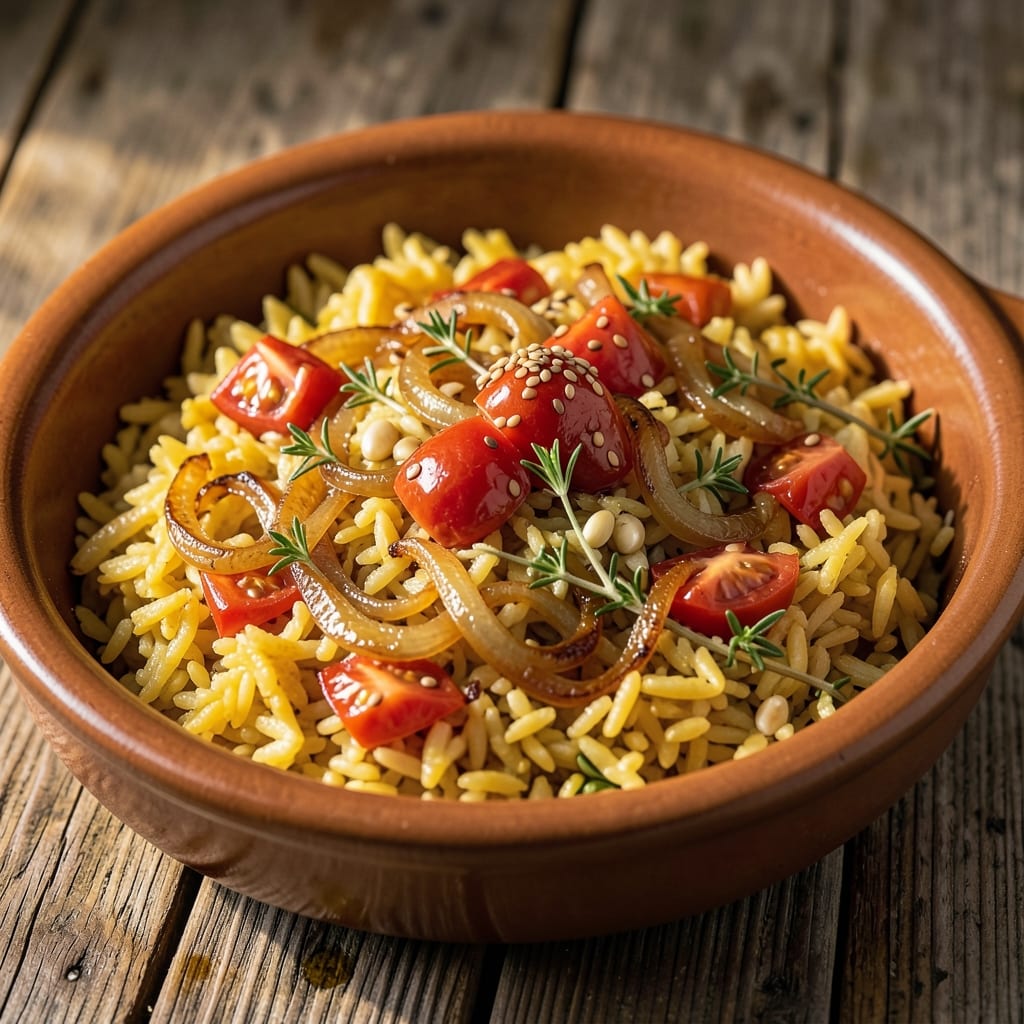
This African yellow rice recipe transforms simple white rice into a fragrant, golden masterpiece with just a few key ingredients. The secret lies in turmeric's vibrant hue and earthy warmth, balanced by garlic, thyme, and tomatoes for depth. I first discovered this technique while exploring West African cuisine, and it quickly became a staple in my kitchen—both for its bold flavors and impressive presentation.
The process is straightforward: sauté aromatic spices until fragrant, toast the rice until translucent, then simmer in rich tomato broth until perfectly tender. What sets this apart is the turmeric-infused broth, which gives the rice its signature golden color and nutty aroma. This dish pairs beautifully with grilled meats or fish, creating a complete, satisfying meal.
What you'll achieve is fluffy, fragrant rice with a delicate crunch and complex flavors that linger. The turmeric not only colors the rice but also adds a subtle earthiness that complements the savory broth. Each grain remains separate yet tender, absorbing just enough liquid to stay moist without turning mushy.
Perfect for weeknight dinners or special occasions, this recipe serves 4-6 and can be made ahead. The flavors deepen as it sits, making it ideal for meal prep. Let's get started on creating this aromatic centerpiece for your table.
Ingredients for african yellow rice
Golden-hued grains and aromatic spices transform basic rice into West African-inspired perfection.
| Ingredient | Amount | Notes |
|---|---|---|
| Long-Grain White Rice 🍚 | 2 cups | Uncooked, rinsed thoroughly |
| Ground Turmeric 🌿 | 1 ½ tbsp | Freshly ground for vibrant color |
| Yellow Onion 🧅 | 1 whole | Medium size, finely diced |
| Garlic Cloves 🧄 | 4 cloves | Fresh, minced finely |
| Fresh Thyme 🌿 | 2 tbsp | Leaves only, chopped |
| Canned Diced Tomatoes 🍅 | 1 can | San Marzano preferred, drained |
| Vegetable Broth 💧 | 3 cups | Low-sodium preferred |
| Olive Oil 🫒 | ½ cup | Extra-virgin for richness |
| Bay Leaves 🌿 | 2 whole | Dried, for depth of flavor |
| Salt 🧂 | 1 ½ tsp | Diamond Crystal preferred |
| Black Peppercorns 🌶️ | ½ tsp | Freshly cracked |
| Scotch Bonnet Pepper 🌶️ | 1 whole | Seeds removed, minced |
| Fresh Cilantro 🌿 | ¼ cup | Chopped, for garnish |
The turmeric is non-negotiable—freshly ground delivers the most vibrant color and earthy depth. Whole Foods or Indian grocery stores carry the best quality, but the regular spice aisle works too if you check the expiration date. For the tomatoes, San Marzano cans are worth the splurge—they're sweeter and less acidic, which balances the turmeric's bitterness. The Scotch bonnet adds heat without overpowering; if you can't find it, jalapeño at one-third the amount works in a pinch. Fresh thyme is ideal, but dried at one-fourth the quantity suffices if you're in a hurry.
No fresh turmeric? Ground turmeric from a trusted brand like Penzeys is fine, but taste it first—some brands can be bitter. Substituting the Scotch bonnet? Habanero at half the amount gives similar heat. The vegetable broth should be low-sodium to avoid overpowering the delicate flavors; Swanson or Pacific Foods are reliable choices. For the rice, jasmine or basmati can replace long-grain white, though the texture will differ slightly. The bay leaves add complexity, but if you're missing them, a pinch of dried oregano provides a similar earthy note.
This rice reheats beautifully—simply add a splash of water and warm through. It keeps for 4-5 days in the fridge, though the texture softens slightly over time. For longer storage, freeze portions for up to 3 months. I always make a double batch—half for immediate use, half to freeze for lazy weeknights. The fresh cilantro garnish can be added after reheating, so don't stress about prepping it too far ahead.
Why You'll Love This Recipe
- I swear by this trick: slice the onions and mince the garlic while the rice simmers—no prep ahead needed. The turmeric does all the work coloring the rice while you’re distracted by whatever’s on TV.
- No-Chop Nightmare: I swear by this trick: slice the onions and mince the garlic while the rice simmers—no prep ahead needed. The turmeric does all the work coloring the rice while you’re distracted by whatever’s on TV.
- Golden, Earthy Magic: That first whiff of toasted onions and thyme? It’s like a warm hug in rice form. The turmeric gives it a sunlit glow, but the garlic and onions ground it—creamy, fragrant, and ridiculously satisfying.
- Weeknight to Potluck: Make a big batch on Sunday, and you’ve got lunch for three days. It’s the side that turns bland proteins into a feast—pair it with grilled chicken, fish, or even eggs for breakfast (yes, really).
Step-by-step instructions for African yellow rice
Here's the method to achieve vibrant, fragrant yellow rice with perfect texture and depth of flavor.
Sauté Aromatics in Olive Oil
Heat the 0.5 cup olive oil in a large, heavy-bottomed pot over medium heat. Add the 1 whole yellow onion and cook until softened and translucent, about 5 minutes. This foundational step builds flavor—don't rush it.
Add the 4 cloves garlic cloves and 2 whole bay leaves, stirring constantly for 1 minute until the garlic becomes fragrant but doesn't brown. The bay leaves will infuse subtle earthy notes into the rice. Here's where the magic begins—your kitchen should smell like a West African spice market.
Toast Turmeric and Spices
Reduce heat to medium-low and add the 1.5 tablespoons ground turmeric, stirring continuously for 2 minutes until the raw aroma dissipates and you see a vibrant golden hue develop. This step is critical—it prevents the turmeric from becoming bitter and ensures that signature yellow color.
Add the 1 whole Scotch bonnet pepper (seeds removed) and 0.5 teaspoon freshly cracked black peppercorns, cooking for 30 seconds until the pepper becomes aromatic. The Scotch bonnet will add a subtle heat that balances the earthy flavors. Be careful not to let it burn—just enough to awaken its flavor.
Cook the Rice with Tomatoes
Add the 2 cups long-grain white rice and stir to coat evenly in the spiced oil, about 1 minute. The rice should look dry but well-coated. Add the 1 can diced tomatoes (drained), 2 tablespoons chopped fresh thyme, 1.5 teaspoons salt, and stir well to combine.
Cook for 2 minutes until the tomatoes break down and the rice begins to absorb the flavors. You'll see the mixture become slightly sticky—this is normal and essential for developing the rice's texture. The tomatoes add acidity that prevents the rice from becoming gummy.
Simmer with Vegetable Broth
Pour in the 3 cups vegetable broth and bring to a gentle boil. Once boiling, reduce heat to low, cover the pot tightly with a lid, and simmer for 20 minutes without stirring. This undisturbed cooking period allows the rice to absorb liquid evenly and develop its signature fluffy texture.
After 20 minutes, check the rice—it should be tender but still slightly firm to the bite. If there's excess liquid, uncover and simmer for another 5 minutes to evaporate. The rice should be moist but not mushy. This is where patience pays off—rushing leads to uneven cooking.
Rest and Garnish
Remove from heat and let the rice sit covered for 10 minutes. This resting period allows the steam to redistribute, resulting in perfectly fluffy grains. Fluff the rice gently with a fork, then stir in the 0.25 cup chopped fresh cilantro just before serving.
The final result should be vibrant yellow rice with distinct grains, fragrant with turmeric and thyme, and just a hint of Scotch bonnet heat. Serve immediately alongside grilled meats or as a standalone dish—each bite should reveal layers of complex flavor from the careful balance of spices and aromatics.
Pro Tips For Making African Yellow Rice
- Bloom the Onions First: I learned this the hard way—skipping the sweat step makes your rice taste flat and one-note. Dice the onions small, then cook them in oil on medium-low for 5-6 minutes until soft and translucent, stirring often. The slow release of their sweetness builds the flavor base that turmeric alone can’t carry.
- Toast the Turmeric: Ground turmeric loses its punch when raw, so give it a quick toast. Add it to the pot with onions and garlic, stir for 30 seconds until fragrant—just until you smell that earthy warmth. This cuts through the bitterness and makes the yellow color pop brighter.
- Use a 1:1.5 Rice-to-Water Ratio: Most recipes say "1:2," but that’s too much for African yellow rice. Stick with 1 part rice to 1.5 parts liquid (broth or water) and let it simmer uncovered for 12-15 minutes. The uncovered method lets excess moisture evaporate, giving you fluffy, separate grains instead of gluey rice.
- Add Thyme Late: Fresh thyme burns faster than you’d think. Tuck the sprigs into the rice after it’s been simmering for 10 minutes, then let it cook another 5 minutes. This keeps the leaves intact and infuses the rice with bright, herbal notes without turning bitter. (Yes, even if you’re impatient like me.)
Troubleshooting your african yellow rice
Mushy Rice Fix
If your rice turns out mushy, it’s likely due to overcooking or insufficient broth absorption. First, check your rice-to-liquid ratio—this recipe uses a 1:1.5 ratio (2 cups rice to 3 cups broth). If you used more liquid, drain excess through a fine-mesh strainer after cooking. For already mushy rice, stir in 1 tablespoon cold olive oil and spread on a baking sheet to dry slightly in a 200°F oven for 10 minutes. 💫
Undercooked Rice Solution
Undercooked rice happens when the heat is too low or cooking time is insufficient. If your rice still has a hard center, return it to the pot with ¼ cup extra broth, cover, and simmer on low heat for 5-10 minutes. Avoid peeking or stirring—this disrupts steam distribution. For stubbornly firm grains, place the pot in a 350°F oven for 10 minutes to finish cooking gently.
Turmeric Color Fading
The vibrant yellow hue may dim if the turmeric isn’t toasted properly or if acidic ingredients (like tomatoes) overpower it. To intensify the color, toast the turmeric for 3-4 minutes until it turns a deeper gold. If the rice still looks pale, stir in ½ teaspoon turmeric powder and 1 teaspoon lemon juice before serving—this brightens the color instantly. 🌟
Broth Too Salty?
If your broth tastes overly salty, dilute it by adding ½ cup extra water or vegetable broth and simmering uncovered for 5 minutes to evaporate excess moisture. For a quick fix, stir in 1 tablespoon plain yogurt or a pinch of sugar to balance the saltiness. Taste as you go—this rice absorbs flavors quickly, so adjustments are easier early in the cooking process.
Burnt Onions or Garlic
Burnt aromatics ruin the delicate balance of flavors. To prevent this, keep the heat at medium when sautéing onions and garlic—never let them brown. If they do burn, remove the pot from heat, scrape out the burnt bits, and start fresh with a clean pot. For a faster fix, stir in 1 teaspoon honey or a splash of vinegar to mask the bitterness, but prevention is always better.
Lacking Flavor Depth
If your rice tastes bland, the spices likely weren’t toasted long enough. Next time, toast the turmeric and spices for 2-3 minutes until fragrant. For a quick flavor boost, stir in 1 teaspoon fish sauce or soy sauce (for umami) and a pinch of smoked paprika before serving. Fresh herbs like cilantro or parsley can also elevate the dish at the table. ✨
Nutrition facts
Frequently asked questions
Can I use brown rice or quinoa instead of white rice?
White rice is ideal for this recipe because it absorbs flavors beautifully and maintains a distinct texture. Brown rice or quinoa will change the cooking time and texture—brown rice needs 10-15 minutes longer and may stay slightly chewy. Quinoa cooks faster (15 minutes total) but has a nuttier flavor that pairs differently with the spices.
What makes this yellow rice different from Indian yellow rice?
The key difference lies in the spice blend and cooking method. African yellow rice uses turmeric, thyme, and Scotch bonnet pepper for a subtly spicy, earthy profile, while Indian versions often include cumin, mustard seeds, and asafoetida. The African technique also emphasizes a longer simmer in tomato broth, creating a richer, more aromatic base.
How do I prevent the rice from sticking to the pot?
Always use a heavy-bottomed pot with a tight-fitting lid and stir only once during cooking. After adding broth, reduce heat to low and avoid peeking—steam is crucial for even cooking. If sticking occurs, add 1-2 tablespoons extra broth and stir gently. For extra insurance, lightly oil the pot before starting.
Can I make this recipe without tomatoes?
Tomatoes add acidity that balances the turmeric, but you can substitute with 1 tablespoon tomato paste + 1 teaspoon lemon juice or ¼ cup extra vegetable broth. For deeper flavor, add ½ teaspoon smoked paprika to compensate. The dish will still be delicious but may lack the slight tang that tomatoes provide.
How long does this rice keep in the fridge?
Store in an airtight container for 4-5 days in the fridge. Reheat gently with 1-2 tablespoons water or broth per cup of rice, covered on low heat. For best texture, avoid microwaving—opt for stovetop reheating. The flavors actually improve slightly as it sits, making it perfect for meal prep!