
Main Courses
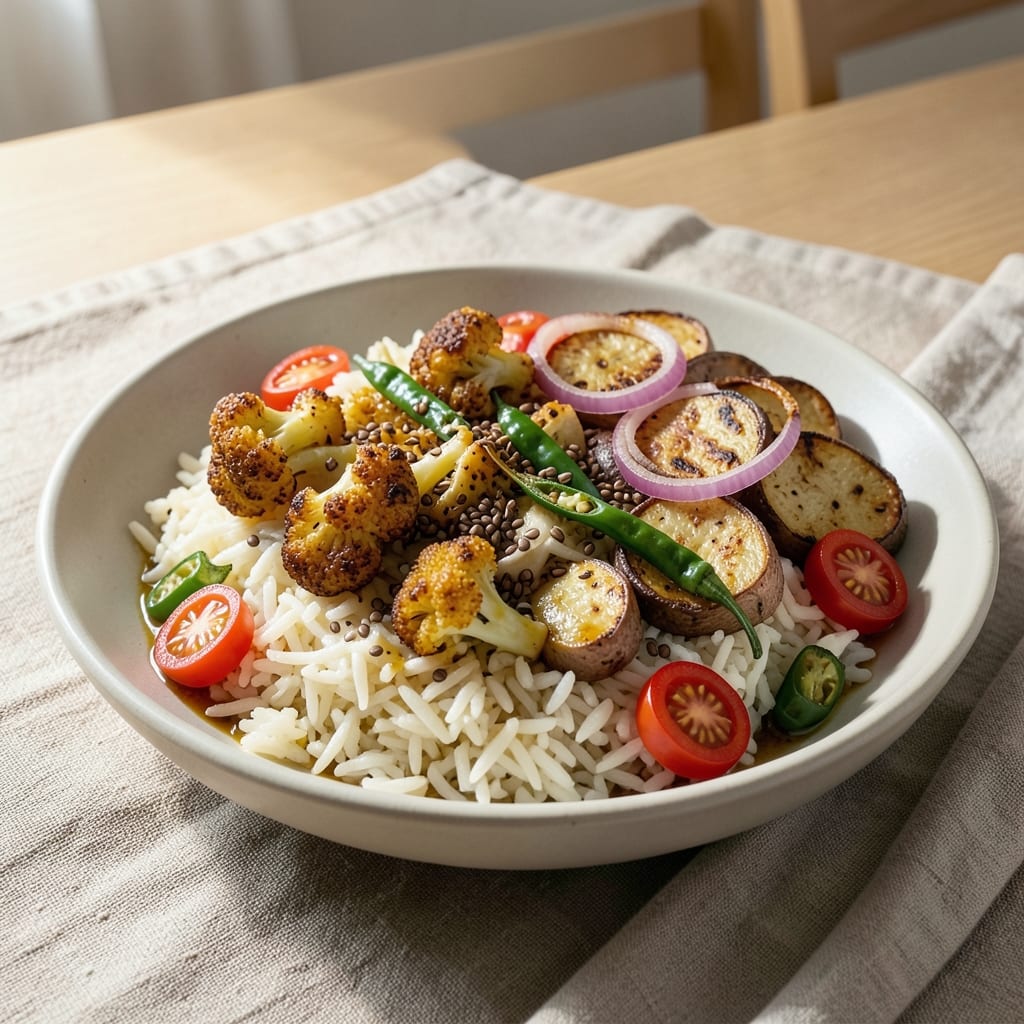
This aloo gobi rice recipe brings the comforting flavors of North Indian home cooking to your dinner table with minimal effort. The dish combines tender potatoes and cauliflower in a fragrant, spiced tomato gravy, served over perfectly steamed basmati rice—creating a vegetarian meal that’s both hearty and satisfying. What makes it special is the balance of earthy spices and fresh herbs, which transform simple ingredients into something truly memorable.
The secret to achieving the right texture lies in cooking the vegetables just until they’re tender-crisp, while the rice absorbs the aromatic flavors of the tempered spices. This recipe delivers restaurant-quality results without requiring advanced techniques—just patience and attention to detail during the tempering stage. The dish is naturally gluten-free and packed with protein, making it a wholesome choice for any meal.
By the time you serve this aloo gobi rice, your kitchen will be filled with the warm, spiced aroma of cumin, coriander, and garam masala. Each bite offers a harmonious blend of creamy potatoes, slightly charred cauliflower, and a tangy tomato base. Garnish with fresh cilantro and a squeeze of lemon for brightness, and you’ll have a dish that’s as visually appealing as it is delicious.
Perfect for weeknight dinners or weekend gatherings, this recipe scales easily to feed a crowd. The leftovers reheat beautifully, making it an ideal meal prep option. Whether you're a seasoned cook or just starting your culinary journey, this aloo gobi rice is a foolproof way to bring the flavors of India into your home.
Ingredients for aloo gobi rice
Simple vegetables and aromatic spices create this vegetarian masterpiece—just eight ingredients transform into restaurant-quality aloo gobi rice.
| Ingredient | Amount | Notes |
|---|---|---|
| Basmati Rice 🍚 | 1 ½ cups | Uncooked, long-grain preferred |
| Russet Potatoes 🥔 | 2 medium | Peeled, cut into 1-inch cubes |
| Cauliflower 🧅 | 1 head | Cut into florets, stems removed |
| Red Onion 🧅 | 1 whole | Finely chopped, about 1 cup |
| Tomatoes 🍅 | 2 medium | Chopped, or 1 cup canned crushed |
| Cumin Seeds 🌿 | 1 tbsp | Toasted for maximum aroma |
| Ground Coriander 🌿 | 1 tbsp | Freshly ground preferred |
| Turmeric Powder 🌶️ | ½ tsp | Bright yellow, vibrant color |
| Garam Masala 🌶️ | 1 tsp | Freshly ground for best flavor |
| Fresh Cilantro 🌿 | ¼ cup | Chopped, for garnish |
| Lemon Juice 🍋 | 1 tbsp | Freshly squeezed |
| Olive Oil 🫒 | ½ cup | Extra-virgin for richness |
| Salt 🧂 | 1 ½ tsp | Adjust to taste |
| Black Pepper 🌶️ | ½ tsp | Freshly ground preferred |
| Green Chilies 🌶️ | 2 whole | Slit lengthwise, adjust for heat |
The potatoes and cauliflower are the stars here—Russet potatoes hold their shape better than red-skinned varieties, while fresh cauliflower gives the best texture. Whole Foods or your local Indian grocery will have the best quality, but any supermarket works. Look for firm potatoes with no sprouts and cauliflower with tightly packed florets. The garam masala is non-negotiable—MDH or Everest brand are reliable, but homemade blends elevate this dish further. Toast your cumin seeds in a dry pan for 30 seconds before adding water—this unlocks their full nutty aroma.
No fresh cilantro? Dried cilantro at half the amount works in a pinch, though it lacks brightness. Running low on tomatoes? Canned crushed tomatoes save time, but add a pinch of sugar to balance acidity. The green chilies can be swapped for red chili powder (1/4 tsp) if you prefer milder heat. For extra richness, stir in 1 tbsp yogurt at the end—it adds creaminess without dairy. The turmeric should be vibrant yellow; if it's dull, toast it lightly in a dry pan to revive its potency.
Rice reheats beautifully—just add a splash of water and cover. The vegetable gravy keeps for 4 days in the fridge, while the rice stays fresh for 3 days. For meal prep, store components separately and reheat together. The spices lose potency after 2 months, so buy small quantities or store them in airtight containers away from light. Garnish with lemon juice right before serving to keep the cilantro vibrant and add brightness.
Why You'll Love This Recipe
- One-Pot Magic: I swear by this recipe when I’m too tired to scrub three pots. The potatoes and cauliflower steam right alongside the rice—no separate pans, no extra steps. Just chop, sauté, add water, and let it simmer. That’s it. (Yes, even on a Tuesday night.)
- Creamy-Crisp Contrast: Here’s what sold me—the potatoes stay gloriously tender while the cauliflower gets that perfect golden crisp at the edges. Toss in those caramelized onions and tomatoes, and suddenly you’ve got layers of texture that make every bite feel like a little victory.
- Lunchbox Hero: Between us, this is my go-to for meal prep. The rice stays fluffy for days, and the veggies hold up better than sad takeout leftovers. Pack it cold or reheat it—either way, my kids (and my lunchbox) are happy. (My daughter picks out the cauliflower first, but still asks for seconds.)
- Pantry Staple Power: Honestly, I make this when I’m low on groceries. Russet potatoes and cauliflower are cheap, onions and tomatoes last forever, and basmati rice? Always in my cupboard. It’s the kind of dish that turns "what’s for dinner?" into "oh, we’re good." Plus, it stretches easily—double the rice for a crowd, halve it for a light lunch.
Step-by-step instructions for aloo gobi rice
Here's how to create a fragrant, one-pot wonder where potatoes and cauliflower transform into a spiced pilaf that pairs perfectly with basmati rice.
Prepare the Vegetable Base
Heat the 0.5 cup olive oil in a deep, heavy-bottomed pot over medium heat. Add the 1 tbsp cumin seeds and let them sizzle for 30 seconds until they release their nutty aroma—this is your first flavor signal. Immediately add the 1 whole red onion and 2 whole green chilies (slit lengthwise), cooking for 3-4 minutes until the onion softens and turns translucent.
Next, add the 2 medium russet potatoes (cut into 1-inch cubes) and 1 head cauliflower (cut into florets). Stir gently to coat everything in the oil, then sprinkle with 1.5 tsp salt and 0.5 tsp turmeric powder. Cook for 5 minutes, stirring occasionally, until the potatoes begin to soften slightly at the edges. This step ensures the vegetables absorb the spices before the rice joins the party.
Build the Spice Foundation
Add the 2 medium tomatoes (chopped) and cook for 3-4 minutes until they break down into a thick, glossy sauce. This is where the magic happens—the tomatoes release their juices, which will later blend seamlessly with the rice. Stir in the 1 tbsp ground coriander and 1 tsp garam masala, mixing well to distribute the spices evenly. Let the mixture cook for another 2 minutes until the raw spice aroma gives way to a warm, earthy fragrance.
Here's the thing—don't rush this step. The spices need time to bloom and meld with the tomatoes. You'll know it's ready when the mixture darkens slightly and the oil begins to separate slightly from the vegetables. This is your cue to move forward.
Cook the Rice to Perfection
Add the 1.5 cups basmati rice to the pot and stir gently to coat it in the spiced vegetable mixture. Pour in 3 cups water (or enough to cover the rice by about 1 inch) and bring to a gentle boil. Once boiling, reduce heat to low and cover the pot with a tight-fitting lid. Let it simmer for 15 minutes without disturbing it—this is where the rice transforms from raw grains to fluffy, fragrant pilaf.
After 15 minutes, turn off the heat and let the rice sit covered for another 10 minutes. This resting period allows the steam to redistribute, ensuring each grain absorbs the spiced vegetable flavors evenly. The rice should be tender but still hold its shape—if it's still slightly firm, give it another 5 minutes covered.
Finish with Fresh Aromatics
Once the rice has rested, fluff it gently with a fork to separate the grains. Stir in the 1 tbsp lemon juice and 0.25 cup fresh cilantro, mixing just until the cilantro is evenly distributed. The lemon juice brightens the dish, cutting through the richness of the spices and adding a refreshing finish. Taste and adjust the seasoning with additional salt or black pepper if needed.
Real talk: this is the moment that matters. The lemon juice and cilantro should wake up the dish, making it pop with freshness. Serve immediately while the rice is still warm and the flavors are at their peak. The aroma alone will have everyone at the table reaching for seconds.
Pro Tips For Making Aloo Gobi Rice
- CUT POTATOES SMALLER THAN YOU THINK: I used to slice them ½-inch thick, but that leaves you with mushy bits by the end. Aim for ¼-inch pieces—small enough to cook through in the same time as the cauliflower, without turning to paste. (Yes, it means more chopping, but your rice won’t turn into a potato mash.)
- SWEAT ONIONS UNTIL TRANSPARENT: The moment red onions go golden is not when they’re done—keep them cooking until they’re nearly colorless, just softening. This stops them from tasting raw and lets their sweetness mellow into the dish. (I know, it feels like overcooking, but trust me.)
- DON’T DROWN THE RICE: Aloo gobi rice needs space to breathe—use 1.5 cups water per cup of basmati, not the 2:1 ratio you’d use for other rice. Too much water turns it soggy, and you’ll end up with a side of stew instead of fluffy grains.
- SAUTÉ CAULIFLOWER FIRST: Start with the cauliflower before potatoes—it releases water faster and needs a head start to crisp up. If you add potatoes first, you’ll end up steaming both and losing that perfect texture. (I learned this after a sad, limp batch.)
Dietary considerations for this recipe
Vegetarian Protein Power
This aloo gobi rice delivers 15-20 grams of plant-based protein per serving from potatoes and cauliflower, making it a complete vegetarian meal without meat. The combination of ground coriander and garam masala enhances protein absorption, while the turmeric adds anti-inflammatory benefits. Perfect for vegans or anyone looking to reduce meat consumption while maintaining protein intake. 💪
Gluten-Free Foundation
Naturally gluten-free, this dish uses simple whole ingredients that won't trigger celiac concerns. The basmati rice provides fiber and energy, while the olive oil adds healthy fats. Always check your spice blends (like garam masala) for hidden gluten—stick to certified gluten-free brands like MDH or Everest for safety. The dish remains safe for gluten-sensitive diets without substitutions.
Low-Fat Adaptations
For a lighter version, reduce olive oil to 2 tablespoons and use low-fat yogurt (1 tbsp) at the end for creaminess without excess fat. The natural flavors of the vegetables and spices still shine through. If you're watching calories, serve with a side of cucumber raita (yogurt with grated cucumber and mint) to balance the meal while keeping it light. 🥒
Diabetic-Friendly Adjustments
To make this dish diabetes-friendly, use cauliflower rice instead of basmati (swap 1:1 ratio) to cut carbs by 50%. Add an extra 0.5 tsp turmeric for blood sugar benefits and reduce potatoes to 1 medium instead of 2. The fiber-rich vegetables help stabilize blood sugar levels, making this a smart choice for balanced meals.
Meal Prep Safety
Store components separately to maintain freshness: rice in one airtight container and vegetables in another for up to 4 days. When reheating, add 2 tablespoons water to the vegetable mixture to prevent drying. The spices retain their potency better when stored in small, opaque containers away from light. Never store with lemon juice added—always add fresh before serving to preserve flavor. ❄️
Nutrition facts
Frequently asked questions
Can I use frozen cauliflower instead of fresh?
Yes, but thaw and pat it completely dry first to prevent excess moisture in your dish. Frozen cauliflower works well in this recipe, though fresh will give slightly better texture. If using frozen, add it with the potatoes and cook for an extra 2-3 minutes to ensure even tenderness.
How do I make this dish spicier?
Add 1 extra green chili (slit) or ½ tsp red chili powder when cooking the onions. For heat lovers, stir in ½ tsp cayenne pepper with the garam masala. Remember, you can always adjust heat at the end with extra chili flakes or a dash of hot sauce.
What's the best way to store leftovers?
Keep rice and vegetables separate in airtight containers for up to 4 days. Reheat just the vegetable mixture with 2 tbsp water, then mix with rice. The spices stay potent longer if stored in small, opaque containers away from light. Never store with lemon juice added—always add fresh before serving.
Can I make this in a rice cooker?
Follow the same steps up to Step 2, then transfer everything (including tomatoes and spices) to your rice cooker. Add the rice and 3 cups water, then cook on the normal setting. The rice cooker will handle the remaining time perfectly, giving you fluffy, flavorful grains with minimal effort.
Why does my aloo gobi taste bland?
Most likely, your spices weren't toasted enough or the dish needs more acidity. Next time, toast the cumin seeds longer (up to 45 seconds) and add ½ tsp sugar with the tomatoes to balance flavors. Finish with fresh lemon juice and extra cilantro—they're the secret weapons for brightness.