
Main Courses
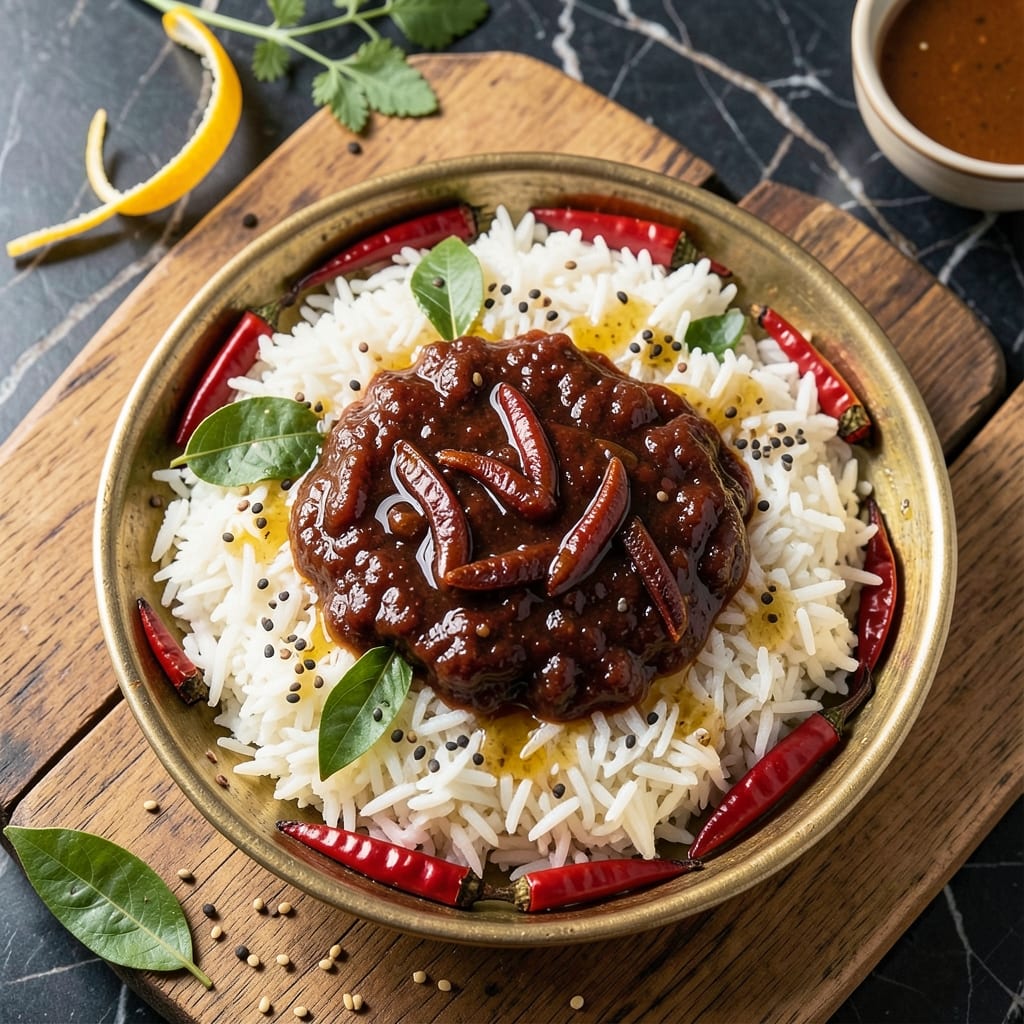
This Andhra tamarind rice recipe brings the bold flavors of South India to your kitchen with its signature tangy tamarind gravy and perfectly toasted rice. The dish is a staple in Andhra Pradesh, where tamarind's sharp tanginess cuts through the richness of the rice, creating a harmonious balance that's both comforting and invigorating. What makes this recipe special is the layered flavors—spicy mustard seeds, fragrant curry leaves, and the deep umami of red chilies—all simmered into a vibrant gravy that clings to each grain of rice.
The foundation of this dish lies in the rice preparation, where grains are toasted to a golden hue before cooking, adding a nutty depth that contrasts beautifully with the tangy gravy. The tamarind pulp, the heart of this recipe, is cooked with a blend of spices to create a sauce that's both complex and balanced—sour, spicy, and slightly sweet. This isn't just a side dish; it's a complete meal that pairs perfectly with simple accompaniments like raita or crisp papad.
What you'll achieve is a dish that's deeply rooted in tradition yet approachable for home cooks. The tamarind gravy, rich and aromatic, coats the rice in a way that's both satisfying and visually stunning—a sight that's almost as enticing as the flavors. The spices are toasted just enough to release their essential oils, ensuring every bite is packed with flavor without being overpowering.
This recipe is more than just a dish; it's a taste of Andhra Pradesh's culinary heritage. Whether you're serving it for a family gathering or a quiet weeknight dinner, the combination of toasted rice and tangy tamarind gravy is sure to impress. The best part? It's a one-pot wonder that comes together in under an hour, making it perfect for busy weeknights.
Ingredients for andhra tamarind rice
Toasted rice meets tangy tamarind gravy—this recipe delivers authentic Andhra flavors with simple, vibrant ingredients.
| Ingredient | Amount | Notes |
|---|---|---|
| Long-Grain White Rice 🍚 | 1 ½ cups | Uncooked, rinsed thoroughly |
| Tamarind Pulp 🍈 | ½ cup | Fresh or high-quality paste |
| Red Chilies 🌶️ | 4 whole | Dried, soaked in warm water |
| Mustard Seeds 🌿 | 1 tbsp | Whole, for tempering |
| Curry Leaves 🌿 | ¼ cup | Fresh, lightly crushed |
| Coconut Oil 🫒 | ½ cup | For toasting and cooking |
| Onion 🧅 | 1 whole | Medium, finely chopped |
| Tomatoes 🍅 | 2 whole | Medium, pureed or finely chopped |
| Green Chilies 🌶️ | 2 whole | Slit lengthwise, for heat |
| Asafoetida 🌿 | ¼ tsp | For umami depth |
| Turmeric Powder 🌿 | ¼ tsp | Freshly ground preferred |
| Cumin Seeds 🌿 | ½ tsp | Toasted for aroma |
| Salt 🧂 | 1 tsp | Adjust to taste |
| Fresh Coriander Leaves 🌿 | ¼ cup | Chopped, for garnish |
| Ghee 🧈 | 2 tbsp | For rice toasting |
The tamarind pulp is the star here, so look for fresh, sticky tamarind blocks at Indian grocery stores like Patel Brothers or Apna Bazaar. If you can't find fresh, use high-quality paste—avoid powdered versions, which lack depth. Red chilies should be bright red and dry, not moldy. Soak them in warm water for 30 minutes before grinding to soften. For curry leaves, fresh is non-negotiable—dried leaves lose their aromatic punch. Toast them lightly in coconut oil before adding to the rice for maximum flavor. The rice itself? Long-grain basmati or sona masoori works best—rinse until the water runs clear to remove excess starch.
No tamarind? Lemon juice with a pinch of sugar mimics the tang, though it won't replicate the complex depth. Running short on red chilies? Kashmiri red chilies or cayenne powder at half the amount adds heat without altering color. Fresh curry leaves hard to find? Dried curry leaf powder works in a pinch, but use half the quantity. The green chilies can be swapped for jalapeños or serrano peppers—just adjust the number based on your heat preference. For a richer gravy, add 1 tbsp tomato paste along with the pureed tomatoes. And if you're avoiding ghee, coconut oil works just as well for toasting the rice.
Toasted rice keeps its texture best if stored in an airtight container for 2 days. The tamarind gravy reheats beautifully—simmer gently with a splash of water to restore its glossy texture. For longer storage, freeze the gravy separately in ice cube trays, then transfer to a bag. Thaw and reheat gently. Garnish with fresh coriander just before serving—it brightens the dish instantly. This recipe doubles easily, so make extra gravy for leftovers or pair it with dosas for a full meal.
Why You'll Love This Recipe
- Five-Ingredient Magic: I swear by this—just rice, tamarind, chilies, mustard seeds, and curry leaves. That’s it. No fancy prep, no hidden pantry raids. The tamarind pulp does all the work, turning simple rice into something tangy and vibrant with almost no effort.
- Tamarind Tang Kick: Honestly, the first time I tasted this, I thought, "Why haven’t I been doing this forever?" That bright, sour punch from the tamarind cuts through the heat of the red chilies, leaving your mouth refreshed and craving more. It’s the kind of flavor that sticks with you—like a citrusy, spicy hug.
- Lunchbox Legend: Between us, this is my go-to for meal prep. Pack it in containers, and it stays fresh for days—no soggy rice in sight. The mustard seeds and curry leaves add a fragrant aroma that makes even a packed lunch feel special. (Yes, even on a Tuesday night.)
- Budget Bright Spot: I make this when I need to stretch my grocery budget without sacrificing flavor. Tamarind pulp and whole spices are cheap but pack a punch. A single batch feeds four, and leftovers reheat like a dream—no mushy texture, just that same bold taste. Practical? Absolutely. Delicious? Ridiculously so.
Step-by-step instructions for Andhra tamarind rice
Master the balance of tangy tamarind and aromatic spices with this authentic method.
Prepare the Tamarind Base
In a small bowl, dissolve the 0.5 cup tamarind pulp in 1 cup hot water until smooth. Strain through a fine sieve to remove any fibers, pressing gently to extract all the juice. This tamarind mixture forms the signature tangy foundation of the dish. Set aside for later use.
While the tamarind soaks, soak the 4 whole red chilies in warm water for 15 minutes to soften. Remove the seeds and slit them lengthwise. These chilies will provide the subtle heat that defines Andhra cuisine. Keep them submerged until ready to use.
Toast the Spices and Temper the Oil
Heat 2 tablespoons ghee in a heavy-bottomed pot over medium heat. Add the 1.5 cups long-grain white rice and toast gently for 2-3 minutes until the grains turn translucent and release a nutty aroma. This step enhances the rice's texture and flavor.
Reduce heat to low and add 0.5 cup coconut oil. Stir in the 0.5 tsp cumin seeds and 0.25 cup curry leaves, toasting for 30 seconds until the cumin sizzles and the curry leaves darken slightly. This aromatic tempering layer is essential for authentic flavor.
Cook the Rice with Tamarind and Vegetables
Add 2 cups water to the pot and bring to a boil. Stir in the tamarind mixture, 0.25 tsp turmeric powder, 0.25 tsp asafoetida, and 1 tsp salt. The asafoetida adds a distinct umami depth that's characteristic of Andhra cooking.
Add the 1 whole onion (finely chopped), 2 whole tomatoes (pureed), 2 whole green chilies (slit lengthwise), and the soaked red chilies. Simmer uncovered for 15 minutes until the rice is 80% cooked and the liquid reduces slightly. The rice should still have a slight bite when tested.
Finish with Mustard Seeds and Garnish
In a small pan, heat 1 tablespoon mustard seeds in 1 tablespoon coconut oil over medium heat until they splutter and turn golden. Quickly pour this tempering over the cooked rice and mix gently. This final step adds a delightful crunch and nutty aroma.
Garnish immediately with 0.25 cup fresh coriander leaves (chopped) and serve hot with raita or a simple salad. The dish should have a perfect balance of tangy, spicy, and aromatic flavors with slightly sticky, well-cooked rice.
Pro Tips For Making Andhra Tamarind Rice
- SOAK THE TAMARIND: I learned this the hard way—tamarind pulp clumps like glue if you toss it dry into the pot. Soak it in ½ cup warm water for 10 minutes first, then strain. The pulp dissolves smoothly, giving you that signature tang without fighting for even distribution.
- CRACK THE MUSTARD SEEDS: High heat. Seriously, crank it up until the mustard seeds pop like fireworks before adding curry leaves. If you’re lazy and let them sputter, they’ll turn bitter—trust me, I’ve ruined batches. A quick splash of water after popping? That’s how you keep them from burning.
- USE DRY RED CHILIES: Skip the wet or powdered versions—whole dry red chilies (3-4, lightly toasted) add depth without overpowering. I was skeptical until I tried it: they release flavor gradually, balancing the tamarind’s sourness perfectly. Toast them for 30 seconds until fragrant, then crush just enough to break the skin.
- COOK RICE SEPARATELY: This isn’t the prettiest method, but it’s the tastiest. Parboil the rice until 80% done (12-14 minutes), then drain and fluff. Mixing raw rice with the tamarind gravy turns it mushy—your future self will thank you for the separate cook.
Wine and beer pairings for this recipe
Tamarind's Tangy Terroir
The bold tang of tamarind in this dish pairs beautifully with dry, crisp whites that cut through the richness. I recommend a Chenin Blanc from India's Karnataka region—its citrusy acidity mirrors the tamarind's brightness while the mineral notes complement the toasted rice. Look for bottles from Grapes of Wrath or Sula Vineyards for authentic regional harmony. 🍷
Spice-Forward Beer Pairings
For beer lovers, a German-style Hefeweizen with its banana and clove notes balances the dish's heat and tang perfectly. Try Weihenstephaner Hefeweissbier—the slight sweetness offsets the tamarind's acidity while the yeasty character enhances the curry leaves. For a local twist, swap in a Korean hoppy lager like HiteJin Rooftop to add a refreshing crunch.
Regional Wine Contrasts
Andhra cuisine's complexity calls for wines with similar depth. A Spanish Albariño from Rías Baixas delivers zesty lemon and green apple flavors that echo the tamarind's tang. For red wine lovers, a Tempranillo from Spain's Rioja region—specifically Muga—brings earthy undertones that pair with the rice's nutty toasted notes. Both wines avoid overpowering the dish's delicate spices. 🍷
Unexpected Cocktail Pairings
For a festive touch, serve with a tamarind-mango cooler—mix 2 oz tamarind syrup (homemade or store-bought), 3 oz mango juice, and 1 oz lime juice with ice. Top with sparkling water and garnish with mint. The sweet-tart contrast mirrors the rice's flavors while keeping the meal refreshing. For non-alcoholic options, try ginger beer with lemon to enhance the dish's zing.
Local South Indian Pairings
In Andhra Pradesh, this dish is traditionally served with cooling raita (yogurt with cucumber and mint) to balance the heat. For a complete meal, add papad (crispy lentil wafers) or sambar (lentil stew) to round out the plate. The contrast of textures and temperatures makes every bite more satisfying. The tamarind rice stands alone as a complete dish, but these accompaniments elevate it to a full feast. 🌶️
Nutrition facts
Frequently asked questions
Can I make this tamarind rice without fresh tamarind?
Yes! For a similar tang, use 1.5 tablespoons lemon juice plus 1 teaspoon sugar to mimic tamarind's complex flavor. For deeper authenticity, try tamarind paste (found in Indian grocery stores) or mix 1 tablespoon tamarind powder with 1 cup hot water to dissolve. Avoid powdered tamarind—it lacks the rich texture and depth of fresh pulp.
How do I adjust the spice level for kids or sensitive eaters?
Reduce heat by removing the green chilies entirely and using only 2 red chilies (soaked and deseeded). For extra mildness, skip the mustard seeds in the final tempering and add a pinch of sugar to balance any remaining acidity. The dish will still taste delicious with just the aromatic spices and tamarind tang.
What's the secret to perfectly toasted rice?
The key is low and slow heat for 2-3 minutes until the grains turn translucent but don't brown. Use a heavy-bottomed pot and stir gently to prevent burning. The rice should smell nutty—this indicates proper toasting. If it browns too quickly, reduce the heat immediately to avoid bitterness.
Can I make this recipe with basmati rice instead of long-grain white?
Basmati rice works beautifully—just rinse it thoroughly to remove excess starch. The grains will be slightly longer and more aromatic, enhancing the dish's overall flavor profile. For extra texture, toast the basmati for 3-4 minutes until lightly golden before adding liquids.
Why does my tamarind gravy taste too sour?
Tamarind's acidity can overpower if not balanced. Fix it by adding 1/2 teaspoon sugar or 1/4 teaspoon salt to the gravy. For a smoother texture, blend the cooked gravy briefly (without tamarind fibers) and reheat. If the sourness persists, reduce the tamarind to 1/4 cup in future batches.