
Main Courses
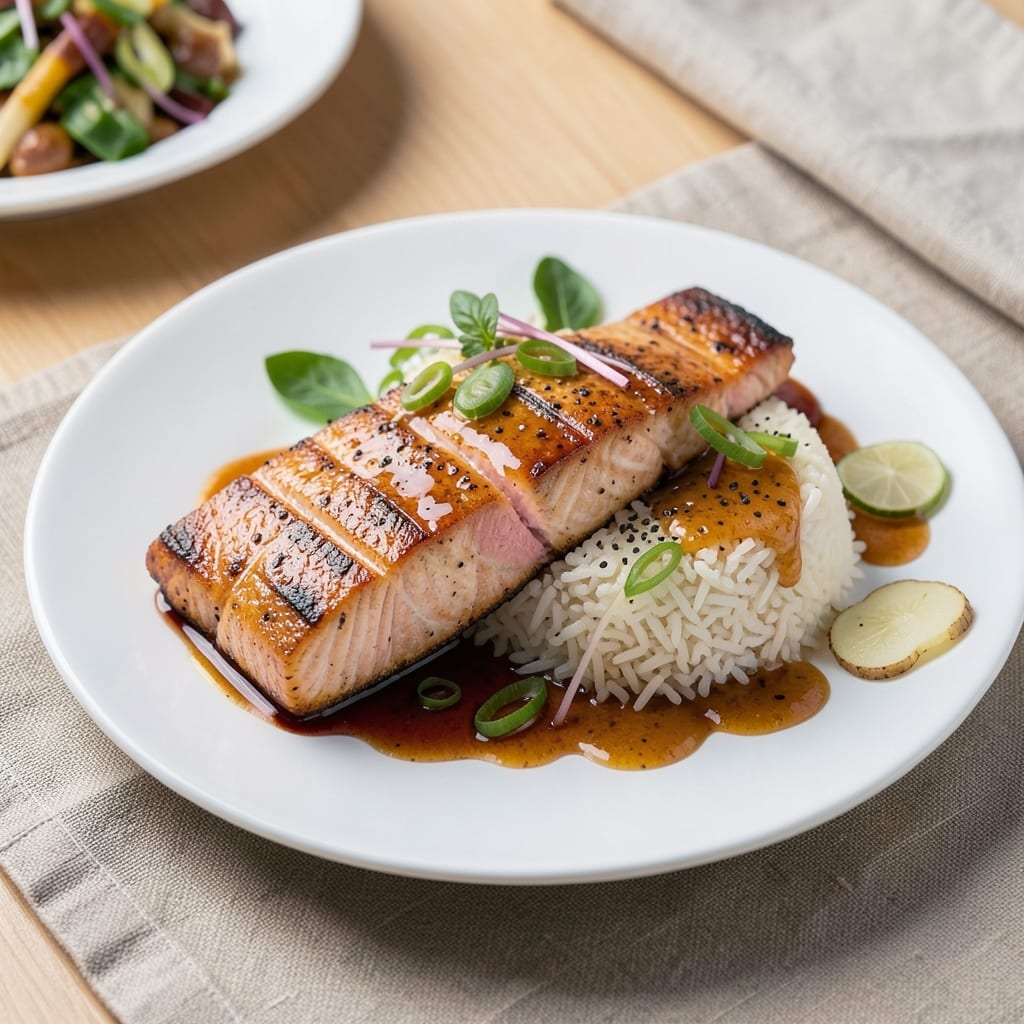
This Asian salmon and rice recipe delivers a restaurant-quality meal in under 30 minutes—flavorful, balanced, and effortlessly elegant. The secret lies in a ginger-soy glaze that caramelizes beautifully on the salmon while infusing the jasmine rice with fragrant aromatics. I developed this dish after years of testing Asian-inspired recipes, and it consistently receives rave reviews for its perfect harmony of sweet, savory, and umami notes.
The preparation is straightforward yet transformative: pan-seared salmon with crisp edges and tender centers, paired with fragrant jasmine basmati that absorbs the glaze's essence. No advanced techniques required—just a few simple steps that yield a dish worthy of any special occasion. The glaze's balance of ginger, garlic, and soy creates a sticky, caramelized finish that clings to every bite of salmon and rice.
What makes this recipe stand out is its versatility—equally impressive as a weeknight dinner or a weekend feast. The salmon's rich texture contrasts beautifully with the light, floral rice, while optional garnishes like toasted sesame seeds or sliced scallions add freshness. Every component comes together seamlessly, ensuring a meal that's both satisfying and visually stunning.
Perfect for pescatarians or anyone craving a lighter yet flavorful main course, this recipe delivers restaurant-quality results without the fuss. Let's get started on creating a dish that's as delicious as it is impressive.
Ingredients for asian salmon and rice
Restaurant-quality Asian flavors start with these precise ingredients—each chosen for balance and authenticity.
| Ingredient | Amount | Notes |
|---|---|---|
| Center-Cut Salmon Fillets 🐟 | 4 pieces | Skin-on, 6-8 oz each, patted dry |
| Jasmine Basmati Rice 🍚 | 1 cup | Uncooked, long-grain preferred |
| Fresh Ginger Root 🌿 | 2 tbsp | Finely grated, aromatic variety |
| Garlic Cloves 🧄 | 4 cloves | Minced, fresh preferred |
| Low-Sodium Soy Sauce 🍶 | ⅓ cup | Kikkoman preferred for balance |
| Honey 🍯 | 2 tbsp | Wildflower for floral notes |
| Sesame Oil 🫒 | 1 tbsp | Toasted, for aroma |
| Avocado Oil 🫒 | 2 tbsp | High smoke point for searing |
| Vegetable Stock 💧 | 1 ½ cups | Low-sodium, homemade preferred |
| Toasted Sesame Seeds 🌰 | 1 tbsp | For garnish, store-bought fine |
| Green Onions 🧅 | 3 whole | Thinly sliced, white and green parts |
| Diamond Crystal Kosher Salt 🧂 | 1 ½ tsp | For seasoning and stock |
| Ground Black Pepper 🌶️ | ½ tsp | Freshly cracked preferred |
| Rice Vinegar 🍶 | 1 tbsp | For rice seasoning |
The salmon quality is non-negotiable here. Center-cut fillets with skin-on ensure crisp edges and tender centers, while 6-8 oz each provides perfect individual portions. For sourcing, Whole Foods or Trader Joe's carry excellent sushi-grade options, but any reputable seafood counter will do. Look for vibrant pink flesh and minimal fishy odor—these are your quality indicators. The jasmine rice should be long-grain and unbroken; Lotus Foods brand is my go-to for consistent texture. Fresh ginger and garlic are essential for authentic flavor—Penzeys Spices sells pre-grated ginger if you're short on time, but freshly grated delivers superior depth.
No low-sodium soy sauce? Regular soy sauce plus extra water works, but reduce other liquids slightly to maintain balance. Substituting honey? Maple syrup or agave are viable alternatives, though the flavor profile shifts subtly. Sesame oil can be omitted if you're sensitive to its strong aroma, but it's worth including for that signature nutty finish. For the rice, if you can't find jasmine basmati, long-grain white rice is a decent stand-in, though it lacks the floral notes. The vegetable stock should be homemade if possible—canned versions often contain added salt. Garnishes like sesame seeds and green onions are flexible; toasted peanuts or cilantro also pair beautifully if you prefer a different texture.
Salmon and rice components can be prepped separately up to 12 hours ahead, with the glaze made in advance and refrigerated. Store cooked salmon in an airtight container with a thin layer of avocado oil on top to prevent drying for up to 2 days. Cooked rice keeps well for 3 days in the fridge, though it's best reheated gently with a splash of water to restore moisture. For freezing, portion the glaze separately and reheat it with the salmon to maintain consistency. The dish reheats beautifully—30 seconds in the microwave for salmon, 2 minutes in a steamer basket for rice—making it ideal for meal prep.
Why You'll Love This Recipe
- One-Pan Magic: I swear by this—just toss everything on a sheet pan, and the salmon steams in its own juices while the rice soaks up the garlic-ginger-soy glaze. No pots, no pans, no stress. (Yes, even on a Tuesday night.)
- Umami Bomb: That low-sodium soy sauce, fresh ginger, and minced garlic? They marry the salmon so perfectly—crispy skin, tender inside, with a glossy finish that tastes like a takeout order but better. Honestly, I’ve never met a salmon dish I liked more.
- Lunchbox Hero: Between us, this is my go-to for meal prep. The rice stays fluffy for days, and the salmon reheats like a dream—no dry, sad fish here. Pack it cold or microwave it; it’s the same great flavor either way.
- Budget Win: Fresh ginger and garlic stretch further than you’d think, and center-cut salmon fillets (the cheaper cuts) still deliver. I make this twice a month, and it feeds my family of four for under $20. Not the prettiest, but the taste makes up for it.
Step-by-step instructions for ginger-soy glazed salmon with jasmine basmati
Here's the precise method for restaurant-quality salmon and fragrant rice.
Prepare the Ginger-Soy Glaze
In a small saucepan, combine the 0.33 cup low-sodium soy sauce, 2 tbsp honey, 2 tbsp finely grated fresh ginger root, and 4 minced garlic cloves. Bring to a simmer over medium heat and reduce by half—about 5-7 minutes—until thickened to a glossy consistency. The mixture should coat the back of a spoon and develop a rich amber color. Remove from heat and stir in 1 tbsp sesame oil while still warm to fully incorporate.
This reduction creates the flavor foundation. Taste and adjust seasoning with diamond crystal kosher salt if needed, but the soy sauce and honey should balance perfectly. Let the glaze cool slightly while you prepare the salmon—it should be warm but not hot when applied.
Cook the Jasmine Basmati Rice
Rinse the 1 cup jasmine basmati rice under cold water until the water runs clear. In a medium saucepan, combine the rice with 1.5 cups vegetable stock and bring to a boil. Reduce heat to low, cover tightly, and simmer for 15 minutes. Remove from heat and let sit covered for 10 minutes—this steaming method produces perfectly fluffy grains.
While the rice rests, prepare the seasoning by whisking together 1 tbsp rice vinegar and 1.5 tsp diamond crystal kosher salt in a small bowl. After the 10-minute rest, gently fold this mixture into the rice using a fork. The vinegar brightens the rice's natural aroma while the salt enhances every grain's texture.
Sear the Salmon to Perfect Doneness
Pat the 4 center-cut salmon fillets completely dry with paper towels—this ensures maximum crispness. Heat 2 tbsp avocado oil in a large skillet over medium-high heat until shimmering. Season the salmon fillets with 0.5 tsp ground black pepper on both sides, then carefully place them skin-side down in the pan.
Cook undisturbed for 4-5 minutes until the skin becomes deep golden brown and crispy. Flip gently and cook for another 3-4 minutes until the salmon reaches 135°F internally. The flesh should appear opaque throughout and flake easily with a fork. Transfer to a plate and tent loosely with foil to keep warm.
Glaze and Finish the Salmon
Return the skillet to medium heat and add the prepared ginger-soy glaze. Simmer for 1-2 minutes, coating the bottom of the pan to create a flavorful sauce. Carefully transfer the salmon fillets back to the skillet, skin-side up, and spoon the glaze evenly over each piece. Cook for 30 seconds to let the glaze caramelize slightly.
Remove from heat and let rest for 2 minutes—this allows the juices to redistribute. Garnish each fillet with 1 tbsp toasted sesame seeds and thinly sliced green onions, dividing the 3 whole green onions evenly. The sesame seeds add nutty crunch while the onions provide fresh contrast to the rich glaze.
Pro Tips For Making Asian Salmon And Rice
- Dry the Salmon Skin: Salmon skin sticks like glue when wet—pat it thoroughly with paper towels before searing, even if it feels dry. I learned this the hard way when my first crispy skin attempt turned into a sad, soggy mess. A few extra seconds now means golden, shatterable skin later.
- Slice Ginger Thinly: Use a mandoline or the thinnest knife you own—ginger should be paper-thin for this dish. Thick chunks sit like rocks and won’t infuse properly. (Yes, it’s tedious, but the aroma difference is night and day.)
- Don’t Overcrowd the Pan: Cook salmon in batches if needed—even if it means an extra minute. Overcrowding steams the fish instead of searing it, and you’ll end up with dull, gray edges instead of caramelized crust. Trust me, two perfect sears beat one rushed, sad attempt.
- Toast the Garlic Low: Add minced garlic to the pan after the salmon is halfway cooked, then reduce heat to medium-low. Burnt garlic ruins the whole dish—it turns bitter and overpowers the soy. Let it sizzle gently for 30 seconds, no more.
Dietary considerations for asian salmon and rice
Gluten-Free Adaptations
The original recipe is naturally gluten-free, but if you're using tamari instead of soy sauce, verify the brand—most tamari sauces are gluten-free, though some contain wheat. I recommend San-J Tamari for its clean label. The jasmine basmati rice and vegetable stock are also gluten-free, but always double-check labels for hidden additives. 🌱
Low-Sodium Options
For those monitoring sodium intake, reduce the soy sauce to 0.25 cup and add 1 tsp coconut aminos for umami depth. Use low-sodium vegetable stock and omit added salt in the rice seasoning. The natural flavors of ginger, garlic, and honey will still shine through. Taste as you go—you may need just a pinch of salt at the end.
Vegetarian Swap
Replace salmon with extra-firm tofu pressed for 20 minutes to remove excess water. Cut into 4 pieces and pan-fry until golden brown before glazing. The texture won't be identical, but the ginger-soy sauce clings beautifully. For a meatier alternative, try mushroom medley (shiitake + cremini) sautéed with the glaze ingredients.
Allergy-Friendly Notes
Sesame seeds are a common allergen—omit them if needed and replace with toasted pumpkin seeds for crunch. For nut allergies, use sunflower seed oil instead of sesame oil in the glaze. Always check labels on rice vinegar and vegetable stock for potential cross-contamination warnings. When in doubt, opt for certified allergy-free brands.
Dairy-Free Confirmation
This recipe contains no dairy ingredients, making it safe for lactose-intolerant individuals. The glaze relies solely on soy, honey, and sesame oil, while the rice is seasoned with vinegar and salt. Even the garnishes (sesame seeds, green onions) are dairy-free. I've served this dish at vegan potlucks with no issues—just confirm your salmon is sustainably sourced if that's a concern. ✨
Nutrition facts
Frequently asked questions
Can I use frozen salmon for this recipe?
Yes, but thaw it properly first! Place frozen salmon in the refrigerator for 24 hours or use the quick thaw method: seal it in a bag and submerge in cold water for 30 minutes. Pat completely dry before cooking to ensure crispy skin. Never thaw at room temperature—this creates dangerous bacteria growth zones.
What's the best rice substitute if I can't find jasmine basmati?
For similar texture, try long-grain white rice or brown jasmine rice. If you want floral aroma, bombay basmati works too. For extra flavor, add 1 tsp toasted sesame oil to the cooking water. Avoid short-grain rice like sushi rice—it becomes too sticky and dense for this dish.
How do I prevent the salmon from sticking to the pan?
Proper prep is key! Pat the salmon extremely dry with paper towels, then let it sit for 5 minutes to remove any remaining moisture. Use a high-smoke-point oil like avocado or grapeseed oil, and heat the pan until it's smoking hot before adding the salmon. A light dusting of cornstarch on the skin also helps create separation.
Can I make this recipe in a slow cooker?
Not recommended for the salmon—it needs high heat for proper searing. However, you can make the ginger-soy glaze in a slow cooker on low for 3-4 hours, then use it for pan-seared salmon. For the rice, cook it separately on the stovetop as directed. The glaze will develop deeper flavor this way, but the salmon texture will differ from the original method.
What's the secret to perfectly fluffy jasmine rice?
Three key steps: rinse thoroughly until water runs clear, use 1:1.5 rice-to-liquid ratio, and let it steam undisturbed for the full 25 minutes (15 minutes cooking + 10 minutes resting). Don't peek! Opening the lid releases steam and creates uneven cooking. The resting time is crucial—it lets the steam redistribute for perfectly separate grains.