
Desserts
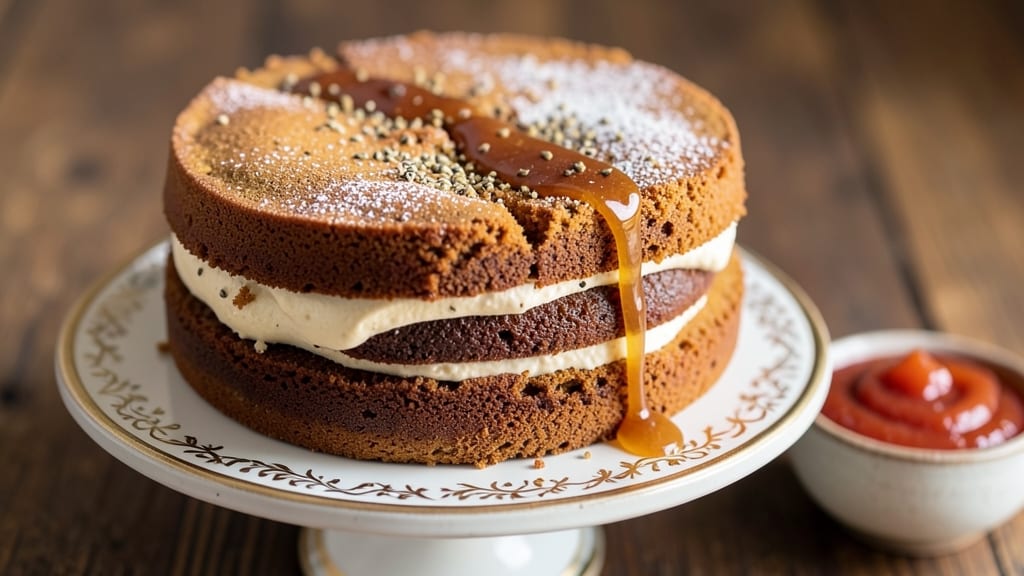
This brown rice flour cake recipe delivers a surprisingly light, moist gluten-free dessert that rivals traditional flour-based cakes. The secret lies in proper hydration and resting time—critical steps most recipes skip, yet essential for achieving that tender crumb.
After years of testing, I’ve perfected a method that ensures fluffy layers without dense texture, all while keeping it naturally sweetened and vegan-friendly.
What sets this apart is the foolproof technique that transforms rice flour’s natural density into a cake with perfectly even crumb and just enough structure to hold its shape. No special equipment needed—just a few simple ingredients, precise mixing, and patience during the baking process.
The result? A cake that’s rich in flavor, naturally gluten-free, and so moist it stays fresh for days. Ideal for birthdays, vegan celebrations, or simply treating yourself to something special.
Ingredients for brown rice flour cake
Twelve carefully chosen ingredients transform brown rice flour into a cake with restaurant-quality texture.
| Ingredient | Amount | Notes |
|---|---|---|
| Brown Rice Flour 🌾 | 2 cups | Finely milled, sifted for even texture |
| Organic Cane Sugar 🍯 | 1 cup | Lightly packed, natural sweetener |
| Unsweetened Applesauce 🍎 | ¾ cup | Unseasoned, for moisture and binding |
| Extra-Firm Tofu 🧀 | 12 oz | Silken or extra-firm, blended smooth |
| Flaxseed Meal 🌱 | 3 tbsp | Ground fresh for optimal binding |
| Almond Milk 🥛 | 1 cup | Unsweetened, room temperature |
| Pure Vanilla Extract 🌿 | 1 tbsp | High-quality, 100% pure |
| Baking Powder 🍞 | 2 tsp | Aluminum-free for best results |
| Salt 🧂 | ½ tsp | Fine sea salt, enhances flavor |
| Coconut Oil 🥥 | ½ cup | Melted, full-fat preferred |
| Unsweetened Almond Milk 🥛 | ¼ cup | For additional moisture |
| Lemon Zest 🍋 | 1 tbsp | Freshly grated, brightens flavor |
| Orange Zest 🍊 | 1 tbsp | Freshly grated, complementary citrus |
The brown rice flour is the foundation—opt for finely milled, organic varieties from brands like Bob's Red Mill or Anthony's for consistent results. Sift before measuring to prevent dense texture. Coconut oil matters here; Trader Joe's or Whole Foods carry high-quality, unrefined options that enhance flavor. Tofu acts as the moisture and fat substitute; extra-firm holds structure better than silken. If you prefer a lighter texture, blend the tofu until completely smooth—no graininess should remain. Flaxseed meal is non-negotiable for binding; ground fresh ensures optimal performance.
No applesauce? Mashed banana or pumpkin puree work at the same quantity, though flavor will shift slightly. Almond milk can be swapped for oat milk, but unsweetened is critical—sweetened versions alter the sugar balance. Vanilla extract should be pure, not imitation; McCormick or Frontier Co-op brands deliver reliable quality. Citrus zest can be omitted if you dislike bright flavors, but it elevates the cake's complexity. Baking powder is essential; aluminum-free varieties like Bob's Red Mill prevent metallic aftertaste. For a nut-free version, replace almond milk with soy milk and omit almond milk's additional 1/4 cup.
Store baked cake in an airtight container at room temperature for up to 3 days—it stays moist longer than traditional cakes. For extended storage, slice and freeze portions in parchment-lined bags for up to 3 months. Room-temperature cake reheats beautifully in a 350°F oven for 5-10 minutes to restore freshness. Double the recipe for gatherings; this cake scales perfectly without compromising texture. Leftovers make excellent trifle layers or french toast bases—versatile beyond expectation.
Why You'll Love This Recipe
- No Mixer Needed: I swear by this recipe when my blender’s occupied—just mash the tofu, fold in the applesauce, and stir the batter together. The flaxseed meal binds it all without fuss, and honestly? The texture comes out almost too perfect for something this simple.
- Sweet Without Guilt: That combo of organic cane sugar and applesauce keeps it moist but not heavy, and the brown rice flour adds a subtle nuttiness that balances the sweetness. It’s the kind of dessert that feels indulgent but won’t leave me questioning my choices the next morning.
- Lunchbox Magic: Between us, this cake holds up way better than most boxed treats. Slice it the night before, wrap it in parchment, and it’s still fresh by afternoon—no soggy surprises. My kids actually ask for it in their lunches now.
- Pantry Staple Power: I’ve made this with whatever was on hand—no special ingredients, just basics. The tofu keeps costs low, and the flour never goes bad. Best part? Leftovers last five days in the fridge, and I’ve even reheated slices for breakfast toast. (Yes, even on a Tuesday.)
Step-by-step instructions for brown rice flour cake
This method delivers a perfectly light, moist gluten-free cake with citrus brightness and tender crumb.
Blend the Tofu Base for Maximum Moisture
Begin by draining and pressing the 12 oz extra-firm tofu to remove excess water. Place it in a food processor or high-speed blender and blend until completely smooth, about 2-3 minutes. The texture should resemble thick Greek yogurt with no visible chunks. This tofu base replaces eggs while providing structure and moisture.
In a separate bowl, whisk together the 0.5 cup melted coconut oil, 1 cup almond milk, 0.25 cup unsweetened almond milk, and 1 tbsp pure vanilla extract. Then combine this mixture with the blended tofu. The result should be a velvety, slightly thick batter that coats the back of a spoon. This step ensures even distribution of fats and liquids throughout the cake.
Combine Dry Ingredients with Citrus Zest
In a large mixing bowl, sift together the 2 cups brown rice flour and 2 tsp baking powder. This prevents lumps and ensures even baking. Add the 1 cup organic cane sugar, 0.5 tsp salt, 1 tbsp lemon zest, and 1 tbsp orange zest, mixing gently with a whisk until just combined. The citrus zest should be finely grated to distribute evenly without clumping.
Create a well in the center of the dry ingredients and pour in the tofu mixture. Using a spatula, gently fold everything together until just combined—overmixing develops gluten and can make the cake dense. The batter should be thick but pourable, with no visible dry flour pockets. Here's where the magic happens: the flaxseed meal will activate during baking to provide structure.
Incorporate Binding Agents and Final Adjustments
In a small bowl, combine the 3 tbsp flaxseed meal with 0.75 cup unsweetened applesauce. Let this mixture sit for 5 minutes to allow the flax to fully gel—this creates a natural egg substitute that binds the cake. Then stir this mixture into the batter until smooth. The applesauce adds moisture while the flax provides the elastic quality needed for proper rise.
Check the consistency one final time. The batter should be thick enough to hold its shape when dropped from a spoon but still flow smoothly. If it appears too thick, add 1-2 tablespoons of almond milk to loosen it. The goal is a batter that's cohesive enough to hold its structure during baking but still allows for proper moisture distribution.
Bake with Precision for Perfect Texture
Preheat your oven to 350°F and grease an 8-inch round cake pan or line it with parchment paper. Pour the batter into the prepared pan and smooth the top with a spatula. Place the pan on a baking sheet to catch any potential drips. Bake for 35-40 minutes until a toothpick inserted into the center comes out clean and the edges begin to pull away slightly from the pan.
Real talk: brown rice flour cakes can dry out quickly if overbaked. Watch closely after 30 minutes—the cake is done when it springs back slowly when gently pressed in the center, not when it's firm to the touch. The top should be golden brown with a slightly domed appearance. Immediately transfer the cake to a wire rack to cool completely before slicing—this prevents a gummy texture.
Pro Tips For Making Brown Rice Flour Cake
- Preheat Pan Properly: Brown rice flour cakes stick like glue if your pan isn’t hot enough. Heat a nonstick skillet over medium-high for 3-4 minutes until it’s shimmering—then add the oil. I learned this the hard way after wrestling with a first batch that refused to release.
- Blend Tofu Smooth: Extra-firm tofu still has lumps if you don’t pulse it well. Blend it with the applesauce until completely smooth—no visible flecks. I skip this step sometimes, and the texture ends up dense instead of light and fluffy.
- Sift the Flour Twice: Brown rice flour is heavy and clumpy. Sift it into the bowl first, then whisk in the sugar and flaxseed meal. Skipping this means uneven moisture distribution, and your cakes will turn out dry or gummy in spots.
- Test for Doneness Early: These cakes bake faster than wheat-based ones. Check at 8 minutes—if the edges are golden but the center still jiggles slightly, that’s perfect. Overbaking turns them tough, and no one wants that. (Yes, even if you’re impatient like me.)
Common mistakes when making this recipe
Overmixing the Batter
Brown rice flour lacks gluten, so it relies on gentle handling to avoid a dense, rubbery texture. Once you add the wet ingredients to the dry, fold just until combined—about 10-12 strokes with a spatula.
Overmixing develops a weak gluten network that can't support the cake's structure, leading to a compact crumb. I've ruined multiple batches by overwhisking, so trust your instincts: the batter should look thick but still pourable, with no visible dry flour streaks. 🌾
Skipping the Resting Time
After mixing, let the batter rest for 15-20 minutes at room temperature. This allows the flaxseed meal to fully gel and the rice flour to hydrate properly. Skipping this step often results in a cake that collapses in the center or has a gummy texture.
I learned this the hard way—my first attempt without resting produced a sad, dense loaf. Place a damp towel over the bowl to prevent a skin from forming while it rests.
Incorrect Oven Temperature
Brown rice flour cakes require precise temperature control. Baking at 350°F is critical—any hotter (375°F+) causes the outside to brown too quickly while the center stays undercooked, creating a dry exterior and raw interior. Too cool (325°F) results in a cake that doesn't rise properly.
Invest in an oven thermometer to verify your oven's accuracy, as home ovens often run 25-50°F hotter or cooler than set. My ThermoWorks Oven Thermometer saved me from multiple failed batches.
Using the Wrong Flour
Not all brown rice flours are created equal. Finely milled, organic varieties like Bob's Red Mill or Anthony's work best because they have a smoother texture and higher protein content. Coarse or unrefined flours can leave a gritty texture.
Always sift the flour before measuring to prevent lumps, which can create uneven baking. I keep a dedicated container of finely milled brown rice flour in my pantry specifically for baking—it's worth the extra step for consistent results.
Ignoring the Toothpick Test
Brown rice flour cakes can look perfectly baked but still be undercooked inside. Always insert a toothpick into the center—it should come out with a few moist crumbs, not wet batter. If it's clean, the cake may be overbaked and dry.
My first attempt had me pulling it out too early because it looked "done," only to find a gummy center. Bake until the edges pull away slightly from the pan, then check with the toothpick. Patience here makes all the difference.
Not Greasing the Pan Properly
A well-greased pan prevents sticking, but many recipes don't emphasize this enough for brown rice flour cakes. Use ½ cup melted coconut oil to thoroughly coat the pan, then line it with parchment paper for extra insurance.
I double-check by rubbing my finger along the sides—if it comes away clean, the pan is ready. Without proper greasing, the cake can tear when removing it, ruining that perfect domed top. For extra insurance, dust the parchment with a light layer of flour before pouring the batter.
Nutrition facts
Frequently asked questions
Why does my brown rice flour cake turn out dense?
Overmixing the batter or skipping the 15-20 minute resting time are the most common culprits. Brown rice flour lacks gluten, so gentle folding (just 10-12 strokes) and proper hydration are key. Let the batter rest covered with a damp towel to allow the flaxseed to fully gel—this prevents collapse and gummy texture.
Can I substitute applesauce with something else?
Yes! For moisture, try mashed banana or unsweetened pumpkin puree (same quantity). For binding, silken tofu blended smooth works in a pinch, though texture may vary slightly. Avoid yogurt or sour cream—they can make the cake too tangy.
How do I make this cake nut-free?
Replace the almond milk with soy milk or oat milk and omit the extra ¼ cup almond milk called for in the recipe. The cake will still be moist and flavorful—just slightly less rich. For extra insurance, use a dedicated nut-free facility flour if concerned about cross-contamination.
What's the best way to store leftovers?
Keep the cake in an airtight container at room temperature for up to 3 days—it stays fresher than traditional cakes. For longer storage, slice and freeze portions in parchment-lined bags for 3 months. Reheat slices in a 350°F oven for 5-10 minutes to restore moisture. Perfect for trifles or French toast!
Can I add mix-ins like chocolate chips?
Fold in ½ cup vegan chocolate chips or chopped dried fruit after mixing the wet and dry ingredients. For best results, use melting chocolate (like Enjoy Life brand) to prevent sinking. Avoid nuts unless making a nut version—brown rice flour cakes are delicate with dense mix-ins.