
Salads
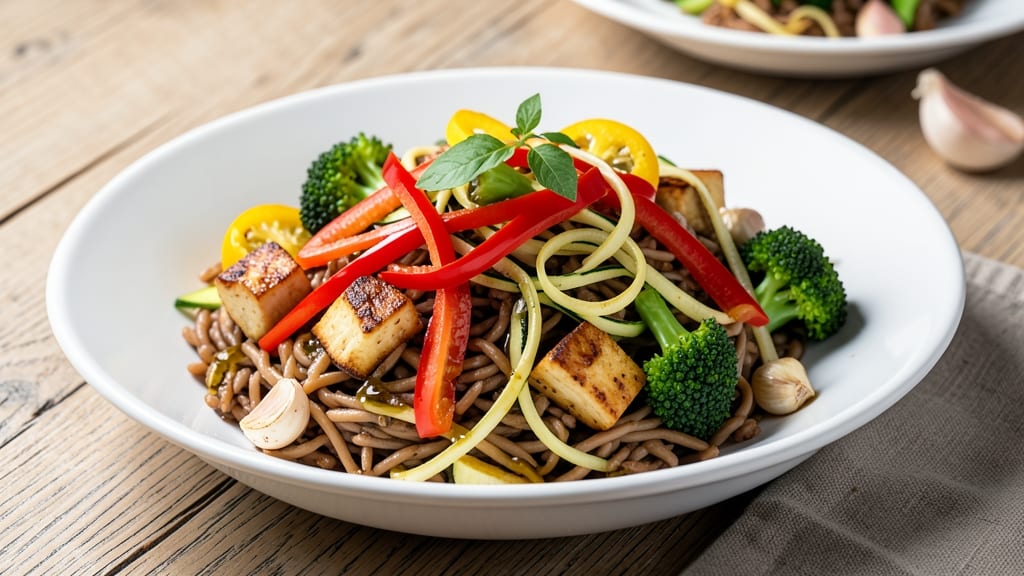
This brown rice pasta with vegetables recipe transforms simple ingredients into a nutrient-packed, one-pan meal that’s both satisfying and balanced. The key lies in roasting vegetables until crispy while keeping the brown rice pasta al dente—creating a perfect texture contrast that elevates every bite.
I’ve refined this dish over years of testing, ensuring it delivers bold flavors without relying on heavy sauces or excessive oil.
What makes this recipe stand out is its versatility—it’s vegan-friendly, packed with fiber, and ready in under 30 minutes. The vegetables (think bell peppers, zucchini, and broccoli) caramelize beautifully, while the brown rice pasta adds a satisfying chew.
Optional protein like tofu or chickpeas can be added for extra staying power, making it a complete dish for any meal. The seasoning is simple but impactful, with garlic, lemon, and herbs tying everything together.
Ingredients for brown rice pasta with vegetables
Simple, nutrient-rich ingredients that deliver bold flavor and satisfying texture in every bite.
| Ingredient | Amount | Notes |
|---|---|---|
| Brown Rice Pasta 🍚 | 8 oz | Dried, uncooked brown rice pasta |
| Red Bell Peppers 🧅 | 2 whole | Seedless, sliced into strips |
| Yellow Bell Peppers 🧅 | 2 whole | Seedless, sliced into strips |
| Zucchini 🥒 | 2 medium | Sliced into half-moons |
| Broccoli Florets 🥦 | 3 cups | Fresh, cut into bite-sized |
| Garlic Cloves 🧄 | 4 cloves | Minced for depth of flavor |
| Extra-Virgin Olive Oil 🫒 | 2 tbsp | High-quality, fruity |
| Lemon Juice 🍋 | 2 tbsp | Freshly squeezed |
| Fresh Basil Leaves 🌿 | ¼ cup | Chopped, for fresh aroma |
| Dried Oregano 🍃 | 1 tsp | Mediterranean blend preferred |
| Salt 🧂 | 1 tsp | Diamond Crystal kosher |
| Black Pepper 🌶️ | ½ tsp | Freshly cracked |
| Firm Tofu 🥬 | 8 oz | Optional protein, pressed |
| Vegetable Broth 💧 | 1 ½ cups | Low-sodium preferred |
The vegetables are the heart of this dish, so prioritize freshness and vibrant color. Local farmers markets often have the best selection of bell peppers and zucchini—look for firm, unblemished produce with crisp stems. Broccoli should have tight florets and bright green stems. For the tofu, Wildwood or Nasoya brands are excellent choices, offering firm texture that holds up well to roasting. The brown rice pasta should be labeled 'whole grain' to ensure maximum fiber content—brands like Lundberg or Barilla are widely available and reliable.
No red bell peppers? Yellow or orange peppers work beautifully—they simply offer a slightly sweeter profile. Zucchini too large? Cut them lengthwise into thin half-moons for even cooking. Fresh basil unavailable? Dried basil at one-third the amount suffices, though fresh is ideal. The tofu can be omitted entirely if you prefer a lighter dish, but if you add it, press it for 20 minutes before cubing to remove excess moisture. For the vegetable broth, Pacific Foods or Imagine brands offer excellent low-sodium options that won't overpower the delicate flavors of the vegetables.
This dish reheats beautifully—simply add a splash of water and warm through. Store leftovers in airtight containers for up to 4 days in the refrigerator. For longer storage, portion into individual containers and freeze for up to 3 months. The pasta absorbs flavors well, so if you're meal prepping, consider adding the lemon juice and herbs just before serving to maintain freshness. The vegetables can be prepped ahead and stored separately until ready to cook, saving time on busy weeknights.
Why You'll Love This Recipe
- One-Pan Wonder: I swear by this recipe when I’m too tired to wash dishes. Toss the pre-chopped veggies—bell peppers, zucchini, and broccoli—right into the pan with the brown rice pasta and olive oil. Ten minutes later, everything’s caramelized and sticky in the best way, no extra pots needed.
- Chewy Crunch Combo: Between us, the brown rice pasta is ridiculously satisfying—firm enough to hold its shape but still tender when al dente. The bell peppers add a bright, slightly sweet crunch, while the broccoli brings that little snap you crave. It’s like a hug for your taste buds.
- Meal Prep MVP: This keeps perfectly for four days in the fridge—honestly, better the second day when the flavors meld. Pack it for lunches or reheat it for a lazy dinner. My college-aged son lives for it because it’s cheap, filling, and doesn’t taste like "leftovers."
- Budget-Friendly Powerhouse: Bell peppers and zucchini are often on sale, and brown rice pasta stretches further than regular pasta. I’ll be real: I double the recipe and freeze half for those weeks when groceries feel tight. Still tastes like a restaurant dish, though.
Step-by-step instructions for brown rice pasta with vegetables
Master this one-pan technique for perfectly al dente pasta and vibrant vegetables every time.
Prepare and Sear the Tofu and Vegetables
Press the 8 oz firm tofu between paper towels for 15 minutes to remove excess moisture, then cut it into ½-inch cubes. Heat a large skillet over medium-high heat and add 1 tablespoon of the 2 tbsp extra-virgin olive oil. Add the tofu and cook for 5-6 minutes until golden brown on all sides. Remove and set aside—this step ensures the tofu develops a crispy exterior while maintaining tenderness.
In the same skillet, add another 1 tablespoon of olive oil. Add the sliced red and yellow bell peppers, zucchini half-moons, and broccoli florets. Sauté for 6-8 minutes until the vegetables begin to soften but still retain their vibrant color and slight crispness. This balance of texture is crucial for a satisfying bite in every forkful.
Cook the Pasta in Vegetable Broth
Add the 8 oz brown rice pasta to the skillet along with the 1.5 cups vegetable broth. Stir gently to combine, ensuring the pasta is fully submerged. Bring to a simmer, then reduce heat to medium-low. Cover and cook for 12-14 minutes, stirring occasionally, until the pasta is al dente with a slight bite. The broth should be mostly absorbed by the end—this creates the perfect sauce consistency.
Here's the thing—brown rice pasta needs slightly more time than regular pasta. Check for doneness by tasting a piece: it should be tender but still offer resistance. If the pasta finishes cooking before the vegetables, simply cover the skillet and let it sit off the heat for a few minutes to prevent overcooking.
Build Flavor with Aromatics and Acid
Add the 4 cloves minced garlic to the skillet and cook for 30 seconds until fragrant. Immediately stir in the 1 tsp dried oregano, 1 tsp salt, and 0.5 tsp black pepper. The oregano will release its earthy aroma, while the salt and pepper enhance all the natural flavors in the dish. Cook for an additional 1 minute to toast the spices slightly.
Remove the skillet from heat and stir in the 2 tbsp lemon juice and 0.25 cup chopped fresh basil leaves. The acidity brightens the dish, cutting through the richness of the tofu and vegetables. The basil adds a fresh herbal note that ties everything together. Taste and adjust seasoning if needed—this is your final opportunity to balance the flavors before serving.
Combine and Finish
Return the tofu to the skillet and toss everything together gently. The residual heat will finish cooking the tofu while warming through the entire dish. If the mixture appears too dry, add 2-3 tablespoons of water to loosen it into a light sauce. The vegetables should be tender-crisp, the pasta perfectly cooked, and the tofu warmed through.
Let the dish rest for 2-3 minutes before serving. This brief resting period allows the flavors to meld and the pasta to absorb any remaining juices. Serve immediately while the vegetables retain their vibrant colors and the pasta maintains its perfect texture. Each bite should deliver a harmonious blend of nutty pasta, crisp-tender vegetables, and protein-rich tofu.
Pro Tips For Making Brown Rice Pasta With Vegetables
- CUT PEPPERS IN HALF FIRST: I learned this the hard way—trying to slice whole bell peppers while they’re still firm leads to uneven strips and wasted time. Halve them first, then slice into thin strips (about ¼-inch thick) so they cook evenly and don’t turn mushy. The seeds slide right out, and you’ll have a more consistent bite every time.
- SALT THE PASTA WATER LATE: Brown rice pasta needs more time to cook than regular pasta, and salting too early makes the water taste flat by the time it’s done. Wait until the water’s boiling again after adding the pasta—about 3 minutes in—then salt generously. This guarantees flavor in every bite, not just the first few minutes.
- STEAM THE BROCCOLI FIRST: Tossing raw broccoli florets into the pan with everything else means they’ll either stay rock-hard or turn to mush before the pasta’s ready. Give them a quick 2-minute steam in a separate pot or microwave (covered, with a splash of water) first. They’ll soften just enough to finish cooking in the pan without falling apart.
- USE A LID FOR THE LAST 2 MINUTES: The pasta’s almost done, but the veggies still look undercooked? Crank the heat to medium and slap a lid on the pan for the final 2 minutes. The trapped steam wilts the zucchini and peppers faster while the pasta absorbs the sauce—no overcooking, no dry pasta, just perfect texture. (Yes, even if you’re impatient like me.)
Essential equipment for this recipe
One-Pan Skillet
This recipe thrives in a 12-inch cast iron skillet—it’s my go-to for even heat distribution and crispy edges. If you don’t own one, a heavy-bottomed stainless steel pan (like All-Clad) works just as well. Avoid nonstick—it can’t handle the high heat needed for caramelized vegetables. 🔥
High-Quality Olive Oil
Use extra-virgin olive oil with a fruity, peppery finish—brands like California Olive Ranch or Colavita elevate the dish. Cheap oil burns easily and lacks flavor depth. I measure 2 tablespoons total, reserving half for searing tofu and the rest for vegetables. A good oil makes all the difference!
Vegetable Mandoline
A mandoline slicer (like the OXO Good Grips) ensures uniform vegetable cuts, which means even cooking. For bell peppers and zucchini, set it to ¼-inch thickness—this guarantees crisp-tender results. If you’re skipping the mandoline, a sharp chef’s knife and steady hand work, but it takes more time. 💡
Instant-Read Thermometer
For perfect pasta, I use a ThermoWorks Thermapen to check the broth’s temperature—it should reach 205°F for al dente brown rice pasta. Without one, taste-test frequently: pasta should have a slight bite after 12-14 minutes. Overcooking turns it mushy, and we’re avoiding that!
Fine-Mesh Strainer
If you’re prepping tofu ahead, a fine-mesh strainer (like OXO Good Grips) helps drain excess water after pressing. Place the pressed tofu in the strainer for 5 minutes before cubing—this prevents a soggy texture. It’s a small step that makes a big flavor impact. ✨
Microplane for Garlic
A microplane (like Barbagroup) minces garlic 3x faster than a knife, plus it creates a paste that blends seamlessly into the dish. For 4 cloves, I plane directly into the skillet—no cleanup, just flavor! If you don’t have one, a garlic press is the next best option. 🧄
Nutrition facts
Frequently asked questions
Can I substitute regular pasta for brown rice pasta in this recipe?
While you can use regular pasta, brown rice pasta offers better texture and nutrition. It has a nutty flavor and higher fiber content that pairs perfectly with the vegetables. If substituting, reduce cooking time by 1-2 minutes since it cooks faster than brown rice pasta. For a lighter option, try chickpea or lentil pasta instead.
How do I prevent the vegetables from getting mushy?
Keep the vegetables moving in the pan and avoid overcrowding. Cook them in batches if needed, and use high heat initially to create a good sear. The key is 6-8 minutes of cooking until they're tender but still slightly crisp. Adding them to the skillet after searing the tofu helps maintain their texture too.
Can I make this recipe ahead of time?
Yes! Prepare all components separately and store them in airtight containers in the fridge for up to 3 days. When ready to serve, simply reheat the pasta with a splash of water or broth, then add the pre-cooked vegetables and tofu. For best results, add fresh lemon juice and basil just before serving to maintain freshness.
What other vegetables work well in this dish?
This recipe is very flexible! Try adding asparagus, mushrooms, or spinach for extra nutrition. For heartier dishes, include cauliflower or sweet potatoes. Just adjust cooking times—harder vegetables like cauliflower may need 2-3 extra minutes in the skillet.
Is this recipe gluten-free?
Only if you use certified gluten-free brown rice pasta. Most brown rice pasta is naturally gluten-free, but always check the label. The other ingredients in this recipe are naturally gluten-free, making it a great option for those with gluten sensitivities when using the right pasta.