
Side Dishes
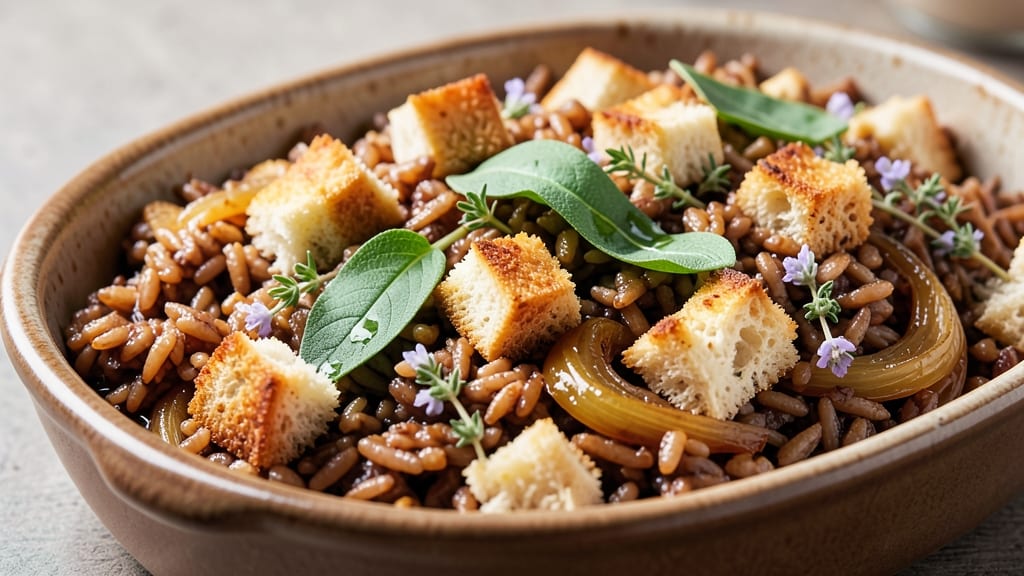
This brown rice stuffing recipe transforms humble ingredients into a side dish with crispy edges and savory depth that rivals holiday classics.
The secret lies in toasting bread cubes until golden, then balancing them with nutty brown rice and aromatic herbs for texture and flavor that stay rich even after reheating.
Perfect for Thanksgiving or weeknight dinners, this stuffing delivers restaurant-quality results with minimal effort. The brown rice absorbs flavors beautifully while maintaining its chewy texture, and the crispy bread cubes add satisfying contrast in every bite. Let's create a stuffing that steals the show without the fuss.
Ingredients for brown rice stuffing
Sixteen ingredients, restaurant-quality texture, and minimal effort for a stuffing that steals the show.
| Ingredient | Amount | Notes |
|---|---|---|
| Long-Grain Brown Rice 🍚 | 2 cups | Uncooked, rinsed thoroughly |
| Day-Old Sourdough Bread 🍞 | 8 cups | Cubed into 1-inch pieces |
| Unsalted Butter 🧈 | ¾ cup | Cold, cubed for toasting |
| Fresh Sage Leaves 🌿 | ½ cup | Chopped finely, stems removed |
| Fresh Thyme Leaves 🌿 | ¼ cup | Chopped finely, stems removed |
| Yellow Onion 🧅 | 1 whole | Diced finely, about 1 cup |
| Celery Stalks 🥬 | 3 whole | Diced finely, about 1 cup |
| Garlic Cloves 🧄 | 4 cloves | Minced finely, peeled |
| Low-Sodium Chicken Broth 🍲 | 2 ½ cups | Homemade or high-quality store-bought |
| Unsalted Chicken Stock 🍲 | 1 cup | For additional depth of flavor |
| Diamond Crystal Kosher Salt 🧂 | 1 ½ tsp | Adjust to taste, freshly ground |
| Freshly Ground Black Pepper 🌶️ | ½ tsp | Cracked peppercorns preferred |
| Extra-Virgin Olive Oil 🫒 | 2 tbsp | For drizzling on bread cubes |
| Parmesan Cheese 🧀 | ½ cup | Freshly grated, finely |
| Fresh Parsley Leaves 🌿 | ¼ cup | Chopped finely, for garnish |
The brown rice is the foundation here—jasmine or short-grain varieties work, but long-grain holds its shape best after reheating. Toast the bread cubes in butter until golden and crisp (don't skip this step—it's non-negotiable for texture). For the herbs, fresh is non-negotiable—dried works in a pinch, but the flavor is noticeably different. I always grab organic sage and thyme from Whole Foods or my local farmers' market, where the leaves are vibrant and fragrant. The onion and celery should be finely diced—think 'stuffing mirepoix'—to create a flavorful base that blends seamlessly with the rice. Pre-chopped celery from the grocery store works fine, but avoid the pre-mixed stuffing vegetables—they're often waterlogged and bland.
No fresh herbs? Dried sage and thyme at half the amount will get you close, but the texture suffers. Running low on chicken broth? Vegetable broth works perfectly—just add a splash of soy sauce for depth. The Parmesan can be swapped for nutritional yeast if you're avoiding dairy, though the flavor will be milder. For extra crispiness, broil the stuffing for 3-5 minutes at the end—watch it like a hawk to avoid burning. The bread cubes should be day-old (or toasted) to prevent sogginess; fresh bread turns mushy faster than you'd think. If you're making this ahead, cook the rice separately and toast the bread cubes the day of serving for maximum crunch.
This stuffing reheats beautifully—cover with foil to retain moisture, then broil for 5 minutes to restore crispiness. Keeps for 4-5 days in the fridge, fully covered, and freezes for up to 3 months for those last-minute holiday dinners. I always portion mine into individual ramekins before freezing—just pop them in the oven straight from the freezer. For serving, a drizzle of olive oil and extra Parmesan elevates it instantly. Leftovers make fantastic sandwiches the next day—toast the bread first to revive the texture.
Why You'll Love This Recipe
- No-Cube Hassle: I just toss day-old sourdough into chunks—no fancy dice work here. The brown rice soaks up the bread’s crunch while staying tender, and honestly? That’s the magic. (Yes, even on a Tuesday night.)
- Earthy Sage Magic: Fresh thyme and sage aren’t just garnish—they sing with the nutty brown rice and buttery bread. One whiff of that toasted herb aroma, and you’ll understand why I keep a bunch in my fridge year-round.
- Dual-Duty Star: This stuffing works as a side or a main—stuff a roasted chicken, pile it on toast with gravy, or serve it cold in wraps. My college kids devour it straight from the pan, no judgment here.
- Budget Bulk: Brown rice stretches the sourdough further than white, and the flavor’s so rich you won’t miss the extra cost. Plus, leftovers reheat like a dream—just add a splash of broth and crisp it under the broiler. My wallet and taste buds win.
Step-by-step instructions for brown rice stuffing
Transform simple ingredients into a rich, crispy-edged stuffing with perfect texture and herbed depth.
👨🍳 Step 1: Toast the Bread Cubes for Crispy Edges
Preheat your oven to 375°F and line two large baking sheets with parchment paper. Spread the 8 cups of day-old sourdough bread cubes evenly across the sheets, leaving 1 inch between each cube. Drizzle them lightly with 2 tablespoons of extra-virgin olive oil and toss gently to coat.
Bake for 15-18 minutes, stirring once halfway through, until the bread cubes are golden brown and crisp around the edges. Remove them from the oven and transfer to a large bowl. This step is crucial—properly toasted bread creates the perfect textural contrast in your stuffing. If you prefer extra crispiness, increase the time by 2-3 minutes but watch closely to avoid burning.
🍳 Step 2: Cook the Rice Until Perfectly Tender
While the bread toasts, rinse the 2 cups of long-grain brown rice thoroughly under cold water until the water runs clear. This removes excess starch that can make the rice gummy. In a medium saucepan, combine the rice with 2.5 cups of low-sodium chicken broth and bring to a boil over high heat.
Once boiling, reduce the heat to low, cover the pan with a tight-fitting lid, and simmer for 40-45 minutes until the rice is tender and the liquid is completely absorbed. If the rice isn't fully cooked after 45 minutes, add 2-3 tablespoons of water and continue cooking until done. Fluff the rice gently with a fork and let it cool slightly before mixing with the other ingredients.
🥘 Step 3: Sauté the Aromatic Vegetables and Herbs
In a large skillet, melt 0.5 cup of unsalted butter over medium heat. Add the 1 whole yellow onion, 3 whole celery stalks, and 4 cloves of garlic, all diced finely. Cook for 8-10 minutes, stirring occasionally, until the vegetables are softened and the mixture is fragrant. The onions should be translucent, and the celery should yield slightly when pressed with a fork.
Reduce the heat to low and stir in the 0.5 cup of fresh sage leaves and 0.25 cup of fresh thyme leaves, both chopped finely. Cook for an additional 2 minutes to infuse the herbs' flavors into the butter. Remove the skillet from heat and let the mixture cool for 5 minutes before combining with the other ingredients.
🥘 Step 4: Combine All Ingredients for Maximum Flavor
In a large mixing bowl, combine the toasted bread cubes, cooked brown rice, sautéed vegetable and herb mixture, and 1 cup of unsalted chicken stock. Gently fold everything together with a wooden spoon, being careful not to break up the bread cubes too much. Season with 1.5 teaspoons of diamond crystal kosher salt and 0.5 teaspoon of freshly ground black pepper, mixing well to distribute the seasoning evenly.
For extra richness, stir in the 0.5 cup of freshly grated parmesan cheese. The cheese adds a savory depth that complements the herbed notes. Taste the mixture and adjust the seasoning if needed—this is the moment to ensure every bite will be perfectly balanced. The stuffing should be moist but not wet, with the bread cubes retaining their crispy edges.
⏰ Step 5: Bake Until Golden and Bubbly
Transfer the stuffing mixture to a greased 9x13-inch baking dish and spread it evenly. For extra crispy edges, press the stuffing gently into the dish to create a smooth top. Bake at 375°F for 20-25 minutes, until the top is golden brown and the stuffing is heated through.
Watch for the edges to turn a deep golden color and the center to bubble slightly. If the top begins to brown too quickly, tent the dish loosely with aluminum foil. Once baked, let the stuffing rest for 5-10 minutes before serving. Garnish with 0.25 cup of finely chopped fresh parsley leaves for a pop of color and freshness. The result should be a stuffing with crispy, herbed edges and a moist, flavorful interior—perfect for any holiday table.
Pro Tips For Making Brown Rice Stuffing
- Toast the Bread First: Cut the sourdough into cubes, toss them in a cold skillet with 1 tablespoon of butter, and cook over medium-low heat until golden—about 3 minutes per side. I learned this the hard way: skipping this step means soggy stuffing later, and nobody wants that.
- Rinse the Rice Twice: Before cooking, rinse the brown rice under cold water until the water runs clear—do this twice. The starch clings to unrinsed rice, making it gummy when mixed with the bread. Trust me, your stuffing will thank you.
- Dry the Herbs Well: Pat the fresh sage and thyme leaves very dry with a paper towel before chopping—wet herbs release too much moisture and turn the stuffing into a sad, damp mess. This isn’t about pretty presentation; it’s about texture.
- Mix Cold Butter In: Fold in the unsalted butter at the end, cut into small cubes, and let it melt into the warm stuffing off the heat. Adding it hot makes the bread greasy; cold butter creates pockets that crisp up beautifully when baked. Sounds weird, but it works.
Pro cooking tips for this dish
Toast Bread Perfectly
Never skip toasting the bread cubes—this creates the signature crunch. Spread them in a single layer on baking sheets with 1 inch between each cube. Use day-old sourdough (it's drier and holds up better) and toast at 375°F for 15-18 minutes, stirring once halfway.
I like to add 2 tbsp olive oil while toasting for extra richness, but don't overcrowd the pan or they'll steam instead of crisp. 🔥
Rinse Rice Thoroughly
Brown rice can turn gummy if not rinsed properly. Place 2 cups uncooked rice in a fine-mesh strainer and rinse under cold water for 30 seconds, rubbing the grains between your fingers to remove starch.
Repeat until the water runs clear. This step is non-negotiable—skipping it means mushy stuffing. Cook the rice in 2.5 cups broth at a 1:1.25 ratio (rice to liquid) for optimal texture.
Sauté Vegetables Low and Slow
Cook the onion, celery, and garlic at medium-low heat for 8-10 minutes until soft but not browned. High heat burns the vegetables before they soften. Add the herbs just before removing from heat to preserve their bright flavors.
I always use fresh sage and thyme—dried herbs work in a pinch, but the texture suffers. For extra depth, add 1 tsp soy sauce with the herbs.
Season Gradually
Start with 1.5 tsp kosher salt and 0.5 tsp black pepper, then taste before adding more. Brown rice absorbs flavors differently than white rice—you'll need 10-15% more seasoning to compensate.
The Parmesan adds umami, but if you're avoiding dairy, nutritional yeast works well (though the flavor differs). Taste as you go—this is where most home cooks over-salt.
Bake with Confidence
Press the stuffing gently into the baking dish to create a smooth top—this helps the edges crisp. Bake at 375°F for 20-25 minutes, then broil for 2-3 minutes if you want extra crispiness.
Watch closely—the edges brown quickly! If the top browns too fast, tent with foil. Let it rest 5-10 minutes before serving—this lets the juices redistribute for maximum moisture.
Reheat Like a Pro
For best results, cover the baked stuffing with foil and reheat at 350°F for 10-15 minutes. To restore crispiness, broil for 3-5 minutes uncovered at the end. If reheating from fridge, add 1-2 tbsp broth to prevent drying out.
Leftovers keep 4-5 days refrigerated or 3 months frozen—portion into ramekins before freezing for easy reheating. ✨
Nutrition facts
Frequently asked questions
Can I use white rice instead of brown rice in this stuffing?
While you can substitute white rice, the texture and flavor will differ significantly. Brown rice adds a nutty depth and chewy texture that complements the crispy bread cubes. If you prefer white rice, use 1.5 cups uncooked (cooked yield will be similar) and reduce the broth by 0.5 cup since white rice absorbs less liquid. The stuffing will be lighter but lose that hearty, wholesome quality.
How do I prevent my stuffing from getting soggy?
The key is proper toasting and baking technique. Always toast bread cubes until golden and crisp (no steaminess!) and avoid overmixing after adding broth. For extra insurance, spread the stuffing in a 9x13-inch baking dish and press gently to create a smooth top—this helps edges crisp. If reheating, cover with foil first to trap moisture, then broil 2-3 minutes at the end for crispiness.
What's the best bread to use for maximum crunch?
Day-old sourdough is ideal for its sturdy texture, but you can also use crusty baguettes, Italian bread, or even cornbread. Avoid soft sandwich bread—it turns mushy. For extra crunch, try toasted croutons mixed in (reserve some for topping). Pro tip: Toast bread cubes in 375°F oven until they're deep golden—this creates the perfect contrast with the tender rice.
Can I make this stuffing ahead of time?
This stuffing reheats beautifully. Assemble completely (including baking), then cool and refrigerate for up to 4 days or freeze for 3 months. To reheat: Cover with foil and bake at 350°F for 15-20 minutes, then broil 3-5 minutes uncovered for crispy edges. For freezing, portion into individual ramekins—just pop them in the oven straight from frozen (add 5-10 minutes to baking time).
How can I make this stuffing gluten-free?
Replace bread cubes with gluten-free bread (toasted until crisp) or gluten-free corn bread crumbles. Use gluten-free chicken broth and check that your Parmesan is certified gluten-free. For extra binding, add 1/4 cup gluten-free flour to the rice while cooking. The texture will be slightly different but still delicious—just expect the crunch to be more delicate.