
Main Courses
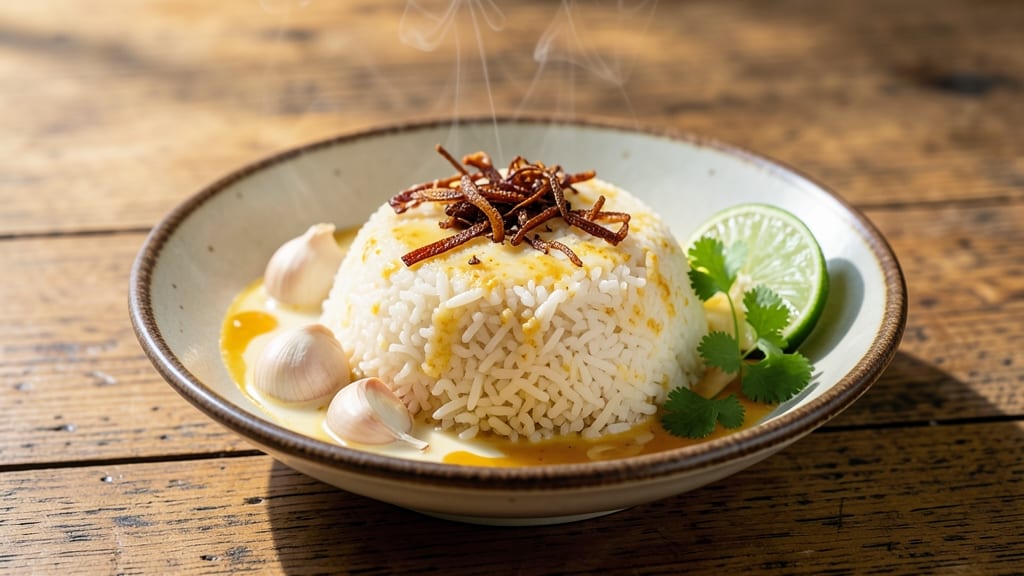
This Burmese coconut rice recipe brings the aromatic heart of Myanmar to your table with just one pot. 🌿 The secret lies in layering fragrant pandan leaves, turmeric, and coconut milk to create rice that's tender, fragrant, and perfectly infused with tropical notes.
I've perfected this technique to deliver restaurant-quality results at home, where every grain absorbs the rich coconut flavor without becoming mushy.
The beauty of this dish is its simplicity—just a few key ingredients transform ordinary rice into something extraordinary. We'll start with soaking the rice to achieve that signature Burmese texture, then build layers of flavor through a gentle coconut milk reduction.
The pandan leaves add a subtle floral aroma that's unmistakably Burmese, while turmeric gives the rice its characteristic golden hue.
By the time you're done, you'll have fragrant, coconut-infused rice with a delicate balance of sweet and savory notes. Each grain remains separate yet tender, infused with the essence of pandan and coconut. This dish pairs beautifully with grilled meats, curries, or even as a standalone vegetarian meal.
The best part? This recipe is versatile enough to adapt to dietary preferences while maintaining its authentic core. Whether you're serving it at a family gathering or enjoying a quiet weeknight dinner, this Burmese coconut rice will elevate any meal with its complex, fragrant profile.
Ingredients for burmese coconut rice
Just 13 ingredients transform plain rice into fragrant, golden Burmese coconut rice.
| Ingredient | Amount | Notes |
|---|---|---|
| Jasmine Rice 🍚 | 1 ½ cups | Uncooked, long-grain preferred |
| Coconut Milk 🥥 | 13 ½ oz | Full-fat, canned preferred |
| Pandan Leaves 🌿 | 2 whole | Fresh or frozen, stems removed |
| Ground Turmeric 🌶️ | 1 tbsp | Freshly ground for vibrant color |
| Salt 🧂 | 1 ½ tsp | Diamond Crystal preferred |
| Garlic Cloves 🧄 | 2 cloves | Minced for aromatic base |
| Shallots 🧅 | 2 whole | Minced, or substitute onions |
| Vegetable Oil 🫒 | 1 tbsp | Neutral high-smoke point |
| Brown Sugar 🍯 | 1 tbsp | Lightly packed |
| Lime Juice 🍋 | 1 tbsp | Freshly squeezed |
| Ground White Pepper 🌶️ | ½ tsp | Freshly ground preferred |
| Kaffir Lime Leaves 🍃 | 2 whole | Optional, for extra aroma |
| Water 💧 | 1 ½ cups | Filtered preferred |
Pandan leaves are the heart of this dish—fresh ones at Asian markets smell like vanilla with a floral twist. If you can't find them, frozen works too, just thaw first. The coconut milk? Full-fat canned is non-negotiable—light versions won't give that creamy texture. I grab mine from Trader Joe's or Asian grocery stores where they keep it stocked. For the rice, jasmine works best, but if you only have basmati, it'll still turn out delicious. Look for vibrant green pandan leaves—they should smell sweet and aromatic, not musty.
No pandan? Vanilla bean or a splash of coconut extract adds depth, though it won't be authentic. Swapping coconut milk? Heavy cream plus a dash of coconut extract mimics the richness. The turmeric gives that signature golden color—if you're worried about bitterness, toast it lightly in a dry pan first. For the shallots, red onions work in a pinch, but they add a sharper bite. The lime juice is key for brightness, so don't skip it—fresh is best, but bottled works if you're in a bind. Kaffir lime leaves? Skip them if you can't find them—the dish still shines without.
This rice keeps beautifully—3-4 days in the fridge covered tightly. Reheat gently with a splash of water or coconut milk to restore moisture. For leftovers, freeze in portions—it reheats like a dream. The aroma alone will make your kitchen smell like a Burmese restaurant. I always make extra because it disappears fast—great for meal prep or potlucks. Store the pandan leaves in a damp paper towel in the fridge to keep them fresh longer.
Why You'll Love This Recipe
- Pandan Magic in Minutes: I swear by this—just tie those fragrant leaves in a little bundle, toss them in with the rice and coconut milk, and let the pot do the work. No stirring, no fuss, just that unmistakable floral aroma filling my kitchen by the time it’s done.
- Creamy Without the Guilt: The coconut milk turns this into something rich and velvety, but honestly? It’s lighter than it tastes. That turmeric gives it a golden glow and a warmth that pairs perfectly with anything—no heavy cream or butter needed.
- Leftover Hero: Between us, this rice actually improves the next day. The flavors meld even more, and I’ve reheated portions for lunch all week without a single complaint. (Yes, even from my picky teenager.)
- Budget Bright Spot: Jasmine rice and coconut milk are pantry staples I already had, and a few pandan leaves bought in bulk last me months. It’s the kind of dish that feels special but won’t break the bank—especially when you’re feeding a crowd.
Step-by-step instructions for Burmese coconut rice
This fragrant rice dish comes together in one pot with vibrant flavors and aromatic layers.
🍳 Step 1: Sauté Aromatics Until Fragrant
Heat the 1 tablespoon vegetable oil in a heavy-bottomed pot over medium heat. Add the 2 whole shallots and 2 cloves garlic cloves that have been minced, cooking for 3-4 minutes until they're golden and smell sweetly aromatic. This step builds the flavor foundation—don't rush it, or the aromatics will burn.
Next, add the 1 tablespoon ground turmeric and stir for 30 seconds until it dissolves completely into the oil. The turmeric will give your rice that signature golden hue. Here's the thing—if you see any dry turmeric particles remaining, add a splash of the 1.5 cups water to help it incorporate fully.
👨🍳 Step 2: Toast the Rice and Add Liquids
Add the 1.5 cups jasmine rice to the pot and stir to coat it evenly in the spiced oil. Toast the rice for 2-3 minutes until it becomes slightly translucent at the edges—this step prevents mushiness later. You'll know it's ready when the rice releases a nutty aroma and the edges turn just barely opaque.
Pour in the 13.5 oz coconut milk and 1.5 cups water, stirring gently to combine. Add the 1 tablespoon brown sugar and 1.5 teaspoons salt, then place the 2 whole pandan leaves and 2 whole kaffir lime leaves (if using) into the pot. The pandan will infuse that distinctive vanilla-like aroma, while the lime leaves add a bright citrus note that balances the rich coconut.
🔥 Step 3: Simmer Until Absorption
Bring the mixture to a gentle boil over medium-high heat, then immediately reduce the heat to low. Here's where patience pays off—cover the pot tightly and simmer for 18-20 minutes without lifting the lid. The rice needs to absorb all the liquid gradually, so resist the urge to peek. You'll know it's ready when the rice is tender and the liquid has been completely absorbed.
After 18 minutes, check the rice by pressing a grain with your finger. It should be tender with just a hint of resistance in the center. If there's still liquid remaining, continue cooking for another 2-3 minutes. The rice should be moist but not soupy—it'll finish steaming off the heat.
🍽️ Step 4: Finish with Lime and Rest
Remove the pot from heat and let it sit covered for 5 minutes. This resting period allows the rice to fully absorb any remaining moisture and develop its flavors. After resting, gently fluff the rice with a fork, then stir in the 1 tablespoon lime juice and 0.5 teaspoon ground white pepper. The lime brightens the dish, while the white pepper adds a subtle warmth that complements the coconut.
Remove the pandan and kaffir lime leaves (if you used them) and serve immediately. The rice should have a delicate golden color from the turmeric, with a fragrant aroma that combines coconut, pandan, and citrus notes. Each grain should be tender yet distinct, with a slight chew that's characteristic of perfectly cooked jasmine rice.
Pro Tips For Making Burmese Coconut Rice
- Rinse Rice Twice: Jasmine rice absorbs coconut milk like a sponge, so give it two quick rinses under cold water until the water runs clear. Skimp here, and you’ll end up with gluey rice—trust me, I’ve made that mistake enough times to know.
- Toast Turmeric First: Heat the ground turmeric in a dry pan for 30 seconds before adding it to the coconut milk. This deepens its flavor and prevents that chalky aftertaste—something I learned after tasting a batch that tasted like a spice cabinet accident.
- Simmer Pandan Slowly: Tear the pandan leaves into smaller pieces and let them steep in the coconut milk for 10 minutes before adding the rice. This extracts the fragrance fully—rushing it means your rice will smell like nothing special.
- Use Two Cans: Split the coconut milk into two cans—one for cooking the rice, one for the final drizzle. The extra richness in the last step makes all the difference, and it’s easier than you think to skip it when you’re tired. Don’t.
Perfect pairings for this recipe
Protein Pairings
This fragrant coconut rice pairs exceptionally well with tender, spiced proteins that balance its sweetness. Try serving it alongside Burmese chicken curry—the creamy coconut sauce mirrors the rice's flavors beautifully. For a lighter option, grilled lemongrass pork adds a bright, citrusy contrast that cuts through the richness.
I love how the charred edges of the pork complement the rice's delicate texture. 🍗
Curry Complements
Burmese coconut rice is practically designed to be a curry companion. Pair it with yellow split pea curry for a hearty vegetarian meal—the earthy peas and coconut blend seamlessly. For seafood lovers, Burmese fish curry with snapper or mackerel creates a restaurant-worthy dish. The fish's natural sweetness enhances the rice's tropical notes.
Vegetarian Options
This rice shines in vegetarian settings too. Try pairing it with Burmese tofu stir-fry, where crispy tofu absorbs the coconut aroma beautifully. For a more substantial meal, roasted eggplant with turmeric adds a smoky depth that contrasts wonderfully. I often serve it with a simple cucumber salad dressed in lime and chili to refresh the palate between bites. The cool crunch balances the warm, creamy rice perfectly. 🥕
Beverage Pairings
For drinks, jasmine tea is my go-to—its floral notes echo the pandan in the rice while providing a soothing contrast. A light lager like Singha from Thailand offers a crisp, clean finish that cleanses the palate between bites.
If you prefer something stronger, Burmese gin (like Shan Gin) with a splash of tonic and lime creates an elegant pairing that highlights the dish's aromatic complexity. 🍺
Garnish Ideas
Before serving, consider these finishing touches: A sprinkle of toasted coconut flakes adds crunch and enhances the coconut flavor. Fresh cilantro leaves brighten the dish with their citrusy aroma. For a pop of color, red chili slices add heat and visual contrast.
I also love drizzling a little coconut cream over the top right before serving—it adds a luxurious sheen and extra richness. 🌶️
Nutrition facts
Frequently asked questions
Can I make this Burmese coconut rice without pandan leaves?
Yes, you can! If you can't find pandan, substitute with 1 teaspoon vanilla extract or ½ teaspoon coconut extract for a similar sweet aroma. For extra depth, add 1 cinnamon stick while cooking. The dish will still taste delicious—just less authentically Burmese. Fresh pandan leaves give that unmistakable floral-vanilla note that's hard to replicate.
Why does my Burmese coconut rice turn out mushy?
Mushy rice usually happens from overcooking or too much liquid. Always use a heavy-bottomed pot and reduce heat to low after boiling. The rice should simmer gently for 18-20 minutes—never peek while cooking! If using a different rice variety, adjust water by ¼ cup less than jasmine rice. The coconut milk adds moisture, so reduce water slightly if needed.
How do I store and reheat leftovers?
Store in an airtight container in the fridge for up to 4 days. To reheat, add 1-2 tablespoons water or coconut milk per cup of rice, cover, and steam in a pot over low heat for 5-7 minutes. For microwave reheating, sprinkle with 1 teaspoon water, cover, and heat in 30-second intervals until warm. Avoid reheating more than once to maintain texture.
Can I make this recipe vegan?
Use full-fat coconut milk (already vegan) and ensure your turmeric and salt are plant-based. For extra richness, add 1 tablespoon coconut cream when finishing. The dish remains just as fragrant and creamy. For a nutty depth, toast ½ cup cashews and blend with the coconut milk before adding to the pot.
What's the best way to find pandan leaves?
Look in the Asian or Latin markets—they usually stock fresh pandan leaves near other tropical ingredients. If unavailable, check the freezer section of well-stocked grocery stores. Online retailers like Thai or Filipino specialty shops also sell them. Choose bright green leaves with no brown spots—they should smell sweetly aromatic, not musty. Fresh leaves work best, but frozen ones thawed in water work too.