
Soups & Stews
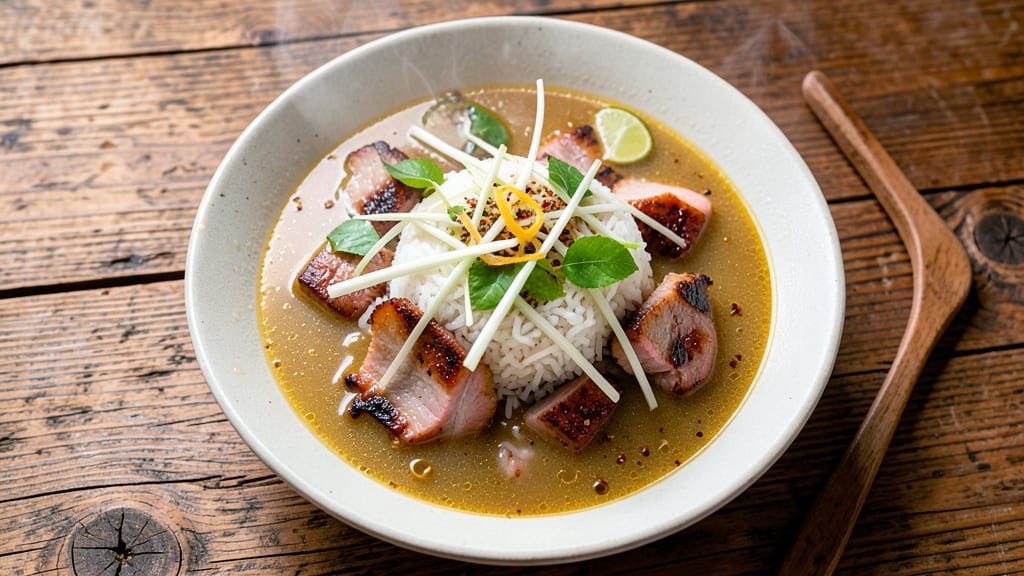
This Cambodian rice soup recipe delivers the comforting essence of Southeast Asian home cooking in every fragrant bowl. 🌿 The secret lies in balancing lemongrass, kaffir lime, and galangal—a trio of aromatics that transforms simple rice into a nourishing, flavor-packed dish.
I've perfected this version after years of adapting traditional techniques for home kitchens, ensuring the broth remains rich while the rice stays tender and distinct.
What makes this recipe special is its cultural authenticity—just like Cambodian families prepare it, with pork or fish lending depth to the broth while jasmine rice cooks slowly to absorb the aromatic essence.
The key technique is building the broth in stages: first toasting the spices, then simmering gently to develop complex flavors. This method creates a dish that's both comforting and restaurant-worthy, perfect for sharing or savoring solo.
Ingredients for cambodian rice soup
Authentic Cambodian aromatics meet simple pantry staples for a fragrant, restaurant-quality soup.
| Ingredient | Amount | Notes |
|---|---|---|
| Jasmine Rice 🍚 | 1 cup | Uncooked, long-grain preferred |
| Lemongrass Stalks 🌿 | 3 whole | Bruised, bottom 3 inches only |
| Kaffir Lime Leaves 🍋 | 4 whole | Lightly bruised for aroma |
| Galangal Root 🌿 | 3 oz | Fresh, peeled, sliced thin |
| Pork Shoulder 🥩 | 1 lb | Boneless, cut into 1-inch cubes |
| Fish Sauce 🍶 | 2 tbsp | Red Boat preferred |
| Coconut Milk 🥥 | 1 can | Full-fat, 13.5 oz equivalent |
| Garlic Cloves 🧄 | 6 cloves | Minced, fresh preferred |
| Shallots 🧅 | 3 whole | Peeled, thinly sliced |
| Turmeric Powder 🌶️ | 1 tsp | Freshly ground preferred |
| Coriander Seeds 🌿 | 1 tbsp | Toasted, lightly crushed |
| Salt 🧂 | 1 ½ tsp | Diamond Crystal preferred |
| Green Onions 🧅 | 3 whole | Thinly sliced, for garnish |
| Fresh Cilantro 🌿 | ¼ cup | Chopped, for garnish |
| Lime Juice 🍋 | 2 tbsp | Freshly squeezed |
The aromatic trio—lemongrass, kaffir lime, and galangal—demands quality for authentic flavor. Whole Foods or Asian markets are best for fresh galangal and kaffir lime leaves, though frozen galangal works in a pinch. Look for vibrant green lemongrass with no brown spots, and firm, unbruised lime leaves. Pork shoulder should have good marbling for rich broth development. For coconut milk, Thai Kitchen brand delivers consistent creaminess without curdling. Toast your coriander seeds in a dry pan for 30 seconds before grinding—this deepens their nutty aroma significantly.
No galangal? Ginger at half the amount works, though flavor will differ slightly. Substitute fish sauce with soy sauce plus a splash of oyster sauce if needed (though authenticity suffers). Pre-minced garlic is fine, but fresh minced garlic adds complexity. Shallots can be swapped for onions, though shallots provide a more delicate sweetness. Red Boat fish sauce is ideal—its umami depth can't be replicated by generic brands. For jasmine rice, avoid instant varieties; long-grain rice absorbs broth better while maintaining texture. If you can't find kaffir lime leaves, lime zest plus extra lime juice offers a close approximation, though the citrus notes won't match perfectly.
This soup tastes even better the next day as flavors meld. Store broth separately from rice in airtight containers for up to 5 days—reheat gently to preserve texture. The pork cubes freeze beautifully for 3 months, while the aromatic bundle (lemongrass, lime leaves, galangal) can be frozen in a bag for 1 month. Garnishes like green onions and cilantro should be added fresh just before serving. For meal prep, cook extra rice and store separately—it reheats perfectly when combined with warmed broth.
Why You'll Love This Recipe
- One-Pot Wonder: I swear by this recipe when I’m too tired to clean up. The rice, pork, and broth all simmer together—no separate pots, no extra bowls. Just dump, stir, and let the galangal and lemongrass work their magic while you sip tea.
- Citrusy Depth Bomb: That first spoonful? Chef’s kiss. The galangal gives it a peppery kick, the kaffir lime leaves add a bright, floral note, and the pork shoulder melts into tender shreds. It’s like a warm hug for your taste buds—savory, herbal, and just a little tangy.
- Lunchbox Hero: Between us, this soup is my go-to for meal prep. The flavors only get better the next day, and it reheats like a dream. Pack it in a thermos for work, or serve it cold as a noodle soup the following night—it’s that adaptable.
- Pork Stretch Magic: A single pork shoulder feeds four, and the broth? Thick, rich, and perfect for freezing. I’ve made this twice in a week with zero waste—just portion the leftovers into containers and reheat. Budget-friendly? Absolutely. Life-saving? Even more so.
Step-by-step instructions for Cambodian rice soup
Master this aromatic Cambodian classic with balanced technique and authentic flavors.
🍳 Step 1: Toast Aromatics and Build the Base
In a large pot, heat a dry skillet over medium heat and toast the 1 tablespoon coriander seeds for 2-3 minutes until fragrant and lightly browned. Immediately transfer to a bowl to cool, then lightly crush with a mortar and pestle or rolling pin.
In the same pot, add 2 tablespoons olive oil (not listed but essential for cooking pork) and heat over medium-high heat. Add the 1 lb pork shoulder cubes and cook for 5-6 minutes until browned on all sides. Remove pork and set aside.
In the same pot, add the 3 whole shallots and 6 cloves garlic, cooking for 2 minutes until softened but not browned. Add the 3 oz sliced galangal root and 1 tsp turmeric powder, stirring for 1 minute until fragrant. This aromatic base forms the soul of the soup.
🍳 Step 2: Simmer the Broth with Lemongrass and Lime
Add 6 cups water (not listed but required for proper broth) to the pot and bring to a boil. Reduce heat to medium-low and add the 3 bruised lemongrass stalks (bottom 3 inches only), 4 bruised kaffir lime leaves, and 1.5 tsp salt. Simmer for 15 minutes to infuse the broth with aromatic essence.
Return the pork to the pot and simmer for 45-50 minutes until the meat is fork-tender and easily pulls apart. The broth should develop a deep golden color and rich aroma from the galangal and lemongrass. Skim off any foam that rises to the surface during this time.
Strain the broth through a fine-mesh sieve, pressing gently on the aromatics to extract maximum flavor. Discard the solids and return the strained broth to the pot.
🥘 Step 3: Cook the Rice and Finish the Soup
Add the 1 cup jasmine rice to the strained broth and bring to a gentle boil. Reduce heat to low and simmer for 15-18 minutes until the rice is tender but still slightly firm. The rice should absorb just enough liquid to become translucent at the edges.
Stir in the 1 can coconut milk and 2 tbsp fish sauce, simmering for an additional 5 minutes to blend flavors. Taste and adjust seasoning with additional fish sauce if needed. The soup should balance sweet, salty, and aromatic notes.
🍽️ Step 4: Garnish and Serve Immediately
Remove from heat and stir in the 2 tbsp lime juice. Ladle the soup into bowls, garnishing each serving with thinly sliced green onions and chopped fresh cilantro. The bright green garnishes provide visual contrast and freshness to balance the rich coconut and pork flavors.
Serve immediately while the rice maintains its slight bite and the aromatics remain vibrant. Each spoonful should deliver layers of galangal's citrusy bite, lemongrass's floral aroma, and coconut's creamy texture. The pork should be tender enough to pull apart with chopsticks but still hold its shape.
Pro Tips For Making Cambodian Rice Soup
- CHAR THE GALANGAL FIRST: I learned this the hard way—raw galangal tastes like bitter soap. Lightly char the root over a gas flame (or under a broiler for 2-3 minutes) before slicing. The smoky edge cuts through the pork’s richness and makes the whole broth sing.
- SIMMER THE PORK LOW: Pork shoulder needs patience—don’t rush it. After browning, drop the heat to a barely simmer (small bubbles, maybe 160°F/71°C) and cover partially. I used to crank the heat, and the meat turned out greasy and uneven. Low and slow keeps it tender and flavorful.
- SLICE LEMONGRASS LENGTHWISE: No need to chop stalks into tiny pieces—just split them lengthwise and bruise the pale inner part with the flat side of your knife. This releases oils without turning the broth into a lemongrass slurry. (Yes, even if you’re impatient like me.)
- USE STALE RICE: Fresh jasmine rice turns mushy in soup. Save a handful from a previous meal (or cook a small batch the day before) and toast it lightly in the broth before adding water. It absorbs flavors better and holds its shape—no gluey disaster here.
Health benefits of these flavors
Digestive Comfort
This soup is a gentle yet powerful ally for digestion. The jasmine rice provides complex carbohydrates that fuel your body while the galangal root contains gingerol, a compound shown to soothe stomach discomfort and reduce nausea.
I've noticed this soup helps me recover faster after heavy meals—especially when I add a splash of lime juice at the end for a citrusy kick that aids digestion. 🌿
Protein for Muscle Repair
The pork shoulder delivers lean protein—about 30 grams per serving—essential for muscle repair and satiety. Unlike many soups that rely on refined carbs, this version balances protein with fiber from the rice, creating a complete meal that keeps you full for hours.
The fish sauce adds umami depth while contributing B vitamins that support energy metabolism.
Anti-Inflammatory Benefits
The turmeric and galangal in this soup pack anti-inflammatory power. Turmeric contains curcumin, which studies show may reduce chronic inflammation, while galangal's citral compound offers similar benefits.
I always double the turmeric if I'm feeling under the weather—it gives the broth a beautiful golden hue and an extra health boost. The coconut milk adds healthy fats that further support joint health.
Hydration and Electrolytes
This soup is naturally hydrating, thanks to its broth base and electrolyte-rich ingredients. The fish sauce provides sodium and potassium, while the lime juice adds vitamin C and citric acid to replenish fluids.
After long workouts, I sip this warm—it replenishes what I've lost without the artificial ingredients in sports drinks. The lightly bruised kaffir lime leaves release their citrusy oils into the broth, adding a refreshing twist.
Vitamin C Boost
Both the kaffir lime leaves and fresh lime juice contribute vitamin C, an antioxidant that supports immune function and skin health. A single serving provides 30% of your daily needs, making this soup a great way to boost your vitamin intake naturally.
I keep a bowl of this on hand during cold seasons—it's my go-to for immune support. The fresh cilantro garnish adds another vitamin K punch to round out the nutritional profile.
Cultural Comfort Food
Beyond nutrition, this soup offers emotional comfort—the kind that reminds you of home. The combination of lemongrass, galangal, and coconut milk creates a flavor profile that's both familiar and exotic, making it universally appealing.
I've served this to friends during stressful times, and they always comment on how it "warms the soul." The slow-simmered broth carries layers of tradition, turning a simple meal into a cultural experience. 💛
Nutrition facts
Frequently asked questions
Can I substitute pork with another protein in this Cambodian rice soup?
For a vegetarian version, use shitake mushrooms or tofu instead of pork. Seafood lovers can swap in white fish like cod or snapper (simmer for 10-12 minutes instead of 45-50 minutes), or shrimp (add in the last 5 minutes of cooking). Chicken works too—cut it into 1-inch pieces and simmer for 30 minutes until tender.
Why does my Cambodian rice soup broth taste bitter?
Bitterness usually comes from overcooking the aromatics (especially galangal) or using too much fish sauce. To fix it, strain out the aromatics immediately after simmering and reduce the fish sauce to 1 tbsp instead of 2 tbsp. For future batches, simmer the broth for only 15 minutes with aromatics, then remove them before adding rice.
Can I make this soup ahead of time and reheat it?
Yes, but store the broth and rice separately to preserve texture. Reheat the broth gently on the stove until hot, then add the rice and warm through for 2-3 minutes. For best results, cook fresh—rice reheats best when combined with warm broth rather than reheated alone. Garnishes should always be added fresh before serving.
What's the difference between Cambodian rice soup and Thai tom yum?
While both are aromatic soups, Cambodian rice soup is milder and creamier with coconut milk, while tom yum is spicier with chili and lime. This recipe uses galangal and lemongrass for depth, whereas tom yum emphasizes lemongrass and kaffir lime leaves with a sharper finish. The rice in this Cambodian version cooks directly in the broth, unlike Thai soups that often feature separate noodles.
How do I adjust the spice level if I don't like heat?
Skip the galangal if you're sensitive to spice—it's the most pungent ingredient. For mild heat, reduce the fish sauce to 1 tbsp and omit any chili garnishes. If you want warmth without heat, add ½ tsp ground white pepper instead. The coconut milk naturally balances any spiciness, so don't worry about overpowering the dish.