
Main Courses
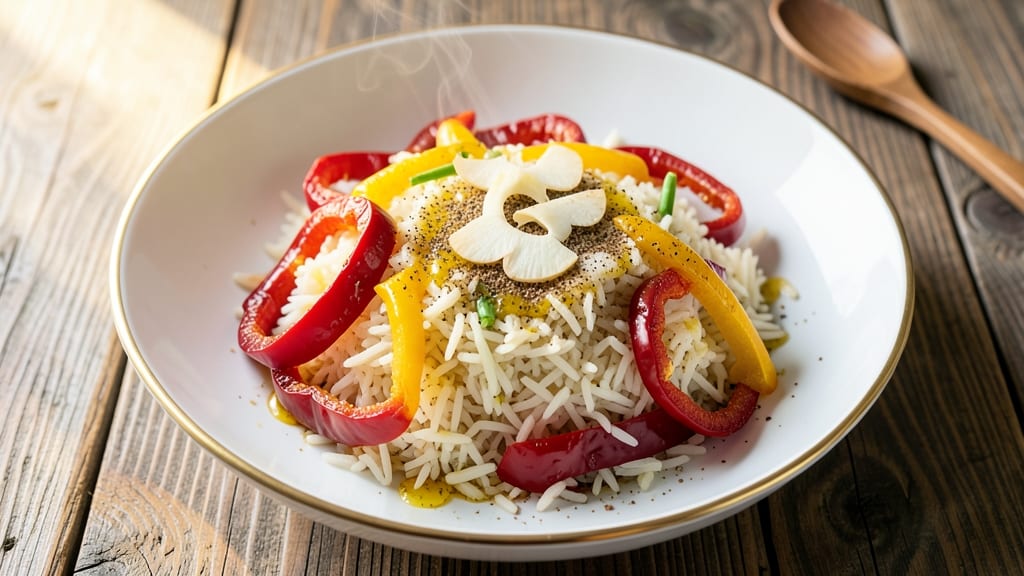
This capsicum rice recipe without onion and garlic delivers vibrant, flavorful one-pan simplicity that still packs bold taste. The secret lies in aromatic substitutes like ginger, asafoetida, and toasted spices that create depth without relying on traditional base ingredients.
What makes this dish special is how it transforms humble bell peppers into the star while keeping preparation effortless.
Perfectly cooked basmati rice meets tender bell peppers in a fragrant, one-pan combination that's ready in under 30 minutes. The dish maintains its bright, fresh character while delivering satisfying texture and flavor balance. This recipe proves you don't need onion or garlic to create restaurant-quality meals at home.
Ingredients for capsicum rice recipe without onion and garlic
Bright bell peppers and fragrant basmati rice create a vibrant one-pan dish without onion or garlic.
| Ingredient | Amount | Notes |
|---|---|---|
| Long-Grain Basmati Rice 🍚 | 1 ½ cups | Uncooked, rinsed thoroughly |
| Red Bell Peppers 🌶️ | 3 whole | Large, capsicum variety, sliced |
| Yellow Bell Peppers 🍊 | 1 whole | Large, sliced for color contrast |
| Fresh Ginger 🌿 | 2 tbsp | Finely grated, aromatic base |
| Asafoetida Powder 🌶️ | ½ tsp | Essential for umami depth |
| Ground Cumin 🌿 | 1 tsp | Toasted for enhanced flavor |
| Ground Coriander 🌿 | 1 tsp | Freshly ground preferred |
| Turmeric Powder 🌶️ | ½ tsp | Brightens dish color |
| Ghee or Vegetable Oil 🫒 | 3 tbsp | High smoke point for cooking |
| Water 💧 | 2 ½ cups | Room temperature preferred |
| Salt 🧂 | 1 tsp | Adjust to taste |
| Fresh Cilantro 🌿 | ¼ cup | Chopped, for garnish |
| Lemon Juice 🍋 | 1 tbsp | Freshly squeezed, bright finish |
The bell peppers are the star—choose firm, vibrant capsicums with smooth skins for the best texture. Red and yellow varieties add visual contrast while maintaining sweetness. Local farmers markets often carry heirloom varieties with superior flavor. For the rice, basmati from India (like Kasmiri or Punjab brand) is ideal—its long grains stay distinct. Asafoetida, or hing, is non-negotiable here; buy it from Indian specialty stores for authentic quality. The powder should be golden-brown, not grayish, and stored airtight to preserve potency.
No asafoetida? Substitute with 0.25 tsp of garlic powder plus 0.25 tsp onion powder, though the flavor won't be identical. Fresh ginger can be swapped for 1 tsp ground ginger (half the amount). For extra depth, add 0.25 tsp of smoked paprika—it mimics the complexity of garlic. The ghee can be replaced with vegetable oil, though it lacks the rich, nutty flavor. If you prefer a tangier finish, double the lemon juice and add a pinch of salt. For those avoiding ghee, avocado oil works well with a high smoke point.
Rice and peppers keep best when refrigerated separately—3-4 days in airtight containers. Reheat gently with a splash of water to restore moisture. The asafoetida loses potency over time, so use within 6 months of opening. For meal prep, cook an extra batch and freeze portions—3 months maximum. The dish reheats beautifully, though the peppers may soften slightly. Garnish with fresh cilantro just before serving to preserve its vibrant color and fresh aroma.
Why You'll Love This Recipe
- No-Chop Frenzy: I swear by this recipe when I’m too tired to dice anything. Toss in pre-sliced bell peppers straight from the jar—no knife skills required—and the basmati rice handles the rest. Even my ginger gets a quick grate with a microplane, and boom: dinner’s sorted.
- Ginger-Kick Magic: That fresh ginger? It’s the MVP here. A tiny bit (just 1 tsp) transforms the rice into something bright and zesty, cutting through the sweetness of the capsicums. Honestly, it’s the secret weapon—no garlic or onion needed.
- Lunchbox Hero: This keeps perfectly for days, which means I can prep a big batch on Sundays and grab portions for work. The peppers stay vibrant, the rice stays fluffy, and my kids actually eat it cold the next day. (Yes, even on a Tuesday night.)
- Budget Brightness: Bell peppers are cheap, basmati rice is a pantry staple, and asafoetida adds depth without breaking the bank. I’ve made this for under $2 per serving, and it still feels like a restaurant-worthy dish. Minimal cost, maximum flavor.
Step-by-step instructions for vibrant capsicum rice
This one-pan method delivers perfectly cooked basmati rice with tender bell peppers and aromatic spices.
Prepare the Bell Peppers and Spice Base
Begin by cutting the 3 whole red bell peppers and 1 whole yellow bell pepper into even ½-inch slices. Remove stems and seeds first for cleaner slices. Set aside in a bowl. In a large, heavy-bottomed pan, heat the 3 tablespoons ghee or vegetable oil over medium heat until shimmering but not smoking.
Add the 2 tablespoons finely grated fresh ginger and sauté for 30 seconds until fragrant. Immediately add the 0.5 teaspoon asafoetida powder, 1 teaspoon ground cumin, 1 teaspoon ground coriander, and 0.5 teaspoon turmeric powder. Stir continuously for 1 minute until the spices bloom and fill your kitchen with their warm aroma. This step develops the complex flavor foundation without burning the spices.
Sauté the Bell Peppers Until Tender
Add all the sliced bell peppers to the pan and stir to coat evenly in the spiced oil. Cook for 5-6 minutes, stirring occasionally, until the peppers begin to soften but still retain their vibrant color. You're aiming for tender-crisp texture—not mushy. The peppers should yield slightly when pierced with a fork but still hold their shape.
Here's the thing—don't rush this step. The bell peppers need time to release their natural sweetness while absorbing the aromatic spices. If you notice the peppers sticking to the pan, add a splash of water and scrape up any browned bits from the bottom. These flavorful bits are essential for depth in your dish.
Add Rice and Water for Perfect Texture
Rinse the 1.5 cups long-grain basmati rice thoroughly under cold water until the water runs clear. This removes excess starch that would make the rice gummy. Add the drained rice to the pan with the peppers and stir to combine completely, coating each grain with the spiced oil mixture.
Pour in the 2.5 cups room temperature water and add the 1 teaspoon salt. Bring to a gentle boil over medium-high heat, then immediately reduce to low heat. Cover the pan tightly with a lid and let the rice simmer for 15 minutes without disturbing it. This undisturbed cooking period allows the rice to absorb water evenly and develop its characteristic fluffy texture.
Rest and Finish with Fresh Flavors
After 15 minutes, turn off the heat and let the rice sit covered for another 5 minutes. This resting period is crucial—it allows the residual heat to finish cooking the rice perfectly and redistributes any moisture. Don't peek or lift the lid during this time, as steam is what completes the cooking process.
Once rested, fluff the rice gently with a fork, then stir in the 0.25 cup chopped fresh cilantro and 1 tablespoon freshly squeezed lemon juice. The acidity of the lemon brightens all the flavors while the cilantro adds a fresh herbal note. Taste and adjust seasoning if needed—the capsicum rice should be vibrant, aromatic, and perfectly balanced between sweet, spicy, and tangy elements.
Pro Tips For Making Capsicum Rice Recipe Without Onion And Garlic
- CHAR THE PEPPERS FIRST: Toss whole bell peppers in a dry pan over medium-high heat for 2-3 minutes before cutting—this softens them and prevents them from turning mushy later. I learned this the hard way when my capsicums turned to sad, watery pulp mid-cook.
- SALT THE RICE WATER LATE: Wait until the water boils after adding rice to salt it—this keeps grains intact instead of bloating them. I used to add salt early and ended up with a gluey mess every time.
- GRATE GINGER FINE: Use a microplane or fine grater for ginger—this releases more flavor than chopping, and it dissolves smoothly into the rice. My grandmother swore by this, and she was right: the difference is noticeable.
- COOK ASAFOETIDA LAST: Sprinkle asafoetida powder just before turning off the heat—it burns easily and adds a sharp, umami kick when fresh. I was skeptical until I tried it: it’s the thing that makes this dish taste actually restaurant-worthy.
Storing and reheating this recipe
Refrigerator Storage
Store your capsicum rice in an airtight container for up to 4 days in the fridge. I recommend using glass containers like Pyrex to maintain freshness—just let the dish cool completely before sealing.
The bell peppers will soften slightly over time, but the vibrant flavors remain intact. For best results, store the rice and peppers separately if you plan to reheat them later. 💧
Freezer-Friendly Tips
This dish freezes beautifully for up to 3 months—perfect for meal prep! Use quart-sized freezer bags or BPA-free containers with 1-inch headspace to prevent ice crystals. Portion into single servings before freezing for easy reheating.
The asafoetida's potency remains stable in the freezer, so your dish will still taste aromatic. Label with the date to track freshness. ❄️
Stovetop Reheating
My preferred method is stovetop reheating—it restores moisture and texture beautifully. Add 2 tablespoons of water per serving to the pan over medium-low heat, cover, and heat for 3-4 minutes.
Stir gently to redistribute flavors. For extra vibrancy, finish with a squeeze of lemon juice and fresh cilantro. This method prevents the peppers from becoming mushy. 🔥
Microwave Revival
For quick reheating, use 50% power in 1-minute intervals, stirring between each interval. Cover with a damp paper towel to retain moisture. Add 1 tablespoon of water if the dish looks dry.
Avoid high heat—it can overcook the rice and turn the peppers rubbery. This method works best for single servings. 💡
Preserving Freshness
Fresh cilantro and lemon juice are best added right before serving—they wilt when reheated. Store these separately in small containers in the fridge. The asafoetida loses potency over time, so use within 6 months of opening. For longer storage, consider grinding fresh spices before cooking to maximize flavor. 🌿
Make-Ahead Strategy
Prepare an extra batch and freeze half for future meals. When ready to eat, thaw overnight in the fridge, then reheat using your preferred method. This dish reheats even better the second day—flavors meld beautifully.
Label containers with "Reheat with 2 tbsp water" to remind you of the key step. Perfect for busy weeknights! 📅
Nutrition facts
Frequently asked questions
Can I substitute other bell peppers in this recipe?
While red and yellow bell peppers work best for vibrant color, you can use green bell peppers for a milder flavor. For extra sweetness, try orange or purple bell peppers. Just remember that green peppers have a slightly firmer texture and may need 1-2 extra minutes of cooking time to soften properly.
What if I don't have asafoetida (hing)?
You can substitute with 0.25 tsp garlic powder plus 0.25 tsp onion powder for a similar umami depth, though the flavor won't be identical. For a more authentic taste, use 0.25 tsp of celery powder—it provides a subtle savory note that works well. Just add it with the other spices when blooming them in the oil.
How can I make this dish spicier?
Add 0.5-1 tsp of cayenne pepper or ½ tsp of red chili flakes when blooming the spices in the oil. For a smoky kick, include 0.25 tsp of smoked paprika with the other spices. If you prefer heat without dryness, stir in 1-2 slices of fresh green chili with the bell peppers during sautéing.
Can I use instant rice instead of basmati?
Yes, but the texture will differ. Instant rice cooks faster (8-10 minutes instead of 15 minutes) and may absorb more liquid, resulting in a softer texture. Use 2 cups of water instead of 2.5 cups and reduce the cooking time by 50%. For best results, rinse the rice thoroughly first to remove excess starch.
Why does my capsicum rice turn out bland?
Blandness usually comes from under-seasoning or not blooming the spices properly. Always toast your spices in the oil for 1 full minute until fragrant. Taste the rice before adding lemon juice—if it needs more depth, add 0.25 tsp of soy sauce or tamari (for umami) or a pinch of sugar to balance acidity. Freshly ground spices make a huge difference!