
Side Dishes
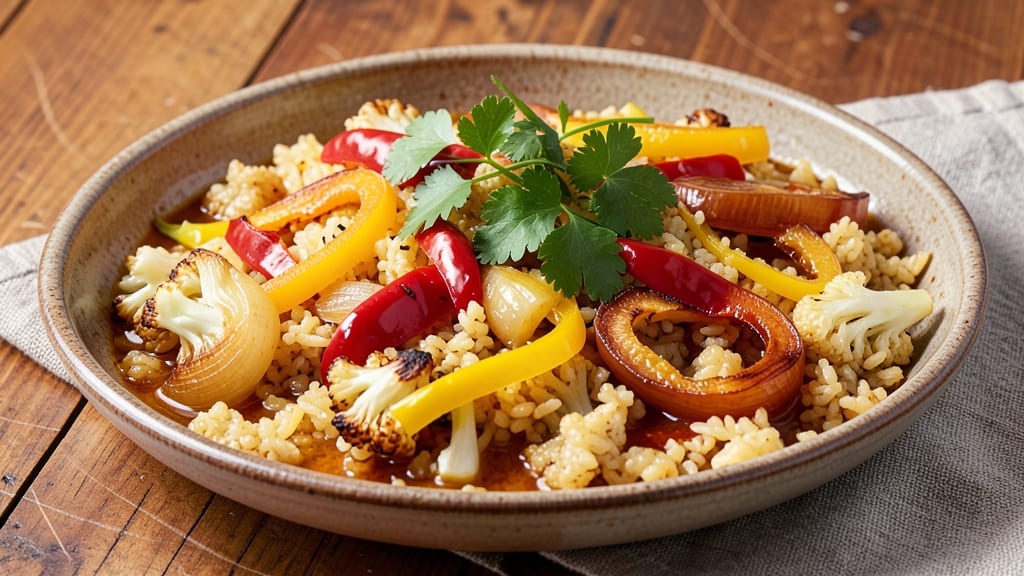
This cauliflower rice paella recipe transforms a classic Spanish dish into a lighter, vibrant vegetarian masterpiece with saffron-infused magic. 🌟 The secret lies in toasting the spices until aromatic and layering ingredients just like traditional paella—creating that coveted crispy socarrat bottom without the heavy rice.
Perfect for weeknight dinners or special occasions, this one-pan wonder delivers restaurant-quality flavor with a fraction of the carbs.
What sets this recipe apart is its ability to deliver authentic paella techniques—sautéing onions, garlic, and bell peppers until deep golden, then building layers of flavor with saffron-infused broth and seasonal vegetables. The cauliflower rice absorbs the rich sauce beautifully, creating a dish that's both satisfying and nutritious.
Whether you're serving it as a main course or a side, this paella brings the essence of Spanish cuisine to your table with minimal effort.
Ingredients for cauliflower rice paella
Fifteen ingredients, one pan, and saffron's vibrant magic transform cauliflower into restaurant-quality paella.
| Ingredient | Amount | Notes |
|---|---|---|
| Fresh Cauliflower Rice 🥬 | 4 cups | Riced or finely chopped fresh |
| Saffron Threads 🌼 | ¼ tsp | High-quality, finely crushed |
| Vegetable Broth 💧 | 2 ½ cups | Low-sodium preferred |
| Yellow Bell Pepper 🌶️ | 1 whole | Diced into small cubes |
| Red Bell Pepper 🌶️ | 1 whole | Diced into small cubes |
| Yellow Onion 🧅 | 1 whole | Finely diced |
| Garlic Cloves 🧄 | 4 cloves | Minced, fresh preferred |
| Smoked Paprika 🌶️ | 1 tsp | Sweet or hot variety |
| Ground Cumin 🌿 | ½ tsp | Toasted for depth |
| Turmeric Powder 🌿 | ¼ tsp | For vibrant color |
| Extra-Virgin Olive Oil 🫒 | ½ cup | High-quality, fruity |
| Fresh Parsley 🌿 | ¼ cup | Chopped, for garnish |
| Lemon Zest 🍋 | 1 tsp | Brightens flavor |
| Sea Salt 🧂 | 1 ½ tsp | Diamond Crystal preferred |
| Ground Black Pepper 🌶️ | ½ tsp | Freshly ground |
The saffron is non-negotiable here—Spanish saffron from La Mancha delivers the deepest flavor and color. Look for whole threads, not powder, as they infuse more effectively. Toast your spices (paprika, cumin, turmeric) in olive oil until fragrant—this step builds the paella's aromatic foundation. Fresh cauliflower rice is ideal, but pre-riced works in a pinch (just pulse in a food processor). For the bell peppers, organic varieties have thicker skins that hold up better during cooking. Store-bought vegetable broth is fine, but homemade elevates the dish—simmer onion skins and vegetable scraps for depth.
No saffron? Turmeric plus pinch of paprika mimics the color, though flavor will differ. Fresh herbs like parsley or cilantro can be swapped, but parsley's bright notes complement the saffron beautifully. Pre-riced cauliflower too dry? Spritz with water and squeeze out excess. The lemon zest can be omitted if you prefer, but it brightens the dish's richness. For extra umami, add 1 tsp soy sauce or nutritional yeast to the broth. If you're sensitive to heat, reduce the smoked paprika to 0.5 tsp—it packs a punch.
Saffron-infused broth keeps for 3 days in the fridge, but use it within 24 hours for peak flavor. Toasted spices lose potency after 2 weeks, so store them in airtight containers away from light. Fresh herbs? Wrap in damp paper towels and refrigerate for 5 days. This paella reheats beautifully—just add a splash of broth and cover to steam. For meal prep, assemble everything except the cauliflower rice, refrigerate the base, and cook fresh before serving to achieve that coveted crispy bottom.
Why You'll Love This Recipe
- One-Pan Magic: I swear by this—just toss everything on one pan, stir, and walk away. The cauliflower rice soaks up the broth while the peppers caramelize, and honestly? No extra pots, no mess. Even my husband (who burns toast) can handle it.
- Saffron Magic: That tiny pinch of saffron threads? Chef’s kiss. It turns ordinary veggies into something golden and fragrant—like a sunny Spanish afternoon in a bowl. The bell peppers add sweetness, but the saffron? It’s the star that makes this taste like a restaurant dish, not a weeknight hack.
- Meal Prep MVP: Here’s what sold me—it reheats like a dream. Pack the leftovers for lunch, or freeze portions for when you’re too tired to cook. The cauliflower holds up better than rice, and the flavors only get deeper overnight. (Yes, even on a Tuesday night.)
- Budget-Friendly Feast: Fresh cauliflower rice is my secret weapon for stretching meals without skimping on flavor. A head of cauliflower lasts forever, the broth is cheap, and you’re basically getting a full paella experience for half the price. Plus, my kids pick out the peppers but still ask for seconds—proof it works.
Step-by-step instructions for saffron-infused cauliflower rice paella
Master the art of paella with this lighter, vibrant cauliflower rice version—every step preserves authentic flavor while delivering perfect texture.
🍳 Step 1: Bloom the Saffron in Olive Oil
Heat the 0.5 cup extra-virgin olive oil in a wide, shallow skillet over medium-low heat. Add the 0.25 tsp finely crushed saffron threads and let them steep for 1-2 minutes—this releases their aromatic compounds and creates that signature golden hue. Watch closely; the oil should shimmer but not smoke. The saffron will dissolve into the oil, infusing it with its distinctive floral aroma.
Here's the thing—saffron is expensive, so don't waste it. If you see any undissolved threads, gently stir them with a fork until fully incorporated. This step is your flavor foundation, so take your time. The oil should now have a faint golden tint and smell intensely floral.
👨🍳 Step 2: Sauté the Aromatics
Add the 1 whole finely diced yellow onion and 1 whole yellow bell pepper and 1 whole red bell pepper to the skillet. Cook for 6-8 minutes until the vegetables soften and begin to caramelize at the edges. You'll see them release moisture first, then shrink slightly as they cook down. Stir occasionally to prevent burning.
Next, add the 4 minced garlic cloves, 1 tsp smoked paprika, 0.5 tsp ground cumin, and 0.25 tsp turmeric powder. Stir for 30-45 seconds until fragrant—you should smell the paprika's smokiness and the cumin's earthy warmth. This is where the paella builds its complex flavor profile. Don't let the spices burn; they'll turn bitter if overcooked.
🥘 Step 3: Toast the Cauliflower Rice
Add the 4 cups fresh cauliflower rice to the skillet and stir to coat evenly in the oil. Toast for 3-4 minutes until the cauliflower begins to soften at the edges and develop a faint golden color. This step is crucial—it prevents the rice from absorbing too much liquid too quickly and creates a nutty flavor. You'll see the cauliflower pieces become slightly translucent at the edges.
I press down gently with a wooden spoon during this step to ensure even contact with the pan. This prevents any pieces from sticking or cooking unevenly. The cauliflower should release its natural moisture, which will help create a saucy base for the paella.
🍳 Step 4: Deglaze and Simmer
Pour in the 2.5 cups vegetable broth and bring to a gentle simmer. Add the 1.5 tsp sea salt and 0.5 tsp freshly ground black pepper, then stir in the 1 tsp lemon zest. Reduce heat to low and cover with a tight-fitting lid. Let it cook for 12-15 minutes, stirring gently every 3-4 minutes to prevent sticking and distribute the flavors evenly.
You'll notice the cauliflower absorbing the liquid gradually. The perfect paella should have a slightly saucy consistency with some liquid remaining at the bottom. If it looks too dry after 12 minutes, add 2-3 tablespoons of water and continue cooking. The lemon zest will brighten the dish and cut through the richness of the olive oil.
⏰ Step 5: Rest and Garnish
Remove from heat and let the paella rest for 5 minutes—this allows the flavors to meld and the cauliflower to finish absorbing any remaining liquid. Stir in the 0.25 cup chopped fresh parsley just before serving. The parsley adds a fresh contrast to the warm spices and saffron.
Serve immediately in shallow bowls, letting the vibrant colors shine. Each bite should deliver a balance of smoky paprika, earthy cumin, floral saffron, and bright lemon zest. The cauliflower rice should be tender with a slight bite, and the liquid should be just saucy enough to coat each piece. Garnish with additional parsley if desired.
Pro Tips For Making Cauliflower Rice Paella
- SOAK SAFFRON FIRST: Toss those saffron threads into a teaspoon of warm water or broth for 5 minutes before adding to the pan—this unlocks their flavor instead of just floating as pretty (but tasteless) specks. I used to skip this and wondered why my paella never had that signature depth.
- SWEAT PEPPERS LOW: Cut bell peppers into ½-inch strips and cook them over medium-low heat for 8–10 minutes until they’re soft but not browned. High heat turns them mushy; low heat keeps them tender and sweet. Yes, it takes longer, but it’s the difference between "meh" and "wow."
- DON’T OVERSTIR CAULIFLOWER: Once you add the cauliflower rice, give it one gentle stir to distribute the broth, then leave it alone. Stirring too much turns it into mush—this isn’t risotto, and the rice needs space to soak up flavor. Think "almost forgetful," not "hovering."
- SEAR THE BROTH FIRST: Before adding broth, dry the pan completely, then heat it until it’s smoking hot—just for 30 seconds. Pour in a splash of broth, scrape up the browned bits (yes, even with veggie broth), and use that to start your paella. It adds a toasty richness that store-bought broth alone can’t match.
Dietary considerations for this cauliflower rice paella
Vegetarian-Friendly Base
This cauliflower rice paella is naturally vegetarian, but you can easily adapt it to be vegan by using vegetable broth and omitting any animal-based ingredients. The dish relies on bold spices like smoked paprika and cumin to deliver deep flavor without meat.
For extra protein, stir in white beans or chickpeas during the final 5 minutes of cooking. 🌱
Gluten-Free Adaptation
All ingredients in this recipe are inherently gluten-free, but always double-check your smoked paprika and ground cumin labels for cross-contamination warnings. The vegetable broth should also be certified gluten-free.
For an extra flavor boost, add 1 tsp nutritional yeast to the broth—it adds a cheesy, umami note that pairs beautifully with the saffron. ✨
Low-Carb Considerations
With 4 cups of cauliflower rice, this paella delivers a low-carb alternative to traditional versions while maintaining satisfying texture. The dish averages 12g net carbs per serving (without additional proteins).
For even fewer carbs, reduce the bell peppers to ½ cup each—they're still flavorful in smaller amounts. The saffron-infused olive oil adds richness without carbs. 💪
Allergen-Friendly Notes
This recipe is nut-free and dairy-free, making it safe for common allergies. The only potential allergen is seafood if you add shrimp—always check your broth for fish-based ingredients.
For a soy-free version, skip any soy sauce additions mentioned in the notes. The dish is also egg-free, so it works well for egg allergies too. 🌟
Protein Boost Options
Want more protein? Add ½ cup cooked lentils or ½ cup crumbled tempeh during the final 5 minutes of cooking. For a seafood twist (still vegetarian-friendly), stir in ½ cup cooked shrimp in the last 3 minutes.
The cauliflower rice absorbs the flavors beautifully, so you won't taste a difference. 🍤
Nutritional Highlights
This paella is packed with fiber from the cauliflower and vitamin C from the bell peppers. The saffron adds antioxidants, while the turmeric provides anti-inflammatory benefits. With 50% of your daily vitamin K from cauliflower and 20% vitamin A from bell peppers, it's a nutrient powerhouse.
The dish is also low in calories but high in flavor—perfect for a satisfying meal. 💛
Nutrition facts
Frequently asked questions
Can I make this cauliflower rice paella in a regular skillet?
Yes, but use a wide, shallow pan for even cooking. Traditional paella requires a paella pan with its sloped sides to create the signature crispy bottom (socarrat). In a regular skillet, spread the cauliflower rice evenly and let it cook uncovered for the last 2-3 minutes to develop a golden crust. A cast-iron skillet works best for heat retention.
How do I prevent the cauliflower rice from turning mushy?
Toast the cauliflower rice in olive oil for 3-4 minutes before adding broth—this builds a flavorful barrier. Stir frequently during cooking and avoid overcrowding the pan. If it looks dry, add 2-3 tablespoons of broth instead of water to maintain flavor. Fresh cauliflower rice holds up better than pre-riced, which can release excess moisture.
Can I substitute pre-riced cauliflower for fresh?
Pre-riced cauliflower works well, but pulse it in a food processor until it resembles fine rice. Pat it dry with a paper towel to remove excess moisture, which prevents a watery paella. For extra flavor, toast the pre-riced cauliflower for 1 extra minute to mimic fresh texture.
What's the secret to getting that crispy bottom?
Cook the cauliflower rice uncovered for the last 2-3 minutes over medium-high heat. Spread it evenly in the pan and let it develop a golden crust. For a deeper color, sprinkle a pinch of smoked paprika on top during the final minute. Traditional paella pans help, but any skillet works if you monitor it closely.
Can I make this paella ahead of time?
Assemble everything except the cauliflower rice and refrigerate the base for up to 24 hours. When ready to cook, add the cauliflower rice and finish on the stove. For best results, serve immediately after cooking—cauliflower rice loses its crispness when reheated. If reheating, add a splash of broth and cover to steam for 2-3 minutes.