
Side Dishes
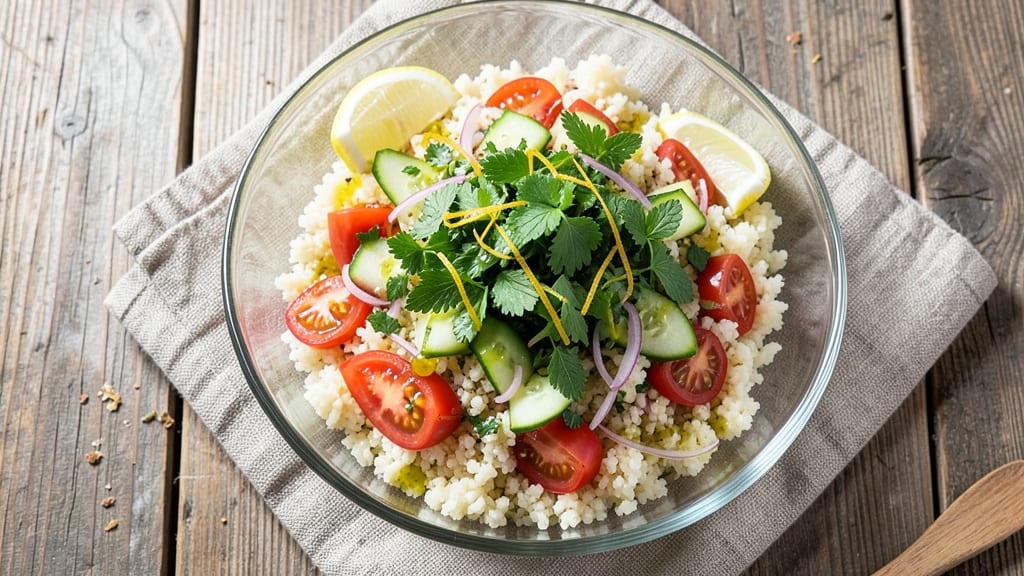
This cauliflower rice tabbouleh recipe transforms a classic Middle Eastern salad into a lighter, herb-packed dish perfect for low-carb diets or anyone craving bright, crunchy textures.
The secret lies in perfectly rinsing the bulgur and balancing fresh parsley, mint, and lemon for that signature tangy freshness without the traditional bulgur overload.
With just 15 minutes of prep, you'll create a vibrant side dish that's as nutritious as it is flavorful—ideal for pairing with grilled meats, fish, or as a standalone vegetarian meal.
The cauliflower rice adds a satisfying crunch, while the herbs and lemon brighten every bite, making this tabbouleh a refreshing upgrade to any plate.
Ingredients for cauliflower rice tabbouleh
Fresh herbs, zesty lemon, and crunchy cauliflower rice create this vibrant vegetarian tabbouleh without traditional bulgur.
| Ingredient | Amount | Notes |
|---|---|---|
| Fresh Cauliflower Rice 🥬 | 3 cups | Freshly grated or store-bought pre-riced |
| Fresh Parsley 🌿 | ½ cup | Finely chopped, stems removed |
| Fresh Mint Leaves 🍃 | ¼ cup | Finely chopped, stems removed |
| Extra-Virgin Olive Oil 🫒 | ⅓ cup | High-quality, fruity variety |
| Fresh Lemon Juice 🍋 | ¼ cup | Freshly squeezed, strained |
| Diamond Crystal Kosher Salt 🧂 | ½ tsp | Adjust to taste |
| Cucumber 🥒 | 1 medium | Seedless, peeled and diced |
| Red Onion 🧅 | ¼ medium | Thinly sliced, red variety |
| Garlic Cloves 🧄 | 2 cloves | Minced, fresh preferred |
| Toasted Pine Nuts 🥜 | ¼ cup | Optional for crunch |
| Fresh Dill 🌿 | ⅛ cup | Finely chopped, optional |
| Ground Black Pepper 🌶️ | ¼ tsp | Freshly ground preferred |
The cauliflower rice is the foundation—freshly grated delivers the best texture, though pre-riced from the produce section at Whole Foods or Trader Joe's works in a pinch. For the herbs, farmers' markets often have the freshest parsley and mint, but avoid wilted stems. The lemon juice should be freshly squeezed; bottled juice lacks the bright acidity needed to balance the herbs. Toast your pine nuts in a dry pan for 2-3 minutes until golden—they add a satisfying crunch that elevates the dish.
No fresh dill? Substitute with extra parsley or skip it entirely—this dish still shines. Running short on mint? Fresh basil at half the amount works surprisingly well. For the cucumber, seedless varieties like Persian cucumbers stay crisp longer, but any firm cucumber will do. The red onion adds depth; if you prefer milder flavor, swap in white onion and reduce the amount by half. For extra tang, add 1 tablespoon of pomegranate molasses—it’s a Middle Eastern staple found at specialty stores like Middle Eastern grocers or online.
Store the dressing (olive oil, lemon juice, garlic, and salt) separately until ready to toss to maintain crispness. The tabbouleh keeps well in an airtight container in the fridge for up to 3 days, though the cauliflower rice softens over time. For best texture, assemble just before serving. If prepping ahead, store the herbs and vegetables separately and combine with dressing when ready. This dish reheats poorly, so enjoy it fresh or at room temperature for optimal flavor.
Why You'll Love This Recipe
- No-Rice Nightmare Solved: I swear by this when I forget to grab rice—just pulse cauliflower, toss in herbs, and boom. That bright lemon and mint cut through everything like a summer breeze.
- Herb Bomb in Minutes: The parsley and mint aren’t just garnish—they’re the stars. Freshly squeezed lemon juice ties it all together with a zing that makes store-bought tabbouleh look sad.
- Potluck or Picnic Hero: Pack it in jars or bowls—it stays fresh for days. Honestly, I’ve brought this to BBQs, office lunches, and even my mom’s dinner table, and no one’s ever questioned the cauliflower swap.
- Budget Brightener: Cauliflower’s cheap, herbs stretch forever, and olive oil lasts for ages. I’ve fed four people for under $8 with this—plus, it’s the one side that makes cheap proteins taste fancy.
Step-by-step instructions for cauliflower rice tabbouleh
This low-carb twist on traditional tabbouleh delivers vibrant herbaceous flavor with a satisfying crunch.
Prepare the Vegetable Base
Begin by finely chopping the 0.5 cup fresh parsley and 0.25 cup fresh mint leaves, removing stems first. Set aside in a large mixing bowl. Peel and dice the 1 medium cucumber into small, even pieces—about ¼-inch cubes. Thinly slice the 0.25 medium red onion into half-moons, then finely mince the 2 cloves garlic.
Add the cucumber, red onion, and garlic to the herbs. Toss gently to combine, ensuring the garlic distributes evenly. The raw garlic will mellow as it marries with the lemon and olive oil, so don't worry about overpowering flavors at this stage. This vegetable medley forms the foundation of your tabbouleh, so take your time with the chopping for even texture throughout.
Combine Wet Ingredients
In a separate small bowl, whisk together the 0.33 cup extra-virgin olive oil, 0.25 cup fresh lemon juice, 0.5 tsp diamond crystal kosher salt, and 0.25 tsp ground black pepper. The lemon juice should be freshly squeezed and strained to remove any pulp that might make the dressing too thick. This mixture creates the bright, tangy base that balances the earthy cauliflower rice.
Pour the dressing over the vegetable mixture and toss gently with your hands or a large spoon. Let it sit for 5 minutes to allow the flavors to meld. The lemon will begin to draw out moisture from the vegetables, creating a slightly juicy but not soggy texture. This resting period is crucial for developing the dish's signature brightness.
Incorporate the Cauliflower Rice
Add the 3 cups fresh cauliflower rice to the bowl and toss everything together until the cauliflower is evenly coated and distributed. Use your hands to work the mixture—this ensures the cauliflower absorbs the dressing completely. The texture should resemble traditional tabbouleh but with a lighter, more delicate mouthfeel.
If the mixture appears too dry after tossing, add 1-2 tablespoons of water to help bind everything together. Conversely, if it's too wet, let it sit for another 5 minutes to allow excess moisture to evaporate. The ideal consistency should be moist but not dripping, with the cauliflower holding its shape while still being tender.
Add Finishing Touches
Fold in the 0.125 cup fresh dill (if using) and the 0.25 cup toasted pine nuts just before serving. The pine nuts add a delightful crunch that contrasts beautifully with the tender cauliflower and herbs. Sprinkle them over the top rather than mixing them in completely—this preserves their texture and makes them easier to enjoy with each bite.
Taste and adjust seasoning if needed. The dish should be bright, fresh, and herb-forward with a balanced tang from the lemon. If it needs more acidity, add a splash of additional lemon juice. For extra depth, you could even add a pinch of smoked paprika or a few drops of harissa, though the recipe as written delivers robust flavor without these additions.
Serve Immediately
Transfer the tabbouleh to a serving bowl and let it sit for 10-15 minutes at room temperature before serving. This brief resting period allows the flavors to fully meld and the cauliflower to soften slightly without losing its texture. Serve as a refreshing side dish alongside grilled meats, fish, or as a light vegetarian main course with a sprinkle of feta cheese if desired.
The dish should be vibrant green with pops of red from the onion and golden highlights from the pine nuts. Each bite should deliver a perfect balance of crisp cauliflower, fresh herbs, and bright citrus notes. For best results, consume within 2 hours of preparation to enjoy the freshest possible flavors and textures.
Pro Tips For Making Cauliflower Rice Tabbouleh
- Sauté Cauliflower Rice First: Toss the raw cauliflower rice in a dry pan over medium-high heat for 2-3 minutes before adding anything else—this removes excess moisture and prevents a soggy tabbouleh. I learned this the hard way after ending up with a watery mess that tasted more like cauliflower soup.
- Chop Herbs Coarse: Roughly chop parsley and mint—no need for tiny confetti-like pieces. Big, uneven bits look rustic and hold their texture better in the dish. (Yes, even if you’re impatient like me, resist the urge to over-chop.)
- Salt the Cauliflower: Sprinkle a pinch of salt on the cauliflower rice while it sautés—it’ll draw out moisture faster and give the final dish a brighter flavor. Skip this, and your tabbouleh will taste bland, no matter how much lemon you add.
- Use Cold Lemon Juice: Measure your lemon juice straight from the fridge and let it sit for 10 minutes before adding it to the warm cauliflower. Cold juice brightens flavors better than warm, and it won’t cook off the acidity. (Your future self will notice the difference.)
Regional styles of this recipe
Middle Eastern Roots
This dish traces its lineage to traditional Lebanese tabbouleh, where bulgur wheat forms the base. My Lebanese grandmother used to make it with toasted bulgur, fresh parsley, and lemon—always served at family gatherings. The cauliflower twist keeps that bright, herbaceous essence while making it perfect for low-carb diets. 🌿
Greek Salad Fusion
In Greece, they call this variation "kolokithokeftedes" when made with cucumbers and herbs. I've adapted it by adding the cauliflower rice for extra texture. The red onion and garlic bridge the Mediterranean flavors beautifully. Serve with grilled octopus or lamb for an authentic Greek-Middle Eastern mashup.
Turkish Meze Style
Turkish cuisine loves vibrant salads called "çoban salatası." This version swaps bulgur for cauliflower rice and adds toasted pine nuts—a nod to Turkish meze traditions. Serve with warm pita bread and a cold Turkish beer like Efes Pilsen for a refreshing contrast.
The herbs and lemon keep it light while the nuts add satisfying crunch.
Modern Low-Carb Twist
For a contemporary approach, skip the bulgur entirely and focus on the fresh herbs and cauliflower. This version works perfectly as a keto-friendly side dish. I often serve it alongside grilled chicken with a drizzle of za'atar-infused olive oil for an extra flavor boost.
The bright acidity cuts through richer proteins beautifully.
Indian Chaat Influence
Add a pinch of chaat masala (¼ teaspoon) and a few crushed kala namak (black salt) flakes for an Indian-inspired twist. The tangy, slightly sulfurous notes complement the lemon beautifully. Serve with mint chutney for dipping—this fusion brings bold new flavors to the classic tabbouleh concept.
Mediterranean Market Adaptations
At local markets, I've seen variations with roasted red peppers, capers, and olives. For a seafood pairing, add ¼ cup chopped Kalamata olives and 2 tablespoons chopped roasted red peppers.
The briny olives and sweet peppers create a perfect Mediterranean flavor bridge. This version works wonderfully with grilled shrimp or white fish.
Nutrition facts
Frequently asked questions
Can I use frozen cauliflower rice for this recipe?
Frozen cauliflower rice works in a pinch, but fresh is ideal for texture. If using frozen, thaw it completely first, then pat it very dry with a paper towel to remove excess moisture. This prevents your tabbouleh from becoming soggy.
How do I make this dish even more herb-forward?
Double the parsley and mint amounts, or add 0.125 cup chopped cilantro for a brighter, more complex flavor profile. For extra freshness, toss in 0.125 cup chopped basil just before serving. The key is using the freshest herbs you can find!
Can I prepare this tabbouleh ahead of time?
Store the dressing (olive oil, lemon, garlic, salt) separately until ready to toss. Keep the herbs and vegetables in an airtight container in the fridge for up to 3 days, but combine everything just before serving to maintain crispness. The cauliflower rice softens when refrigerated, so this keeps the texture optimal.
What's the best way to toast pine nuts?
Spread 0.25 cup pine nuts in a dry skillet over medium heat and toast for 2-3 minutes, stirring constantly, until golden brown and fragrant. Watch closely—they burn quickly! Let them cool completely before adding to your tabbouleh to prevent releasing oils that could make the salad greasy.
Is this recipe suitable for meal prep?
While the flavors develop best when fresh, you can prep components separately for up to 3 days: store the herbs and veggies in one container, dressing in another, and cauliflower rice dry in a separate bag. Combine everything 30 minutes before serving for the best texture and flavor balance.