
Main Courses
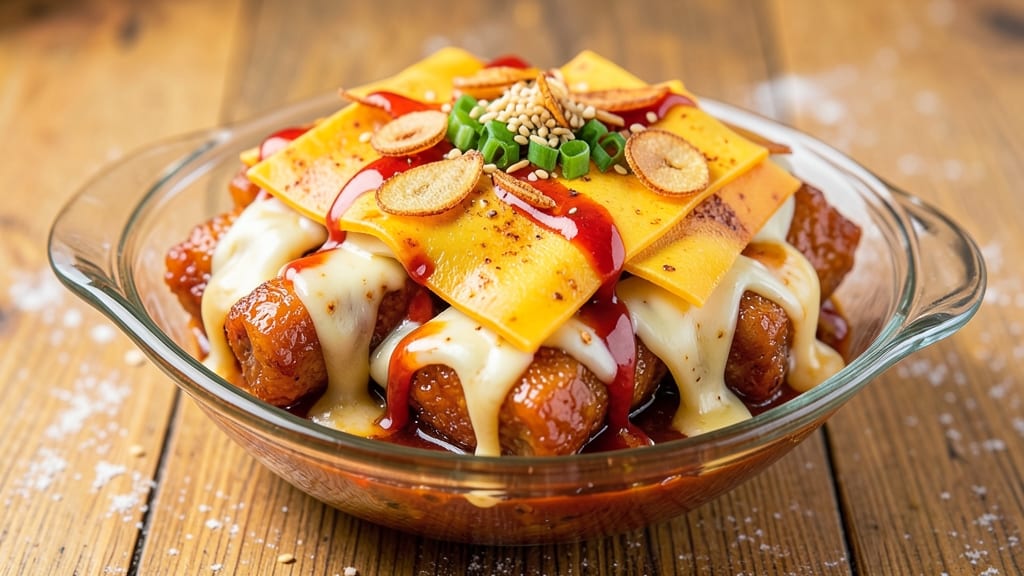
This cheesy Korean rice cake recipe transforms simple ingredients into a dish that balances crispy fermented rice cakes with gooey melted cheese—perfect for a weeknight dinner that feels special. 💛 The key lies in the sauce: a tangy, slightly sweet glaze that coats each piece, creating a texture that's both crunchy and creamy in every bite.
Traditionally, tteokbokki relies on spicy red sauce, but this version swaps it for a cheesy twist that's equally addictive. The rice cakes soften just enough to soak up the sauce while maintaining their signature chew, and the cheese adds a rich, velvety finish that makes this dish irresistible.
Ready in under 30 minutes, it’s a complete meal with minimal effort.
Ingredients for cheesy korean rice cake
Fourteen ingredients blend crispy rice cakes with melted cheese and tangy sauce for a satisfying weeknight dish.
| Ingredient | Amount | Notes |
|---|---|---|
| Fermented Korean Rice Cakes (Tteokbokki) 🍚 | 14 oz | Traditional fermented, cylindrical shape |
| Shredded Mozzarella Cheese 🧀 | 1 ½ cups | Fresh mozzarella preferred, low-moisture works |
| Cheddar Cheese 🧀 | ½ cup | Shredded, sharp variety for depth |
| Gochujang (Korean Red Pepper Paste) 🌶️ | 2 tbsp | For authentic tangy heat, adjust to taste |
| Soy Sauce 🥢 | 2 tbsp | Use light soy for subtle flavor |
| Rice Vinegar 🍶 | 1 tbsp | White or seasoned vinegar |
| Granulated Sugar 🍬 | 1 tbsp | Balances sauce sweetness |
| Vegetable Oil 🫒 | 1 tbsp | For frying rice cakes |
| Garlic Cloves 🧄 | 3 cloves | Minced for aromatic base |
| Green Onion 🧅 | 3 whole | Sliced for garnish |
| Sesame Seeds 🌾 | 1 tbsp | Toasted for nutty crunch |
| Salt 🧂 | ½ tsp | Kosher or sea salt |
| Black Pepper 🌶️ | ¼ tsp | Freshly ground preferred |
| Butter 🧈 | 2 tbsp | Unsalted for best flavor |
The rice cakes are the heart of this dish—look for traditional fermented tteokbokki at Asian markets or the international aisle. Brands like Hana Brand or Lotus Foods carry them year-round. If you can't find fermented, regular rice cakes work in a pinch, but they won't have that signature tang. For the cheese, fresh mozzarella melts beautifully, but pre-shredded works too (just pat it dry first). The cheddar adds depth—sharp varieties like Cabot or Pepper Jack work best. Gochujang is non-negotiable for that authentic Korean kick—Maesil Chunjang is my go-to brand, but any quality paste will do.
No gochujang? Substitute 1 tbsp sriracha plus 1 tsp honey for heat and sweetness. Fresh mozzarella too expensive? Low-moisture shredded is fine, just add 1 tsp cornstarch to prevent clumping. The rice cakes can be pre-cooked in water (package instructions) or fried fresh for extra crispiness. For a milder version, reduce gochujang to 1 tbsp and add 1 tsp honey. The green onions and sesame seeds are purely for garnish—skip them if you're in a rush, but they add that restaurant-quality finish. Toast the sesame seeds in a dry pan for 30 seconds—they taste worlds better.
This dish reheats beautifully—just add a splash of water or broth to the sauce. Keeps for 3-4 days in the fridge, though the rice cakes get softer over time. For best texture, fry fresh batches when reheating. The sauce can be made ahead and stored separately for up to 5 days. Freeze the sauce in ice cube trays for easy portioning—just thaw and warm before using. The cheese sauce sets slightly when chilled, so a quick stir with warm water brings it back to creamy perfection.
Why You'll Love This Recipe
- One-Pot Magic: I swear by this recipe when I’m too tired to wash extra bowls—just toss the rice cakes, gochujang, and soy sauce in a pan, let it simmer until the sauce clings, then dump in the cheese. The mozzarella stretches into gooey strands while the cheddar melts into sharp little pockets. No straining, no fuss.
- Spicy Cheesy Obsession: That first bite? The chewy rice cakes soak up the sticky-sweet gochujang, then the melted cheeses add this perfect contrast—creamy, salty, and just spicy enough to linger. Honestly, I’ve made it for friends who aren’t even fans of Korean food, and they’ve all come back for seconds. The gochujang and soy sauce combo is ridiculously addictive.
- Leftover Hero: This dish actually improves the next day. The flavors meld even more, and the cheese gets extra crispy on top when reheated. I portion it into containers and keep it in the fridge for lazy lunches—just microwave, and boom, instant comfort. (Yes, even on a Tuesday night.)
- Budget Crowd-Pleaser: A bag of rice cakes and a block of cheese run cheap, and this recipe stretches to feed four for under $10. My college roommates called it “the perfect dorm food,” and I still make it now for game nights or when I have last-minute guests. Everyone eats it, no one complains, and I always save money. Win.
Step-by-step instructions for cheesy Korean rice cakes
Transform simple ingredients into a bold fusion of Korean comfort and cheesy indulgence.
🍳 Step 1: Prepare the Sauce Base
In a small saucepan, combine the 2 tbsp gochujang, 2 tbsp soy sauce, 1 tbsp rice vinegar, and 1 tbsp granulated sugar. Bring to a gentle simmer over medium heat for 3-4 minutes until the sugar dissolves completely and the mixture thickens slightly. The sauce should develop a rich, glossy texture with a deep red hue.
Here's the thing—don't walk away. Stir occasionally to prevent burning, especially since gochujang can scorch easily. You'll know it's ready when the aroma becomes intensely savory and slightly sweet. Remove from heat and set aside while you prepare the rice cakes.
🔥 Step 2: Fry the Fermented Rice Cakes
Heat 1 tbsp vegetable oil in a large skillet over medium-high heat until shimmering. Add the 14 oz fermented Korean rice cakes in a single layer, being careful not to overcrowd the pan. Fry for 2-3 minutes per side until they develop a golden-brown crust and begin to puff slightly.
I press down gently on the rice cakes during the first minute—this prevents them from curling and ensures even contact with the pan. You'll notice the edges start to crisp—that's your signal to flip. Remove the fried rice cakes and set them aside on a paper towel-lined plate to drain excess oil.
🥘 Step 3: Build the Cheese Sauce
In the same skillet (no need to clean it—the flavorful residue adds depth), melt the 2 tbsp butter over medium heat. Add the 3 minced garlic cloves and cook for 30 seconds until fragrant but not browned. Immediately add the 1.5 cups shredded mozzarella cheese and 0.5 cup shredded cheddar cheese, stirring constantly until completely melted and smooth.
Here's where it gets fun—toss in the fried rice cakes and pour the prepared gochujang sauce over them. Stir gently to coat everything evenly. The cheese should begin to cling to the rice cakes, creating that irresistible cheesy crust. Sprinkle with 0.5 tsp salt and 0.25 tsp black pepper and let the mixture simmer for 1-2 minutes until everything is well combined.
🍽️ Step 4: Garnish and Serve
Transfer the cheesy rice cakes to a serving platter. Slice the 3 whole green onions into thin rounds and scatter them over the top. Toast the 1 tbsp sesame seeds in a dry skillet over low heat for 1-2 minutes until golden and fragrant, then sprinkle evenly over the dish.
Serve immediately while the cheese is still gooey and the rice cakes maintain their satisfying crunch. Each bite delivers a perfect balance of spicy, savory, sweet, and cheesy flavors. For extra indulgence, serve with a side of kimchi or a simple cucumber salad to cut through the richness.
Pro Tips For Making Cheesy Korean Rice Cake
- SOAK THE RICE CAKES: Skip the mushy texture by giving your tteokbokki a quick 10-minute soak in warm water first—just enough to soften the edges without turning them into pudding. I learned this the hard way when my first batch turned into a gluey mess; the rice cakes need to hold their shape to absorb the cheesy sauce properly.
- MELT THE CHEESE IN STAGES: Don’t dump all the shredded mozzarella and cheddar at once—start with half while the sauce simmers, then add the rest just before serving. This keeps the sauce from turning greasy and ensures the cheese melts into creamy strands instead of clumping. (Yes, even if you’re impatient like me.)
- DILUTE THE GOCHUJANG FIRST: Mix your gochujang with a splash of soy sauce and a little water before adding it to the pan—about 1 tablespoon of liquid per 1 teaspoon of paste. This prevents the sauce from seizing up and makes it easier to stir into a smooth, glossy consistency. My grandmother swore by this, and she was right: the heat balances better.
- COVER AND STEAM THE FINISH: Once the sauce is thick and the cheese is melting, toss in the rice cakes, then cover the pan with a lid for 2-3 minutes. The trapped steam helps the cheese cling to the rice cakes instead of sticking to the bottom—no scrubbing required. (Your future self will thank you.)
Regional styles of these flavors
Korean Street Food Roots
This cheesy twist on tteokbokki traces back to Korea's bustling street food culture, where vendors sold spicy rice cakes in paper cups. The original version relied on fermented rice cakes simmered in gochujang sauce, often served with fish cakes or boiled eggs.
My version keeps that fermented crunch but swaps the spicy sauce for a cheesy glaze inspired by Korean-American fusion spots in Los Angeles. 🌶️
Modern Korean Fusion
Cheese-laden Korean dishes have exploded in popularity, especially in cities like Seoul and New York. Restaurants now serve tteokbokki with melted cheese curds or even a fried egg on top—a combo called "cheese egg tteokbokki."
I took this concept further by creating a pan-fried version where the cheese becomes part of the sauce itself. This adaptation works perfectly for home cooks who want bold flavors without the mess of traditional stovetop versions.
Japanese-Inspired Twist
While the base is Korean, the cheesy element nods to Japanese okonomiyaki (savory pancakes) where melted cheese is often drizzled on top. I've adapted this technique by incorporating the cheese directly into the sauce, creating a hybrid dish that's crispy outside, creamy inside.
The garlic butter base adds another layer of umami that bridges both culinary traditions beautifully.
Southern U.S. Adaptation
For those who prefer a Southern touch, swap the gochujang for 1 tbsp hot sauce and add ¼ cup cream cheese to the sauce mixture. This version becomes a cheesy, spicy rice cake casserole that's perfect for potlucks.
The crispy texture remains while the flavors take on a distinctly American comfort food profile. Serve with coleslaw for the ultimate fusion combo. 💛
Vegetarian-Friendly Version
This dish is already vegetarian, but you can make it even more plant-based by using vegan mozzarella (like Miyoko's) and nutritional yeast instead of cheddar. The umami from nutritional yeast mimics the depth of cheddar perfectly.
For extra protein, add ½ cup crispy tofu cubes to the pan during the final simmer. This version proves how versatile this recipe can be while keeping all the cheesy goodness. ✨
Korean BBQ Pairing
Serve these cheesy rice cakes alongside Korean BBQ for a complete meal. The smoky, charred flavors of bulgogi or galbi complement the spicy-cheesy profile beautifully. I like to arrange the rice cakes on a platter with BBQ beef, quick-pickled cucumbers, and sesame seeds for a visually stunning spread.
The contrast between the tender meat and crispy rice cakes creates an unforgettable dining experience. 🔥
Nutrition facts
Frequently asked questions
Can I use regular rice cakes instead of fermented Korean rice cakes?
You can, but the flavor will be less authentic. Fermented rice cakes have a natural tang that balances the cheesy sauce beautifully. If you must use regular rice cakes, soak them in warm water for 10 minutes first to mimic the fermented texture. For extra flavor, add 1 tsp rice vinegar to the soaking water. The texture will be softer, but the cheesy coating will still taste delicious!
How do I make this dish less spicy?
Reduce the gochujang to 1 tbsp and add ½ tbsp honey or 1 tsp sugar to balance the heat. For a completely mild version, swap the gochujang for 2 tbsp soy sauce and 1 tbsp rice vinegar. The cheese will still melt beautifully, and the dish will focus more on the savory and creamy flavors. Kids and sensitive eaters will love this milder twist!
Can I make this recipe ahead of time?
Yes! The sauce can be made 1 day ahead and stored in the fridge. The rice cakes are best fried fresh, but you can prep them up to 4 hours ahead and reheat in a skillet with a little oil. To assemble ahead, combine the sauce and cheese in a slow cooker on low heat for 15 minutes before adding the rice cakes. Serve immediately for the best texture.
What's the best way to reheat leftovers?
Reheat in a skillet over medium heat with a splash of water or broth to restore moisture. Cover for 2-3 minutes to melt the cheese again. For crispier texture, broil for 1-2 minutes at the end. Leftovers keep well for 3-4 days in the fridge, but the rice cakes soften over time. Freeze the sauce separately for up to 3 months—just thaw and warm before using.
Can I add protein to this dish?
For extra protein, stir in ½ cup cooked shrimp or ½ cup diced chicken during the final simmer. For a vegetarian option, add ½ cup crispy tofu cubes or ¼ cup chopped cashews for crunch. The cheese sauce will coat everything perfectly, creating a complete meal in one pan. Just be mindful not to overcrowd the skillet to maintain even cooking.