
Main Courses
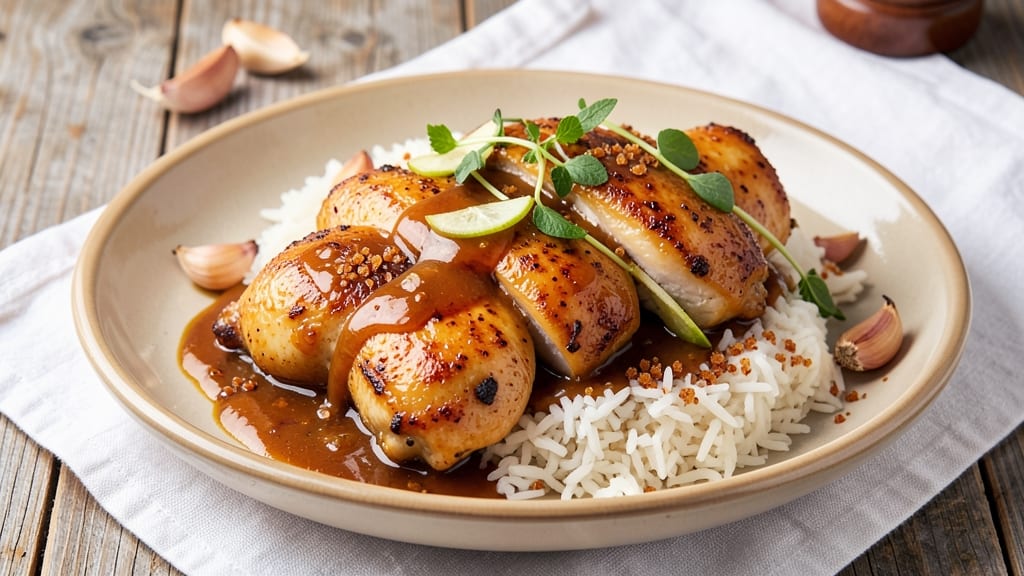
This chicken adobo recipe with rice vinegar delivers the bold, tangy-sour balance that defines Filipino comfort food—perfectly tender chicken braised in a rich, caramelized sauce. The key lies in balancing vinegar acidity with soy sauce depth, a technique that transforms simple ingredients into restaurant-quality results.
What sets this version apart is the slow braising process, which develops layers of flavor while keeping the chicken fork-tender.
Unlike quick marinades, this method lets the vinegar mellow while the sauce reduces into a glossy, slightly sweet glaze. Serve over steamed jasmine rice to soak up every last drop of that complex, savory-sour sauce.
The result? A dish that's equally at home on weeknight tables or holiday spreads, with authentic Filipino soul and modern convenience.
Ingredients for chicken adobo recipe with rice vinegar
Authentic Filipino flavors start with these 13 simple yet transformative ingredients.
| Ingredient | Amount | Notes |
|---|---|---|
| Chicken Thighs 🍗 | 1 ½ lb | Bone-in, skin-on preferred |
| Rice Vinegar 🍶 | 1 cup | White or seasoned variety |
| Soy Sauce 🥫 | ½ cup | Light or all-purpose |
| Garlic Cloves 🧄 | 8 cloves | Peeled and smashed |
| Fresh Ginger 🌿 | 2 tbsp | Finely grated |
| Brown Sugar 🍯 | ¼ cup | Packed, light kind |
| Olive Oil 🫒 | 2 tbsp | For searing chicken |
| Bay Leaves 🌿 | 2 whole | Dried, for depth |
| Black Peppercorns 🌶️ | 1 tsp | Crushed, freshly |
| Green Onions 🧅 | 3 whole | Sliced, for garnish |
| Jasmine Rice 🍚 | 1 ½ cups | Uncooked, for serving |
| Water 💧 | 3 cups | For rice cooking |
| Salt 🧂 | 1 ½ tsp | Kosher or sea salt |
The chicken thighs are non-negotiable here—bone-in, skin-on delivers the richest flavor and stays fork-tender during the long braise. Look for free-range or organic if possible, but standard supermarket thighs work beautifully too. For the rice vinegar, Kikkoman or Mae Ploy are reliable brands, but any white vinegar will do in a pinch. The ginger should be fresh and aromatic—no powdered substitutes here. Trader Joe's often carries pre-grated ginger in the freezer section, which saves time. For the garlic, smash the cloves with the flat side of your knife for maximum flavor infusion during cooking.
No soy sauce? Coconut aminos work in a bind, though the flavor will be subtly different. Short on brown sugar? White sugar plus a pinch of molasses mimics the depth. The olive oil matters—use a fruity, extra-virgin for the searing step to avoid a flat taste. For the rice, jasmine rice is traditional, but long-grain white is a fine substitute. If you can't find it, basmati rice works too. The green onions are optional but add a bright finish—substitute chives if that's what you have. For a deeper flavor profile, add 1/2 teaspoon of fish sauce (if not vegetarian) or soy sauce to the braising liquid.
The chicken can be prepped ahead—marinate for up to 4 hours in the refrigerator, but no longer to avoid over-acidifying the meat. The sauce thickens as it reduces, so keep it covered while simmering to prevent evaporation. Leftovers keep for 4-5 days in the fridge or 3 months frozen. For reheating, low heat is key—microwave reheats quickly but can make the sauce watery. Portion into airtight containers with a little sauce to keep the chicken moist. The rice should be cooked separately and served alongside—steamed to perfection using a 1:1.5 rice-to-water ratio.
Why You'll Love This Recipe
- One-Pan Magic: I swear by this recipe on nights when I’d rather not wash a million dishes. The chicken thighs brown right in the same pot where the sauce simmers—no extra pans, no fuss. Just toss everything in, let it work its magic, and you’re left with sticky, flavorful chicken that practically falls off the bone.
- Umami Bomb: That combo of rice vinegar and soy sauce? It’s the secret weapon. The vinegar brightens the dish while the soy adds depth, and when you throw in minced garlic and ginger—chef’s kiss—you get this perfect balance of tangy, savory, and just a little heat. It’s the kind of flavor that makes people ask, “What’s in this?”
- Lunchbox Hero: Between us, this is my go-to for meal prep. The leftovers reheat like a dream—no soggy rice here—and the sauce clings to the chicken so well, it’s basically a flavor bomb in a container. Pack it for work, take it to a picnic, or just eat straight from the fridge. It’s that good.
- Budget Win: Chicken thighs are affordable, and the rest of the ingredients? Pantry staples. I’ve made this for under $10 for four servings, and it still feels like a restaurant-quality meal. Plus, the leftovers stretch for days, so you’re not scrambling to figure out what’s for dinner. Win-win.
Step-by-step instructions for chicken adobo with rice vinegar
This method delivers authentic Filipino restaurant flavor with tender chicken and a perfect tangy-sour sauce.
Sear the Chicken Thighs for Maximum Flavor
Pat the 1.5 lb chicken thighs completely dry with paper towels—this ensures a proper sear. Heat 2 tablespoons olive oil in a large Dutch oven over medium-high heat until shimmering. Arrange the chicken thighs skin-side down in a single layer, leaving space between each piece.
Sear undisturbed for 5-6 minutes until the skin turns deep golden brown and crispy. Flip the thighs and continue cooking for another 4-5 minutes until they're evenly browned. Remove the chicken from the pot and set aside on a plate. The rendered fat in the pot will form the base of your sauce, so don't wipe it out.
Build the Tangy-Sour Sauce
In the same Dutch oven, add the 8 smashed garlic cloves, 2 tablespoons finely grated fresh ginger, and 2 whole bay leaves. Cook over medium heat for 2 minutes until the garlic turns light golden and becomes fragrant. Be careful not to burn the garlic—it should smell sweet and aromatic, not bitter.
Pour in the 1 cup rice vinegar and 0.5 cup soy sauce, scraping up any browned bits from the bottom of the pot with a wooden spoon. Add the 0.25 cup packed brown sugar and 1.5 teaspoons salt, then bring the mixture to a gentle simmer. Let it cook uncovered for 5 minutes to allow the flavors to meld and the sauce to slightly reduce.
Simmer the Chicken Until Tender
Return the seared chicken thighs to the pot, skin-side up. The sauce should come about halfway up the sides of the thighs. Bring everything to a gentle simmer (small bubbles breaking the surface), then reduce heat to low. Cover the pot and let it cook for 30-35 minutes, turning the chicken occasionally, until the meat is fork-tender and easily pulls away from the bone.
If the sauce reduces too much before the chicken is done, add 2-3 tablespoons water to maintain moisture. The chicken is ready when it reaches an internal temperature of 165°F and the sauce has thickened slightly but remains glossy. This slow cooking ensures the chicken stays juicy while absorbing the rich, tangy flavors.
Cook the Jasmine Rice
While the chicken simmers, rinse the 1.5 cups jasmine rice under cold water until the water runs clear. In a separate pot, combine the rice with 3 cups water and bring to a boil over high heat. Once boiling, reduce heat to low, cover tightly with a lid, and let it steam for 15 minutes. Remove from heat and let it sit covered for another 10 minutes—this resting period allows the rice to absorb all the moisture and develop a fluffy texture.
Fluff the rice gently with a fork, then cover it loosely with a clean kitchen towel to keep it warm. The rice should be tender with a slight bite, and any remaining liquid should be absorbed. Serve the rice alongside the chicken adobo, allowing each person to assemble their own plate with a generous portion of both.
Finish and Serve with Garnishes
Once the chicken is fully cooked, transfer it to a serving platter. Strain the sauce through a fine-mesh sieve to remove the bay leaves and any large ginger pieces, then return the sauce to the pot. Simmer uncovered over medium heat for 3-4 minutes to reduce slightly and intensify the flavors. The sauce should coat the back of a spoon and have a glossy sheen.
Garnish the chicken with 3 sliced green onions and serve immediately with the jasmine rice. The chicken should be fork-tender with a crispy skin, and the sauce should be perfectly balanced—tangy from the rice vinegar, savory from the soy sauce, and slightly sweet from the brown sugar. Each bite delivers a complex flavor profile that rivals the best Filipino eateries.
Pro Tips For Making Chicken Adobo Recipe With Rice Vinegar
- CRACK THE GINGER FIRST: I used to just throw in chopped ginger straight from the jar, but fresh ginger’s kick is way stronger when you smash it with the flat side of a knife before grating—no peeling needed. This releases more oils and cuts through the vinegar’s sharpness without overpowering the dish.
- SIMMER LOW AND SLOW: After the initial sear, drop the heat to a bare simmer—just enough to see tiny bubbles at the edges. I learned this the hard way: boiling the sauce turns it thin and sour, while a gentle simmer lets the vinegar mellow into a glossy, balanced glaze.
- SALT THE CHICKEN BEFORE SEARING: Season the thighs generously with salt at least 30 minutes before cooking—this guarantees crispy skin later. I skip this, and the skin ends up limp, no matter how long I sear. (Yes, even if you’re impatient like me.)
- USE LESS SOY SAUCE: Start with half the soy sauce the recipe calls for, then add more to taste at the end. Too much upfront makes the adobo taste like a salty broth instead of a bright, vinegary dish. Trust your palate—you can always adjust, but you can’t un-salt.
Perfect pairings for chicken adobo recipe with rice vinegar
Filipino-Inspired Sides
Serve your chicken adobo with steamed jasmine rice—it’s the classic pairing that soaks up every drop of that tangy-sour sauce. For extra authenticity, add garlic fried rice using leftover rice sautéed with 2 tbsp olive oil, 3 minced garlic cloves, and 1 egg scrambled in. 🍚
Crispy Vegetable Contrast
Balance the richness with crispy atchara (pickled papaya), which adds a refreshing tang and crunch. Slice 1 cup papaya thinly, soak in ½ cup vinegar, 1 tbsp sugar, and ½ tsp salt for 30 minutes, then drain.
For a quicker option, try sautéed bok choy with 1 tbsp soy sauce and 1 tsp sesame oil—it wilts beautifully while keeping a slight bite. 🥬
Wine & Beer Pairings
A crisp Sauvignon Blanc from New Zealand cuts through the sauce’s acidity beautifully—look for notes of citrus and grassiness that complement the vinegar. For beer lovers, a Filipino-style lager like San Miguel or a light wheat beer (like Blue Moon) balances the dish’s bold flavors without overpowering them. 🍷
Sauce Elevations
Boost the sauce’s depth by adding 1 tbsp fish sauce (if not vegetarian) or 1 tsp black pepper for heat. For a smoky twist, stir in ½ tsp smoked paprika during the final simmer.
If you love texture, top with toasted sesame seeds or crushed peanuts for a nutty crunch. 🌶️
Dessert Pairings
End the meal with ube halaya (purple yam jam) or leche flan—both offer a sweet contrast to the savory-sour adobo. For a lighter option, serve mango slices with a sprinkle of flaky sea salt to cleanse the palate. 🍦
Make-Ahead Tips for Leftovers
Store leftovers in airtight containers with a little extra sauce to keep the chicken moist. Reheat gently in a skillet with 1 tbsp water over low heat to avoid drying out.
For a quick meal, serve reheated adobo over microwave-steamed rice with a side of quick-pickled cucumbers (slice, toss with 1 tbsp vinegar and ½ tsp sugar). ⏰
Nutrition facts
Frequently asked questions
Can I use chicken breasts instead of thighs for this recipe?
Chicken breasts will work, but they cook faster and are more prone to drying out during the long braise. If using breasts, reduce the cooking time to 20-25 minutes and cover with extra sauce or broth to prevent drying. For best results, pound the breasts to an even thickness (1/2-inch) before cooking.
What if my sauce turns out too sour or too salty?
Too sour? Add 1-2 tablespoons brown sugar or a pinch of salt to balance the acidity. Too salty? Thin with 2-3 tablespoons water or a splash of rice vinegar to dilute, then simmer for 2-3 minutes to reduce. Taste as you go—Filipino adobo should be tangy-sour with savory depth, not harsh.
Can I make this recipe in an Instant Pot or slow cooker?
Yes! For the Instant Pot, sear the chicken first, then add all ingredients (except rice) and cook on High Pressure for 12 minutes. Release pressure naturally, then reduce the sauce on the stove. For a slow cooker, combine everything (including 1/2 cup water) and cook on Low for 4-5 hours or High for 2-3 hours. The chicken should still be fork-tender.
How do I know when the chicken is fully cooked?
The chicken is done when it reaches an internal temperature of 165°F and the meat easily pulls away from the bone. For bone-in thighs, check the thickest part of the thigh (not touching the bone). If using boneless breasts, they should be opaque throughout with no pink juices. Always use a meat thermometer for accuracy.
What's the best way to store and reheat leftovers?
Store in airtight containers with a little extra sauce to keep the chicken moist. Leftovers keep for 4-5 days in the fridge or 3 months frozen. To reheat, use a skillet over low heat with 1 tablespoon water—never microwave directly. For frozen adobo, thaw overnight in the fridge first, then reheat gently.