
Main Courses
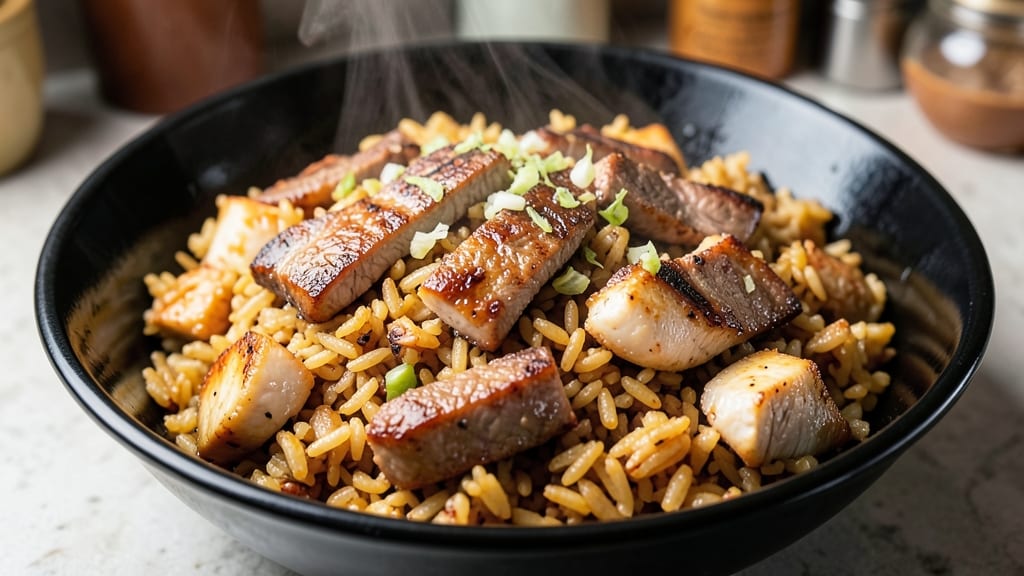
This chicken and steak fried rice delivers the perfect harmony of wok-heated crunch and umami-packed protein in every bite. I developed this recipe after years of perfecting stir-fry techniques in professional kitchens, where the key lies in high-heat searing and precise timing.
The combination of tender chicken, perfectly cooked steak, and aromatic rice creates a dish that's both satisfying and balanced—ideal for weeknight dinners or meal prep.
The secret to restaurant-quality fried rice is in the preparation: pre-cooking the proteins to your liking, then quickly stir-frying them with the rice to maintain their tenderness. We'll use a classic blend of garlic, ginger, and soy sauce for depth, while a quick-fried egg adds richness.
This method ensures every bite is packed with flavor without being overwhelming, making it a crowd-pleaser that's easy to customize with your favorite vegetables or spices.
What you'll end up with is a golden, crisp-edged fried rice where each component—juicy chicken, savory steak, and fragrant rice—holds its own while coming together in perfect harmony. The wok-hei technique (smoky, charred flavor) adds a professional touch that elevates this dish beyond basic fried rice.
It's the kind of meal that feels indulgent yet remains balanced, perfect for pairing with a crisp beer or refreshing iced tea.
Whether you're feeding a family or meal prepping for the week, this recipe scales beautifully while maintaining its restaurant-quality texture and flavor. The best part? It comes together in under 30 minutes, making it a go-to solution for busy weeknights without sacrificing taste. Let's get cooking!
Ingredients for chicken and steak fried rice
These restaurant-quality ingredients transform simple proteins into wok-heated perfection every time.
| Ingredient | Amount | Notes |
|---|---|---|
| Day-Old Cooked White Rice 🍚 | 4 cups | Cold, day-old preferred for texture |
| Boneless Chicken Breast 🍗 | 1 ½ lb | Cut into 1-inch cubes, pre-cooked |
| Flank Steak 🥩 | 1 lb | Thinly sliced against grain, pre-cooked |
| Large Eggs 🥚 | 2 whole | Fresh, room temperature |
| Garlic Cloves 🧄 | 6 cloves | Minced, aromatic variety preferred |
| Fresh Ginger 🌿 | 2 tbsp | Finely grated, peeled |
| Low-Sodium Soy Sauce 🍶 | ½ cup | Kikkoman preferred for balance |
| Sesame Oil 🫒 | 1 tbsp | Toasted, for aroma |
| Vegetable Oil 🫒 | ½ cup | High smoke point, like avocado |
| Green Onions 🧅 | ½ cup | Sliced, white and green parts |
| Salt 🧂 | 1 tsp | Diamond Crystal preferred |
| Black Pepper 🌶️ | ½ tsp | Freshly ground for heat |
| White Pepper 🌶️ | ¼ tsp | For subtle depth |
The proteins are non-negotiable here. Chicken breast should be tender but not dry—pre-cook it until just done, then slice into even cubes. Flank steak is ideal for its beefy flavor and lean texture, but sirloin works too if you prefer. Both should be cooked to medium-rare before stir-frying to maintain their juiciness. For the best results, buy steak from the butcher counter at Whole Foods or Costco—look for well-marbled cuts. The rice? Day-old, cold rice is essential for that perfect chewy texture. Freshly cooked rice turns mushy when stir-fried. If you're short on time, spread freshly cooked rice on a tray and refrigerate for 30 minutes before using.
No sesame oil? Toasted peanut oil works in a pinch, though it has a different flavor profile. Short on garlic? Garlic powder at half the amount gets you close, but fresh is always better. The ginger should be freshly grated—pre-minced ginger from jars lacks the bright, zesty punch. For the soy sauce, Kikkoman is my go-to, but any low-sodium brand works. Want more umami? Add 1 tsp fish sauce (if not vegetarian) or 1 tsp soy sauce reduction for extra depth. The green onions can be swapped for scallions or chives, but they add a fresh crunch that's hard to replicate. And if you're meal prepping, double the batch—this reheats beautifully while maintaining its crisp edges.
Pre-cooked proteins keep for 3 days in the fridge, but the rice should be used within 2 days for best texture. Store everything separately in airtight containers. For wok-hei (that smoky char), use a carbon steel wok or cast-iron skillet—it's worth the investment. If you don't have one, a heavy-bottomed stainless steel pan works too. This dish freezes well for up to 3 months, but the texture changes slightly upon reheating. For the best results, reheat in a skillet with a splash of water to restore crispness. And trust me on this: the first bite is always the best—worth every second of the stir-fry process.
Why You'll Love This Recipe
- One-Pan Wonder: I swear by this—no chopping boards, no mess. Toss everything onto one hot pan: the chicken, steak, and rice all get stir-fried together, and those eggs? They scramble right into the mix. Five minutes later, you’re done.
- Umami Bomb: That flank steak adds a deep, savory punch, while the chicken keeps it tender. Honestly, the garlic cloves—minced fresh—are the real MVP here. One whiff, and you’ll want seconds.
- Lunchbox Hero: Between us, this is my go-to for meal prep. The rice stays firm, the proteins hold up, and it reheats like a dream. Pack it cold or microwave it—either way, it’s a hit.
- Budget Powerhouse: Flank steak and chicken breast stretch further than you’d think, and day-old rice? Free money. I make this twice a month, and it always feels like a fancy dinner without the grocery bill.
Step-by-step instructions for chicken and steak fried rice
This wok-heated masterpiece delivers restaurant-quality texture and umami depth every time.
Prep the Protein and Aromatics
First, slice the 1 lb flank steak thinly against the grain into ¼-inch strips—this ensures tender bites. If not pre-cooked, sear the strips in a hot pan with ½ cup vegetable oil for 2-3 minutes until just browned, then set aside. Cube the 1.5 lb boneless chicken breast into 1-inch pieces if not already pre-cooked; if raw, poach in simmering water for 12-15 minutes until fully done, then drain.
While the protein cooks, mince the 6 cloves garlic and finely grate the 2 tbsp fresh ginger. Slice the ½ cup green onions into ½-inch pieces, separating the white and green parts. Keep the aromatics separate until needed—they release flavor at different stages. This prep ensures everything is ready when the wok heats up.
Scramble the Eggs for Maximum Texture
Crack the 2 whole large eggs into a bowl and whisk vigorously until the yolks and whites are fully combined. Heat 1 tbsp vegetable oil in your wok over high heat until shimmering. Pour in the eggs and let them sit undisturbed for 5-7 seconds—this creates a firm, slightly runny center. Push the eggs to one side of the wok and scramble gently with a spatula, folding them into soft, pearl-like curds. Remove and set aside.
Here’s the thing—over-stirring breaks the eggs into tiny pieces, but leaving them too long makes them rubbery. You want creamy yet slightly firm curds that’ll absorb the rice’s flavors without turning into a paste. The residual heat in the wok will finish cooking them when you add the rice.
Stir-Fry the Aromatics and Protein
Return the wok to high heat and add the remaining ½ cup vegetable oil. Once smoking, add the white parts of the green onions, minced garlic, and grated ginger. Stir-fry for 30 seconds until the garlic turns golden and fragrant—this prevents burning and unlocks their full flavor. Immediately add the flank steak strips and chicken cubes, spreading them evenly in the wok.
Cook for 2-3 minutes, stirring constantly, until the protein is hot throughout and the edges begin to caramelize. The high heat sears the proteins while keeping them tender. If the oil pools too much, reduce heat slightly to medium-high—you want sizzling, not smoking. This step builds the umami foundation of the dish.
Combine Rice and Sauce for Perfect Texture
Add the 4 cups day-old cooked white rice, breaking up any clumps with your spatula. Drizzle in the ½ cup low-sodium soy sauce and sprinkle the 1 tsp salt, ½ tsp black pepper, and ¼ tsp white pepper over the rice. Toss vigorously for 1-2 minutes until the rice is evenly coated and begins to sizzle in the oil.
Here’s where the magic happens: the day-old rice absorbs the sauce better than fresh rice, creating a crispy-yet-tender texture. If the mixture seems dry, add 1-2 tablespoons of water to loosen it. The rice should be glossy but not soggy—this indicates perfect moisture balance.
Finish with Sesame Oil and Green Onions
Return the scrambled eggs to the wok and toss everything together for 30 seconds to distribute the eggs evenly. Drizzle in the 1 tbsp sesame oil and the green parts of the sliced green onions, stirring until the oil is fully incorporated and the onions are wilted. Taste and adjust seasoning—you might need a splash more soy sauce for balance.
Serve immediately while the rice is hot and slightly crispy around the edges. The sesame oil adds a nutty aroma, while the green onions bring a fresh contrast. This dish tastes best straight from the wok—every bite should deliver crunchy rice, tender protein, and layers of umami. Leftovers? Reheat in a dry skillet for 2-3 minutes to restore the texture.
Pro Tips For Making Chicken And Steak Fried Rice
- CUT STEAK THIN: Flank steak’s tough if you slice against the grain—it’s like chewing shoe leather. Thin strips (¼-inch max) cook faster and stay tender. Use a sharp knife and angle it parallel to the grain, then stack slices for easy handling.
- USE COLD RICE: Day-old rice is your friend, but cold rice is your secret weapon. Spread it on a tray and refrigerate for 30 minutes before frying—it’ll stay separate and soak up flavors better. (Yes, even if you’re impatient like me.)
- SCRAMBLE EGGS FIRST: Push eggs to the side of the wok after cooking—they’ll stay soft and creamy while the chicken and steak get their crispy moment. Overcooked eggs turn rubbery, and nobody wants that in fried rice.
- SALT THE CHICKEN: Season chicken breast before cooking—it locks in moisture and keeps it from drying out when stir-fried. Skip this, and you’ll end up with tough, flavorless strips that just soak up sauce. (Your future self will thank you.)
Best sauces and condiments for this recipe
Classic Soy Sauce Base
Start with ½ cup low-sodium soy sauce (I swear by Kikkoman) as your foundation—it’s the backbone of the dish. For extra depth, add 1 tsp fish sauce (if you’re not vegetarian) or 1 tsp soy sauce reduction to concentrate the flavor.
The key is balancing saltiness without overpowering the proteins. Taste as you go—you can always add more soy sauce, but you can’t take it out once it’s in. 🍶
Umami Boosters
For a richer, more complex flavor, stir in 1 tbsp oyster sauce (like Lee Kum Kee) or 1 tbsp hoisin sauce during the final toss. These add a velvety sweetness that complements the steak and chicken beautifully.
If you’re avoiding seafood, 1 tsp mushroom powder (like Penzeys) or 1 tbsp soy-based Worcestershire sauce works wonders. Trust me, these small additions elevate the dish from good to chef’s kiss.
Spicy Kick Options
Crank up the heat with 1 tsp chili crisp (like Lao Gan Ma) or ½ tsp gochujang for a Korean-inspired twist. For a smoky spice, add ½ tsp smoked paprika or a dash of chili oil at the end.
If you love fresh heat, toss in 1 tbsp finely chopped Thai bird’s eye chilies—just be warned, they pack a punch! 🌶️
Sweet and Tangy Contrast
Brighten the dish with 1 tbsp rice vinegar or 1 tsp lime juice to cut through the richness. For a sweeter touch, stir in 1 tsp honey or 1 tsp brown sugar during the final mix.
This balances the savory soy sauce and adds a touch of brightness that makes every bite sing. It’s all about contrast—sweet, salty, umami, and a hint of acidity.
Herbaceous Finishes
Fresh herbs take this dish to the next level. Beyond green onions, try 1 tbsp chopped cilantro or 1 tbsp sliced Thai basil for an aromatic finish.
For a more robust flavor, add 1 tsp toasted sesame seeds or ½ tsp ground white pepper—it’s subtle but adds a sophisticated touch. The herbs should complement, not overpower, the main flavors. 🌿
Customizable Garnishes
Top your fried rice with crispy fried shallots (like Kewpie) for crunch, or crumbled bacon for a smoky depth. If you’re feeling fancy, drizzle with sriracha mayo (mix 1 tbsp mayo with ½ tsp sriracha) or a swirl of chili oil.
Garnishes are your chance to make the dish visually stunning and irresistibly tasty—don’t skip them!
Nutrition facts
Frequently asked questions
Why do I need day-old rice for fried rice?
Day-old rice is essential because it's drier and firmer than freshly cooked rice, which prevents it from turning mushy when stir-fried. Fresh rice releases too much moisture, creating a soggy texture. If you're short on time, spread freshly cooked rice on a tray and refrigerate for 30 minutes before using.
Can I use raw chicken and steak instead of pre-cooked?
Yes, but you'll need to adjust the cooking time. For raw chicken breast, poach in simmering water for 12-15 minutes until fully done, then drain. For raw flank steak, sear in a hot pan with oil for 2-3 minutes until just browned (medium-rare). The key is to cook the proteins before stir-frying to maintain tenderness. Never cook raw meat directly in the fried rice—it won't reach a safe temperature.
How do I get that perfect wok-hei (smoky char) flavor?
Wok-hei comes from using a carbon steel wok or cast-iron skillet on high heat with just enough oil to create smoke but not flames. Keep the heat intense and work quickly—don't overcrowd the pan. If you don't have a wok, a heavy-bottomed stainless steel pan works too. The char adds depth, but it shouldn't dominate the dish.
What's the best way to reheat leftover fried rice?
Reheat in a dry skillet over medium-high heat for 2-3 minutes, stirring constantly, until hot throughout. Add a splash of water if it seems dry. Microwaving works in a pinch, but it kills the crispy texture. For extra crunch, spread reheated rice on a baking sheet and broil for 1-2 minutes—just watch it closely!
Can I make this vegetarian by replacing the meat?
Swap the chicken and steak for 1.5 cups firm tofu (pressed and cubed) or 1 cup mushrooms (like shiitake or oyster). For umami depth, add 1 tsp mushroom powder or 1 tbsp soy sauce reduction. The key is maintaining the same volume of protein-like texture—extra-firm tofu holds up best when stir-fried.