
Main Courses
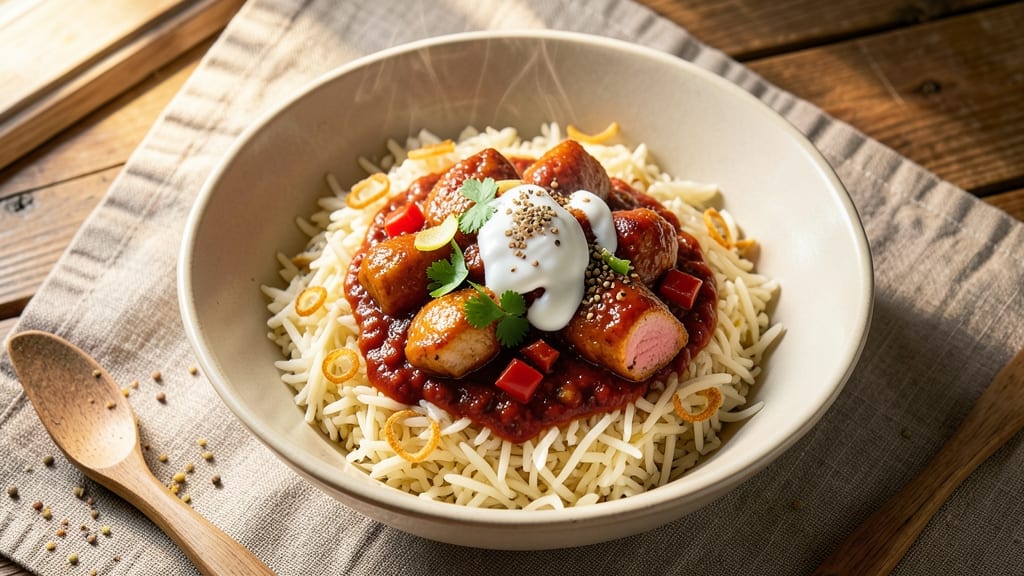
This chicken curry over rice recipe delivers restaurant-quality spiced tomato gravy that transforms simple ingredients into a fragrant, flavor-packed meal. The secret lies in slow-cooked chicken infused with aromatic spices, creating tender pieces that melt in your mouth while absorbing the rich, velvety sauce.
I developed this version after years of perfecting curry techniques in professional kitchens, ensuring every bite balances heat, sweetness, and umami perfectly.
The foundation of this dish is a foolproof tomato gravy that simmers until thick and fragrant, with just the right consistency to coat each forkful.
We'll use basmati rice for its signature fluffy texture that contrasts beautifully with the rich curry, and I'll share my technique for achieving perfectly cooked rice every time. The spices—cumin, coriander, turmeric, and garam masala—are toasted to release their full aroma, creating layers of flavor that build with each bite.
What makes this recipe truly special is how it comes together: tender chicken pieces swimming in a spiced tomato gravy that's neither too thin nor too thick, served over fragrant basmati rice that's light yet substantial.
The dish finishes with fresh cilantro and a squeeze of lemon, adding brightness to cut through the richness. This is the kind of meal that feels like a warm embrace—comforting, satisfying, and full of depth.
Perfect for weeknight dinners or special occasions, this curry scales easily for crowds while maintaining its restaurant-quality balance. The method is straightforward but packed with professional techniques to ensure success every time. Let's get cooking—your taste buds will thank you.
Ingredients for chicken curry over rice
Restaurant-quality curry starts with these aromatic ingredients that transform simple chicken into a fragrant, velvety masterpiece.
| Ingredient | Amount | Notes |
|---|---|---|
| Boneless, Skinless Chicken Thighs 🍗 | 1 ½ lb | Cut into 1.5-inch pieces |
| Basmati Rice 🌾 | 1 ½ cups | Uncooked, long-grain preferred |
| Canned Crushed Tomatoes 🍅 | 1 can (14.5 oz) | San Marzano preferred |
| Fresh Ginger 🌿 | ½ inch | Peeled, finely grated |
| Yellow Onion 🧅 | 1 whole | Medium size, finely chopped |
| Garlic Cloves 🧄 | 6 cloves | Minced for aromatic base |
| Ground Cumin 🌿 | 1 ½ tsp | Toasted for deeper flavor |
| Ground Coriander 🌿 | 1 ½ tsp | Freshly ground preferred |
| Turmeric Powder 🌶️ | ½ tsp | Bright yellow color |
| Garam Masala 🌶️ | 1 tsp | Store-bought or homemade blend |
| Coconut Milk 🥥 | ½ cup | Full-fat for creaminess |
| Fresh Cilantro 🌿 | ¼ cup | Chopped for garnish |
| Lemon Juice 🍋 | 2 tbsp | Freshly squeezed |
| Vegetable Oil 🫒 | 2 tbsp | High smoke point preferred |
| Salt 🧂 | 1 ½ tsp | Diamond Crystal preferred |
| Black Pepper 🌶️ | ½ tsp | Freshly ground preferred |
The ginger and garlic are the flavor anchors here. Fresh ginger from the produce section (the knobby, brown-skinned kind) packs more punch than the jarred stuff—Whole Foods or Trader Joe's usually have the best selection. For garlic, peel and rough-chop it first before mincing—saves time and keeps your knife sharp. The San Marzano crushed tomatoes are worth the splurge; their sweetness and consistency make all the difference. If you can't find them, Muir Glen is a solid backup. The basmati rice should be long-grain and aged at least 6 months—check the package date. Lundberg or Mahatma are reliable brands.
No fresh ginger? Substitute 0.25 tsp ground ginger, but you'll lose some depth. Running low on garam masala? Mix 0.25 tsp each of cinnamon, cardamom, cloves, and black pepper for a quick version. The coconut milk can be swapped for Greek yogurt or cashew cream if you're avoiding dairy. For extra richness, add 1 tbsp of butter or coconut oil to the gravy at the end. The cilantro is optional but adds that bright finish—dried won't cut it—so grab a bunch if you're making this. If you're short on time, pre-chopped cilantro from the refrigerated section works.
The chicken pieces can be prepped ahead and stored in the fridge for 2 days—just pat them dry before cooking. The spice blend keeps for 3 months in an airtight container, so make extra. The cooked curry reheats beautifully—add a splash of water or milk if it thickens too much. For meal prep, portion the rice and curry separately; they reheat best individually. The lemon juice should be added fresh when serving, but you can zest the lemon and mix it into the gravy ahead of time if you prefer. This dish tastes even better the next day as the flavors meld.
Why You'll Love This Recipe
- Foolproof Simplicity: I swear by this recipe because it’s the kind of meal that forgives mistakes. Dice the onion and ginger roughly—no need for perfect matchsticks—and the chicken thighs cook through in one pan while the rice simmers. Between us, I’ve burned rice before, but this curry? It’ll taste good even if you rush.
- Rich Without Effort: That canned crushed tomato base is where the magic happens—it’s already sweet and tangy, so you just need to layer in the ginger, onions, and a pinch of spices. The chicken soaks up all that flavor until it’s tender and falling apart, but the sauce? Thick, aromatic, and just spicy enough to linger.
- Weeknight Workhorse: Honestly, this is my go-to when I need to feed a crowd or pack lunches. Make a double batch, and you’ve got dinner for three nights (or a potluck). The rice stays fluffy, the curry reheats beautifully, and my kids—picky eaters—still ask for seconds.
- Budget-Friendly Luxury: Chicken thighs are cheaper than breasts, and basmati rice stretches far. A single can of tomatoes and a small onion cut costs in half, yet you’d never guess it’s not a restaurant dish. I’ll be real: this is the kind of meal that makes grocery bills feel less brutal.
Step-by-step instructions for chicken curry over rice
Here's how to build a rich, aromatic curry that clings perfectly to each basmati grain.
Cook the Basmati Rice to Fluffy Perfection
Rinse the 1.5 cups basmati rice under cold water until the water runs clear—this removes excess starch and prevents gummy rice. In a medium saucepan, combine the rinsed rice with 3 cups water and bring to a boil over high heat. Once boiling, reduce to low heat, cover tightly with a lid, and simmer for 15 minutes.
Here's the thing—don't peek! The steam needs to build up evenly. After 15 minutes, turn off the heat and let the rice sit covered for 10 minutes. The residual heat will finish cooking it perfectly. Fluff with a fork before serving to separate the grains.
Sear the Chicken for Deep Flavor
Heat 2 tablespoons vegetable oil in a large skillet over medium-high heat. Add the 1.5 lb boneless, skinless chicken thighs, cut into 1.5-inch pieces, and cook undisturbed for 3-4 minutes per side until golden brown and cooked through. You want that beautiful crust—it's where all the flavor develops.
Once the chicken reaches an internal temperature of 165°F, remove it from the skillet and set aside. Don't drain the oil—those browned bits are pure flavor gold. They'll form the base of your curry sauce, so leave them in the pan.
Build the Aromatic Spice Base
In the same skillet (with all that delicious chicken fat), add the 1 whole yellow onion, chopped, and cook for 5-6 minutes until softened and golden. Add the 0.5-inch fresh ginger, 6 cloves garlic, 1.5 teaspoons ground cumin, 1.5 teaspoons ground coriander, 0.5 teaspoon turmeric powder, and 1 teaspoon garam masala. Stir constantly for 1-2 minutes until fragrant.
This is where the magic happens—the spices toast and release their oils, creating that warm, earthy aroma that defines great curry. If the spices start to darken too quickly, reduce the heat to medium. You're aiming for a deep golden color, not burnt.
Simmer the Curry Sauce
Pour in the 1 can (14.5 oz) crushed tomatoes and stir to combine with the spice mixture. Add 1.5 teaspoons salt and 0.5 teaspoon black pepper, then bring to a gentle simmer. Reduce heat to low and let it cook uncovered for 10 minutes, stirring occasionally, until the sauce thickens slightly.
Return the seared chicken to the skillet and spoon the sauce over it. Cover and simmer for another 10-12 minutes until the chicken absorbs the flavors and the sauce coats it beautifully. The curry should be rich but not watery—if it's too thick, add 2-3 tablespoons water to reach your desired consistency.
Finish with Coconut Milk and Garnish
Stir in the 0.5 cup coconut milk and 2 tablespoons lemon juice, then simmer for 3-4 minutes until heated through. The coconut milk adds a velvety richness that balances the spices perfectly. Taste and adjust seasoning if needed—you might need a pinch more salt or a squeeze of lemon for brightness.
Remove from heat and stir in the 0.25 cup fresh cilantro. Serve the chicken curry immediately over the fluffy basmati rice, garnished with additional cilantro if desired. Each bite should deliver tender chicken, aromatic spices, and a perfect balance of tangy-sweet flavors.
Pro Tips For Making Chicken Curry Over Rice
- CUT ONIONS SMALLER THAN YOU THINK: I used to slice onions into big half-moons for curry, and they’d just sit there like stubborn lumps. For this dish, dice them into ¼-inch pieces—they’ll soften and sweeten faster, blending right into the sauce instead of turning to mush or burning. (Yes, it takes a minute, but your curry will taste like it simmered all day.)
- SALT THE CHICKEN BEFORE SEARING: Skip the "season after cooking" habit—pat those thighs dry, then hit them with salt before they hit the pan. The salt breaks down the proteins, ensuring juicier meat, and the crust seals better. I learned this the hard way after serving dry, flavorless chicken that looked perfect but tasted like cardboard.
- LOW AND SLOW AFTER TOMATOES: Once you add the crushed tomatoes, drop the heat to medium-low and let it simmer uncovered for at least 15 minutes. This isn’t the time to rush—you’re building depth, not just heating. I used to crank it up, and the sauce would turn grainy and one-dimensional. Patience here makes the difference between "meh" and "wow."
- TOAST THE RICE GRAINS: After cooking the rice, spread it on a tray and let it dry out for 10 minutes. Then, toast it in a dry pan over medium heat for 2–3 minutes, stirring constantly. The grains will puff up and get that nutty aroma—basmati rice deserves this step, even if you’re serving it plain. (Your curry will taste better too, because contrast matters.)
Essential equipment for chicken curry over rice
Skillet Essentials
For this curry, I swear by a 10-inch cast iron skillet—it retains heat beautifully and develops that perfect crust on the chicken. My go-to is a Lodge Pre-Seasoned Cast Iron Skillet because it's heavy enough to handle the high heat without warping.
If you don't have cast iron, a heavy-bottomed stainless steel skillet like All-Clad works just as well. The key is avoiding nonstick—it can't handle the high heat needed for proper searing. 🔥
Spice Toasting Tools
You'll need a wooden spoon for stirring the spices—it won't scratch your pan like metal. I recommend Oxo Good Grips for their ergonomic handles. For measuring spices precisely, invest in a small spice scoop set (like Penzeys Spices sells) rather than spooning from the jar.
Toasting spices requires close attention, so keep a timer handy—I use my phone's kitchen timer for simplicity.
Rice Cooking Gear
For the basmati rice, a medium saucepan with a tight-fitting lid is non-negotiable. I prefer Calphalon stainless steel for its even heating. If you're making this for a crowd, consider a rice cooker—I love the Zojirushi model because it handles basmati perfectly without requiring constant monitoring.
For portioning, grab a fine-mesh strainer to rinse the rice thoroughly before cooking.
Knife & Cutting Prep
A sharp chef's knife (like Wüsthof Ikon) is essential for chopping onions, garlic, and ginger efficiently. I also keep a small pairing knife (about 4 inches) for mincing garlic—it gives me better control.
A cutting board with non-slip feet (I use John Boos Maple) prevents accidents, and a microplane for the ginger and garlic makes prep faster than a knife.
Storage & Serving
For leftovers, I use glass Pyrex storage containers with airtight lids—they keep the curry tasting fresh for up to 4 days in the fridge. When serving, a ladle with a long handle (like Oxo Stainless Steel) helps portion the curry neatly over rice.
For garnishing, a small bowl for the cilantro and a lemon wedge press (or just a fork) works perfectly. 💫
Nutrition facts
Frequently asked questions
Can I use chicken breast instead of thighs?
Chicken breast works but requires extra care. Cut it into 1-inch pieces and pound them slightly to even thickness. Cook at medium heat for 4-5 minutes per side to prevent drying out. The thighs stay juicier due to their higher fat content, but breast will work if you monitor heat closely.
How do I make this curry less spicy?
Reduce the garam masala to 0.5 teaspoon and omit the black pepper entirely. For extra mildness, add 1 extra tablespoon lemon juice and 0.25 cup coconut milk at the end to balance flavors. Fresh cilantro also helps brighten the dish without heat.
Can I make this in an Instant Pot?
Sauté chicken and spices as directed, then add tomatoes and 1 cup water. Cook on high pressure for 8 minutes, then quick-release. Stir in coconut milk and lemon juice at the end. The rice can be cooked separately in the Instant Pot using the rice setting.
Why is my curry sauce too thin?
Simmer uncovered for 5-10 extra minutes to reduce naturally. If still too thin, mix 1 tablespoon cornstarch with 2 tablespoons water, stir into the sauce, and simmer 2 minutes until thickened. Never use flour—it can make the sauce taste grainy.
What's the best way to reheat leftovers?
Reheat curry and rice separately in a skillet with 1 tablespoon oil over medium heat for 3-4 minutes. Add 1 tablespoon water to the curry if it thickens too much. Never microwave—it makes rice rubbery and curry watery. For extra flavor, stir in 0.5 teaspoon garam masala while reheating.