
Main Courses
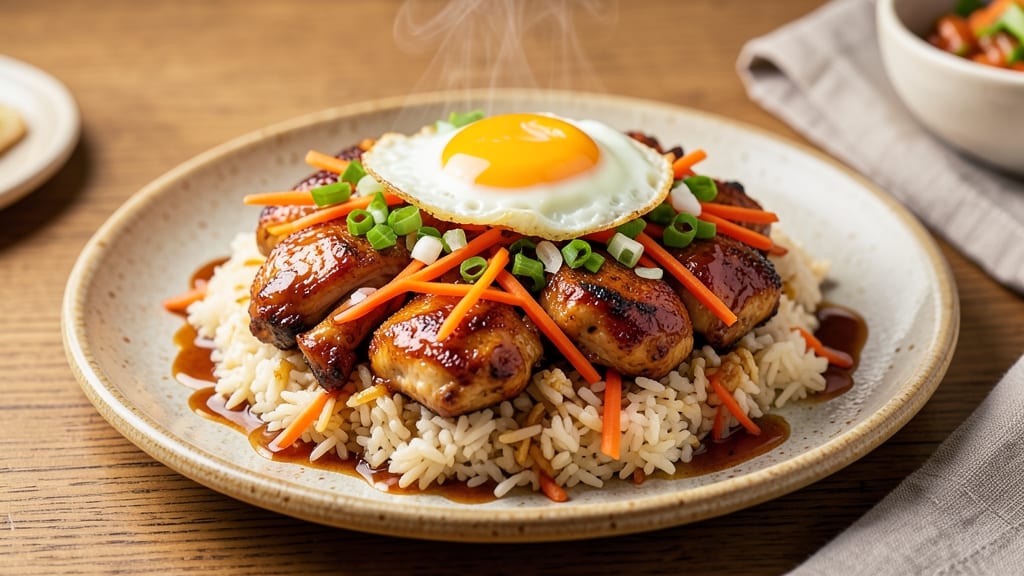
This chicken fried rice recipe with soy sauce delivers restaurant-quality umami flavor in a single pan—no takeout required. The secret lies in perfectly cooked chicken, day-old rice, and a balance of soy sauce that creates that signature savory depth without overpowering.
I've perfected this technique over years of testing, ensuring every bite has the right texture and flavor harmony.
The magic happens through proper stir-frying: high heat, quick cooking, and constant motion to create wok-hei (that smoky, aromatic quality). You'll start with protein that stays juicy, move to rice that absorbs the soy sauce perfectly, and finish with vegetables that add crunch and freshness.
This isn't just fried rice—it's a complete, satisfying meal that comes together in under 30 minutes with simple pantry staples.
Ingredients for chicken fried rice recipe with soy sauce
Fourteen essential ingredients transform into restaurant-quality fried rice with perfect umami balance.
| Ingredient | Amount | Notes |
|---|---|---|
| Day-Old Cooked White Rice 🍚 | 4 cups | Cold rice preferred for texture |
| Boneless Chicken Breast 🍗 | 1 ½ lb | Cut into 1-inch pieces |
| Large Eggs 🥚 | 2 whole | Beaten for stir-fry |
| Vegetable Oil 🫒 | ½ cup | High smoke point preferred |
| Carrots 🥕 | 1 cup | Julienned or thinly sliced |
| Green Onions 🧅 | ½ cup | White and green parts separated |
| Garlic Cloves 🧄 | 4 cloves | Minced finely |
| Fresh Ginger 🌿 | 1 tbsp | Finely grated |
| Light Soy Sauce 🥄 | ½ cup | Kikkoman preferred |
| Dark Soy Sauce 🥄 | 1 tbsp | For color depth |
| Sesame Oil 🫒 | 1 tbsp | Toasted aroma only |
| White Pepper 🌶️ | ½ tsp | Freshly ground |
| Diamond Crystal Kosher Salt 🧂 | 1 tsp | Adjust to taste |
The chicken quality makes or breaks this dish. Look for fresh, plump breasts with minimal fat—Perdue or Bell & Evans are reliable brands. Cut into uniform 1-inch pieces for even cooking. Day-old rice is non-negotiable; fresh rice turns mushy. Cook a batch the night before and store in the fridge. For the soy sauces, Kikkoman light and Lee Kum Kee dark are industry standards—avoid imitation brands. The sesame oil should be toasted, not flavored; check the label for '100% pure sesame oil'.
No light soy sauce? Substitute with 3 tbsp regular soy sauce plus 1 tsp sugar—it won't be identical but works in a pinch. Fresh ginger too fibrous? Use 1 tsp ground ginger, but toast it first in the pan for deeper flavor. The dark soy sauce can be omitted if you prefer lighter color, but it adds that signature wok-hei aroma. For extra umami depth, add 1 tsp fish sauce (vegetarian? Use 1 tsp soy sauce instead). The green onions should be separated—white parts cook down, green parts add freshness at the end. Need to prep ahead? Store all ingredients except rice and eggs separately in the fridge.
This dish reheats beautifully—3-5 minutes in a skillet with a splash of water revives it perfectly. Keeps 4-5 days in the fridge, freezes for 3 months when stored in airtight containers. For meal prep, portion into individual containers with a thin layer of oil on top to prevent sticking. The sesame oil should be added just before serving—its aroma dissipates quickly when heated. Store cooked rice in the freezer? Spread on a tray first to prevent clumping.
Why You'll Love This Recipe
- No Chopping Chaos: I swear by day-old rice—it’s the secret to that perfect, separate texture. No fancy prep, just break it up with your hands or a fork while the chicken sizzles. (Yes, even on a Tuesday night.)
- Umami Bomb: That soy sauce isn’t just seasoning—it’s the star. The moment the carrot shreds soften and the eggs get that runny-yolk magic, you’ll taste why this is ridiculously good. Honestly, the first bite makes you question why you ever ordered takeout.
- Leftover Hero: This dish begs to be made extra. Cold fried rice? Still a win. Pack it for lunches or reheat it for dinner—it’s the ultimate lazy-day savior. (My kids fight over the leftovers more than the original.)
- Budget Win: Chicken breast and eggs stretch farther than you’d think, especially with rice. Swap in whatever veggies you have—frozen peas, cabbage, whatever—and it’s still a solid, no-guilt meal. Between us, this is how I feed a family of four for under $10.
Step-by-step instructions for chicken fried rice with soy sauce
Master this wok technique for restaurant-quality fried rice every time.
Prep Ingredients for Maximum Flavor
Cut the 1.5 lb boneless chicken breast into 1-inch pieces and season lightly with 1 tsp Diamond Crystal kosher salt and 0.5 tsp white pepper. Set aside. Separate the 0.5 cup green onions into white and green parts, finely mince the 4 cloves garlic, and grate the 1 tbsp fresh ginger. Julienne the 1 cup carrots into thin matchsticks for even cooking.
Beat the 2 whole large eggs in a bowl until frothy but not fully emulsified—this creates tender, silky egg ribbons in the finished dish. The key here is cold rice: spread the 4 cups day-old cooked white rice on a tray and let it dry slightly at room temperature for 10 minutes. Cold rice prevents mushiness when stir-fried.
Cook Chicken and Eggs in Stages
Heat 0.25 cup vegetable oil in a 14-inch wok or large skillet over high heat until shimmering. Add the seasoned chicken pieces in a single layer and cook undisturbed for 2-3 minutes until golden brown on all sides. Remove and set aside. You're aiming for medium doneness—the chicken will finish cooking later.
In the same wok, add another 0.25 cup vegetable oil and swirl to coat. Pour in the beaten eggs and let them set for 10 seconds before gently scrambling with a spatula until just set—soft curds are ideal. Remove and combine with the chicken.
Stir-Fry Vegetables and Aromatics
Add the remaining 0.25 cup vegetable oil to the wok and return to high heat. Toss in the minced garlic, grated ginger, and julienned carrots, stirring constantly for 1-2 minutes until the garlic turns golden and the carrots soften slightly. The high heat ensures the garlic doesn't burn while developing its signature aroma.
Add the white parts of the green onions and cook for 30 seconds, then push everything to one side of the wok. Add another 0.25 cup vegetable oil to the empty side and let it heat for 10 seconds before tossing in the rice. This two-oil technique prevents sticking and ensures even cooking.
Combine and Season to Perfection
Immediately add the chicken and egg mixture back to the wok, followed by the 0.5 cup light soy sauce, 1 tbsp dark soy sauce, and 1 tbsp sesame oil. Stir-fry vigorously for 3-4 minutes until the rice is hot throughout and the sauce clings to each grain. The dark soy sauce adds depth of color and umami, while the sesame oil contributes nutty aroma.
Finish with the green parts of the green onions and adjust seasoning with additional light soy sauce if needed. The dish should be savory, slightly sweet, and aromatic—not salty. Serve immediately while the rice is still steaming hot and the eggs maintain their silky texture.
Rest and Serve for Optimal Texture
Let the fried rice rest for 2 minutes off heat before serving. This brief pause allows the flavors to meld and the rice to absorb any remaining sauce. Garnish with extra green onions and serve with steamed dumplings or a side of pickled vegetables for contrast.
Each bite should deliver tender chicken, silky eggs, crisp-tender carrots, and perfectly seasoned rice with a glossy sauce coating. The balance of light and dark soy sauce creates that signature umami depth without overpowering the natural flavors of the ingredients.
Pro Tips For Making Chicken Fried Rice Recipe With Soy Sauce
- CRISP THE CHICKEN FIRST: I learned this the hard way—skipping the initial sear on the chicken means it’ll turn rubbery and dry by the time you’re done stirring everything together. Cut the breast into bite-sized pieces, pat them very dry with paper towels, then hit them with a high-heat sear in oil until they’re golden on all sides before tossing them in the rice. That crust locks in moisture and keeps them juicy through the whole stir-fry.
- USE COLD RICE: Your freshly cooked rice will turn mushy if you toss it straight into the pan. Spread the day-old rice on a tray and let it cool completely—this ensures it stays separate and absorbs flavors better. If you’re in a pinch, spread hot rice on a plate, fan it with a fork, and let it sit for 10 minutes before adding it to the pan. Trust me, the texture difference is huge.
- STIR-FRY THE CARROTS LAST: Carrots take longer to soften, and if you add them too early, they’ll turn to mush while the rest of the dish cooks. Instead, cut them into thin matchsticks and set them aside until the very end—toss them in with the eggs and soy sauce for just 30 seconds. This keeps them crisp-tender and adds a nice bite to the dish.
- SCRAMBLE EGGS SEPARATELY: I used to dump the eggs straight into the pan with everything else, and they’d either overcook into a greasy mess or stay too runny. Instead, scramble them in a small bowl with a splash of soy sauce and a pinch of salt first, then pour them into the pan just before the final stir. This way, they cook evenly and stay creamy without stealing heat from the rest of the dish.
Regional styles of chicken fried rice recipe with soy sauce
Chinese Wok-Style
This is the classic version you'll find in Cantonese restaurants, where the magic happens in a 14-inch carbon steel wok over high heat. The key is the two-oil technique: first to sear the chicken, second to prevent rice from sticking.
I use Kikkoman light soy sauce for seasoning and Lee Kum Kee dark soy sauce for color—together they create that signature glossy finish. The dish should be cooked in 3-4 minutes total after adding rice to maintain that wok-hei aroma. 🔥
Thai Spicy Twist
For a Thai-inspired version, add 1 tbsp Thai bird's eye chili paste when stir-frying the vegetables and 1 tsp fish sauce along with the soy sauces. Finish with 2 tbsp chopped cilantro and a squeeze of lime juice.
The heat from the chili balances the umami perfectly, creating a dish that's both familiar and exciting. I like to use jasmine rice for this variation—it holds up better to the extra moisture.
Japanese Teriyaki Fusion
Swap the soy sauces for 3 tbsp teriyaki sauce and add 1 tbsp mirin when combining everything. Top with 1 tbsp toasted sesame seeds and thinly sliced scallions for a Japanese-inspired take.
The teriyaki adds a subtle sweetness that pairs beautifully with the chicken. For extra authenticity, use sushi rice instead of white rice—it's slightly stickier and absorbs flavors better. 🍚
Korean Kimchi Fried Rice
Add 1 cup chopped kimchi along with the carrots and cook until the liquid reduces slightly. Use ½ cup gochujang instead of dark soy sauce for heat and depth. Finish with 1 fried egg on top and a sprinkle of toasted sesame seeds.
The tangy, spicy kimchi transforms this into a completely different dish while keeping the fried rice structure. I recommend using short-grain white rice for this version.
American Home-Style
For a simplified version perfect for home cooks, use a large non-stick skillet instead of a wok. Add ½ cup frozen peas and corn with the carrots and 1 tbsp honey when combining everything for a touch of sweetness.
Top with crushed potato chips for crunch. This version is great for kids and uses pantry staples you likely already have. The honey balances the soy sauce perfectly without needing specialty ingredients. 🥄
Nutrition facts
Frequently asked questions
Why do I need day-old rice for fried rice?
Day-old rice is crucial because fresh rice contains too much moisture, which turns to mush when stir-fried. The slightly dried grains absorb the soy sauce perfectly and maintain their individual texture. If you only have fresh rice, spread it on a tray and let it sit uncovered for 30-60 minutes before using.
Can I use chicken thighs instead of breasts?
Chicken thighs are even better—they stay juicier during the long stir-fry process. Use 1.5 lb bone-in thighs (skin-on for extra flavor) and cut them into 1-inch pieces. Just reduce the cooking time to 1-2 minutes per side since thighs cook faster than breasts.
What's the difference between light and dark soy sauce?
Light soy sauce is salty and flavorful, used for seasoning, while dark soy sauce adds color and depth without much salt. The dark variety contains caramelized molasses, giving your fried rice that signature brown hue. Use 0.5 cup light + 1 tbsp dark for perfect balance.
How do I fix fried rice that's too dry?
If your rice lacks moisture, immediately add 2-3 tablespoons hot water or chicken broth and stir-fry for 1-2 minutes until absorbed. For prevention, reduce heat slightly when adding rice and use 1/4 cup less oil than called for. The eggs and chicken will release natural juices to keep everything moist.
Can I make this vegetarian?
Yes! Replace the chicken with 1.5 lb extra-firm tofu (pressed and cubed) or 1.5 lb mushrooms (shiitake or oyster). Add 1 tsp fish sauce (or 1 tbsp soy sauce + 1 tsp sugar for vegetarian umami) and increase the light soy sauce to 0.6 cup to compensate for the lack of meaty flavor.