
Main Courses
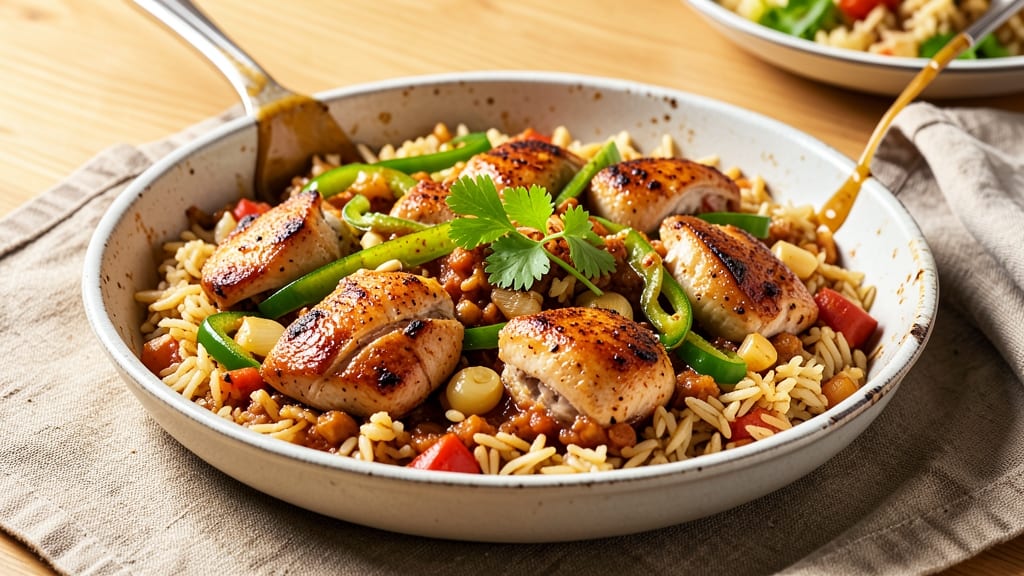
This chicken jambalaya rice recipe delivers the bold, smoky flavors of a Louisiana classic in one satisfying one-pan meal. 🔥 The secret lies in building layers of flavor—sautéed chicken, aromatic spices, and perfectly cooked rice all simmer together until every bite is rich with depth.
I've perfected this version to balance heat, smokiness, and tenderness, making it approachable for home cooks while staying true to tradition.
The foundation starts with properly browning the chicken and onions to develop that essential caramelized depth. Then, the spices—paprika, cayenne, and thyme—infuse the broth while the rice absorbs all the smoky goodness.
What sets this apart is the 30-minute simmer that transforms simple ingredients into a hearty, restaurant-quality dish with minimal effort. The result? A pot so flavorful, you'll want to serve it straight from the skillet.
By the time you're done, you'll have tender chicken pieces, perfectly cooked rice, and a sauce so rich it coats every grain. The dish carries all the soul of jambalaya—smoky, spiced, and deeply satisfying—without requiring multiple pots or complicated techniques.
This is the kind of meal that turns a simple weeknight into a celebration.
Serve with a sprinkle of fresh parsley and a side of crusty bread to soak up every last drop of that flavorful broth. The best part? Leftovers taste even better the next day as the flavors meld further. Let's get cooking!
Ingredients for chicken jambalaya rice
Pantry staples meet bold spices for this one-pan jambalaya feast.
| Ingredient | Amount | Notes |
|---|---|---|
| Boneless Chicken Thighs 🍗 | 1 ½ lb | Cut into 1-inch pieces |
| Long-Grain White Rice 🍚 | 1 cup | Uncooked, medium grain |
| Yellow Onions 🧅 | 1 whole | Diced, medium size |
| Green Bell Pepper 🌶️ | 1 whole | Diced, medium size |
| Celery Stalks 🧅 | 2 whole | Diced, medium ribs |
| Garlic Cloves 🧄 | 4 cloves | Minced, fresh preferred |
| Smoked Paprika 🌶️ | 1 tbsp | For authentic smokiness |
| Dried Thyme 🌿 | 1 tsp | Or 1 tbsp fresh thyme |
| Ground Cayenne Pepper 🔥 | ½ tsp | Adjust for heat preference |
| Salt 🧂 | 1 ½ tsp | Diamond Crystal preferred |
| Black Pepper 🌶️ | ½ tsp | Freshly ground preferred |
| Chicken Broth 💧 | 2 cups | Low-sodium preferred |
| Tomato Sauce 🍅 | 1 cup | Canned, no salt added |
| Olive Oil 🫒 | ½ cup | Extra-virgin for richness |
| Fresh Parsley 🌿 | ¼ cup | Chopped, for garnish |
The chicken thighs are non-negotiable here—they stay juicy while the rice cooks. Look for bone-in, skin-on thighs at your local butcher if you want extra flavor (and crispy skin), but boneless works too. The holy trinity of onions, bell pepper, and celery is the flavor foundation, so don't skip any. I always grab the organic celery at Whole Foods—it's sweeter and more flavorful. For the spices, smoked paprika is what gives jambalaya its signature depth, so don't substitute regular paprika here unless you want less smokiness. The rice should be medium-grain like Carolina Gold—it holds up better to the long simmer.
No smoked paprika? Mix 1 tsp regular paprika with 1/4 tsp liquid smoke for a close approximation. Short on cayenne? Red pepper flakes at half the amount will add heat without changing the flavor profile. The tomato sauce can be any brand, but San Marzano crushed tomatoes add a richness that canned sauce lacks. For the broth, low-sodium is key—you'll be adding plenty of salt later. If you're worried about the rice getting mushy, rinse it thoroughly before adding to remove excess starch. The parsley is just for garnish, but I always grab extra—half goes on top, half gets tossed into the pot at the end for extra brightness.
This dish tastes even better the next day as the flavors meld. Keeps 4-5 days in the fridge, freezes for 3 months if portioned properly. I always make a double batch—one for dinner, one for lunches. The rice reheats beautifully, and the broth gets even more flavorful. Store in airtight containers with a sprinkle of parsley on top to keep it fresh. For serving, crusty bread is a must—it soaks up all that smoky goodness. Leftovers? Even better cold for sandwiches.
Why You'll Love This Recipe
- One-Pot Magic: I swear by this—no rice burner here. Toss everything (chicken, rice, veggies) into one pot, simmer, and walk away. The celery and bell pepper soften just enough to melt into the sauce, while the onions caramelize right in the pan.
- Cajun Soul in a Bowl: That smoky, spicy kick from the jambalaya seasoning? It’s the star. The chicken thighs stay juicy, the rice soaks up all the flavor, and the bell pepper adds a bright crunch that cuts through the richness. Honestly, I’ve made it without the spice blend before—don’t.
- Lunchbox Hero: Between us, this is my go-to for meal prep. The rice holds up for days, and the flavors actually get better as it sits. Pack it in containers, reheat it, and watch people ask for seconds. (Yes, even on a Tuesday night.)
- Budget-Friendly Feast: Chicken thighs are cheaper than breasts, long-grain rice fills you up, and the veggies stretch the dish for a crowd. I’ve fed six people for under $15 with this—plus, the leftovers taste just as good the next day. Not the prettiest, but the taste makes up for it.
Step-by-step instructions for smoky chicken jambalaya
Here's how to build this soul-warming jambalaya from scratch—one flavorful pan at a time.
🍳 Step 1: Sear the Chicken for Deep Flavor
Heat the 0.5 cup olive oil in a large Dutch oven over medium-high heat until shimmering. Add the 1.5 lb boneless chicken thighs cut into 1-inch pieces, working in batches if needed to avoid crowding. Sear for 4-5 minutes per side until golden brown and cooked through to 165°F internally.
Here's the thing—searing creates that rich, caramelized crust that carries all the jambalaya's smoky goodness. Don't rush this step; you'll know it's ready when the chicken releases easily from the pan. Transfer the seared chicken to a plate and set aside, leaving all that glorious browned fat in the pot.
👨🍳 Step 2: Build the Holy Trinity Base
In the same Dutch oven, add the diced yellow onions, diced green bell pepper, and diced celery stalks. Cook over medium heat for 8-10 minutes, stirring occasionally, until the vegetables soften and the onions become translucent. This classic "holy trinity" forms the flavor foundation.
Add the 4 minced garlic cloves and cook for another 30 seconds until fragrant—don't let it burn, or you'll taste bitterness. Stir in the 1 tbsp smoked paprika, 1 tsp dried thyme, 0.5 tsp ground cayenne pepper, 1.5 tsp salt, and 0.5 tsp black pepper. Cook for 1 minute to toast the spices and release their aromatic oils.
🥘 Step 3: Deglaze and Combine All Ingredients
Pour in the 1 cup tomato sauce and scrape up all those browned bits from the bottom of the pot—this is where all the flavor lives. Add the 1 cup long-grain white rice and stir to coat it evenly with the sauce. This ensures every grain absorbs that rich, smoky base flavor.
Bring everything to a simmer, then pour in the 2 cups chicken broth. Return the seared chicken to the pot, spreading it evenly over the rice. The liquid should just cover the rice—if it looks too thin, add ¼ cup water. Bring to a gentle boil, then immediately reduce heat to low and cover with a tight-fitting lid.
⏰ Step 4: Simmer to Perfect Texture
Let the jambalaya cook undisturbed for 20 minutes. Here's where patience pays off—don't peek or stir, or you'll disrupt the rice's ability to absorb liquid evenly. After 20 minutes, check the rice. It should be tender but still slightly firm in the center with a tiny bite—this is the "al dente" texture jambalaya craves.
If the rice needs more time, cook for another 5-10 minutes at low heat. The liquid should be mostly absorbed, leaving the rice separate but flavorful. If it's still too wet, uncover and cook for 2-3 more minutes to evaporate excess moisture. The goal is creamy yet distinct grains that hold their shape.
🍽️ Step 5: Finish and Garnish
Remove from heat and let the jambalaya rest for 5 minutes covered. This resting period allows the flavors to meld and the rice to finish absorbing any remaining liquid. Stir in the 0.25 cup chopped fresh parsley just before serving—it adds a bright, fresh contrast to the rich, smoky flavors.
Taste and adjust seasoning if needed. I usually add a pinch more salt or a crack of cayenne for heat. Serve immediately in deep bowls, letting everyone dig into this one-pan masterpiece. The aroma alone will have your kitchen smelling like a Louisiana bayou!
Pro Tips For Making Chicken Jambalaya Rice
- CRISP THE VEGETABLES: I learned this the hard way—skipping the sweat step means your onions and bell peppers turn to mush in the broth. Slice them into ¼-inch pieces, then cook them in a dry pan over medium-high heat for 5-6 minutes until they soften and release their juices. The flavor concentrates, and the texture stays firm—no sad, waterlogged veggies here.
- SEAR THE CHICKEN IN BATCHES: Crowding the pan drops the temperature fast, and you end up with steamed chicken instead of golden, flavorful bites. Work in two batches if needed, using about 2 tablespoons of oil per batch. Let the first batch get a deep brown crust before adding the second—this builds layers of flavor that canned chicken just can’t match.
- RICE TO LIQUID RATIO MATTERS: I used to eyeball it and wonder why my jambalaya was either mushy or dry. For long-grain white rice, use a 1:1.5 ratio (1 cup rice to 1.5 cups broth). If you’re nervous, start with 1:1.75—you can always add more broth later, but you can’t un-cook dry rice.
- DEGLAZE WITH THE RIGHT LIQUID: After browning the chicken, don’t just dump in water or stock—use a mix of ½ cup white wine (or apple cider vinegar in a pinch) and ½ cup broth. The acidity cuts through the fond, pulling up all those caramelized bits that make jambalaya taste restaurant-worthy. Skip the wine? At least add a splash of lemon juice—it makes a real difference.
Essential equipment for chicken jambalaya rice
Dutch Oven
A large Dutch oven (like the Le Creuset Signature 5.5-quart) is my go-to for jambalaya because it retains heat evenly and handles the one-pan cooking beautifully. The deep sides prevent spills while simmering, and the heavy base ensures consistent temperature control.
Look for one with a tight-fitting lid—this helps trap steam and cook the rice perfectly. If you don’t own one, a heavy-bottomed stainless steel pot (like All-Clad Stainless) works too. 🔥
Cast Iron Skillet
For a more rustic approach, a cast iron skillet (such as Lodge 12-inch) adds that classic jambalaya texture to the chicken and rice. The natural non-stick properties (once seasoned) mean you can sear the chicken and cook the rice in the same pan without sticking.
Just be mindful—cast iron requires more attention to heat control. I love using mine for the sear and then transferring to a separate pot for the simmer, but true purists cook it all in one. 💪
Measuring Cups & Spoons
Precision matters with spices and rice. Use stainless steel measuring spoons (like OXO Good Grips) for accurate measurements of smoked paprika, cayenne, and thyme. For the 1 cup rice, a clear glass measuring cup (like Pyrex) lets you see the rice level clearly.
I keep my measuring tools within arm’s reach while cooking to avoid guesswork—especially with the holy trinity veggies, where even a little extra onion can throw off the balance. ✨
Wooden Spoon
A heat-resistant wooden spoon (such as OXO Good Grips) is essential for stirring jambalaya without scratching your pot. Wood distributes heat evenly and prevents the rice from sticking to the bottom.
I use mine to scrape up those flavorful browned bits during the deglazing step—those bits are pure liquid gold for jambalaya. Avoid metal utensils, as they can react with acidic ingredients like tomato sauce. 🌿
Tongs for Serving
Serve jambalaya with heat-resistant silicone or stainless steel tongs (like OXO Good Grips) to portion out the rice and chicken without breaking the grains. They’re also great for flipping chicken pieces during the sear.
I like tongs because they let everyone serve themselves directly from the pot, keeping the dish feeling communal and restaurant-style. Plus, they’re easier to clean than forks or spoons. 🍽️
Kitchen Timer
Timing is everything in jambalaya—especially the 20-minute undisturbed simmer. A digital kitchen timer (like OXO Good Grips) ensures you don’t overcook the rice or let the chicken dry out. Set it when you start the simmer and again for the 5-minute rest at the end.
Pro tip: Place the timer near your stove so you can hear it without missing a beat. I’ve ruined more than one batch by forgetting to check the rice on time! ⏰
Nutrition facts
Frequently asked questions
Can I substitute chicken breast for thighs in this jambalaya?
Yes, but with caution! Chicken breast cooks faster and can dry out during the long simmer. Use 1 lb breast instead of 1.5 lb thighs and cut it into ½-inch pieces. Sear briefly (3 minutes per side) until just cooked (165°F), then proceed with the recipe. For extra moisture, add ¼ cup water when simmering.
How do I adjust the heat level for picky eaters?
Reduce the cayenne to ¼ tsp or omit it entirely. For a milder kick, add ½ tsp sweet paprika instead. Taste the finished dish and adjust with more salt or a pinch of sugar if needed. The smokiness from the smoked paprika will still shine through without the heat.
What's the best way to reheat jambalaya?
Reheat gently on the stovetop over low-medium heat with 2-3 tablespoons broth or water to prevent drying. Cover and simmer for 5-7 minutes, stirring occasionally. Microwave in 1-minute intervals on 50% power, stirring between each. Never reheat to boiling—it can turn the rice mushy.
Can I make this jambalaya in an Instant Pot?
Sauté the chicken and holy trinity as directed, then add all remaining ingredients except parsley. Seal the lid, set to High Pressure for 5 minutes, then natural release. Stir in parsley and let rest 5 minutes before serving. The rice may need ¼ cup extra broth to prevent sticking.
Why did my jambalaya turn out mushy?
Mushy rice usually means too much liquid or stirring too soon. For next time, ensure the rice is uncovered for the last 2-3 minutes if needed, and resist the urge to peek during the 20-minute simmer. Also, rinse the rice before cooking to remove excess starch. If using brown rice, increase simmer time to 30-35 minutes and broth to 2.5 cups.