
Main Courses
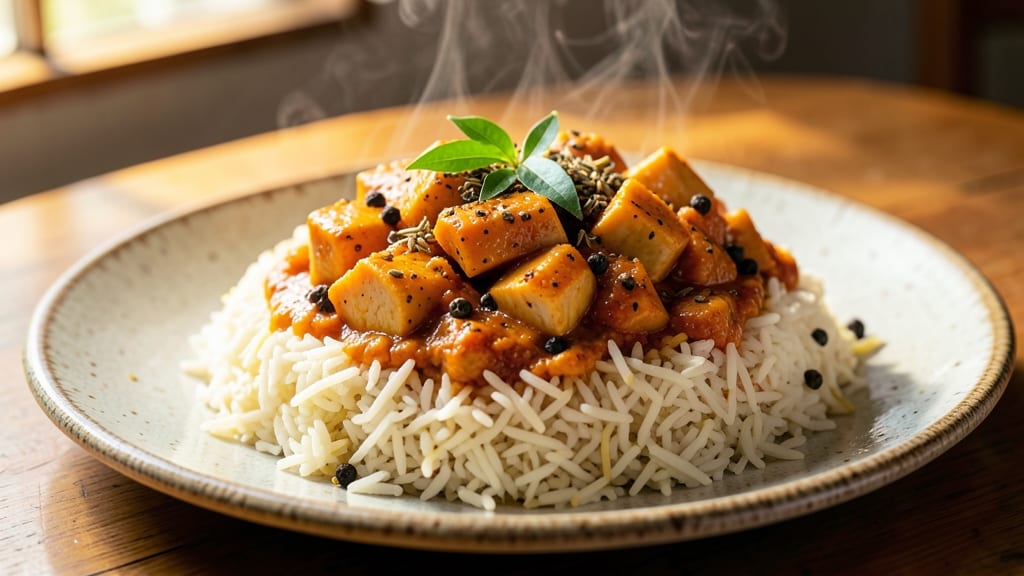
This chicken sambar rice recipe brings the soul of South Indian home cooking to your table, where fragrant basmati rice meets a rich, spiced lentil stew.
I've perfected the balance between traditional flavors and home-cook simplicity—no shortcuts, just the layered aromas of tamarind, curry leaves, and slow-cooked chicken that make every bite unforgettable.
The secret lies in the sambar base: toor dal simmered with coconut and tamarind until tender, then elevated with a blend of whole spices like fennel, coriander, and black pepper.
Meanwhile, the chicken—marinated in mustard seeds and turmeric—cooks separately to maintain its tenderness, then joins the stew at the very end for maximum flavor absorption. This is how my grandmother taught me: respect the ingredients, and they'll reward you.
What you'll end up with is a steaming plate of perfectly fluffy basmati rice topped with vibrant orange sambar—peppery yet sweet, with chunks of chicken that melt in your mouth.
The dish sings with authenticity, yet it's approachable enough for weeknight dinners. Serve with a side of coconut chutney or crispy papadums for the full experience.
This recipe serves 4 and takes about 1 hour 15 minutes—most of that time is hands-off simmering. The result? A restaurant-quality meal that tastes like home, with every element working in harmony. Let's get cooking.
Ingredients for chicken sambar rice
These vibrant ingredients create the heart of South Indian home cooking.
| Ingredient | Amount | Notes |
|---|---|---|
| Basmati Rice 🍚 | 1 ½ cups | Uncooked, long-grain preferred |
| Toor Dal (Split Pigeon Peas) 🌾 | 1 ½ cups | Rinsed well before cooking |
| Medium Tomatoes 🍅 | 4 whole | Ripe, roughly chopped |
| Fresh Curry Leaves 🌿 | ¼ cup | Packed, stems removed |
| Tamarind Paste 🍯 | 2 tbsp | Adjust for tartness preference |
| Coconut Milk 🥥 | ½ cup | Full-fat for creaminess |
| Yellow Onion 🧅 | 1 whole | Medium, finely chopped |
| Garlic Cloves 🧄 | 6 cloves | Peeled, minced |
| Ginger Root 🌿 | 1 inch | Fresh, grated |
| Chicken Breast 🍗 | 1 ½ lb | Boneless, skinless, cubed |
| Mustard Seeds 🌶️ | 1 tbsp | Whole, light brown preferred |
| Turmeric Powder 🌶️ | 1 tsp | Freshly ground preferred |
| Cumin Seeds 🌿 | 1 tbsp | Toasted for depth |
| Fennel Seeds 🌿 | ½ tsp | Whole, lightly crushed |
| Black Peppercorns 🌶️ | ½ tsp | Freshly cracked |
| Salt 🧂 | 1 ½ tsp | Adjust to taste |
| Coconut Oil 🫒 | 2 tbsp | For tempering |
The curry leaves are non-negotiable—they carry that unmistakable aroma of sambar. Indian grocery stores have them fresh year-round, but if you're stuck with the dried kind, crush them slightly first. Tamarind paste can vary in tartness, so start with the full amount and adjust. For the dal, soaked toor dal cooks faster, but I usually skip it for weeknight convenience. The tomatoes? Ripe but firm—they'll break down in the simmer, so no need to peel or seed. The chicken stays separate until the end to keep it tender, just like my grandmother's method.
No fresh curry leaves? Dried works at double the amount, but it won't have the same aroma. Short on tamarind? Lemon juice or vinegar in a pinch, though the flavor won't be identical. The coconut milk can be swapped for coconut cream if you prefer it richer. For the chicken marinade, turmeric is essential—it keeps the meat vibrant. If you're vegetarian, replace the chicken with extra toor dal or chickpeas. The spices? Toast them in the coconut oil first—they'll sing with flavor.
Rice keeps best in an airtight container for 3 days, while the sambar reheats beautifully—just add a splash of water. The chicken stays moist for 2 days in the fridge, so make extra. I always double the batch and freeze portions for lazy days. The spices lose potency after 3 months, so store them in a cool, dark place. The curry leaves? Wrap them in damp paper towels in a bag—they'll stay fresh for a week.
Why You'll Love This Recipe
- Here’s what sold me: that bright, tangy kick from the tamarind and tomatoes cuts through the richness of the chicken. It’s not too sweet, not too sour—just right, with the dal adding this earthy depth that makes every bite satisfying.
- One-Pot Magic: I swear by this—just one pot for the dal, another for the rice, and you’re done. No fancy gadgets, no cluttered counters. The curry leaves and tamarind paste do all the heavy lifting while you sip your tea.
- Tamarind-Tomato Tang: Here’s what sold me: that bright, tangy kick from the tamarind and tomatoes cuts through the richness of the chicken. It’s not too sweet, not too sour—just right, with the dal adding this earthy depth that makes every bite satisfying.
- Lunchbox Hero: Between us, this is my go-to for meal prep. The rice stays fluffy for days, the sambar thickens beautifully, and I can pack it in containers without worrying about soggy textures. Even my picky teen grabs seconds—(yes, even on a Tuesday night).
Step-by-step instructions for chicken sambar rice
Here's how to create a fragrant, flavorful sambar that balances spice, tang, and richness perfectly.
Prepare the Chicken and Rice
First, cube the 1.5 lb chicken breast into 1-inch pieces and set aside. Rinse the 1.5 cups toor dal under cold water until the water runs clear, then soak in a bowl of water for 30 minutes. For the rice, wash the 1.5 cups basmati rice in a fine-mesh strainer until the water runs clear—this removes excess starch for fluffier grains.
While the dal soaks, heat 2 tablespoons coconut oil in a large pot over medium heat. Add the cubed chicken and cook until the pieces turn opaque and slightly golden on all sides—about 5-6 minutes. Remove the chicken and set aside. This step ensures your chicken stays juicy while absorbing all the sambar flavors later.
Temper the Spices and Build the Sambar Base
In the same pot with the chicken oil, add the 1 tablespoon mustard seeds. Let them sizzle for 30 seconds until they pop audibly. Add the 1 tablespoon cumin seeds and 0.5 teaspoon fennel seeds, stirring constantly for 1 minute until fragrant. The seeds should dance and release their aroma—this is your signal to move quickly.
Add the 1 whole yellow onion, 6 cloves garlic cloves, and 1 inch ginger root. Sauté for 5-6 minutes until the onion softens and turns golden brown. Stir in the 1 teaspoon turmeric powder and 0.5 teaspoon black peppercorns, cooking for 30 seconds until the raw spice smell disappears. This aromatic base is the soul of your sambar.
Cook the Dal and Add Tomatoes
Drain the soaked dal and add it to the pot with the spices. Stir well to coat the lentils in the oil. Pour in 4 cups water (enough to cover the dal by about 1 inch) and bring to a boil. Reduce heat to medium-low and simmer for 20 minutes, stirring occasionally to prevent sticking. The dal should soften but still hold its shape slightly.
Add the 4 whole medium tomatoes (roughly chopped) and 2 tablespoons tamarind paste. Stir well and simmer for another 10 minutes until the tomatoes break down and the mixture thickens. Taste and adjust seasoning with salt—you want a balance of tangy, spicy, and savory. The sambar should coat the back of a spoon with a rich, vibrant color.
Finish the Sambar with Coconut Milk and Curry Leaves
Return the cooked chicken to the pot and stir gently to combine. Add the 0.5 cup coconut milk and 0.25 cup fresh curry leaves, stirring well. Simmer for 5-7 minutes until the flavors meld together. The coconut milk adds creaminess while the curry leaves infuse their distinct aroma. Taste again and adjust salt or tamarind paste if needed—this is where you fine-tune the balance.
Remove from heat and let the sambar sit for 5 minutes to allow the flavors to settle. The curry leaves should float on top, releasing their essence into the dish. This resting step ensures every spoonful is packed with flavor, not just heat.
Cook the Rice and Serve
While the sambar rests, cook the washed rice in a separate pot with 3 cups water (or according to package instructions). Bring to a boil, then reduce heat to low, cover, and simmer for 15 minutes. Turn off the heat and let the rice steam for another 10 minutes—this steaming method guarantees fluffy, separate grains.
Fluff the rice with a fork and serve the sambar hot over the rice. Garnish with extra curry leaves if desired. Each bite should deliver tender chicken, creamy coconut-infused dal, and the bright tang of tamarind—all balanced by the fragrant rice. The key to a perfect sambar lies in patience: letting the flavors develop and the spices bloom.
Pro Tips For Making Chicken Sambar Rice
- SOAK TOMATOES FIRST: I used to just chop raw tomatoes and toss them in—big mistake. Soak them in warm water for 10 minutes before blending; this softens them enough to make a smoother sambar base without gummy texture. Drain well, then blend with tamarind and dal—your gravy will thank you.
- PRESSURE-COOK DAL LOW: After burning three batches of dal, I finally learned: set your pressure cooker to low heat once it’s sealed. High heat = scorched dal and bitter sambar. Let it cook on medium until pressure builds, then switch to low. The dal stays creamy, not pasty.
- SKIP PRE-CUTTING CHICKEN: Does it look weird? Yes. Does it work? Every single time. Add whole chicken pieces (bone-in, skin-on) to the sambar pot after the dal-tomato base simmers. The bones infuse flavor without breaking apart, and the meat stays juicier than pre-cut pieces.
- TAMPER THE RICE: Basmati rice needs a good shake, not a gentle stir. After the initial boil, let it sit undisturbed for 2 minutes, then press down firmly with a spoon or ladle. This evens out the grains so they cook uniformly—no mushy bottoms or undercooked bits. (Yes, even if you’re impatient like me.)
Storing and reheating this recipe
Fridge Storage
Store the cooked rice in an airtight container for up to 3 days—it keeps best at 40°F or below. The sambar, with its coconut and lentils, lasts 2 days in the fridge, though I recommend reheating it within 48 hours for peak flavor.
The chicken stays juicy for 2 days if stored separately in its cooking juices. I always portion the sambar into 2-cup servings for easy reheating later. 🥫
Freezer Prep
For longer storage, freeze the sambar in quart-sized freezer bags with 1 inch headspace—this prevents ice crystals from breaking the texture. Label with the date, as it stays good for 3 months. Thaw overnight in the fridge before reheating.
The rice doesn’t freeze well (it gets mushy), so cook it fresh when serving from frozen. I double the sambar recipe specifically for freezing—perfect for lazy weeknights. ❄️
Reheating Sambar
My go-to method is stovetop: place sambar in a pot over medium-low heat and add ¼ cup water to prevent sticking. Stir occasionally for 8-10 minutes until piping hot.
For microwave reheating, cover with a damp paper towel and heat in 1-minute intervals at 70% power, stirring between each interval. The coconut milk can separate slightly—just stir vigorously to re-emulsify. 🔥
Reviving Rice
If your rice looks dry after reheating, sprinkle 1 teaspoon coconut milk or water over it, cover, and steam for 2 minutes. For extra fluffiness, spread the rice on a plate and microwave for 30 seconds to break up clumps.
I’ve even revived slightly undercooked rice this way—just add 1 tablespoon water per cup of rice and steam for 5 minutes. The key is moisture control. ✨
Chicken Safety
Reheat chicken separately to 165°F internal temperature—use a meat thermometer for accuracy. I like to pan-fry previously cooked chicken pieces in 1 teaspoon coconut oil over medium heat for 3-4 minutes until heated through.
This method crisps the edges slightly, adding texture contrast. Never reheat chicken more than once for safety. 💡
Make-Ahead Tips
Prep the sambar base (without chicken) ahead and store it in the fridge for 2 days. When ready to serve, cook the chicken separately, add it to the sambar, and reheat together.
For a 30-minute meal, I keep the rice pre-washed in the fridge and cook it fresh while reheating the sambar. The spices develop deeper flavor overnight—this is why my grandmother’s sambar always tasted better the next day. 🌟
Nutrition facts
Frequently asked questions
Can I make this recipe vegetarian?
Simply replace the chicken with 1 extra cup of toor dal or 1 can (15 oz) chickpeas. For extra protein, add 1 cup cooked white beans or 1 block (14 oz) firm tofu, cubed and pan-fried until golden. The spice blend and coconut milk will keep the dish rich and satisfying without meat.
What's the best rice to use?
Basmati rice is traditional, but jasmine rice works beautifully too. For extra fluffiness, try pony rice (short-grain) which absorbs the sambar flavors wonderfully. Avoid instant rice—it lacks the aromatic quality. Pro tip: Rinse the rice 3-4 times until the water runs clear to remove excess starch and prevent mushiness.
How can I adjust the spice level?
For milder flavor, reduce the black peppercorns to ¼ teaspoon and skip the fennel seeds. For extra heat, add ½ teaspoon cayenne pepper or 1-2 dried red chilies when tempering the spices. The tamarind already adds natural tang, so adjust that first before adding more spice. Taste as you go!
Can I make this in a slow cooker?
Yes! Sauté the mustard seeds, cumin, and onions first in a skillet, then transfer everything to the slow cooker. Cook on low for 6-7 hours or high for 3-4 hours. The chicken will stay tender, and the dal will soften perfectly. Add the coconut milk and curry leaves in the last 30 minutes to preserve their freshness.
What if I don't have fresh curry leaves?
Use ½ teaspoon dried curry leaves (crushed lightly) or substitute with ½ teaspoon dried thyme plus ¼ teaspoon ground allspice. For aroma, add 1 bay leaf when cooking the dal. While not identical, these alternatives will still add depth. The key is balancing the earthy notes with the coconut and tamarind.