
Main Courses
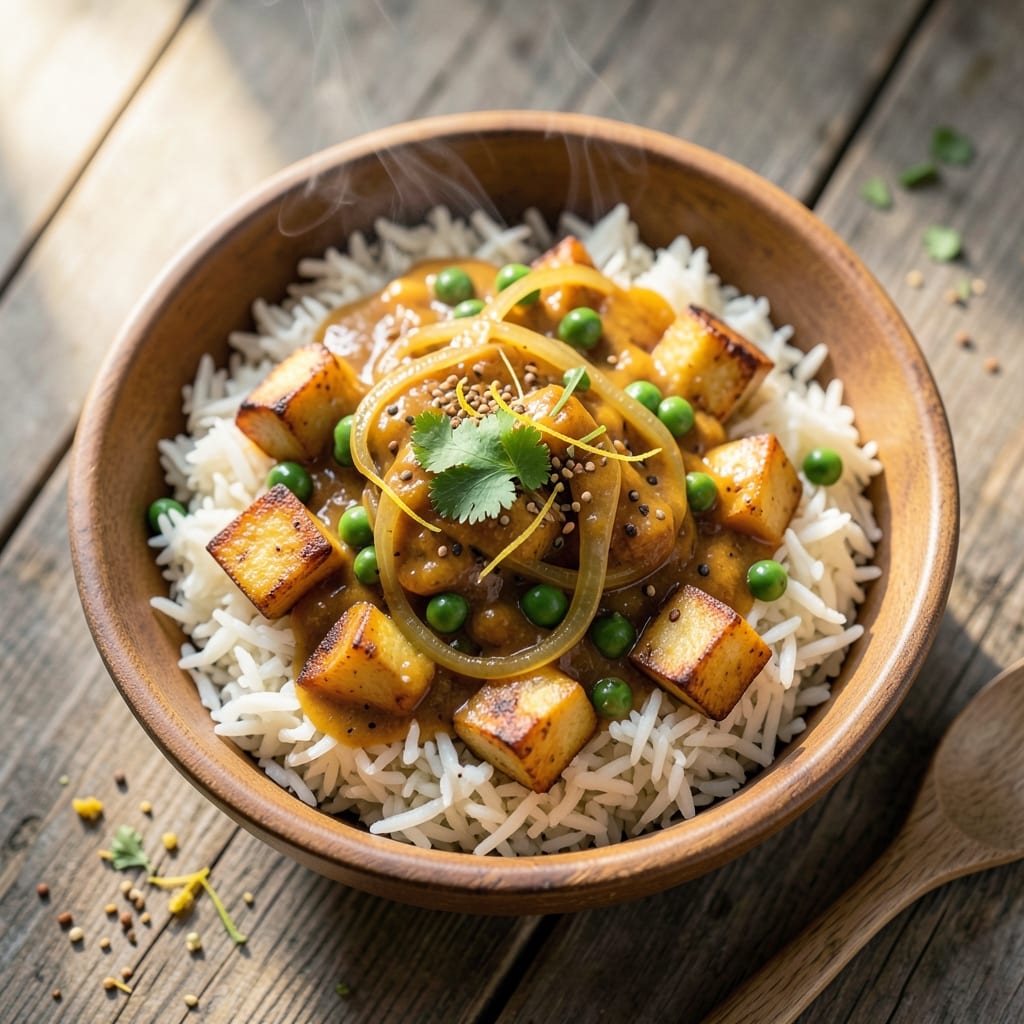
This aloo matar rice recipe delivers the comforting flavors of home-cooked Indian cuisine with creamy potatoes and peas paired perfectly with fragrant basmati. The secret lies in slow-cooked spices that meld into a rich, velvety gravy—no heavy cream needed. I've refined this method over years to balance textures: tender potatoes, crisp peas, and perfectly steamed rice that soaks up every drop of flavor.
The dish begins with tempering whole spices in ghee until they sing, creating aromatic layers that form the base of the curry. Potatoes and peas simmer just until tender, absorbing the spiced tomato-onion gravy without breaking down. The key is patience—letting the flavors develop over 15-20 minutes on low heat transforms simple ingredients into something restaurant-worthy.
What you'll end up with is a plate of golden basmati rice topped with a vibrant curry where each bite delivers creamy potatoes, sweet peas, and a harmonious blend of cumin, coriander, and garam masala. The dish is naturally vegetarian and can be made vegan by substituting ghee with oil. Garnish with fresh cilantro for brightness and serve with roti or naan for the full experience.
Perfect for weeknight dinners or special occasions, this recipe scales easily for a crowd. The flavors only improve with time, making it ideal for meal prep. Here's how to make it step by step—where traditional techniques meet modern convenience.
Ingredients for aloo matar rice
Simple spices and fresh vegetables create this comforting Indian classic with fragrant basmati rice.
| Ingredient | Amount | Notes |
|---|---|---|
| Basmati Rice 🍚 | 1 ½ cups | Uncooked, long-grain preferred |
| Yellow Onions 🧅 | 1 whole | Finely chopped |
| Garlic Cloves 🧄 | 6 cloves | Minced finely |
| Ghee 🧈 | ½ cup | Clarified butter for flavor |
| Green Peas 🌱 | 1 ½ cups | Fresh or frozen |
| Russet Potatoes 🥔 | 1 ½ lb | Cubed into 1-inch pieces |
| Tomatoes 🍅 | 2 medium | OR 1 cup diced canned tomatoes |
| Cumin Seeds 🌿 | 1 tbsp | Whole seeds for tempering |
| Ground Cumin 🌿 | 1 tsp | For gravy depth |
| Ground Coriander 🌿 | 1 tsp | Freshly ground preferred |
| Turmeric Powder 🧂 | ½ tsp | Bright yellow color |
| Garam Masala 🌶️ | 1 tsp | Store-bought blend works |
| Fresh Cilantro 🌿 | ¼ cup | Chopped for garnish |
| Salt 🧂 | 1 tsp | Adjust to taste |
| Water 💧 | 2 ½ cups | For rice cooking |
The star ingredients here are the potatoes and peas—fresh peas add sweetness while potatoes soak up the spiced gravy beautifully. For the best results, buy baby potatoes (they stay whole and creamy) or cut larger ones into even 1-inch cubes. The garlic and onions form the aromatic base, so take your time mincing them finely. Ghee gives that authentic richness—don't substitute with regular butter, which burns easily. If using canned tomatoes, San Marzano or Muir Glen brands have the best flavor consistency. For the rice, Indian basmati like Tilda or Bhagya works perfectly, but any long-grain basmati will do.
No fresh peas? Frozen peas work just as well—they're pre-thawed and ready to use. Running short on ghee? Coconut oil or vegetable oil maintains the dish's vegetarian nature, though the flavor will be slightly different. The garam masala is non-negotiable—it's the soul of the dish. If you can't find it, mix 1/4 tsp each of cinnamon, cardamom, and cloves as a substitute. For the tomatoes, sun-dried tomato paste (1 tbsp) can replace fresh if needed. The cilantro should be added at the very end—it wilts quickly in heat, so chop it fresh right before serving. Pre-shredded cilantro loses flavor fast, so skip it if that's all you have.
Store any leftovers in an airtight container for up to 3 days—the flavors actually deepen overnight. The rice reheats beautifully with a splash of water, while the curry can be warmed gently on the stove. For meal prep, portion the rice and curry separately—they keep better that way. The spices stay potent for 6 months if stored in a cool, dark place. Freeze the curry (without rice) for up to 3 months—just thaw and reheat gently. This dish is naturally vegan if you substitute oil for ghee, making it versatile for all dietary needs.
Why You'll Love This Recipe
- One-Pot Magic: I swear by this recipe because it’s basically foolproof—just basmati rice cooking in the same pot as the aloo matar, so no extra pans or fuss. The ghee infuses everything with that rich, nutty aroma while you’re chopping onions, and by the time the peas pop, the rice is already fluffy and done.
- Garlic-Ghee Bomb: That moment when you fry the onions until they’re golden, then add the garlic in ghee—it’s like a flavor explosion. The peas add a little crunch, but the real star is how the ghee and garlic cloves make every bite taste like a warm hug for your taste buds.
- Lunchbox Hero: Between us, this is my go-to for meal prep. The rice stays separate from the aloo matar until serving, so it’s fresh and doesn’t get soggy. Pack it in containers, and you’ve got a hearty, satisfying lunch that tastes like you slaved over it—even if you threw it together in 20 minutes.
- Budget Win: Honestly, this recipe is my secret weapon for stretching ingredients without sacrificing flavor. Basmati rice is affordable, onions and garlic are cheap staples, and a little ghee goes a long way. Leftovers? They’re even better the next day—just reheat and enjoy.
Step-by-step instructions for creamy aloo matar rice
This method delivers perfectly balanced basmati rice with a rich, creamy potato-pea gravy that clings beautifully.
Prepare the Potatoes and Peas
Peel the 1.5 lb russet potatoes and cut them into uniform 1-inch cubes. The consistency matters here—even-sized pieces cook at the same rate. Place them in a bowl of cold water to prevent browning while you prepare the other ingredients.
If using fresh green peas, shell them and measure out exactly 1.5 cups. For frozen peas, no need to thaw—they'll soften perfectly in the gravy. Set both aside for now; you'll add them later when the potatoes are nearly tender.
Cook the Potatoes Until Tender
In a medium pot, combine the cubed potatoes with 2.5 cups of water and bring to a boil over medium-high heat. Add 0.5 tsp turmeric powder and 0.5 tsp salt. Reduce heat to medium-low and simmer for 8-10 minutes until the potatoes are fork-tender but still hold their shape slightly.
Drain the potatoes, reserving 1 cup of the starchy cooking water. This liquid is essential for creating the creamy texture later. Keep the potatoes warm while you prepare the gravy base.
Build the Flavorful Gravy Base
Heat 0.5 cup ghee in a large pot over medium heat until it shimmers but doesn't brown. Add 1 tbsp cumin seeds and let them sizzle for 30 seconds until they release their aroma and turn golden.
Add the finely chopped 1 whole yellow onion and cook for 5-6 minutes until softened and translucent. Stir in the 6 cloves minced garlic and cook for another 30 seconds until fragrant. This aromatic base forms the flavor foundation for your creamy gravy.
Add Tomatoes and Spices for Depth
Add the 2 medium tomatoes (or 1 cup diced canned tomatoes) to the pot. Cook for 5-6 minutes until they break down into a thick, chunky sauce. Stir in 1 tsp ground cumin, 1 tsp ground coriander, and 1 tsp salt, mixing well to combine.
Now add the cooked potatoes back to the pot along with the 1.5 cups green peas. Pour in the reserved 1 cup potato water and bring to a gentle simmer. Cook for 5-7 minutes until the peas are tender and the potatoes have absorbed some of the liquid, creating a creamy consistency.
Finish with Garam Masala and Cook the Rice
In a separate pot, rinse the 1.5 cups basmati rice under cold water until the water runs clear. This removes excess starch that would make the rice mushy. Drain well and set aside.
In the same pot with the potato-pea mixture, stir in 1 tsp garam masala. Bring to a gentle boil, then add the drained rice and 2.5 cups fresh water. Bring to a boil, then reduce heat to low, cover tightly, and simmer for 12-15 minutes until the rice is tender and the liquid is absorbed.
Rest and Garnish for Perfect Texture
Remove from heat and let the rice sit covered for 5 minutes. This resting period allows the flavors to meld and the rice to finish cooking perfectly. Fluff gently with a fork, then garnish with the 0.25 cup chopped fresh cilantro.
Serve immediately with the creamy potato-pea gravy spooned over the fragrant basmati rice. The dish should have a rich, slightly creamy texture from the potatoes and peas, with aromatic spices that complement the mild rice perfectly.
Pro Tips For Making Aloo Matar Rice
- Bloom the Onions Right: Start onions in ghee on medium-low heat—high heat burns them before they soften. I learned this the hard way when my first batch turned bitter; now I let them cook until they’re translucent and just starting to caramelize (about 8-10 minutes). That’s when the real flavor unlocks. ---
- Crush Garlic Like a Pro: Don’t mince garlic—lightly crush the cloves with the flat side of your knife first. This releases more aroma without burning, and the pieces stay intact for texture. (Yes, even if you’re impatient like me, resist the urge to chop them tiny.) ---
- Parboil Rice Separately: Cook rice al dente (10-12 minutes less than package says) and drain completely—no soggy grains in your aloo matar. Mix in the peas and potatoes later; this keeps the rice light and prevents a mushy final dish. ---
- Ghee Over Oil: Ghee’s smoke point is higher than butter, and it adds a nutty depth that oil can’t match. Use 2 tablespoons for frying onions—enough to coat the pan but not drown the spices. (Your future self will notice the difference.)
Essential equipment for aloo matar rice
Spice Tempering Pot
This is where the magic happens—your heavy-bottomed stainless steel pot (like a Calphalon or All-Clad) is non-negotiable. The even heat distribution prevents burning those precious cumin seeds and onions. I use my 12-inch stainless steel pot for this recipe because it gives me enough room to stir without overcrowding. Avoid non-stick—it can't handle the high heat needed for proper tempering. 🌡️
High-Quality Ghee
Don't skimp on ghee—this is where the authentic flavor lives. I recommend Organic India or Gowardhan brands for that rich, nutty taste. Ghee has a higher smoke point than butter, so it won't burn when you add onions and garlic. If you're making this vegan, coconut oil (like Lundberg Organic) works well, though the flavor will be slightly different. Store your ghee in an airtight container in a cool, dark place to preserve its quality.
Fine-Mesh Strainer
A fine-mesh strainer (like the OXO Good Grips) is essential for rinsing your basmati rice properly. This removes excess starch that would make your rice gummy. I also use it to drain the potatoes after boiling, ensuring I capture that starchy water for the creamy gravy. A colander won't cut it—you need those tiny holes to get the rice perfectly clean. 💧
Wooden Spoon
Your wooden spoon (I love my Ozeri Heat-Grip) is your best friend for stirring the gravy without scratching the pot. Wood distributes heat evenly and won't react with acidic ingredients like tomatoes. Use it to gently fold in the peas and potatoes at the end to maintain their shape. Avoid metal spoons—they can accelerate browning and alter the flavor. Keep it handy for scraping up any stuck-on bits during the tempering process.
Instant-Read Thermometer
While not strictly necessary, an instant-read thermometer (like the Thermoworks ThermoPop) helps ensure your potatoes reach the perfect 205°F internal temperature—just tender enough to absorb flavor without falling apart. It's also useful for checking the ghee's temperature during tempering to avoid burning. I check the potatoes after 8 minutes of simmering to confirm doneness. This small investment takes the guesswork out of timing. 🌡️
Rice Cooker (Optional)
If you're short on stovetop space or want foolproof rice every time, a rice cooker (like the Zojirushi) is a game-changer. Simply add the rice and water, press start, and walk away. The keep-warm function also maintains the perfect temperature for serving. For the curry portion, continue using your pot on the stovetop—just transfer the finished rice to the cooker. Many models even have a steam setting for perfect side dishes. 🍚
Nutrition facts
Frequently asked questions
Can I make this aloo matar rice without ghee?
Yes! For a vegan version, substitute ½ cup coconut oil or vegetable oil—it won't affect the flavor but will be slightly lighter. If you're avoiding dairy for other reasons, olive oil works too, though it has a more pronounced taste. The key is using enough fat to properly temper the spices and create the creamy texture.
Why does my aloo matar gravy turn out watery?
This usually happens when the potatoes release too much liquid or the rice absorbs all the gravy. To fix it, simmer the potato-pea mixture uncovered for 2-3 extra minutes to thicken, or stir in 1 tbsp cornstarch mixed with water. For future batches, reduce the potato cooking water to ½ cup instead of 1 cup. The peas should also be added slightly later in the process.
How do I store leftovers to keep them tasting fresh?
Store the rice and curry separately in airtight containers for up to 3 days in the fridge. Reheat the curry gently on low heat, stirring occasionally, and add a splash of water if needed. The rice reheats best in a steamer or microwave with a damp paper towel. For longer storage, freeze the curry (without rice) for up to 3 months—thaw overnight in the fridge.
Can I use baby potatoes instead of regular potatoes?
Baby potatoes are perfect for this dish—they stay whole and creamy without needing to be peeled. Use about 2 cups of baby potatoes (whole, halved if large) instead of 1.5 lb regular potatoes. Their skins add subtle earthiness, and they cook faster (6-8 minutes instead of 8-10 minutes). Just reduce the cooking water to 2 cups since baby potatoes release less starch.
What's the best way to make this dish spicier?
Boost the heat by adding ½ tsp red chili powder or 1-2 green chilies (finely chopped) during the tempering stage. For extra depth, stir in ½ tsp Kashmiri chili powder with the garam masala. If you love heat, add a pinch of cayenne pepper to the gravy base. Remember, spices build flavor—start with small amounts and adjust to taste.