
Main Courses
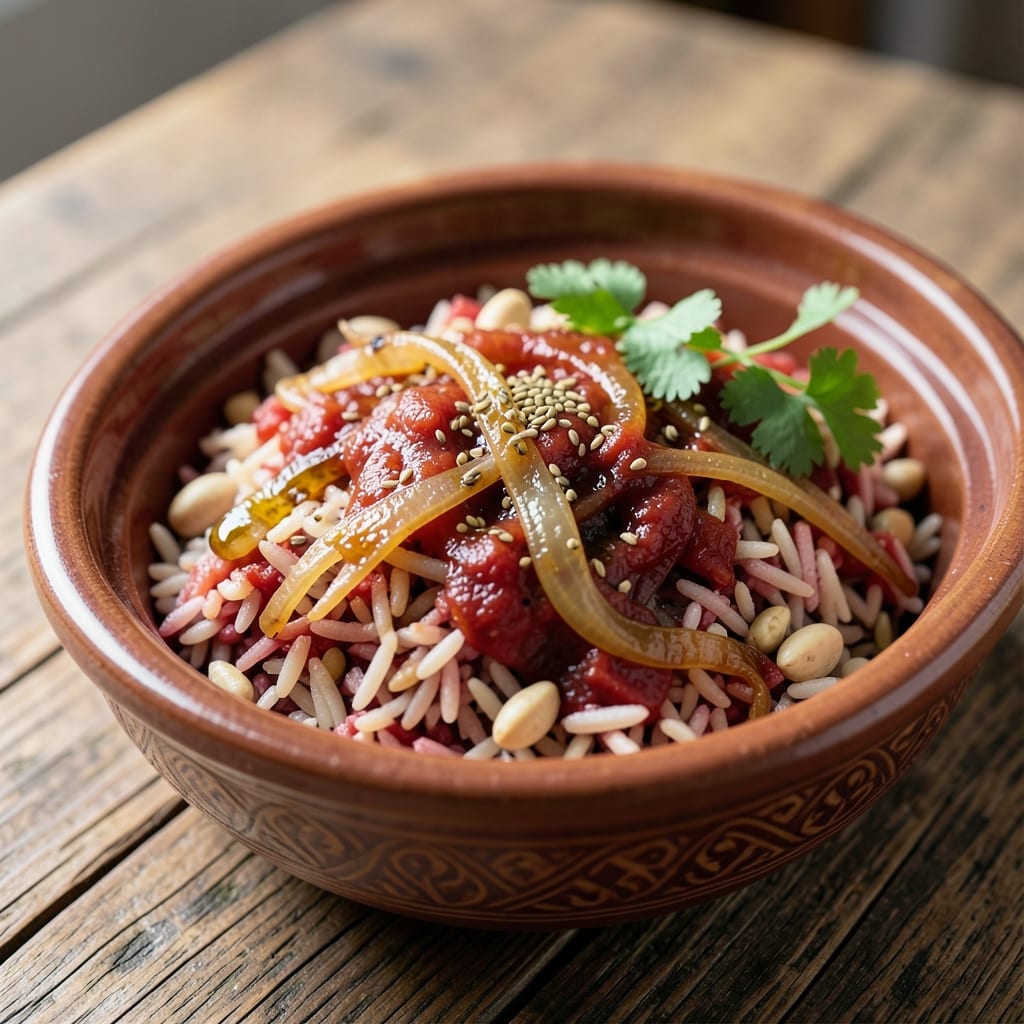
This Arabic red rice recipe transforms simple basmati rice into a vibrant, fragrant centerpiece for any meal. The secret lies in a rich tomato base infused with saffron and warm spices that create a deep red hue and complex flavor profile. I developed this version after years of perfecting the balance between sweet, smoky, and earthy notes that define authentic Middle Eastern cuisine.
The foundation begins with a slow-cooked tomato sauce that simmers until thick and jammy, absorbing the flavors of cumin, coriander, and cinnamon. Saffron threads steep in warm water to release their golden essence, while turmeric adds that signature vibrant color. The rice cooks gently in this aromatic broth, resulting in grains that are tender yet distinct—each bite delivering layers of umami and spice.
What makes this dish truly special is its versatility. Serve it as a standalone vegetarian meal or pair it with grilled lamb, chicken, or even shrimp for a complete feast. The flavors deepen as it rests, making it perfect for meal prep or special occasions. Every spoonful carries the essence of tradition with modern convenience.
This recipe preserves the authenticity of Arabic red rice while adapting to home kitchens. The slow cooking process develops rich flavors without requiring specialized equipment, and the ingredients are accessible yet transformative. Whether you're cooking for family gatherings or weeknight dinners, this dish delivers restaurant-quality results with minimal effort.
Ingredients for arabic red rice
Authentic Middle Eastern flavors start with these carefully chosen ingredients for vibrant, fragrant Arabic red rice.
| Ingredient | Amount | Notes |
|---|---|---|
| Long-Grain Basmati Rice 🍚 | 1 ½ cups | Uncooked, rinsed thoroughly |
| Canned Crushed Tomatoes 🍅 | 2 cups | San Marzano preferred |
| Yellow Onion 🧅 | 1 whole | Medium size, finely diced |
| Garlic Cloves 🧄 | 4 cloves | Peeled, minced finely |
| Ground Cumin 🌿 | 1 tsp | Freshly toasted preferred |
| Ground Coriander 🌿 | 1 tsp | Freshly ground preferred |
| Ground Cinnamon 🌿 | ½ tsp | Ceylon preferred |
| Turmeric Powder 🌶️ | ½ tsp | Freshly ground preferred |
| Saffron Threads 🧡 | ¼ tsp | High-quality, Iranian preferred |
| Extra-Virgin Olive Oil 🫒 | ¼ cup | Light variety preferred |
| Vegetable Broth 💧 | 2 cups | Low-sodium preferred |
| Salt 🧂 | 1 ½ tsp | Diamond Crystal kosher |
| Black Pepper 🌶️ | ½ tsp | Freshly ground preferred |
| Fresh Parsley 🌿 | ¼ cup | Chopped, for garnish |
The saffron is non-negotiable—Iranian threads deliver the most vibrant color and authentic flavor. Whole Foods or specialty spice shops carry the highest quality, though any reputable brand works. Toast your whole spices (cumin, coriander) in a dry pan for 30 seconds before grinding to deepen their aroma. The San Marzano tomatoes are worth seeking out for their sweet, meaty texture that forms the rich sauce base. For the rice, Calrose or Carolina basmati holds up better to long cooking than traditional basmati varieties.
No saffron? Turmeric plus a pinch of paprika mimics the color (though not the flavor). Short on cumin? Smoked paprika at half the amount adds depth. The crushed tomatoes can be substituted with tomato paste plus water—just reduce the broth by 1 cup. For a quicker version, use pre-minced garlic from a jar, though fresh is always better. The parsley garnish can be omitted if you're serving immediately, but it adds freshness when the dish rests.
This rice improves with time—2-3 hours at room temperature lets the flavors meld beautifully. Store leftovers in an airtight container for up to 5 days in the fridge, though the texture softens after day 2. For longer storage, freeze portions for up to 3 months. The saffron-infused broth can be made ahead and reheated separately if preferred. Garnish with extra parsley or a drizzle of olive oil before serving for restaurant-quality presentation.
Why You'll Love This Recipe
- Minimal Chopping Required: I swear by this trick—just dice one onion and mince four garlic cloves. That’s it. The crushed tomatoes handle the rest of the work while you sip your tea.
- Cumin Magic: That earthy cumin toasted in oil? It’s the secret weapon. One teaspoon transforms simple rice into something rich and layered—like a warm hug in a bowl.
- Weeknight to Potluck: Make a double batch on Sunday and reheat all week. Or bring it to a gathering—it’s hearty enough to stand alone but pairs perfectly with grilled meats or salads.
- Pantry Staple Power: Basmati rice, canned tomatoes, onion, garlic—these ingredients don’t break the bank. I’ve made this for $1.50 a serving, and it still feels like a restaurant dish.
Step-by-step instructions for Arabic red rice with tomato and saffron
Master this aromatic technique for vibrant, fragrant rice infused with warm spices and saffron.
Bloom the Spices in Olive Oil
Heat the 0.25 cup extra-virgin olive oil in a heavy-bottomed pot over medium heat. Add the 1 whole yellow onion and 4 cloves garlic cloves, cooking until the onion softens and becomes translucent, about 5 minutes. This creates the flavor base.
Reduce heat to medium-low and add the 1 tsp ground cumin, 1 tsp ground coriander, 0.5 tsp ground cinnamon, 0.5 tsp turmeric powder, and 0.5 tsp black pepper. Stir constantly for 1 minute until the spices release their aromatic oils and the mixture becomes fragrant. You'll notice the pot filling with steam and the spices deepening in color—this is when they're properly bloomed.
Here's the thing—blooming spices this way develops their full flavor potential. If you skip this step, you'll miss that complex, layered aroma that defines authentic Arabic red rice. The spices should smell rich and earthy, not burnt or bitter.
Toast the Tomatoes and Infuse with Saffron
Increase heat to medium-high and add the 2 cups canned crushed tomatoes. Stir and cook for 8-10 minutes until the tomatoes break down and the mixture thickens slightly. You're looking for a deep, concentrated tomato flavor with no liquid remaining.
While the tomatoes cook, steep the 0.25 tsp saffron threads in 2 tablespoons hot vegetable broth for 5 minutes. This extracts the saffron's vibrant color and delicate floral notes. Stir this saffron infusion into the tomato mixture and simmer for another 3 minutes. The rice will absorb this aromatic liquid later, giving it that signature golden hue.
Don't walk away during this step. The tomatoes can burn quickly, and you want them to caramelize gently rather than scorch. The mixture should reduce to a thick, jam-like consistency with pronounced tomato flavor.
Prepare the Rice and Combine with Broth
Rinse the 1.5 cups long-grain basmati rice thoroughly under cold water until the water runs clear. This removes excess starch that would make the rice gummy. Drain well and add the rice to the pot with the tomato mixture. Stir gently to coat each grain with the spiced tomato base.
Pour in the remaining 1.4 cups vegetable broth (reserving 0.6 cups for later) and the 1.5 tsp salt. The rice should be submerged but not swimming in liquid. Bring to a gentle boil, then immediately reduce heat to low and cover the pot tightly with a lid.
This is the moment that matters: maintaining even heat is crucial. Too high and the rice will scorch; too low and it won't cook through. The rice should simmer gently with just a few bubbles breaking the surface—what we call a "soft simmer."
Steam the Rice to Perfect Texture
Cook the rice for 15 minutes without disturbing it. The steam will work its magic, infusing the grains with the tomato-spice mixture. After 15 minutes, remove the lid and gently fluff the rice with a fork. Add the reserved 0.6 cups vegetable broth and the 0.25 cup chopped fresh parsley. Stir once, then cover again and cook for another 5 minutes.
Real talk: the rice is done when all the liquid is absorbed and the grains are tender but still have a slight bite. If you lift the lid too early, you'll lose precious steam and end up with dry rice. The parsley added at this stage brightens the dish with freshness.
For best results, let the rice rest covered for 10 minutes after cooking. This allows the residual heat to finish cooking the grains and the flavors to meld completely. The rice should be vibrant orange-red with distinct grains that don't clump together.
Pro Tips For Making Arabic Red Rice
- SOAK BASMATI 20 MINUTES: I learned this the hard way—skipping the soak makes basmati turn mushy instead of fluffy. Just rinse it once, then let it sit in warm water for 20 minutes before draining. The starch loosens, so you won’t end up with gluey rice clumping together in your tomato sauce.
- CRUSH TOMATOES BY HAND: Canned crushed tomatoes are fine, but for real depth, grab a fork and break up any chunks yourself. I used to ignore this, and the sauce would taste one-note. The extra texture and released juices make the rice absorb flavor better—no fancy tools needed.
- SWEAT ONIONS LOW AND SLOW: High heat burns onions before they soften, and you’ll taste that bitter edge in every bite. Keep the pot on medium-low until onions are translucent—about 8-10 minutes—so they melt into the tomatoes without adding harshness. Patience here means richer flavor later.
- ADD CUMIN LAST, NOT FIRST: Tossing cumin in at the start burns its earthy aroma before it can bloom. Wait until onions are cooked through, then stir it in for 30 seconds—just enough to wake up the spices. This small tweak makes the difference between "meh" and "oh wow."
Regional styles of this arabic red rice
Lebanese Zaatar-Inspired
In Lebanon, this rice often incorporates zaatar—a blend of toasted sesame seeds, sumac, and dried herbs. After cooking the rice, stir in 1 tablespoon zaatar and 2 tablespoons melted butter for a nutty, tangy twist. Garnish with extra zaatar and toasted pine nuts for crunch. This variation pairs beautifully with grilled halloumi or marinated chicken. 🌿
Moroccan Harissa Twist
Moroccan cooks often add harissa paste for heat and depth. After blooming the spices, stir in 1 tablespoon harissa with the tomatoes and simmer for an extra 5 minutes. The smoky, spicy kick complements the saffron beautifully. For balance, add a pinch of sweet paprika and serve with couscous or tagine-style lamb. 🌶️
Egyptian Tomato-Pine Nut
Egyptian versions frequently include pine nuts and raisins for texture and sweetness. Toast 2 tablespoons pine nuts in the olive oil before adding onions, then stir in 2 tablespoons raisins with the tomatoes. The combination adds a luxurious, slightly sweet contrast to the spiced rice. This version shines with roasted chicken or falafel. 🌰
Yemeni Spiced Lamb
In Yemen, this rice is often served with slow-cooked lamb and a yogurt sauce. After cooking the rice, fold in ½ cup shredded lamb (cooked separately) and a dollop of plain yogurt mixed with 1 teaspoon ground cardamom. The cool yogurt balances the richness of the lamb and rice. Garnish with chopped mint for freshness. 🐑
Gulf-Style Saffron Rice
Across the Gulf, this rice is sometimes made with caramelized onions and a touch of orange blossom water. After blooming the spices, caramelize an extra ½ cup diced onion until deep golden, then add it to the tomatoes. Stir in ½ teaspoon orange blossom water (available at Middle Eastern markets) for a floral aroma. Serve with grilled shrimp or seafood. 🍊
Vegetarian Mediterranean
For a Mediterranean twist, skip the meat and load the rice with roasted vegetables. After cooking, fold in 1 cup roasted eggplant and zucchini, plus ¼ cup crumbled feta cheese. Drizzle with extra-virgin olive oil and fresh oregano. This version is perfect for stuffing into grape leaves or serving as a mezze platter centerpiece. 🥒
Nutrition facts
Frequently asked questions
Why does Arabic red rice turn orange-red instead of just red?
The vibrant color comes from a perfect blend of turmeric (for the orange base) and saffron (for golden highlights). The saffron also adds floral notes that balance the earthy spices like cumin and coriander. The tomatoes deepen the hue as they caramelize during cooking.
Can I make this recipe without saffron?
Yes! Use ½ teaspoon turmeric plus ¼ teaspoon paprika for color, though the flavor won't be identical. For depth, add 1 extra pinch of cinnamon. The dish will still taste delicious—just with a slightly different color profile. The saffron's floral aroma is what makes it truly special, though!
How do I prevent the rice from becoming mushy?
Rinse the rice thoroughly before cooking to remove excess starch, and use a heavy-bottomed pot to distribute heat evenly. After the initial 15 minutes of cooking, fluff the rice gently with a fork before adding more liquid. Avoid lifting the lid too early—steam is what keeps the grains distinct. The resting period of 10 minutes after cooking is crucial too!
What's the best way to serve this rice?
This aromatic rice pairs perfectly with grilled meats like lamb or chicken, but it's equally delicious as a vegetarian centerpiece. For a complete meal, serve with a side of tzatziki, fresh salad, or roasted vegetables. Garnish with extra parsley and a drizzle of olive oil before serving. It's also fantastic for meal prep—flavors deepen as it rests!
Can I make this in a rice cooker?
Yes, but with adjustments. Cook the tomato-spice base first, then add the rice and broth. Use the white rice setting and let it sit for 10 minutes after cooking. You may need to add a splash of hot water if it seems dry. The texture won't be identical to stovetop, but it'll still be flavorful and aromatic!