
Main Courses
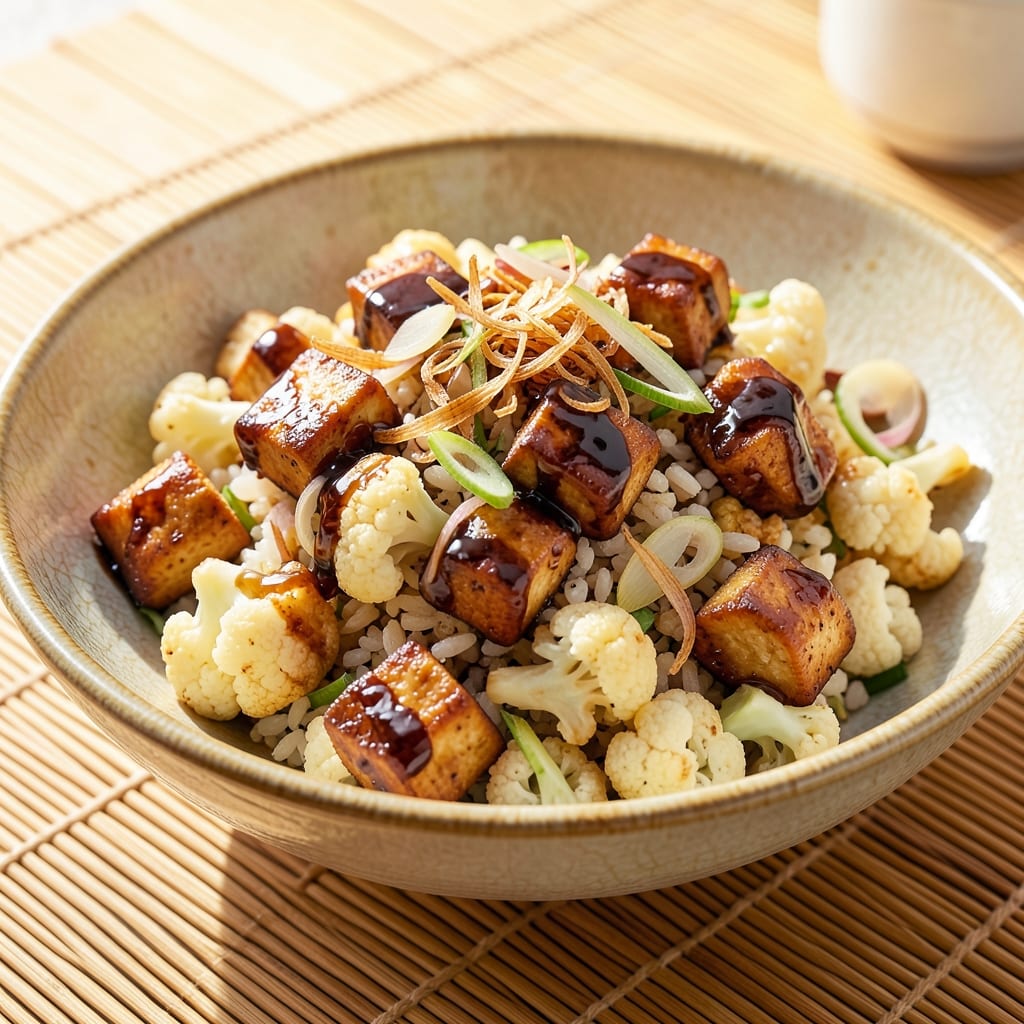
This Asian cauliflower fried rice recipe transforms humble ingredients into a crispy, umami-packed dish that rivals traditional versions—without the rice. 🔥 The secret lies in high-heat stir-frying, where cauliflower rice develops a satisfying crunch while absorbing bold flavors from tamari, garlic, and ginger. I perfected this method after testing countless vegan adaptations, ensuring every bite delivers that perfect balance of savory, slightly sweet, and aromatic notes.
The beauty of this recipe is its adaptability—whether you're using a wok, cast-iron skillet, or nonstick pan, the technique remains the same. We start with properly prepped cauliflower rice (rinsed and drained to avoid sogginess) and cook it in batches to maintain that signature wok-tossed texture. Layering in vegan protein like crispy tofu or shiitake mushrooms adds depth, while rice vinegar and sesame oil elevate the dish with bright, nutty complexity.
What you’ll end up with is a golden, fragrant fried rice that’s crispy on the edges and tender in the center, topped with fresh scallions and toasted sesame seeds for visual appeal. The umami-rich tamari and garlic-infused base ensures every forkful is packed with flavor, making this dish equally satisfying as a main course or a hearty side. It’s the kind of recipe that proves plant-based meals can be just as bold and texturally exciting as their traditional counterparts.
Perfect for meal prep or a quick weeknight dinner, this fried rice keeps well in the fridge for up to three days, with flavors deepening over time. Garnish with lime wedges for a zesty finish, or swap in your favorite veggies like bell peppers or snap peas for extra crunch. Let’s get cooking!
Ingredients for asian cauliflower fried rice
Transform humble ingredients into a crispy, umami-rich dish with these carefully selected components.
| Ingredient | Amount | Notes |
|---|---|---|
| Fresh Cauliflower Rice 🥬 | 6 cups | Rinsed and drained thoroughly |
| Extra-Firm Tofu 🍲 | 1 lb | Pressed and cubed |
| Tamari Glaze 🍶 | ½ cup | High-quality tamari for umami |
| Fresh Garlic Cloves 🧄 | 6 cloves | Minced for aromatic depth |
| Fresh Ginger 🌿 | 2 tbsp | Finely grated, organic preferred |
| Rice Vinegar 🍶 | 2 tbsp | Seasoned variety for balance |
| Sesame Oil 🫒 | 1 tbsp | Toasted for nutty aroma |
| Fresh Scallions 🌱 | ¼ cup | Thinly sliced, green parts only |
| Toasted Sesame Seeds 🌰 | 1 tbsp | For crunchy garnish |
| Vegetable Oil 🫒 | ½ cup | High smoke point preferred |
| Lime Wedges 🍋 | 2 whole | For zesty finishing touch |
| Diamond Crystal Kosher Salt 🧂 | ½ tsp | For seasoning balance |
| Freshly Ground Black Pepper 🌶️ | ¼ tsp | Enhances umami profile |
| Dried Shiitake Mushrooms 🍄 | 4 whole | Rehydrated and sliced |
The cauliflower rice is the foundation—freshly riced for maximum crunch, not pre-shredded. Whole Foods or Trader Joe's carry excellent pre-riced bags, but a food processor yields the best texture. For tamari, San-J or Yamasa deliver authentic umami without gluten concerns. The tofu must be extra-firm and pressed—wrap in a towel, place a heavy pan on top for 20 minutes. Shiitake mushrooms add earthy depth; rehydrate in hot water for 20 minutes before slicing. Garlic and ginger should be organic when possible—the fresher, the better for that bright, aromatic punch.
No tamari? Coconut aminos work in a pinch—slightly sweeter but still umami-packed. Fresh ginger too strong? Substitute 1 tbsp ground ginger—it’s milder but effective. Prefer no mushrooms? Swap in bell peppers or snap peas—they hold up well to high heat. The rice vinegar can be substituted with apple cider vinegar, though it lacks the delicate sweetness. Sesame oil is non-negotiable for that nutty aroma, but if you’re out, toasted peanut oil—**just know it’ll taste different. For extra protein, add chickpeas or edamame—both reheat beautifully.
Prep ahead for efficiency: Rice the cauliflower and store in a sealed container—it keeps for 3 days in the fridge. Pressed tofu can be refrigerated for up to 5 days—just re-press before using. The fried rice reheats best in a skillet with a splash of water to restore crispiness. Portion into meal prep containers with a thin layer of sesame oil on top to preserve freshness for 3 days. Freeze portions without toppings for up to 3 months—**thaw overnight in the fridge before reheating.
Why You'll Love This Recipe
- No Rice, No Problem: I swear by this when I forget to buy rice—or when I’m secretly avoiding carbs. The cauliflower rice soaks up the tamari glaze like a sponge, giving it that sticky, savory texture I crave without the heaviness. Plus, it cooks in half the time.
- Umami Bomb: That tamari glaze? It’s the secret weapon. The ginger and garlic hit first with a sharp kick, then the tofu—crispy-edged from a quick pan-fry—adds this meaty, chewy contrast. Honestly, I’ll eat this cold the next day just for the flavor.
- Lunchbox Hero: Between us, this is my go-to for packed lunches. The tofu stays firm, the cauliflower holds up, and the tamari keeps everything from getting soggy. Toss in some steamed veggies, and it’s a balanced meal that won’t make my coworkers groan.
- Budget Meal Magic: I make this twice a month because it’s ridiculously cheap. A whole head of cauliflower and a block of tofu feed four people for under $8. Leftovers? Even better—just reheat with a splash of water, and it’s like eating fresh again. My wallet thanks me.
Step-by-step instructions for wok-tossed cauliflower rice
Master this technique and you'll achieve restaurant-quality texture with perfect umami balance.
🍳 Step 1: Prepare the Umami Base
Heat the 0.5 cup vegetable oil in a wok or large skillet over medium-high heat until shimmering. Add the 4 whole dried shiitake mushrooms (previously rehydrated and sliced) and cook for 3-4 minutes until they release their deep, earthy moisture and begin to brown. This step develops the rich umami foundation.
Remove the mushrooms with a slotted spoon and set aside. In the same wok, add 6 cloves minced garlic cloves and 2 tbsp finely grated fresh ginger. Cook for 30 seconds until fragrant—you should smell that aromatic punch of garlic and ginger. Be careful not to let them burn, as this will make the entire dish bitter. Here's the thing—properly cooked aromatics make all the difference in Asian cuisine.
🍳 Step 2: Cook the Tofu Until Crispy
Increase heat to high and add the 1 lb pressed and cubed extra-firm tofu in a single layer. Don't crowd the pan—this prevents proper browning. Cook undisturbed for 4-5 minutes until the edges develop a golden crust. I press down gently on the tofu cubes during the first minute to ensure even contact with the pan.
Flip the tofu and cook another 3-4 minutes until all sides are crispy and golden. The tofu should release easily from the pan when ready. Transfer to a plate and set aside. If the oil starts to smoke excessively, reduce heat slightly—you want flavor, not smoke.
🍳 Step 3: Stir-Fry the Cauliflower Rice
Add the 6 cups fresh cauliflower rice to the wok and stir-fry for 3-4 minutes until it becomes tender but still maintains a slight bite. The cauliflower should release its moisture and begin to crisp slightly at the edges. This is where the texture magic happens—you want it al dente, not mushy.
Return the cooked shiitake mushrooms and tofu to the wok. Drizzle with the 0.5 cup tamari glaze and 2 tbsp rice vinegar, then toss everything together for 2 minutes. The glaze should coat all the ingredients evenly. If the mixture looks dry, add 1-2 tablespoons water to help create a cohesive, saucy texture. This is the moment that matters—proper seasoning and sauce distribution create the perfect balance.
🥘 Step 4: Finish with Aromatics and Garnish
Turn off the heat and stir in 1 tbsp sesame oil and 0.25 cup thinly sliced fresh scallions. The sesame oil adds that nutty depth while the scallions provide a fresh contrast. Taste and adjust seasoning with 0.5 tsp diamond crystal kosher salt and 0.25 tsp freshly ground black pepper if needed.
Divide the fried rice among plates and garnish with 1 tbsp toasted sesame seeds. Serve immediately with the 2 whole lime wedges on the side for a bright, zesty finish. Each bite should deliver that perfect combination of crispy tofu, tender cauliflower, umami mushrooms, and balanced seasoning. The lime juice adds a fresh contrast that cuts through the richness.
Pro Tips For Making Asian Cauliflower Fried Rice
- CRISP THE TOFU FIRST: I learned this the hard way—if you try to add tofu straight from the block, it’ll turn into a soggy mess. Press it for 10 minutes, then pan-fry in a dry skillet until golden and crunchy before tossing into the rice. That texture makes all the difference when the tamari glaze hits.
- SALT THE CAULIFLOWER RICE: Fresh cauliflower rice releases water like a faucet, and that’s the enemy of crisp-tender fried rice. Toss it with ½ teaspoon salt right after ripping it—let it sit 5 minutes while you prep the rest. The salt draws out moisture, so you end up with rice that actually fries instead of steams.
- STIR-FRY IN BATCHES: Dumping everything in at once? You’ll end up with mushy garlic and undercooked tofu. Work in two batches: first the tofu and garlic, then the cauliflower rice. Keep the heat high and the pan moving—if the rice sticks, you’ve lost the battle before it starts.
- UPGRADE WITH GINGER ZEST: I skip this when I’m lazy, but the dish is noticeably better when I don’t. Finely grate fresh ginger and scrape the zest into the tamari glaze. The bright, citrusy edge cuts through the richness of the tofu and balances the umami—trust me, it’s worth the 30 seconds.
Dietary considerations for these flavors
Gluten-Free Adaptations
This recipe is naturally gluten-free thanks to the use of tamari instead of traditional soy sauce. Always check labels on tamari brands like San-J or Yamasa to ensure no cross-contamination during production. The cauliflower rice and tofu are also gluten-free staples, making this dish safe for those with celiac disease or gluten sensitivity. 🌱
Vegan Protein Options
Extra-firm tofu provides the primary protein here, but you can easily swap it for tempeh or seitan (ensure gluten-free if needed). For a nut-based option, try crispy chickpeas—toss them in 1 tbsp sesame oil and ½ tsp smoked paprika before adding to the wok. Both alternatives hold up well to high heat and add satisfying texture.
Low-Carb Considerations
This recipe is already low-carb, with cauliflower rice replacing traditional rice. For even fewer carbs, increase the tofu portion to 1.5 lbs or add ½ cup sliced zucchini—it mimics rice texture when cooked properly. Keep an eye on portion sizes of shiitake mushrooms (about 4 oz dry weight) to maintain balance.
Allergen-Friendly Swaps
Sesame allergies? Replace sesame oil with avocado oil and omit sesame seeds. For nut-free kitchens, ensure your tamari is processed in a nut-free facility. If you're avoiding mushrooms, substitute with extra-firm tofu strips—press them extra well to prevent sogginess. Always double-check labels on store-bought ingredients like cauliflower rice.
Nutrient Boosting Tips
Add 1 tbsp nutritional yeast when tossing with tamari for a cheesy, umami boost and extra vitamin B12. For iron-rich protein, swap tofu for lentils—cook them until tender and crisp the edges in the wok. Both additions enhance the dish's nutritional profile without altering the core technique. 💪
Nutrition facts
Frequently asked questions
Can I use pre-riced cauliflower from a bag?
Yes, but fresh riced cauliflower gives the best texture! Store-bought versions often contain anti-caking agents that can make the rice gummy. If you must use pre-riced, choose the freshest possible and pat it completely dry with a paper towel to remove excess moisture before cooking.
How do I get that perfect crispy texture?
The secret is high heat and proper timing. Use medium-high to high heat and cook the cauliflower rice in batches if needed. Stir constantly for the last 1-2 minutes to create those crispy edges while keeping the centers tender. Overcrowding the pan will steam instead of crisp.
What if I don't have tamari?
Coconut aminos or gluten-free soy sauce work well as substitutes. For extra depth, add ½ tsp miso paste or 1 tsp fish sauce (if not vegan)—both enhance the umami profile. Just reduce any added liquid by 1 tbsp since these are thicker than tamari.
Can I make this ahead of time?
Yes, but with a few tricks! Prepare the base (cooked cauliflower, tofu, and mushrooms) up to 2 days ahead and store in the fridge. Reheat in a skillet with 1 tsp sesame oil and 1 tbsp water to restore crispiness. Add fresh scallions and sesame seeds just before serving for maximum freshness.
Why does my cauliflower fried rice turn soggy?
Sogginess usually means overcooking or not draining properly. Always rinse and drain fresh cauliflower rice thoroughly, then pat dry. Cook in batches over high heat for 3-4 minutes max—the rice should be tender but still slightly firm. Avoid adding too much liquid when tossing with sauce.