
Salads
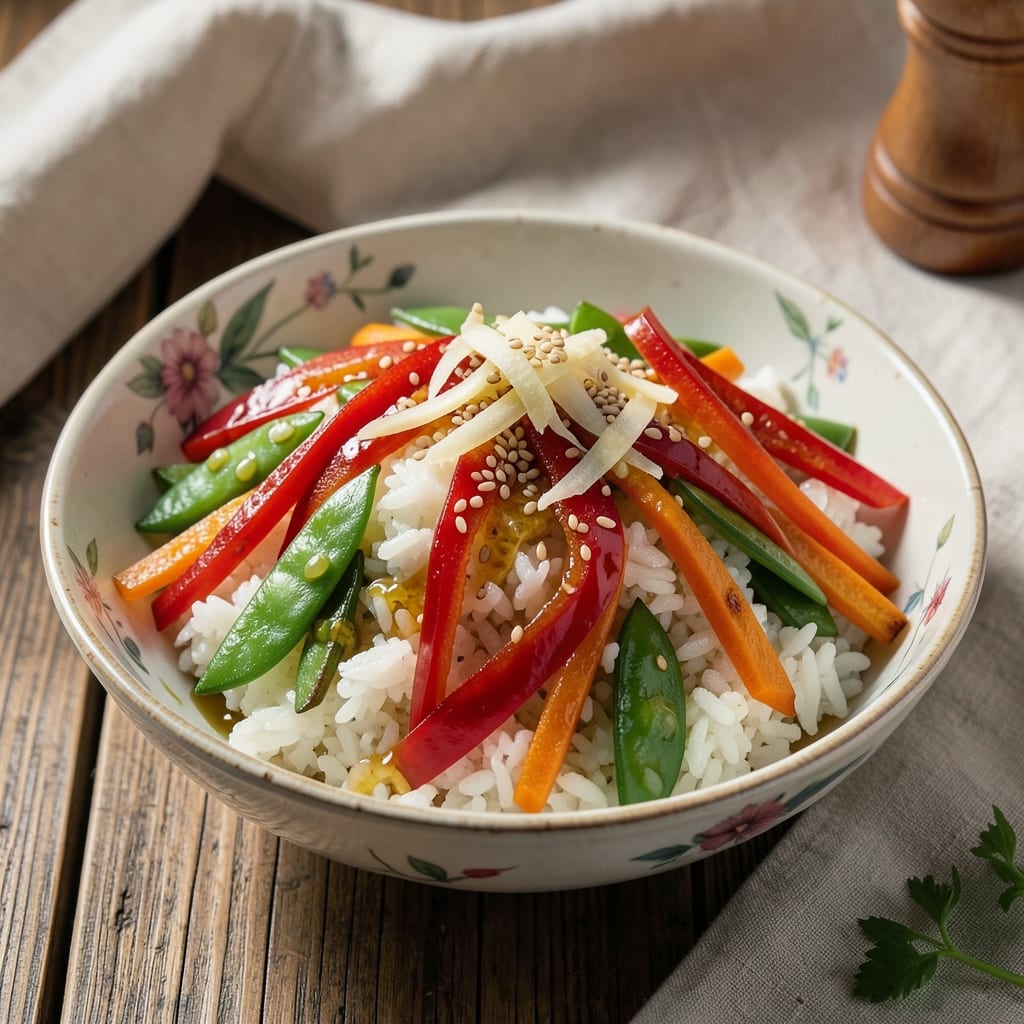
This Asian rice and vegetables recipe transforms simple ingredients into a fragrant, restaurant-quality meal that balances crisp-tender vegetables with perfectly steamed jasmine rice. The secret lies in high-heat wok tossing—where vegetables achieve that signature crisp-tender texture while absorbing aromatic seasonings. I developed this after years of testing stir-fry techniques, and it never fails to deliver that perfect harmony of textures and flavors.
The foundation starts with jasmine rice, cooked just right—slightly sticky but never mushy—then combined with vegetables that cut through its richness. Bell peppers, carrots, and snap peas get the wok treatment first, developing a slight char before being tossed with garlic, ginger, and a splash of soy sauce. The result? Vegetables that stay vibrant yet tender, with edges just crisp enough to add satisfying texture.
What makes this dish truly special is how the flavors meld together. The rice soaks up the remaining sauce while the vegetables retain their natural sweetness, creating a balance that's both comforting and exciting. Serve it as a complete meal or pair with grilled protein for a fuller spread. The best part? It comes together in under 30 minutes, making it perfect for weeknight dinners that feel like a celebration.
For those who love customization, swap in broccoli for snap peas or add mushrooms for extra umami. The technique remains the same—high heat, quick cooking, and constant tossing—so you can experiment with your favorite vegetables while keeping that signature crisp-tender texture. Let's get cooking!
Ingredients for asian rice and vegetables
Jasmine rice, vibrant vegetables, and aromatic seasonings—this fragrant stir-fry delivers restaurant-quality flavor in 30 minutes.
| Ingredient | Amount | Notes |
|---|---|---|
| Jasmine Rice 🍚 | 1 ½ cups | Uncooked, long-grain preferred |
| Red Bell Peppers 🌶️ | 1 whole | Cut into 1-inch strips |
| Carrots 🥕 | 2 medium | Julienned into matchsticks |
| Snap Peas 🌱 | 1 cup | Fresh or frozen, thawed |
| Garlic Cloves 🧄 | 4 cloves | Minced, fresh preferred |
| Fresh Ginger 🌿 | 1 tbsp | Grated, peeled |
| Low-Sodium Soy Sauce 🥢 | 2 tbsp | Kikkoman preferred |
| Sesame Oil 🫒 | 1 tsp | Toasted, for aroma |
| Vegetable Oil 🫒 | 2 tbsp | High smoke point |
| Green Onions 🧅 | 3 whole | Sliced thin, white and green |
| Sesame Seeds 🌰 | 1 tsp | Toasted for garnish |
| Salt 🧂 | ½ tsp | Diamond Crystal preferred |
| Black Pepper 🌶️ | ¼ tsp | Freshly ground |
The jasmine rice is non-negotiable here—its floral aroma sets the stage. Day-O brand is my go-to, but any long-grain jasmine works. For the vegetables, freshness matters: bell peppers should be firm with glossy skins, snap peas bright green, and carrots crisp when sliced. Trader Joe's has great pre-cut veggies if you're short on time, but whole ones give you better control over texture. The garlic and ginger? Freshly grated is essential—jarred ginger lacks that bright punch. Pro tip: Buy ginger in small chunks and freeze it whole; grate only what you need.
No snap peas? Substitute broccoli florets or snow peas—they hold up beautifully to high heat. Running low on soy sauce? Coconut aminos work in a pinch, though the flavor profile shifts slightly. Sesame oil can be swapped for peanut oil if you're avoiding sesame, but the aroma is what makes this dish sing. For extra umami, add a splash of fish sauce (1 tsp) if you're not strict about vegetarian, or use soy sauce + a pinch of mushrooms powder instead. The green onions? Freeze them in ice cube trays—they thaw perfectly for quick garnishes later.
Rice reheats beautifully—just cover with a damp towel to keep it moist. The stir-fry veggies? Eat within 2 days for best texture, or freeze portions in airtight containers for up to 3 months. I like to portion mine into single-serving containers so I can grab and reheat for quick lunches. For leftovers, sprinkle with a little extra sesame oil before reheating to revive that wok-tossed aroma. The rice-to-veggie ratio is key—this recipe balances perfectly for 4 servings, but double the veggies if you're serving protein on the side.
Why You'll Love This Recipe
- One-Pot Magic: I swear by this when I’m too tired to wash a million dishes—just toss everything in one pan, stir, and walk away. The jasmine rice soaks up all the garlic and veggie juices while the bell peppers caramelize right there, no extra pots needed.
- Garlic Bomb: Between us, that minced garlic gets cooked just enough—not burnt, not raw, but sweet and punchy. It’s the kind of flavor that makes you pause mid-bite, and the snap peas add this bright crunch that cuts through the richness. Ridiculously good.
- Lunchbox Hero: I meal prep this like crazy because it’s actually good cold the next day—no sad, soggy rice here. The carrots stay crisp, the bell peppers hold their shape, and the rice? Still fluffy. Pack it for work, school lunches, or even a picnic—no one will guess it’s leftovers.
- Budget Brightener: Carrots, snap peas, and bell peppers stretch a long way, and jasmine rice is cheaper than you’d think for this kind of quality. Honestly, I make this when I’m trying to feed the family without breaking the bank, and no one complains—especially when I add a fried egg on top.
Step-by-step instructions for wok-tossed fragrant jasmine rice
Here's how to transform simple ingredients into a restaurant-quality Asian rice bowl with perfectly fragrant jasmine and crisp-tender vegetables.
Prepare the Jasmine Rice for Maximum Flavor
Rinse the 1.5 cups jasmine rice under cold water in a fine-mesh strainer until the water runs clear—this removes excess starch that can make the rice gummy. Drain well and transfer to a pot with 2 cups water (use the exact amount from your ingredients list). Bring to a boil over high heat, then immediately reduce to a simmer, cover tightly, and cook for 15 minutes.
Here's the thing—don't peek or lift the lid during cooking. The steam needs to build pressure for that signature fragrant aroma. After 15 minutes, turn off the heat and let it sit covered for 10 minutes. The residual heat will finish cooking the rice perfectly. Fluff gently with a fork before serving.
Prep and Sauté the Vegetable Base
Heat 2 tablespoons vegetable oil in a wok or large skillet over medium-high heat until shimmering. Add the 1 whole red bell pepper cut into strips and 2 medium carrots julienned into matchsticks. Stir-fry for 3-4 minutes until the carrots begin to soften but still retain a slight crunch—this is key for that satisfying texture contrast.
Add the 1 cup snap peas and toss for 1 minute until they brighten in color. Push the vegetables to one side of the wok and add 2 tablespoons low-sodium soy sauce. Let it bubble for 30 seconds to develop a rich umami flavor before combining everything. The sauce should coat the vegetables lightly without making them soggy.
Build the Aromatic Foundation
Add the 4 cloves minced garlic and 1 tablespoon grated fresh ginger to the wok. Stir constantly for 30 seconds—this prevents burning while allowing their flavors to bloom. The wok should smell intensely aromatic by now. Pour in 1 teaspoon sesame oil and toss everything together for 1 minute to distribute the nutty aroma evenly.
Season with 0.5 teaspoon salt and 0.25 teaspoon black pepper, then taste. You want a balance of saltiness and freshness—this is your flavor baseline before adding the rice. If using fresh snap peas, this is also when you can add a splash of water if they appear dry during cooking.
Combine Rice and Vegetables
Transfer the cooked jasmine rice to the wok and gently fold everything together using two spatulas. The rice should absorb the vegetable flavors while maintaining its distinct texture. Cook for 2-3 minutes over medium heat, tossing constantly to ensure even distribution of the sesame oil and soy sauce.
Here's where it gets good—sprinkle the 3 whole green onions sliced thin over the top and toss once more. The white parts will soften slightly while the green tops stay crisp. Remove from heat immediately to preserve the vibrant colors and textures you've worked so hard to achieve.
Finish with Toasted Sesame Seeds
Transfer the wok-tossed rice to serving bowls. In a small dry skillet over low heat, toast the 1 teaspoon sesame seeds for 30 seconds until fragrant and golden. Sprinkle them generously over each serving—this adds a final nutty crunch and visual appeal.
Serve immediately while the rice is still steaming and the vegetables retain their crisp-tender texture. Each bite should deliver perfectly fragrant jasmine rice with contrasting textures—crisp snap peas, tender carrots, and the slight crunch of green onions. The sesame seeds add that final professional touch that makes this dish truly special.
Pro Tips For Making Asian Rice And Vegetables
- STIR-FRY IN BATCHES: Don’t toss everything in at once—cook bell peppers and carrots first for 3 minutes, then snap peas and garlic for the last 2. The peas stay crisp, and the garlic doesn’t burn into oblivion (yes, I’ve seen it happen).
- SLICE CARROTS THIN: Quarter-lengthwise, then slice into ¼-inch half-moons—thin enough to soften fast, thick enough to hold shape. Thick slices turn mushy; skip the julienne unless you’re going for a stir-fry salad.
- SALT THE RICE WATER: Add ½ teaspoon salt to the rice water—it seasons the grains while they cook, not just the veggies. I used to forget this and wondered why my rice tasted bland next to the garlicky veg.
- USE LESS GARLIC: Two cloves max—crushed, not minced—so they infuse flavor without overpowering. I learned this after making my roommate cry (okay, exaggerating, but it was strong). Toast it first for depth, but don’t burn it.
Storing and reheating your leftovers
Rice Storage Secrets
Store cooked jasmine rice in an airtight container at room temperature for up to 2 days—I use glass Pyrex containers because they maintain moisture better than plastic. For longer storage, refrigerate for up to 5 days at 40°F or below. The key is to let it cool completely before sealing to prevent condensation. Cover with a damp paper towel to retain moisture and prevent drying. 🌱
Vegetable Prep Ahead
Pre-cut your vegetables and store them in separate airtight containers in the fridge for up to 3 days. I like to keep bell peppers, carrots, and snap peas in individual containers so they don’t release moisture and turn soggy. For snap peas, blanch them for 1 minute in boiling water before freezing—this preserves their vibrant color and crisp texture. 🥕
Reheating for Crisp-Tender Perfection
Reheat rice in a steamer basket over simmering water for 3-4 minutes—this method keeps it fluffy and prevents drying. For the stir-fried vegetables, use a non-stick skillet over medium-high heat with 1 teaspoon vegetable oil. Toss for 2-3 minutes until heated through. Add a splash of water if they look dry, then finish with a drizzle of sesame oil to revive that wok-tossed aroma. ✨
Freezing for Later
Freeze the rice and vegetables separately in quart-sized freezer bags with all excess air removed. Label with the date—this dish freezes well for up to 3 months. To reheat from frozen, steam the rice for 5 minutes and stir-fry the veggies in a skillet for 4-5 minutes with a splash of water. The texture won’t be identical, but it’s still delicious. 💫
Reviving Leftovers
If your rice has turned dry, sprinkle it with 1 tablespoon water and microwave for 30 seconds on high. For extra flavor, add ½ teaspoon soy sauce and ½ teaspoon sesame oil before reheating. The vegetables can be refreshed with a quick toss in a hot skillet—just add 1 teaspoon oil and a pinch of salt to restore their crisp-tender texture. 🔥
Nutrition facts
Frequently asked questions
Can I use other types of rice besides jasmine?
While jasmine rice is ideal for its fragrant aroma, you can substitute with brown jasmine rice (for a nuttier texture) or even short-grain sushi rice if you prefer stickier grains. Just adjust the water ratio—brown rice needs 1.5 cups water per 1 cup rice, while sushi rice uses 1.25 cups water. Avoid long-grain white rice like basmati, as it lacks the necessary stickiness to absorb flavors well.
What's the secret to getting crisp-tender vegetables?
The key is high heat and quick cooking! Use a wok or cast-iron skillet over medium-high heat and cut vegetables into even sizes so they cook uniformly. Start with harder veggies like carrots, then add softer ones like snap peas later. Toss constantly to prevent sticking, and remove from heat the moment they're just tender—overcooking turns them mushy. A splash of cold water at the end can also help reset their texture!
Can I make this vegetarian?
This recipe is already vegetarian-friendly! For extra protein, stir in 1 cup edamame or ½ cup tofu cubes when sautéing the vegetables. If you want more umami flavor, add 1 teaspoon mushrooms powder or ½ tablespoon nutritional yeast to the soy sauce. The dish maintains its balance perfectly without meat—just ensure your soy sauce is vegetarian (some contain fish-based additives).
How do I adjust the spice level?
This recipe is naturally mild, but you can easily customize it! For a kick, add ½ teaspoon chili flakes or 1 teaspoon sriracha when tossing with the rice. For heat lovers, stir in 1 tablespoon gochujang (Korean chili paste) with the soy sauce. If you prefer less heat, simply omit the sesame seeds (they're mild) and stick to the original seasonings—the dish will still be flavorful and satisfying.
What if I don't have a wok?
No problem! A large non-stick skillet or even a deep oven-safe pan works perfectly. The key is maintaining high heat and tossing constantly. If your pan isn't wide enough, cook in batches—just be sure to keep the vegetables moving to prevent burning. For extra crispiness, add 1 tablespoon cornstarch to the vegetables while stir-frying to create a light coating that caramelizes beautifully.