
Side Dishes
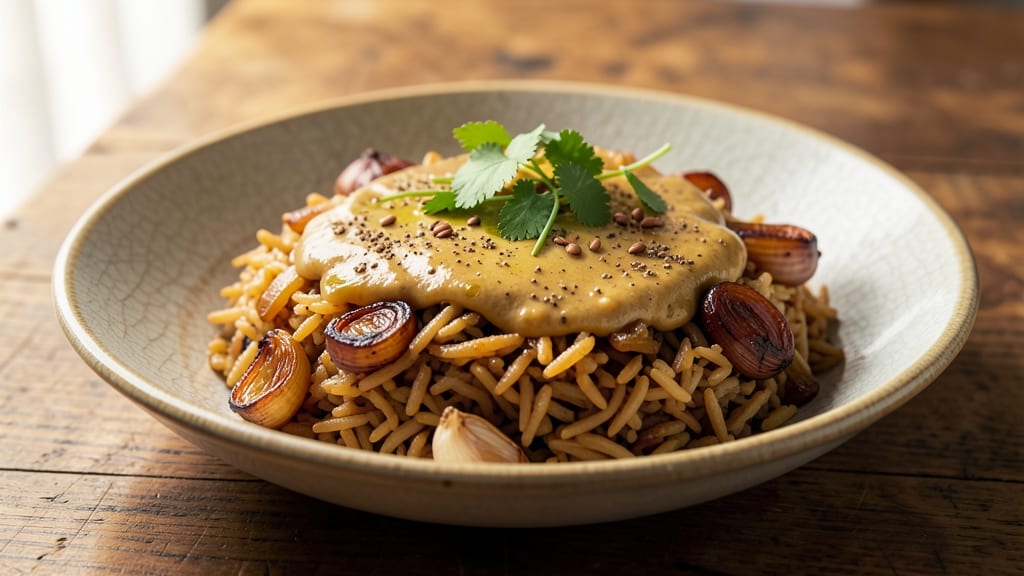
This brown basmati rice pilaf transforms simple grains into a nutty, aromatic centerpiece that elevates any meal. The secret lies in toasting the rice and spices until fragrant, then simmering in rich broth until each kernel achieves that perfect golden-brown texture.
What sets this apart is the toasted almond crunch layered on top—adding both texture and a subtle sweetness that balances the savory spices.
The result is a restaurant-quality side dish with deep, toasty flavors and an irresistible crunch. Unlike basic white rice pilafs, this version uses brown basmati for its nutty depth and longer cooking time for maximum flavor development.
Whether served alongside roasted chicken, grilled fish, or as a vegetarian main, it delivers rich, satisfying bites that keep coming back for more.
Ingredients for brown basmati rice pilaf
Transform simple grains into aromatic, toasty perfection with these quality ingredients.
| Ingredient | Amount | Notes |
|---|---|---|
| Brown Basmati Rice 🍚 | 1 lb | Uncooked, long-grain variety |
| Extra-Virgin Olive Oil 🫒 | ¼ cup | For toasting rice and spices |
| Unsalted Butter 🧈 | 4 tbsp | Cold, cubed for toasting |
| Yellow Onion 🧅 | 1 whole | Finely diced, yellow or red |
| Garlic Cloves 🧄 | 4 cloves | Minced, fresh preferred |
| Ground Cumin 🌿 | 1 tsp | Toasted for depth of flavor |
| Ground Coriander 🌿 | 1 tsp | Freshly ground preferred |
| Turmeric Powder 🌶️ | ½ tsp | Brightens color and flavor |
| Salt 🧂 | 1 ½ tsp | Diamond Crystal kosher salt |
| Chicken Broth 💧 | 2 ½ cups | Low-sodium, homemade preferred |
| Sliced Almonds 🥜 | ½ cup | Toasted, skin-on preferred |
| Fresh Parsley 🌿 | ¼ cup | Chopped, for garnish |
| Lemon Zest 🍋 | 1 tsp | Brightens final flavor |
| Fresh Lemon Juice 🍋 | 1 tbsp | Freshly squeezed |
The brown basmati rice is the foundation—look for long-grain varieties at specialty stores like Whole Foods or Trader Joe's for optimal texture. The toasted almonds should be skin-on for extra crunch; Costco sells them in bulk at unbeatable prices. Fresh parsley and lemon zest elevate the dish, so prioritize vibrant, fresh herbs from the grocery store's produce section. For the spices, Penzeys Spices offers pre-toasted cumin and coriander that deepen the flavor profile immediately.
No chicken broth? Vegetable broth works equally well, though the flavor will be subtly different. Substitute sliced almonds with toasted pecans or cashews if preferred, though almonds provide the ideal balance of sweetness and crunch. Fresh parsley can be swapped for dried parsley at one-third the amount, but fresh is preferred for that bright pop of color. The lemon zest and juice can be omitted if you're avoiding citrus, though they're essential for that restaurant-quality brightness.
Toasted almonds and spices keep for 3 months in an airtight container, while fresh parsley stays vibrant for 5 days in the fridge wrapped in damp paper towels. The cooked pilaf reheats beautifully—simply add a splash of broth and warm through. Portion into containers for meal prep, and store in the fridge for 4 days or freeze for 3 months. For extra flavor, toast the spices in the olive oil until fragrant—this step is non-negotiable for that authentic aroma.
Why You'll Love This Recipe
- Let’s be real: most rice turns into sad, dry mush after a day. Not this. The brown basmati holds up perfectly, and the extra olive oil and butter keep it moist. I make a big batch on Sundays, and it’s still delicious reheated for lunches all week—no soggy bits in sight. Plus, it’s cheaper than takeout and way healthier.
- No Fuss, One-Pot Magic: I swear by this method—just brown the rice in a single pot with olive oil and butter, then add the onions and garlic until they’re golden. No measuring cups, no stress, no separate pans. Honestly, the only thing you’ll need to set a timer for is the rice cooking, and even that’s forgiving.
- Nutty, Toasty, Irresistible: That brown basmati? It’s got a chewy texture and a toasty depth you won’t find in white rice. Sauté the onions until they’re caramelized, then add the garlic until it’s just fragrant—not burnt—and the butter finishes it all with a rich, almost buttery aroma. Between us, it’s the kind of flavor that makes you want to eat it straight from the pot.
- Weeknight to WOW Dinner: This pilaf is my go-to when I need something that feels special but doesn’t require hours. Toss it with roasted chicken, grilled veggies, or even just a sprinkle of za’atar and lemon for a restaurant-worthy meal. (Yes, even on a Tuesday night.) It’s the kind of dish that makes you look like you planned ahead—even if you didn’t.
Step-by-step instructions for brown basmati rice pilaf
Transform simple ingredients into a fragrant, nutty pilaf with perfectly toasted grains and crunchy almonds.
Toast the Aromatics and Spices
Heat a large, heavy-bottomed skillet or Dutch oven over medium heat and add the 4 tablespoons unsalted butter and 0.25 cup extra-virgin olive oil. Once the butter melts and begins to foam, add the 1 whole yellow onion and cook for 8-10 minutes until softened and golden brown. This slow cooking caramelizes the onions, deepening their flavor.
Add the 4 cloves minced garlic, 1 teaspoon ground cumin, 1 teaspoon ground coriander, and 0.5 teaspoon turmeric powder. Stir for 1-2 minutes until the spices are fragrant and the garlic is golden—not browned. This step builds the aromatic base that will infuse the entire pilaf. Remove the skillet from heat temporarily to avoid burning the spices.
Toast the Rice and Almonds
Return the skillet to medium heat and add the 1 pound brown basmati rice, stirring constantly for 3-4 minutes until the grains become translucent at the edges and develop a light golden color. This toasting enhances the rice's natural nuttiness and prevents a mushy texture.
Add the 0.5 cup sliced almonds and stir for 1-2 minutes until they begin to turn golden. Watch closely—they toast quickly and can burn easily. Remove the skillet from heat again to prevent overcooking. The almonds should have a warm, toasty aroma and a slight crunch.
Deglaze and Simmer with Broth
Pour in the 2.5 cups chicken broth and stir to combine, scraping up any browned bits from the bottom of the skillet. These bits are packed with flavor and will enrich the pilaf. Bring the mixture to a gentle boil, then reduce heat to low, cover tightly with a lid, and simmer for 35-40 minutes.
After 20 minutes, check the rice for doneness. It should be tender but still slightly firm to the bite—brown basmati rice needs a bit longer than white rice. If the liquid has absorbed too quickly, add 2-3 tablespoons water to maintain moisture. The pilaf is ready when the rice is tender and the liquid is mostly absorbed.
Finish with Lemon and Rest
Remove the skillet from heat and stir in the 1 teaspoon lemon zest and 1 tablespoon fresh lemon juice. The acidity brightens the dish, cutting through the richness of the butter and almonds. Let the pilaf rest, covered, for 10 minutes. This resting period allows the flavors to meld and the rice to absorb any remaining liquid.
Fluff the pilaf gently with a fork, then garnish with 0.25 cup chopped fresh parsley. Serve immediately while the almonds are still warm and crunchy. Each bite should deliver a perfect balance of nutty rice, toasted almonds, and aromatic spices.
Pro Tips For Making Brown Basmati Rice Pilaf
- Toast the Rice First: Brown basmati has a stubborn outer layer that never softens properly if you skip this. Dry-toast the rice in the olive oil and butter over medium-high heat for 3-4 minutes until it smells nutty and the edges turn golden—this breaks down the bran and makes the grains fluffier later.
- Slice Onions Thinly: I used to chop onions into big chunks, thinking it would save time, but they just sat there like little rocks. For pilaf, slice them paper-thin so they cook through without turning mushy—your rice will absorb their flavor evenly, not just at the bottom.
- Use Double the Water: The package says 2:1 rice-to-water, but brown basmati drinks up more than white. Start with 2.5 cups liquid per cup of rice, then adjust after tasting—it’s better to have slightly more water than too little, especially if you’re impatient and want to eat it sooner.
- Salt the Water Last: Adding salt early makes the rice absorb it unevenly, leaving some grains bland. Wait until the water is boiling before stirring in the salt—this guarantees every grain gets the same seasoning, and the butter will coat them perfectly when you fold it in later.
Regional styles of these flavors
Persian-Inspired Tahdig
For a Middle Eastern twist, add a crispy tahdig layer by pressing a small amount of butter into the bottom of your pan before cooking.
Once the rice is nearly done, sprinkle 1 tablespoon sugar and 2 tablespoons butter on top, then cover and cook for an extra 5 minutes. This creates a caramelized, golden crust that adds texture and depth. 🌟
Indian Saffron Pilaf
Transform this into an Indian-inspired dish by steeping ¼ teaspoon saffron threads in 2 tablespoons warm milk for 10 minutes before adding it to the broth.
Add ½ teaspoon garam masala and ½ teaspoon cardamom powder with the other spices. Garnish with toasted pistachios instead of almonds for a nutty, aromatic finish.
Moroccan Spice Blend
Swap the cumin and coriander for a Moroccan-inspired blend of ½ teaspoon each of cinnamon, ginger, and smoked paprika. Add 1 teaspoon ras el hanout (a North African spice blend) for warmth and complexity. Serve with grilled lamb or as a vegetarian main with roasted vegetables.
Spanish Lemon-Herb Pilaf
Brighten the dish with a Spanish-inspired twist by adding 1 teaspoon smoked paprika and ½ teaspoon dried oregano to the spice mix. Finish with 2 tablespoons chopped fresh cilantro instead of parsley, and a sprinkle of flaky sea salt for a coastal Mediterranean flair.
Middle Eastern Za’atar Crunch
For a Middle Eastern-inspired topping, replace the almonds with ½ cup toasted za’atar seasoning mixed with ¼ cup olive oil. Sprinkle this over the pilaf before serving for a tangy, herby crunch. Pair with grilled halloumi or roasted eggplant for a vegetarian feast.
Turkish Pomegranate Glaze
Add a Turkish-inspired finish by reducing ¼ cup pomegranate molasses with 1 tablespoon honey until syrupy. Drizzle this over the pilaf just before serving for a sweet-tart contrast. Garnish with toasted pine nuts for extra crunch and visual appeal.
Nutrition facts
Frequently asked questions
Why does brown basmati rice need a longer cooking time than white?
Brown basmati retains its bran layer, which requires more time to fully hydrate and soften. While white rice cooks in 15-20 minutes, brown basmati needs 35-40 minutes to achieve perfect tenderness. The extra cooking time also allows the grains to develop their signature nutty flavor.
Can I substitute white basmati rice in this recipe?
Yes, but expect a different texture and flavor. White basmati cooks faster (20-25 minutes) and has a lighter, less nutty taste. For best results, reduce the cooking time by 10-15 minutes and check for doneness at 20 minutes. The toasted almonds will still add great crunch!
What's the best way to prevent mushy rice?
Toast the rice in butter and oil for 3-4 minutes until translucent before adding liquid. This step builds a protective layer around each grain. Also, avoid lifting the lid while cooking—steam escape causes uneven cooking. If the rice seems dry, add 2-3 tablespoons water instead of more broth.
How can I make this pilaf ahead of time?
Cook the pilaf completely, then spread it on a baking sheet to cool quickly. Store in an airtight container in the fridge for 4-5 days. Reheat gently with a splash of broth or water until warmed through. For best texture, add fresh toasted almonds and parsley just before serving.
What's the secret to getting that perfect golden crust?
The crust comes from toasting the rice and almonds thoroughly before adding broth. For extra depth, try the Persian-inspired tahdig method: press 1 tablespoon butter into the pan bottom before cooking, then add 1 tablespoon sugar and 2 tablespoons butter at the end for a caramelized finish.