
Main Courses
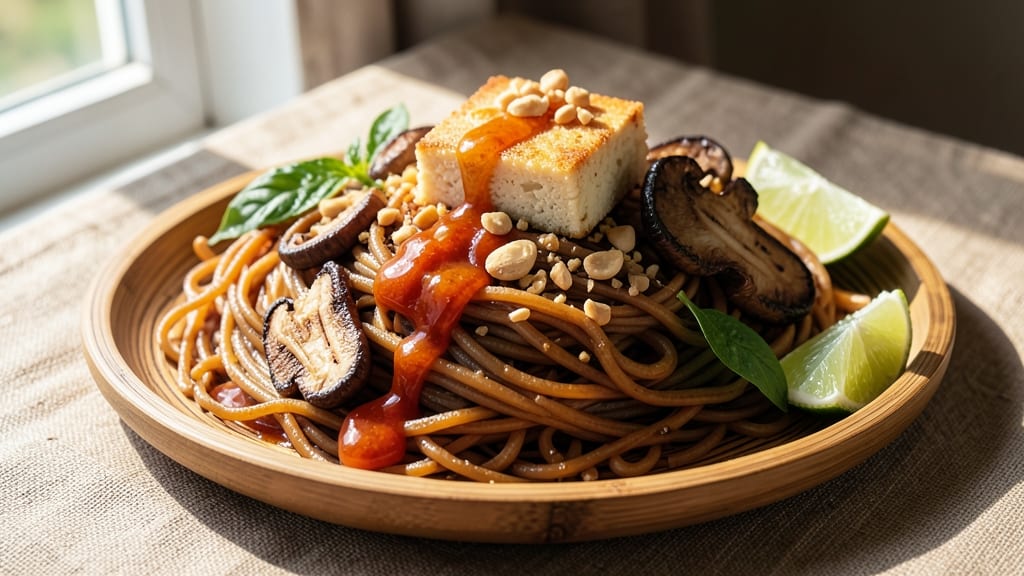
This brown rice Pad Thai noodles recipe delivers all the tangy, crunchy, umami-packed flavors of classic Pad Thai—just with a nutritious twist. 🌱 The secret lies in tamarind paste for that signature Thai tang, while brown rice noodles add satisfying chew and fiber-rich substance.
I've perfected this vegetarian version using crispy tofu and mushrooms for protein, ensuring every bite is packed with texture and flavor without fish sauce.
What sets this dish apart is the perfect balance of wok-tossed crunch (from peanuts and bean sprouts) and tamarind zing, all coming together in a quick 30-minute cooking process. The sauce is rich yet light, with just enough sweetness to complement the savory tofu and fresh herbs.
Whether you're serving this as a weeknight dinner or a vibrant vegetarian main course, it's a dish that feels both comforting and exciting—with none of the heavy guilt of traditional versions.
Ingredients for brown rice pad thai noodles
Tamarind tang, crispy tofu, and chewy brown rice noodles—this vegetarian Pad Thai packs all the wok-tossed magic.
| Ingredient | Amount | Notes |
|---|---|---|
| Brown Rice Pad Thai Noodles 🍜 | 8 oz | Uncooked, medium-width preferred |
| Extra-Firm Tofu 🍲 | 14 oz | Pressed, cubed for crispiness |
| Shiitake Mushrooms 🍄 | 8 oz | Sliced thin for umami depth |
| Tamarind Paste 🍈 | ½ cup | Thick, unsweetened for tang |
| Lime Juice 🍋 | ¼ cup | Freshly squeezed, seeds removed |
| Peanut Butter 🥜 | 2 tbsp | Natural, unsweetened variety |
| Soy Sauce 🥢 | 2 tbsp | Low-sodium preferred |
| Maple Syrup 🍁 | 1 tbsp | For subtle sweetness balance |
| Sesame Oil 🫒 | 1 tbsp | Toasted, for aroma |
| Bean Sprouts 🌱 | 2 cups | Fresh, crisp for crunch |
| Roasted Peanuts 🥜 | ½ cup | Chopped, for texture |
| Garlic Cloves 🧄 | 4 cloves | Minced for aromatic base |
| Red Bell Pepper 🌶️ | ½ whole | Thinly sliced, for color |
| Fresh Cilantro 🌿 | ¼ cup | Chopped, for fresh finish |
| Vegetable Oil 🫒 | 2 tbsp | High smoke point for wok |
The tamarind paste is non-negotiable for that signature Thai tang—look for unsweetened blocks at Asian markets or tubes at Trader Joe's. If you can't find it, lime juice + 1 tsp sugar is a decent stand-in. For the tofu, extra-firm is key—press it for 20 minutes to remove excess water before cubing. Shiitake mushrooms add earthy depth, but cremini or oyster mushrooms work too. Fresh bean sprouts are best (they wilt fast), but frozen sprouts thawed in cold water are a solid backup. The brown rice noodles? Soak them in warm water for 10 minutes before cooking—they're drier than regular Pad Thai noodles.
No tamarind? Lime juice + 1 tsp brown sugar mimics the tang, though it won't be identical. Swapping peanuts? Cashews or almonds add richness, but they'll change the texture. For the sauce, peanut butter is essential—it's what creates that creamy, nutty base. If you're avoiding soy, coconut aminos work in a pinch (use same amount). The garlic can be roasted for a sweeter flavor—toss minced cloves in oil and roast at 400°F for 5 minutes before adding to the wok. And if cilantro's not your thing, basil or mint add a bright finish instead.
Prep the tofu and mushrooms first—they take the longest. Store tamarind paste in the fridge once opened (it keeps for 6 months), and keep the peanut butter in a cool pantry spot to avoid oil separation. This dish reheats beautifully—microwave for 1 minute with a splash of water to revive crispiness. For meal prep, store components separately: noodles, sauce, veggies, and tofu/mushrooms. Toss everything together when ready to eat—the texture suffers if pre-tossed. Leftovers keep for 3 days in the fridge.
Why You'll Love This Recipe
- No-Fuss Assembly: I swear, the hardest part is pressing the noodles. Toss them in boiling water for 3-4 minutes—no soaking, no fuss—and they’re ready. The tofu gets pressed and pan-fried in 10 minutes flat, while the shiitakes just need a quick rinse and slice. Honestly, I’ve made this mid-meeting when my brain was fried.
- Umami Bomb: That tamarind paste? It’s the secret weapon. The deep, tangy sweetness cuts through the earthy mushrooms and crispy tofu like a knife. Add a squeeze of lime, and suddenly you’ve got this perfect balance—salty, sweet, funky, and fresh all at once. It’s the kind of flavor that makes you pause mid-bite.
- Lunchbox Hero: Between us, this is my go-to for meal prep. The noodles hold up for days in the fridge, and the sauce clings to everything like glue. Pack it cold or reheat it—it’s just as good both ways. My kids (the picky ones) actually finish it, and that’s saying something.
- Budget Win: Tofu’s cheap, mushrooms stay fresh forever, and brown rice noodles cost next to nothing compared to white. A single batch feeds four for under $10, and leftovers? They’re even better the second day. I’ll be real: this is how I eat well without breaking the bank.
Step-by-step instructions for wok-tossed brown rice Pad Thai
Let's bring this vibrant dish to life with a perfect balance of tangy, sweet, and umami flavors.
🍳 Step 1: Press and Cube the Extra-Firm Tofu
Start by pressing the 14 oz extra-firm tofu to remove excess water. Wrap it tightly in a clean kitchen towel or paper towels, then place a heavy object like a cast-iron skillet on top for 15 minutes. This ensures crispy edges when we cook it later.
Once pressed, cut the tofu into ½-inch cubes using a sharp knife. Toss them in a bowl with 2 tablespoons soy sauce and let them marinate for 10 minutes. This step adds flavor and helps the tofu develop that perfect texture when we wok it.
🍳 Step 2: Prepare the Tamarind-Peanut Sauce Base
In a small bowl, whisk together the ½ cup tamarind paste, 2 tablespoons peanut butter, 1 tablespoon maple syrup, and 1 tablespoon sesame oil. This combination creates the signature tangy-sweet sauce that ties everything together. Thin it slightly with 2 tablespoons warm water if needed—it should coat the back of a spoon but still be pourable.
Set the sauce aside while you prep the remaining ingredients. The tamarind paste is key here; don't substitute with bottled tamarind concentrate, which is often diluted. The thicker, unsweetened version gives the best balance of sour and umami.
🍳 Step 3: Cook the Tofu and Vegetables in the Wok
Heat a wok or large skillet over high heat until smoking, then add 2 tablespoons vegetable oil. Once shimmering, add the marinated tofu and cook for 3-4 minutes until golden brown on all sides. Remove the tofu and set aside temporarily.
In the same wok, add a little more oil if needed, then sauté the 4 minced garlic cloves and ½ thinly sliced red bell pepper for 1-2 minutes until fragrant. Add the 8 oz sliced shiitake mushrooms and cook for another 3 minutes until they release their moisture and turn tender. You're building layers of flavor here—don't rush this step.
🥘 Step 4: Cook the Noodles and Assemble
Bring a large pot of water to a boil and cook the 8 oz brown rice pad thai noodles according to package instructions (usually 4-5 minutes) until al dente. Drain and rinse briefly with cold water to stop the cooking process, then toss with 1 tablespoon sesame oil to prevent sticking.
Return the cooked tofu to the wok with the mushrooms and peppers. Add the drained noodles, 2 cups bean sprouts, and the prepared tamarind-peanut sauce. Toss everything vigorously over high heat for 2-3 minutes until the noodles are heated through and coated in the sauce. The high heat is crucial here—it prevents the noodles from becoming mushy.
🍽️ Step 5: Finish and Serve with Garnishes
Remove the wok from heat and stir in the ½ cup chopped roasted peanuts and ¼ cup chopped fresh cilantro. Finish with a splash of ¼ cup lime juice—this brightens the entire dish and cuts through the richness. Taste and adjust seasoning with a pinch more soy sauce if needed.
Serve immediately while everything is hot and the noodles are still springy. The dish should have a perfect balance of textures—crispy tofu, chewy noodles, crunchy sprouts and peanuts—all coated in that glossy, tangy-sweet sauce. Garnish with extra peanuts and cilantro for color and freshness.
Pro Tips For Making Brown Rice Pad Thai Noodles
- CRANK THE WOK HOT: Brown rice noodles need a proper sear to avoid turning mushy—get your wok or pan screaming hot (3-4 minutes on high) before tossing in the noodles. I used to rush this and ended up with limp, sad strands every time. Trust me, the first 30 seconds of high heat make all the difference in texture.
- SALT THE TOFU BEFORE SEARING: Toss cubed extra-firm tofu in 1 teaspoon of salt and let it sit for 10 minutes before pressing and cooking. This draws out moisture, so it crisps up instead of steaming. I skipped this once and got sad, greasy tofu—now I never skip it.
- SOAK SHIITAKES IN WARM WATER: Shiitake mushrooms hold onto dirt and grit like a stubborn child. Soak them in warm water for 5 minutes, then rinse under running water before slicing. This cuts down on gritty bites and makes them absorb the tamarind sauce better.
- DILUTE TAMARIND PASTE FIRST: Tamarind paste is thick and stubborn—mix it with ½ cup warm water before adding to the sauce. This prevents clumping and ensures an even, tangy flavor throughout. I learned this after scraping globs off my wok for the third time.
Perfect pairings for this recipe
Sauce Enhancements
Boost the sauce with 1 tsp chili garlic sauce for heat lovers or 1 tsp miso paste for deeper umami richness. I often add 1 tsp grated ginger to the tamarind mixture for a zesty kick—it brightens the entire dish.
For extra creaminess, stir in 1 tbsp coconut milk at the end, but keep it optional to maintain the sauce's signature tanginess. 🌶️
Protein Swaps
Replace tofu with chickpeas for a heartier texture—simply toss cooked chickpeas in 1 tbsp soy sauce and 1 tsp smoked paprika before adding to the wok. Seitan works beautifully too, especially if you want a meatier bite.
For a seafood twist (non-vegetarian), swap in shrimp sautéed with 1 tsp garlic powder and ½ tsp turmeric for color. 🍤
Veggie Variations
Add ½ cup snap peas for extra crunch or ½ cup shredded carrots for natural sweetness. I love tossing in ¼ cup chopped Thai basil at the end for an aromatic finish—it’s fresher than cilantro and adds a licorice-like depth.
For a spicier profile, include 1 tbsp sliced Thai chilies (remove seeds if you prefer mild heat). 🌿
Beverage Pairings
A sparkling Thai iced tea (like Thai Tea Lemon from Trader Joe’s) cuts through the richness perfectly. For beer lovers, a light lager (such as Asahi Super Dry) complements the dish without overpowering it.
If you prefer wine, a dry Riesling or Pinot Grigio enhances the tamarind’s acidity and peanut notes. 🍷
Garnish Upgrades
Drizzle with sriracha-lime dressing (mix 1 tbsp sriracha with 1 tbsp lime juice) for a spicy-sweet contrast. Top with crushed red pepper flakes and lime zest for a pop of color and extra zing.
For a smoky touch, sprinkle 1 tsp toasted sesame seeds or crumbled tempeh over the top. 💛
Make-Ahead Tips
Prep the sauce and chop all veggies in advance, storing them in airtight containers in the fridge for up to 2 days. Cook the tofu and mushrooms ahead, then reheat in the wok with a splash of water to revive crispiness.
Keep the noodles uncooked until serving—they’ll absorb flavors better when fresh. 📅
Nutrition facts
Frequently asked questions
Why use brown rice noodles instead of regular white rice noodles?
Brown rice noodles add fiber and nutrients while maintaining that satisfying chew—perfect for a healthier twist on classic Pad Thai. They also absorb sauce differently, creating a heartier texture without losing the dish's signature springiness. Plus, they're naturally gluten-free!
Can I make this recipe without tamarind paste?
Yes! Mix ¼ cup lime juice with 1 tablespoon brown sugar as a substitute, though the flavor won't be identical. For deeper tang, try 1 tablespoon apple cider vinegar plus ½ teaspoon sugar. The sauce will be brighter but less complex than tamarind's signature depth.
How do I prevent the tofu from getting soggy?
Press the tofu thoroughly for 20 minutes before cubing, then pat dry with paper towels. Cook it in batches over high heat until golden and crispy, and add it back to the wok only at the very end when tossing everything together. This keeps the texture perfect!
What's the best way to reheat leftovers?
Reheat in a wok or skillet over medium-high heat with a splash of water for 2-3 minutes to restore crispiness. Microwave reheating works too, but the texture won't be as satisfying. Add fresh bean sprouts and peanuts after reheating to maintain crunch.
Can I make this gluten-free?
Use tamari instead of soy sauce (check labels for gluten-free certification), and ensure your peanut butter is labeled gluten-free. Brown rice noodles are naturally gluten-free, and all other ingredients in this recipe are safe. Always verify sauce labels—some tamarind pastes may contain wheat.