
Main Courses
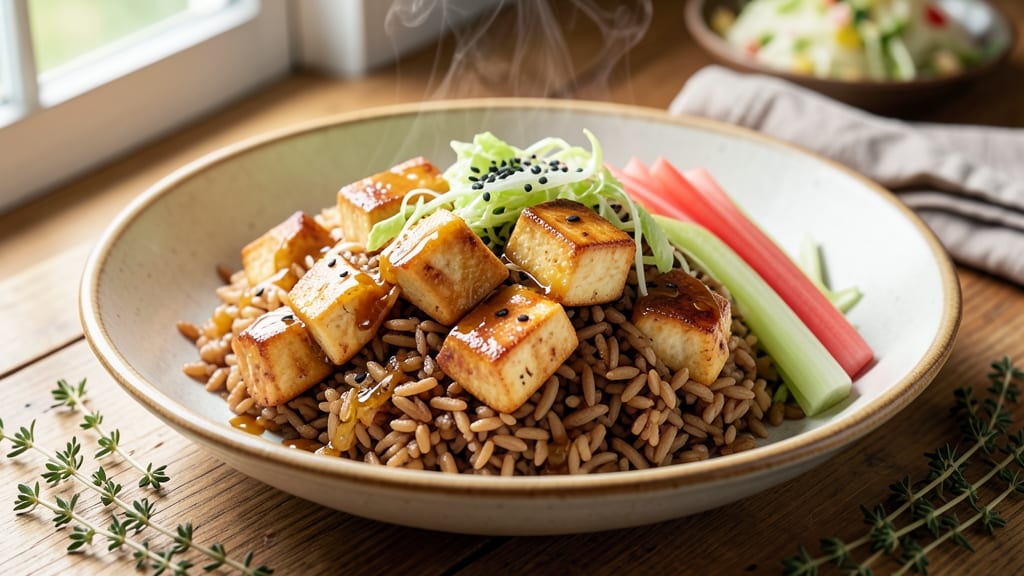
This Buddha rice recipe transforms simple ingredients into a vibrant, protein-rich bowl that honors tradition while satisfying modern cravings. The foundation of crispy celery and savory tofu creates a satisfying texture contrast, while the warm grains absorb the flavors of fresh herbs and aromatic spices.
I developed this version after years of experimenting with vegan Buddhist dishes, focusing on balance—both in taste and nutrition.
The magic happens when you roast the celery until it's crispy and caramelized, then combine it with fluffy brown rice and marinated tofu that stays tender yet flavorful. Fresh vegetables like shredded cabbage and pickled radishes add brightness, while a drizzle of peanut dressing ties everything together.
This dish isn't just a meal—it's a celebration of mindful eating, packed with plant-based protein and fiber.
What makes this recipe special is its versatility—it works as a hearty lunch or light dinner, and you can customize it with gluten-free grains or extra protein for high-protein needs.
The cultural roots run deep, inspired by Buddhist principles of simplicity and gratitude, but the flavors are anything but basic. Each bite delivers a perfect harmony of textures and tastes.
Ready in about 45 minutes, this Buddha rice bowl is perfect for meal prep or a quick weeknight dinner. The crispy celery adds a satisfying crunch, while the creamy peanut sauce brings everything together into a dish that's both nourishing and deeply satisfying. Let's get cooking!
Ingredients for buddha rice
Crispy celery, savory tofu, and aromatic brown rice create this vegan Buddha bowl's perfect harmony.
| Ingredient | Amount | Notes |
|---|---|---|
| Short-Grain Brown Rice 🌾 | 1 cup | Uncooked, organic preferred |
| Extra-Firm Tofu 🥬 | 1 lb | Pressed, cubed for marinade |
| Celery Stalks 🥬 | 3 whole | Thick-cut for crispy roasting |
| Green Cabbage 🥬 | 3 cups | Shredded, for fresh crunch |
| Daikon Radish 🥕 | 1 medium | Julienned, pickled in rice vinegar |
| Fresh Ginger 🌿 | 1 tbsp | Grated, for aromatic depth |
| Sesame Oil 🫒 | 1 tbsp | Toasted, for nutty aroma |
| Low-Sodium Soy Sauce 🥢 | 3 tbsp | For umami marinade |
| Coconut Aminos 🍶 | 1 tbsp | Gluten-free alternative |
| Peanut Butter 🥜 | 2 tbsp | Creamy, unsweetened |
| Maple Syrup 🍁 | 1 tbsp | For natural sweetness |
| Lime Juice 🍋 | 1 tbsp | Freshly squeezed |
| Fresh Cilantro 🌿 | ¼ cup | Chopped, for garnish |
| Sesame Seeds 🌱 | 1 tbsp | Toasted, for crunch |
| Vegetable Oil 🫒 | 2 tbsp | High smoke point |
The celery is non-negotiable—thick-cut stalks roast to crispy perfection while caramelizing into sweet, savory bites. Organic celery from the produce section at Whole Foods or your local farmers market delivers the best texture. For the tofu, extra-firm is essential—press it for 20 minutes to remove excess water, then cube into even pieces for consistent marinade absorption. The brown rice should be organic, short-grain for its sticky, satisfying texture. If you can't find short-grain, jasmine rice works in a pinch but lacks the same chew.
No sesame oil? Toasted peanut oil delivers similar nutty depth, though the flavor profile shifts slightly. Short on time? Pre-shredded cabbage from the bagged salad section saves chopping, but fresh is always better. The daikon radish can be swapped for regular radishes or carrot shavings, though the pickling process (rice vinegar + pinch of salt) remains key. For the peanut sauce, almond butter works if peanuts aren't available, though texture differs. Always toast your sesame seeds—30 seconds in a dry pan makes all the difference for that satisfying crunch.
Store prepped ingredients separately: rice in an airtight container for 4 days, tofu marinade in the fridge for 2 days, and veggies wrapped in damp paper towels for 3 days. The peanut sauce keeps for 1 week refrigerated or 3 months frozen. Assemble bowls fresh for maximum crispiness—reheating celery ruins its texture. For meal prep, portion components into containers and assemble when ready to eat. This dish reheats beautifully—just 30 seconds in the microwave revives the flavors.
Why You'll Love This Recipe
- No-Cook Prep Magic: The tofu and veggies just sit—no chopping frenzy, no boiling panic. I slice the daikon and cabbage while watching TV, then toss everything with the rice. Honestly, it’s the kind of meal that lets you breathe instead of stressing.
- Crunchy-Creamy Balance: That crispy tofu edge with the tender daikon? Chef’s kiss. The celery adds this fresh, bright bite that cuts through the richness, and the brown rice soaks up all the good stuff—no soggy mess, just perfect texture every time.
- Lunchbox Hero: Between us, this is my go-to for work lunches. Pack it in jars, and it stays fresh for days. My coworkers think I’m a meal-prep saint because it’s hearty enough to fill you up but light enough to not weigh you down by noon.
- Budget-Friendly Staple: Tofu and cabbage stretch like magic—this feeds four for under $10. I’ll be real: the first time I made it, I thought I’d regret the brown rice cost, but the flavor makes it worth every penny. Plus, leftovers taste just as good the next day.
Step-by-step instructions for Buddha rice preparation
This method transforms simple ingredients into a vibrant, protein-rich Buddha rice bowl with perfect texture contrasts.
Prepare the Crispy Tofu and Celery Base
Press the 1 lb extra-firm tofu between paper towels for 15 minutes to remove excess moisture. Cut it into 1-inch cubes and toss with 2 tablespoons vegetable oil, 3 tablespoons low-sodium soy sauce, and 1 tablespoon coconut aminos. Spread on a parchment-lined baking sheet and bake at 400°F for 20 minutes, flipping halfway, until golden brown and crispy.
While the tofu bakes, cut the 3 whole celery stalks into 2-inch thick pieces. Heat 1 tablespoon sesame oil in a large skillet over medium-high heat. Add the celery and cook for 8-10 minutes until deeply caramelized and tender-crisp. Remove and set aside with the tofu.
Cook the Short-Grain Brown Rice
Rinse the 1 cup short-grain brown rice thoroughly under cold water until the water runs clear. In a medium saucepan, combine the rice with 2 cups water and bring to a boil. Reduce heat to low, cover, and simmer for 40 minutes until the liquid is absorbed and rice is tender. Fluff with a fork and keep warm.
Here's the thing—don't skip the rinsing step. It removes surface starch that would make the rice gummy. The rice should have a slight bite when done, which is perfect for this dish's texture balance.
Assemble the Protein Sauce
In a small bowl, whisk together the 2 tablespoons peanut butter, 1 tablespoon maple syrup, 1 tablespoon lime juice, and 1 tablespoon grated fresh ginger until smooth. This sauce creates the signature sticky, savory-sweet element that binds everything together.
Heat 1 tablespoon vegetable oil in a small saucepan over medium heat. Add the peanut butter mixture and cook for 2-3 minutes until it thickens slightly and becomes glossy. Remove from heat and set aside.
Prepare the Fresh Vegetable Medley
Shred the 3 cups green cabbage and julienne the 1 medium daikon radish. In a large bowl, combine with the 0.25 cup chopped fresh cilantro and 1 tablespoon toasted sesame seeds. Toss gently to maintain texture. This vibrant mix provides the dish's essential crunch and freshness.
For the crispy element, thinly slice the previously caramelized celery into matchsticks. The contrast between the warm celery and cool cabbage is what makes this dish truly special.
Build and Serve the Buddha Rice Bowls
Divide the cooked short-grain brown rice among four bowls. Top each with ¼ of the crispy tofu cubes, ¼ of the caramelized celery, and ¾ cup of the cabbage-daikon mixture. Drizzle with the peanut sauce and finish with an additional sprinkle of sesame seeds.
Serve immediately while everything is at its peak temperature and texture. The combination of crispy tofu, tender rice, and fresh vegetables creates a perfect balance of textures and flavors in every bite.
Pro Tips For Making Buddha Rice
- SOAK THE BROWN RICE: DESCRIPTION:
- PRESS THE TOFU: DESCRIPTION:
- SHRED THE DAIKON THIN: DESCRIPTION:
- SAVE THE CELERY WATER: DESCRIPTION:
Flavor customization for these flavors
Spicy Peanut Twist
Swap the regular peanut sauce for a spicy version by adding 1 teaspoon of sriracha or ½ teaspoon of cayenne pepper to the peanut butter mixture. For extra depth, stir in ½ teaspoon of chili flakes and 1 teaspoon of miso paste for umami heat.
This transforms the dish into a fiery, flavor-packed bowl perfect for those who love a kick. 🌶️
Sweet & Tangy Mango Dressing
Replace the peanut sauce with a mango-lime dressing by blending ½ cup mango purée, 1 tablespoon lime juice, 1 tablespoon maple syrup, and 1 teaspoon grated ginger. Thin with 1 tablespoon water if needed.
This tropical twist adds a refreshing sweetness that pairs beautifully with the savory tofu and crispy celery. Use fresh mango or high-quality frozen purée for the best flavor.
Umami Mushroom Boost
Add ½ cup sliced shiitake mushrooms to the tofu marinade for an extra umami punch. Sauté the mushrooms in 1 tablespoon sesame oil until golden before mixing them into the tofu cubes.
The earthy, meaty flavor elevates the dish, making it even more satisfying. For a deeper taste, add 1 teaspoon soy sauce to the mushrooms before cooking. 🍄
Crunchy Nut Toppings
Swap sesame seeds for toasted cashews or crushed peanuts to add a richer, nuttier crunch. Pulse ¼ cup raw cashews in a food processor until finely chopped, then toast in a dry pan for 2-3 minutes until fragrant.
Sprinkle over the bowls just before serving to keep them crisp. This adds a delightful texture contrast and extra protein.
Herb-Infused Rice
Enhance the rice by stirring in 1 tablespoon chopped fresh herbs like cilantro, basil, or mint while it cooks. For a garlic-infused twist, sauté 1 minced garlic clove in the sesame oil before adding the celery.
The aromatic herbs and garlic elevate the dish, making every bite more vibrant and flavorful. This small change makes a big difference in complexity. 🌿
Pickled Vegetable Swaps
Experiment with different pickled veggies like carrots, cucumbers, or red onions instead of daikon radish. Thinly slice 1 small red onion and pickle it in ¼ cup rice vinegar, 1 teaspoon sugar, and a pinch of salt for 15 minutes.
The tangy crunch adds a refreshing contrast to the rich tofu and peanut sauce. Try different veggies to find your favorite combination.
Nutrition facts
Frequently asked questions
Can I make this Buddha rice bowl gluten-free?
Swap the brown rice for quinoa or certified gluten-free rice, and use tamari or coconut aminos instead of regular soy sauce. The tofu marinade and peanut sauce remain naturally gluten-free as long as you avoid cross-contamination with shared utensils or surfaces.
How do I prevent the tofu from getting soggy?
Press the tofu thoroughly for 20 minutes before marinating, and pat it completely dry with paper towels. Bake it at 400°F until golden and crispy—this creates a protective barrier. Keep the tofu separate from wet ingredients until serving to maintain texture.
What's the best way to store leftovers?
Store components separately: rice in an airtight container for 4 days, tofu in its marinade for 3 days, and veggies wrapped in damp paper towels for 3 days. The peanut sauce keeps for 1 week refrigerated. Reheat only the rice and tofu (never the celery—it loses crispiness). Assemble fresh when ready to eat.
Can I use white rice instead of brown?
Yes, but the texture will be less satisfying. White rice cooks faster (20 minutes) and has a softer bite. For best results, use jasmine rice and reduce cooking time by 5 minutes. The dish will still work, but the traditional chewiness of brown rice enhances the overall experience.
What makes this different from a regular Buddha bowl?
This recipe emphasizes crispy celery and caramelized textures that traditional Buddha bowls often lack. The peanut sauce adds a signature sticky-sweet element, while the tofu marinade creates a savory depth. It's a fusion of Buddhist-inspired simplicity with modern umami-rich techniques for maximum flavor contrast.