
Main Courses
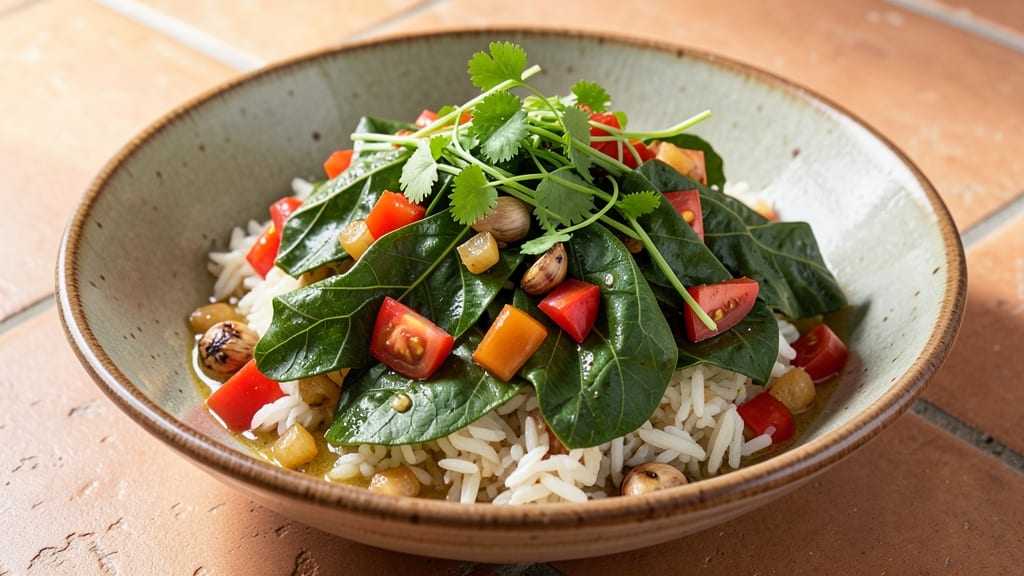
This cassava leaf and rice recipe brings the vibrant flavors of West Africa to your kitchen in a single, aromatic dish. The earthy cassava leaves blend seamlessly with fragrant rice, creating a hearty meal that’s both nutritious and deeply satisfying.
Whether you're serving a vegetarian feast or adding protein later, this one-pan wonder delivers restaurant-quality results with minimal effort.
The secret lies in the layered flavors: a rich tomato-pepper base simmered with onions, garlic, and spices, then combined with tender cassava leaves and perfectly cooked rice. Every bite delivers a balance of savory, slightly sweet, and umami notes—proof that bold flavors don’t require complicated techniques.
Ready in under an hour, this dish is perfect for weeknight dinners or special occasions alike.
Ingredients for cassava leaf and rice
This vibrant West African dish needs just 14 simple ingredients for bold, restaurant-worthy flavor.
| Ingredient | Amount | Notes |
|---|---|---|
| Long-Grain White Rice 🍚 | 1 ½ cups | Uncooked, rinsed well |
| Fresh Cassava Leaves 🌿 | 12 oz | Chopped, stems removed |
| Diced Onions 🧅 | 1 medium | Yellow or white |
| Garlic Cloves 🧄 | 4 cloves | Minced for aroma |
| Fresh Tomatoes 🍅 | 2 medium | Diced, ripe |
| Bell Peppers 🌶️ | 1 medium | Red or green, diced |
| Fresh Ginger 🌿 | 1 tbsp | Grated finely |
| Vegetable Oil 🫒 | 3 tbsp | For sautéing |
| Ground Black Pepper 🌶️ | ½ tsp | Freshly cracked |
| Salt 🧂 | 1 tsp | Adjust to taste |
| Dried Thyme 🌿 | ½ tsp | Or 1 tbsp fresh |
| Bay Leaves 🍃 | 2 whole | For depth of flavor |
| Vegetable Broth 💧 | 1 ½ cups | Low-sodium preferred |
| Lemon Juice 🍋 | 2 tbsp | Freshly squeezed |
Cassava leaves are the star—look for them at African markets or well-stocked grocery stores. If you can't find fresh, frozen cassava leaves work too (just thaw first). The rice should be long-grain white, like Uncle Ben's or Jasmine. For the tomatoes, grab ripe ones—they should be firm but yield slightly to gentle pressure. Ginger loses its punch fast, so buy it fresh and grate it right before cooking. The vegetable broth? Low-sodium is key unless you're adding extra salt later.
No cassava leaves? Spinach or kale can sub in a pinch (use half the amount). Fresh thyme unavailable? Dried works at one-third the quantity. The bell peppers can be swapped for zucchini or carrots if you prefer. For extra richness, stir in 1 tbsp tomato paste with the other spices. The lemon juice brightens everything up—don't skip it, even if you're not a huge citrus fan. And if you're worried about the rice getting mushy, rinse it well before cooking to remove excess starch.
This dish tastes even better the next day—make extra and store leftovers in the fridge for up to 4 days. For freezing, portion into airtight containers and it keeps for 3 months. The cassava leaves can be prepped ahead and stored in the fridge for 2 days before cooking. If you're making this for a crowd, double the recipe—it scales perfectly. The flavors meld beautifully overnight, so don't hesitate to prep components in advance.
Why You'll Love This Recipe
- No-Chop Frustration: The cassava leaves are the star, but honestly? They’re forgiving. Roughly chopping them (or even tearing them by hand) still works—no need for perfect precision. The rice handles everything else while you stir, so the only real prep is dicing onions and garlic, which takes all of two minutes.
- Deep Umami Magic: That first sizzle of onions and garlic in oil? It’s where the flavor starts. The cassava leaves—when wilted just right—add this earthy, slightly bitter depth that balances the tomatoes’ sweetness. It’s not fancy, but it’s ridiculously satisfying, like a hug in a bowl.
- Lunchbox Hero: Between us, this is my go-to for meal prep. Cook a big batch of rice, mix in the leafy goodness, and portion it into containers. The flavors only get better the next day—no sad, dry leftovers here. Pack it for work or school, and you’ll be the one everyone asks for seconds from.
- Pocketbook Friendly: Fresh cassava leaves might sound fancy, but they’re often cheaper than spinach or kale at local markets. A single bunch stretches across multiple meals, and the rice? Basic white rice won’t break the bank. It’s the kind of dish that feeds a family of four for under $10—and still feels special.
Step-by-step instructions for West African cassava leaf and rice
This one-pan wonder brings bold West African flavors together in minutes.
Sauté the Aromatics for Deep Flavor
Heat the 3 tablespoons vegetable oil in a large, heavy-bottomed pot over medium heat. Add the 1 medium diced onions and cook for 3-4 minutes until they soften and become translucent. You'll notice the onions release their sweet aroma as they cook down.
Next, add the 4 cloves minced garlic and cook for another 30 seconds until fragrant. The garlic should sizzle slightly but not brown—this prevents bitterness. Immediately stir in the 1 tablespoon finely grated fresh ginger, the 0.5 teaspoon dried thyme, and the 2 whole bay leaves. Let the spices toast for 1 minute until the kitchen fills with their earthy aroma.
Build the Sauce Base with Tomatoes and Peppers
Add the 2 medium diced fresh tomatoes and 1 medium diced bell peppers to the pot. Cook for 5-6 minutes, stirring occasionally, until the tomatoes break down and the mixture thickens slightly. You're looking for a rich, jammy texture that coats the back of a spoon.
Season with the 1 teaspoon salt and 0.5 teaspoon ground black pepper. Stir in the 1.5 cups vegetable broth and bring to a gentle simmer. Let it cook uncovered for 5 minutes to allow the flavors to meld together. This step develops the sauce's depth—don't rush it.
Add Cassava Leaves and Cook Until Tender
Gently stir in the 12 ounces chopped fresh cassava leaves, spreading them evenly over the sauce. Cover the pot and simmer over medium-low heat for 8-10 minutes, stirring occasionally. The leaves will wilt dramatically and release their vibrant green color into the sauce.
Here's the thing—cassava leaves can be tough if overcooked, so watch them closely. They're done when they're completely wilted and tender enough to pierce easily with a fork. If the sauce gets too thick, add a splash of water to maintain moisture.
Layer and Cook the Rice to Perfection
Rinse the 1.5 cups long-grain white rice thoroughly under cold water until the water runs clear. Spread the rice evenly over the cassava leaves in the pot, pressing down gently to ensure even contact with the sauce.
Pour the 2 tablespoons freshly squeezed lemon juice over the rice, then cover the pot tightly with a lid. Reduce heat to low and cook for 18-20 minutes. The rice should absorb all the liquid and develop a golden crust on top—this is your signal it's done.
Rest and Serve with Confidence
Remove the pot from heat and let it sit covered for 5 minutes. This resting period allows the rice to finish steaming and the flavors to meld completely. Fluff the rice gently with a fork, then remove and discard the bay leaves.
Serve immediately with a side of fried plantains or grilled fish. The cassava leaves will have a tender, slightly bitter bite that pairs perfectly with the fluffy rice. Each bite delivers a perfect balance of earthy cassava, aromatic spices, and bright lemon finish.
Pro Tips For Making Cassava Leaf And Rice
- Wilt Leaves in Stages: Cassava leaves release a ton of water—don’t dump them all in at once. Split the batch into 2-3 additions, stirring between each, or you’ll end up with a watery, sad stew instead of a rich, saucy base. I learned this the hard way after serving a plate that looked like someone drowned the rice.
- Blister Garlic First: Crush your garlic cloves after they turn golden-brown in the oil, not before. Raw garlic burns easily and can turn bitter, but blistered garlic adds a deep, nutty sweetness that cuts through the earthiness of the cassava leaves. (Yes, even if you’re impatient like me.)
- Salt the Rice Twice: Toss the raw rice with half the salt before cooking, then add the rest with the water. The first salt draws out starch, preventing mushy grains, while the second ensures even seasoning. I skip this when I’m lazy, but the dish is noticeably better when I don’t—especially with long-grain rice.
- Char the Onions Low: Let those onions cook slow and sweet until they’re deep brown, not crispy. High heat burns them into bitterness, but patient caramelization builds the flavor foundation for the entire dish. Sounds weird, but it works: your rice will taste like it simmered for hours, not minutes.
Essential equipment for cassava leaf and rice
Large Pot or Dutch Oven
A 5-7 quart heavy-bottomed pot or Dutch oven is essential for even heat distribution and proper layering of ingredients. I use my All-Clad stainless steel Dutch oven—it handles the steam from the rice beautifully without scorching.
If you don’t have one, a 5-quart enameled cast iron works just as well. Avoid thin, lightweight pots that can cause hot spots and uneven cooking. 🔥
Sharp Chef’s Knife
Cassava leaves have tough stems and fibrous veins, so a sharp 8-inch chef’s knife is a game-changer. I recommend the Wüsthof Classic for its precision—it glides through leaves without crushing them.
A serrated knife can also help with thicker stems. Always keep a cutting board nearby to protect your countertops from the leaf’s natural juices.
Fine-Mesh Strainer
Rinsing 1.5 cups of rice thoroughly requires a fine-mesh strainer to remove excess starch, which prevents mushy rice. My OXO Good Grips strainer has large holes but still traps fine particles.
If you’re short on time, rinse the rice in a bowl with cold water, then drain through a colander. For cassava leaves, a strainer isn’t needed, but it’s handy for washing any debris off before chopping.
Wooden Spoon or Spatula
A heat-resistant wooden spoon or silicone spatula is perfect for stirring the sauce and folding in cassava leaves without scratching your pot. I avoid metal utensils during the leaf-cooking phase—they can oxidize and turn the greens unappealingly dark.
A long-handled spoon also helps reach every corner of the pot, ensuring even cooking. 🌿
Measuring Cups and Spoons
Precision matters with spices and liquids, so invest in stainless steel measuring cups and spoons for accuracy. My OXO Stainless Steel set has clear markings for easy reading.
For the 1.5 cups of broth and 2 tablespoons of lemon juice, a liquid measuring cup with a spout makes pouring effortless. Don’t eyeball measurements—especially with the 0.5 teaspoon thyme and 0.5 teaspoon black pepper—they’re the secret to balanced flavor.
Lid with Ventilation
A tight-fitting lid with a small vent (or a loosely placed lid) is critical for steaming the rice while allowing excess moisture to escape. My All-Clad lid has a built-in handle and a slight gap for steam release.
If yours doesn’t, prop the lid open with a wooden spoon during the final 18-20 minutes of rice cooking. This prevents soggy rice and ensures a perfect crust. ⚡
Nutrition facts
Frequently asked questions
What if I can't find fresh cassava leaves?
No problem! Use 12 ounces of frozen cassava leaves instead—just thaw them completely before chopping. If you're completely out of options, spinach or kale works in a pinch (use about half the amount). The flavor won't be identical, but it'll still be delicious.
Can I make this dish without broth?
Yes, but your sauce will be less flavorful. Replace the 1.5 cups of vegetable broth with 1.5 cups of water plus 1 tablespoon tomato paste for depth. If you're vegetarian, use vegetable broth—chicken broth would work for non-vegetarian versions. The broth is key for that rich, savory base!
How do I prevent the rice from getting mushy? Rinse the 1.5 cups of rice thoroughly until the water runs clear to remove excess starch. Also,
Can I add protein to this dish?
Stir in 1 cup of cooked shrimp, chicken, or fish during the last 5 minutes of cooking. For extra richness, add 1/2 cup of coconut milk with the broth. Just keep in mind this will change the dish's vegetarian nature.
Why does my cassava leaf and rice taste bitter?
Bitterness usually means the leaves were overcooked or not washed properly. Always rinse leaves thoroughly before chopping to remove any dirt or natural bitterness. Also, cook them just until tender (8-10 minutes)—they should wilt completely but not turn mushy. A splash of lemon juice at the end can help balance any lingering bitterness.