
Main Courses
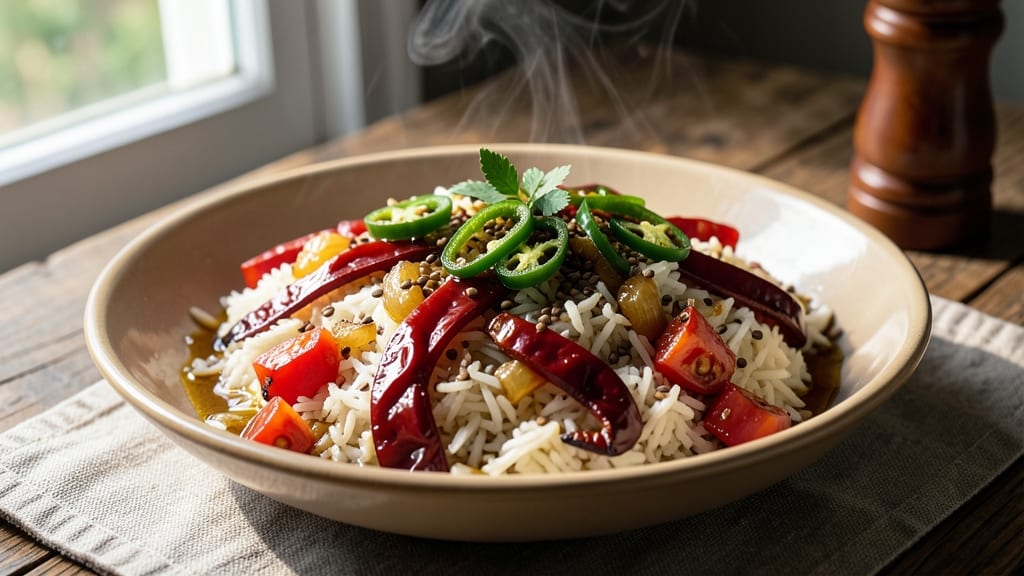
This capsicum rice Indian recipe transforms simple jasmine rice into a fragrant, smoky masterpiece with just a few key techniques. The secret lies in tempering whole spices like cumin and mustard seeds until they release their aromatic oils, creating that signature Indian crunch.
I've perfected this vegetarian version over years of testing, ensuring every bite delivers tender rice, sweet bell peppers, and layers of spiced flavor that balance perfectly.
The dish begins with perfectly soaked jasmine rice that cooks up fluffy and separate, then gets infused with sautéed bell peppers and a fragrant onion-tomato base.
The real magic happens in the tempering stage, where cumin, curry leaves, and other spices sizzle in hot oil before being poured over the rice. This method ensures each grain absorbs the smoky, spiced flavors evenly, creating a dish that's both comforting and restaurant-quality.
Ingredients for capsicum rice indian
Jasmine rice, bell peppers, and aromatic spices create this fragrant vegetarian masterpiece.
| Ingredient | Amount | Notes |
|---|---|---|
| Jasmine Rice 🍚 | 1 ½ cups | Uncooked, long-grain preferred |
| Red Bell Peppers 🍅 | 2 whole | Medium-sized, seeds removed |
| Yellow Onions 🧅 | 1 whole | Medium, finely chopped |
| Tomatoes 🍅 | 2 medium | Ripe, pureed or finely chopped |
| Green Chilies 🌶️ | 2 whole | Slit lengthwise, seeds removed |
| Cumin Seeds 🌿 | 1 tbsp | Whole, for tempering |
| Mustard Seeds 🌿 | ½ tbsp | Whole, for tempering |
| Curry Leaves 🌿 | ¼ cup | Fresh, loosely packed |
| Fresh Ginger 🧅 | 1 inch | Peeled, grated |
| Vegetable Oil 🫒 | ½ cup | For cooking and tempering |
| Salt 🧂 | 1 tsp | Adjust to taste |
| Turmeric Powder 🌶️ | ½ tsp | For rice coloring |
| Garam Masala 🌶️ | 1 tsp | For finishing |
| Fresh Coriander Leaves 🌿 | ¼ cup | Chopped, for garnish |
The jasmine rice is the foundation—look for basmati-style jasmine at Indian specialty stores or the Asian aisle for the best texture. Patel Brothers or H Mart carry excellent brands. Bell peppers should be firm with vibrant color—red and yellow work best for that classic Indian sweetness. For curry leaves, fresh is non-negotiable; dried won't give that signature aroma. The ginger should smell bright and zesty—no shriveled roots here. If you can't find fresh curry leaves, substitute with 1 tsp dried fenugreek leaves, though it won't be identical.
No green chilies? Red chili powder at half the heat level works in a pinch. The tomatoes can be pureed for a smoother texture or chopped for texture—San Marzano if you're splurging. For the tempering spices, toast the cumin and mustard seeds separately in oil before combining for maximum aroma. The garam masala is crucial—MDH or Everest brands are reliable, but homemade blends with cardamom, cinnamon, and cloves are superior. If you're short on time, use 1 tsp each of ground cumin and coriander as a substitute.
Rice keeps best in an airtight container for 3-4 days in the fridge, though it reheats better the next day. The tempered spices lose punch after 24 hours, so make fresh if possible. For meal prep, store components separately—rice, veggies, and spices—then combine when reheating. Garnish with fresh coriander just before serving to keep it vibrant. This dish freezes beautifully for up to 2 months, though texture may change slightly.
Why You'll Love This Recipe
- One-Pot Magic: I swear by this recipe when I’m too tired to scrub a million pans. Sauté onions and peppers, toss in rice and spices, then let it all steam together—no separate pot, no extra cleanup. That fragrant tomato-chili base clings to every grain, and honestly? The rice comes out fluffier than I expect.
- Sweet & Spicy Balance: The red bell peppers add this bright, almost candy-like sweetness that cuts through the heat of the green chilies. It’s the kind of dish where the first bite makes you pause—like, wait, that’s actually good—and then you’re back for seconds. The onions caramelize just enough to add depth without overpowering.
- Leftover Goldmine: This rice keeps its texture for days, which means I can make a big batch on Sunday and still have perfect lunches by Thursday. Reheat it with a splash of water, and it’s like it was just cooked. My kids even ask for it when I forget to pack their usual sandwiches—(yes, even on a Tuesday night).
- Budget Brightener: Jasmine rice is affordable, bell peppers stay fresh for weeks, and onions? You’ll always have them. I’ve made this for under $3 a serving, and it still feels like a restaurant-worthy meal. Plus, the leftovers stretch into stir-fries or wraps—waste nothing.
Step-by-step instructions for capsicum rice Indian recipe
Here's the method for creating a fragrant, smoky capsicum rice dish with perfect texture and vibrant flavors.
Prepare the Vegetable Mixture
Begin by washing and cutting the 2 whole red bell peppers into even strips, removing seeds and membranes. Finely chop the 1 whole yellow onion and the 2 medium tomatoes. Slit the 2 whole green chilies lengthwise and remove seeds if you prefer milder heat. Peel and grate the 1 inch fresh ginger.
In a large bowl, combine all chopped vegetables with the 0.5 cup fresh coriander leaves, 1 tsp salt, and 0.5 tsp turmeric powder. Mix gently to distribute the spices evenly. This preparation ensures your vegetables will absorb the flavors perfectly during cooking. Set this mixture aside while you prepare the rice base.
Cook the Rice Base
Rinse the 1.5 cups jasmine rice under cold water until the water runs clear, then drain well. In a medium saucepan, combine the rice with 3 cups water and bring to a boil over high heat. Once boiling, reduce heat to medium-low, cover with a tight-fitting lid, and simmer for 12-15 minutes until the rice absorbs all the liquid and becomes tender.
While the rice cooks, heat 0.25 cup vegetable oil in a separate pan over medium heat. Add the 1 tbsp cumin seeds and 0.5 tbsp mustard seeds, stirring constantly until they begin to sizzle and turn golden brown. This should take about 1-2 minutes. Immediately add the 0.25 cup curry leaves and sauté for 30 seconds until fragrant. Remove from heat and set aside.
Temper the Vegetables
In a large, deep skillet, heat the remaining 0.25 cup vegetable oil over medium heat. Add the tempered spice mixture and stir for 30 seconds to combine. Add the prepared vegetable mixture and cook for 8-10 minutes, stirring occasionally, until the vegetables soften but retain their texture. The vegetables should be tender yet still slightly crisp.
Add the cooked rice to the skillet and gently fold everything together. Sprinkle the 1 tsp garam masala over the top and mix well to distribute evenly. Cook for an additional 2-3 minutes to allow the flavors to meld together completely.
Finish and Serve
Remove the skillet from heat and let the capsicum rice rest for 2-3 minutes. This resting period allows the flavors to settle and the rice to absorb any remaining moisture. Taste and adjust seasoning with additional salt if needed.
Garnish with additional fresh coriander leaves and serve immediately while hot. The dish should have a fragrant aroma with a perfect balance of smoky spices, tender vegetables, and fluffy jasmine rice. Pair with a side of yogurt or raita for a complete meal experience.
Pro Tips For Making Capsicum Rice Indian
- CHAR THE ONIONS LOW: Your capsicum rice starts with onions—don’t rush this. Cook them on medium-low heat for 8-10 minutes until they’re deep golden, almost caramelized, not just translucent. I used to rush this and end up with raw onion bits that make the whole dish taste sharp and unfinished.
- SLICE PEPPERS THIN AND EVEN: Cut your red bell peppers into ¼-inch strips, not thick chunks. Uniform slices ensure even cooking and a consistent texture—no mushy bits or undercooked centers. (Yes, it takes a few extra minutes, but it’s worth it.)
- TOAST THE RICE FIRST: Before adding water, spread the raw jasmine rice in a dry pan over medium heat for 2-3 minutes until it smells nutty and lightly browns. This step removes excess starch and prevents the rice from turning gummy later. (I know, it feels like overkill, but trust me.)
- SALT THE WATER LIGHTLY: Use only half the salt you’d normally use for plain rice—capsicum rice gets enough flavor from the onion-tomato base and green chilies. Over-salting here makes the rice taste flat and dull. Taste the water before adding rice; it should be just slightly salty, not briny.
Common mistakes when making perfect results
Over-Soaking the Rice
I’ve seen so many beginners ruin perfectly good rice by soaking it for too long—more than 30 minutes—before cooking.
This leads to mushy, clumpy grains that absorb way too much water and lose their distinct texture. Jasmine rice should only soak for 20-30 minutes max in room-temperature water, then drain completely before cooking.
Pro tip: Use cold water for soaking to prevent premature germination, which can make the rice gummy. 🍚
Skipping the Tempering Stage
The tempering stage—where spices sizzle in hot oil—is where this dish gets its soul. If you rush or skip it, you’ll miss that smoky, aromatic crunch that defines Indian rice dishes. Toast cumin and mustard seeds separately until they pop and darken slightly—this releases their oils and flavors.
Then, add curry leaves last for that fresh, citrusy aroma. Trust me, the difference is night and day. 🌿
Undercooking the Vegetables
Bell peppers and onions need 8-10 minutes of gentle cooking to soften without turning mushy. Many cooks cut this short, leaving the veggies crunchy and underseasoned. Medium-low heat is key—it allows the spices to meld while keeping the peppers tender.
If they’re still firm after 10 minutes, cover the pan for another 2 minutes to steam them through. 🍅
Adding Too Much Liquid
After combining the rice and vegetables, resist the urge to add extra water or oil to "fix" the texture. The rice should already be cooked and fluffy from Step 2, and the veggies should release their moisture naturally.
Adding liquid at this stage will turn your dish into a soggy, watery mess. If it looks dry, gently fold in a splash of reserved cooking water from the rice—just 1-2 tablespoons at a time. ⚡
Ignoring the Resting Phase
Letting the capsicum rice rest for 2-3 minutes off the heat might seem trivial, but it’s crucial. This short pause allows the flavors to meld and the rice to absorb any remaining spices.
Skipping it means you’ll end up with a dish that tastes uneven and underseasoned. Use this time to taste and adjust the salt—it’s the only chance you’ll get before serving! 💡
Using Dried Curry Leaves
Fresh curry leaves are non-negotiable for authentic flavor. Dried leaves lose their bright, citrusy aroma and can make the dish taste bitter. If you’re in a pinch, toast 1 tsp dried fenugreek leaves in the oil instead—they’ll add a similar earthy depth, though not the same freshness.
For the best results, buy fresh curry leaves from Indian grocery stores or online—your taste buds will thank you. 🌿
Nutrition facts
Frequently asked questions
Can I use basmati rice instead of jasmine?
While jasmine rice gives a naturally fragrant aroma, basmati rice works beautifully too. For best results, use a 1:1.5 rice-to-water ratio and soak for 20 minutes before cooking. The grains will be slightly firmer but still absorb the capsicum flavors wonderfully.
How do I make this dish less spicy?
Reduce or omit the green chilies entirely, and use ½ tsp mild red chili powder instead of fresh chilies. For extra mildness, remove all seeds from the bell peppers before cooking. The dish will still have depth from the cumin and garam masala without the heat.
What's the best way to store leftovers?
Transfer to an airtight container and refrigerate for up to 3 days. Reheat gently in a pan with 1 tsp water to prevent drying. For freezing, store components separately (rice, veggies, spices) and combine when reheating. The texture stays best when reheated slowly.
Can I add protein to this vegetarian dish?
Yes! Stir in ½ cup cooked chickpeas or 1 cup paneer cubes when combining with rice. For meat lovers, add 1 cup cooked chicken or shrimp at the end. Just cook the protein separately first to avoid overcooking.
Why does my capsicum rice turn out dry?
This usually happens from overcooking the rice or adding too much oil. Always use freshly cooked rice (not reheated) and cook veggies until just tender. If needed, add 1-2 tbsp reserved rice water while combining ingredients. The key is gentle heat and proper timing.