
Main Courses
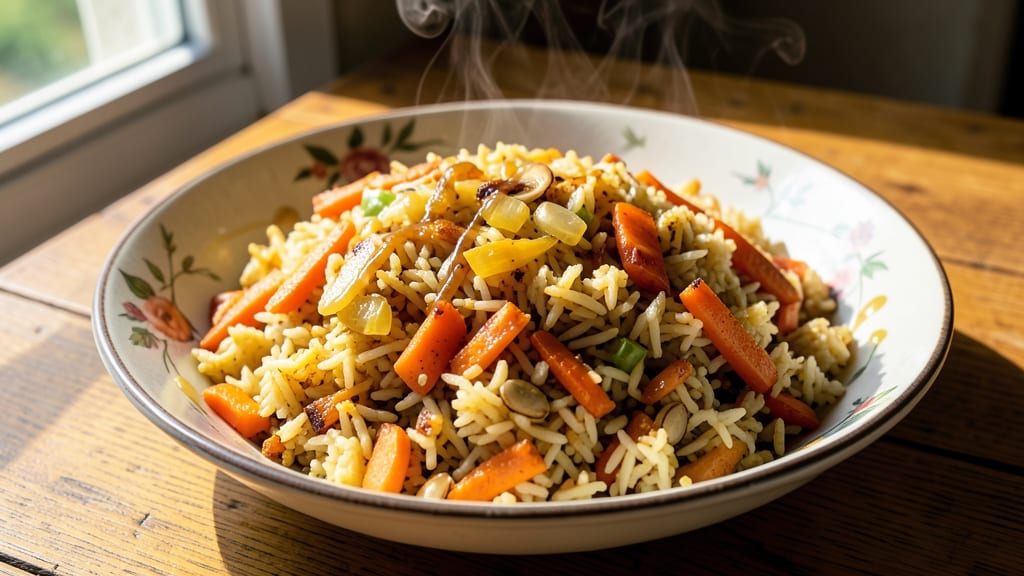
This turmeric-infused Indian carrot fried rice transforms simple ingredients into a vibrant, one-pan masterpiece with bold spices and satisfying crunch. The secret lies in blooming whole spices in ghee—a traditional technique that unlocks deep, aromatic flavors while keeping the dish light and fragrant.
Perfect for a quick vegetarian lunch or meal prep, this recipe balances sweet carrots with savory spices for a dish that's both comforting and restaurant-worthy.
What sets this apart is the textural contrast: crisp-tender carrots, fluffy basmati rice, and a fragrant spice tempering that ties everything together.
We'll sauté onions and garlic until golden, cook the rice with turmeric and cumin, then finish with a quick tempering of mustard seeds, curry leaves, and asafoetida for that authentic Indian punch.
Ready in 25 minutes, this dish proves homemade Indian fried rice can be as easy as it is delicious.
Ingredients for carrot fried rice indian
Authentic Indian spices and crisp carrots create this vibrant vegetarian fried rice masterpiece.
| Ingredient | Amount | Notes |
|---|---|---|
| Basmati Rice 🍚 | 1 ½ cups | Uncooked, long-grain preferred |
| Carrots 🥕 | 2 cups | Medium, julienned or finely diced |
| Yellow Onions 🧅 | 1 whole | Medium, finely chopped |
| Garlic Cloves 🧄 | 6 cloves | Minced, fresh preferred |
| Ghee 🧈 | 3 tbsp | Clarified butter for authentic flavor |
| Turmeric Powder 🌿 | 1 tsp | Freshly ground preferred |
| Ground Cumin 🌿 | ¾ tsp | Toasted for enhanced aroma |
| Mustard Seeds 🌶️ | 1 tsp | Whole, yellow variety |
| Curry Leaves 🌿 | 8 whole | Fresh, dried as substitute |
| Asafoetida Powder 🌶️ | ¼ tsp | For authentic umami depth |
| Green Chilies 🌶️ | 2 whole | Slit lengthwise, optional for heat |
| Fresh Coriander Leaves 🌿 | ¼ cup | Chopped, for garnish |
| Salt 🧂 | 1 tsp | Kosher or sea salt preferred |
| Vegetable Oil 🫒 | 1 tbsp | For additional cooking if needed |
The basmati rice is the foundation—look for long-grain varieties like India Gate or Tilda for optimal texture. Whole spices like mustard seeds and curry leaves elevate the dish; Penzeys Spices or local Indian markets offer the freshest options. Carrots should be julienned uniformly for even cooking, though diced works too. Ghee is non-negotiable for that authentic Indian flavor—Kerala or Amul brands are excellent choices, though any high-quality ghee will suffice. For the turmeric and cumin, toast the cumin seeds briefly in a dry pan before grinding to deepen their aroma.
No fresh curry leaves? Dried leaves at half the quantity work in a pinch, though fresh is ideal. Substitute asafoetida with garlic powder at one-third the amount if unavailable, but the umami will differ. For extra crunch, add frozen peas along with the carrots. If you prefer less heat, skip the green chilies entirely—the dish remains flavorful without them. Pre-cut frozen carrots save time, though fresh yields better texture. The vegetable oil can be swapped for more ghee if you prefer richer flavor, though it may alter the dish's traditional balance.
Cooked rice reheats beautifully—simply sauté with a splash of water to restore moisture. Store in an airtight container for 4-5 days in the fridge or freeze for up to 3 months. For meal prep, portion into single-serving containers with a sprinkle of coriander to maintain freshness. The spice tempering can be made ahead and stored in a dry jar for 2 weeks, though freshly tempered spices yield the best results. Garnish with extra coriander just before serving to preserve its vibrant color.
Why You'll Love This Recipe
- One-Pan Magic: I swear by this—just heat ghee, toss in chopped onions and garlic until golden, add leftover basmati rice and shredded carrots, and stir-fry. No dirty dishes, no stress. The ghee alone makes cleanup feel like a victory.
- Ghee-Garlic Glow-Up: That first sizzle of ghee with onions and garlic? Pure flavor alchemy. The carrots caramelize just enough to add natural sweetness, while the garlic lingers like a warm hug. Honestly, it’s the kind of dish that makes you want to eat straight from the pan.
- Lunchbox Hero: Pack this cold or at room temp—it’s perfect for work lunches, kids’ school meals, or even a picnic. The basmati holds its shape, the carrots stay crisp, and the ghee adds richness that doesn’t turn soggy. My daughter’s been begging for seconds since I started making it.
- Budget Bright Spot: Carrots and onions are cheap, rice is a staple, and a little ghee goes a long way. I stretch this for three meals with leftovers, and it’s still satisfying. Between us, it’s my go-to when grocery money’s tight but I refuse to skimp on taste.
Step-by-step instructions for turmeric-infused carrot fried rice
Master this aromatic Indian fried rice technique for vibrant color, perfect texture, and layered spice.
🍳 Step 1: Prepare the Base Ingredients for Perfect Texture
Begin by rinsing the 1.5 cups basmati rice thoroughly under cold water until the water runs clear. Soak the rice for 20 minutes in fresh water, then drain completely. This step removes excess starch and prevents gummy rice. While the rice soaks, julienne or finely dice the 2 cups carrots into even ¼-inch pieces—uniform size ensures consistent cooking.
Finely chop the 1 whole yellow onion and mince the 6 cloves garlic. The onions should be small enough to disappear quickly during cooking, while the garlic should be finely minced to release its flavor without becoming bitter. Set all prepared ingredients aside in separate bowls for organized cooking. I always use a sharp chef's knife for this prep—it creates cleaner cuts and reduces cooking time.
🔥 Step 2: Bloom the Spices in Ghee for Maximum Flavor
Heat a large, heavy-bottomed skillet or wok over medium-high heat. Add 3 tablespoons ghee and allow it to melt completely, watching for small bubbles to form around the edges—this indicates the ghee is ready. Immediately add the 1 teaspoon mustard seeds and let them sizzle for 30 seconds until they begin to pop.
Next, add the 8 whole curry leaves and 2 whole green chilies (slit lengthwise). Stir constantly for 1 minute until the curry leaves turn crisp and the chilies soften slightly. This is where the foundation of your dish's authentic aroma builds. Immediately follow with the 0.25 teaspoon asafoetida powder—this ingredient adds a distinct umami depth that's essential to Indian cooking. The moment you add it, you'll notice the spices transform from simple to complex.
🍳 Step 3: Cook Aromatics and Incorporate Turmeric
Add the finely chopped 1 whole yellow onion to the skillet and sauté for 3-4 minutes until translucent and just beginning to caramelize at the edges. The onions should soften completely but not brown—this prevents bitterness in the final dish. Add the minced 6 cloves garlic and cook for an additional 30 seconds until fragrant.
Lower the heat to medium and stir in the 1 teaspoon turmeric powder and 0.75 teaspoon ground cumin. Cook for 30 seconds while stirring constantly—this ensures even distribution and prevents burning. The turmeric will immediately turn the mixture a vibrant yellow, which will carry through to your fried rice. This is the moment that defines the dish's signature color and subtle earthy flavor.
🥘 Step 4: Combine Rice and Vegetables for Even Cooking
Add the drained 1.5 cups basmati rice to the skillet and stir to coat evenly in the spiced ghee. Cook for 2 minutes on medium heat, breaking up any clumps and ensuring the rice absorbs the aromatic flavors. Add the julienned 2 cups carrots and stir for another 3 minutes until the carrots soften slightly but maintain their vibrant color.
Pour 1 tablespoon vegetable oil around the edges of the pan to prevent sticking, then increase heat to high. Stir-fry vigorously for 4-5 minutes until the rice grains become separate and slightly crisp at the edges. The rice should be hot throughout—this is crucial for achieving that perfect fried rice texture. If the mixture looks dry, add 2 tablespoons water and stir until absorbed.
🔪 Step 5: Finish with Seasoning and Garnish
Reduce heat to medium-low and add the 1 teaspoon salt. Stir well to distribute evenly throughout the rice mixture. Taste and adjust seasoning if needed—Indian fried rice should balance the earthy spices with just enough saltiness. Remove from heat and fold in the 0.25 cup chopped fresh coriander leaves, reserving a few for garnish.
Transfer the fried rice to a serving platter and garnish immediately with the reserved coriander leaves. The dish should be vibrant yellow from the turmeric, with bright orange carrots peeking through. Serve while hot, ideally with raita or a side of yogurt to complement the spiced rice. The texture should be slightly crisp around the edges with tender rice grains throughout—this balance is what makes this Indian fried rice truly exceptional.
Pro Tips For Making Carrot Fried Rice Indian
- USE COLD RICE: Indian fried rice tastes best with rice that’s been chilled overnight—or at least 4 hours. Cold rice grains stay separate and soak up flavors like a sponge instead of turning mushy. (Yes, even if you’re making it fresh, throw it in the fridge first.)
- SHRED CARROTS SMALL: Skip thick slices—they stay crunchy and weird. Grate or finely dice carrots so they soften evenly and blend into the rice. A mandoline set to 2mm works, but a sharp knife does the job just fine.
- STOP WHEN ONIONS ARE GOLDEN: Overcooking onions turns them bitter and dark. Cook them until they’re translucent with just a hint of caramel—about 5-6 minutes on medium heat. Walk away and check; they’ll keep cooking from residual heat.
- SAUTÉ GARLIC IN BATCHES: Dumping all minced garlic at once burns it fast. Split it into two additions—first half for 30 seconds, then the rest when onions are done. This gives you nutty, fragrant garlic without the bitter kick. (Trust me, you’ll taste the difference.)
Pro cooking tips for great carrot fried rice indian
Spice Bloom Mastery
Blooming spices in ghee is the secret to unlocking deep, aromatic flavors. Heat your 3 tbsp ghee until small bubbles form around the edges, then add 1 tsp mustard seeds and let them pop for 30 seconds—this prevents bitterness.
Immediately add 8 curry leaves and 2 slit green chilies, cooking for 1 minute until crisp. The moment you add ¼ tsp asafoetida, the spices transform from simple to complex. 🌶️
Rice Texture Secrets
Rinsing and soaking 1.5 cups basmati rice for 20 minutes removes excess starch to prevent gummy results. After draining, stir-fry the rice for 2 minutes in the spiced ghee before adding vegetables. This step ensures each grain absorbs flavor while maintaining separation.
For extra crunch, finish with 1 tbsp vegetable oil and stir-fry on high heat for 4-5 minutes—this creates that signature crispy edge. ⚡
Carrot Perfection
Julienne carrots into ¼-inch pieces for even cooking—they should soften in 3 minutes but remain vibrant. Add them after coating the rice in spices to prevent overcooking. For extra sweetness, lightly roast the carrots at 400°F for 10 minutes before adding to the rice.
This caramelization enhances their natural sweetness and balances the earthy spices. 🥕
Heat Control Tips
Medium-high heat is ideal for blooming spices, but reduce to medium when adding turmeric and cumin to prevent burning. The moment you add 1 tsp salt, taste immediately—Indian fried rice should be seasoned but not salty.
If using a wok, work in batches if needed, but avoid overcrowding the pan. I always use a 12-inch cast iron skillet for even heat distribution. 🔥
Garnish Like a Pro
Fresh coriander leaves should be added at the very end to preserve their bright color and aroma. Reserve 2 tbsp chopped leaves for garnishing—this adds visual appeal and a fresh finish.
For extra flair, sprinkle with toasted cumin seeds or crispy fried shallots. Serve immediately while the rice is hot and the spices are fragrant. 💫
Equipment Essentials
A heavy-bottomed skillet or wok is non-negotiable for even heat distribution. I recommend a Lodge cast iron skillet for its superior heat retention. Use a sharp chef's knife for precise cuts, and a wooden spoon for stirring—it won't scratch your pan.
For meal prep, portion into glass containers with tight-sealing lids to maintain texture. ⏰
Nutrition facts
Frequently asked questions
Can I use day-old rice for this carrot fried rice?
Yes! Day-old rice works perfectly—it's drier and separates more easily, giving you that classic fried rice texture. Just break up any clumps before adding to the pan. For best results, use rice that's been refrigerated for at least 12 hours and reheat slightly before frying. This method actually enhances the crispiness when stir-fried.
How do I adjust the spice level for kids or sensitive stomachs?
Skip the green chilies entirely and reduce the asafoetida to ¼ tsp for a milder version. You can also omit the mustard seeds (they're more about aroma than heat) and use ½ tsp ground cumin instead of whole seeds. The turmeric and coriander will still provide flavor without the spiciness. For extra kid appeal, add ½ cup peas along with the carrots.
What's the best way to store leftovers?
Let the fried rice cool completely, then store in an airtight container in the refrigerator for up to 4 days. For reheating, add 1 tablespoon water per cup of rice and microwave for 1-2 minutes or stir-fry in a dry pan for 3-4 minutes to restore crispiness. Freeze portions for up to 3 months—thaw overnight in the fridge before reheating.
Can I make this vegetarian-friendly with protein?
Add ½ cup crumbled paneer or ½ cup boiled chickpeas when you add the carrots. For extra protein, stir in ½ cup scrambled tofu at the end. If using paneer, lightly pan-fry it first to remove excess moisture. The protein will absorb the spices beautifully while keeping the dish vegetarian.
Why did my carrots turn mushy instead of staying crisp?
Overcooking is the most likely cause—carrots should cook for only 3 minutes after adding to the rice. To prevent this, cut them uniformly into ¼-inch pieces and add them after the rice has absorbed the spices. For extra crunch, finish with 1 tablespoon vegetable oil and stir-fry on high heat for 1 minute at the very end.