
Main Courses
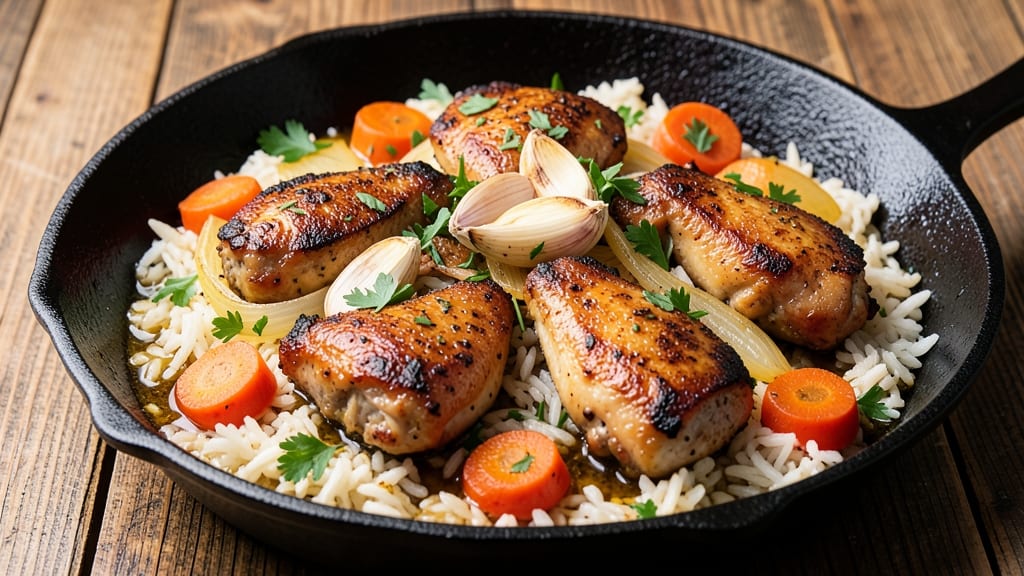
This one-pan chicken and rice skillet dinner delivers restaurant-quality results in just 30 minutes—no fancy equipment or complicated steps required. After years of perfecting this technique, I've created a method that balances tender chicken, fluffy rice, and savory flavors without the mess of multiple dishes.
The secret lies in layering ingredients strategically and letting them cook together, creating a harmonious blend of textures and tastes that's both satisfying and efficient.
What makes this recipe truly special is how it transforms simple ingredients into a protein-packed meal that's ready in under half an hour. We start by searing the chicken to lock in juices, then build flavor with aromatic vegetables and herbs before adding rice and broth.
The result? A dish where every bite delivers perfectly cooked chicken, tender rice, and a rich, flavorful sauce that coats everything. It's the kind of meal that feels indulgent yet requires minimal effort.
The beauty of this skillet dinner is its versatility—it works as a weeknight staple or a weekend centerpiece, and the flavors only deepen as it sits. Whether you're feeding a family or meal prepping for the week, this recipe delivers restaurant-quality results with just one pan to clean.
The combination of chicken, rice, and vegetables creates a balanced plate that's both hearty and nutritious, making it a go-to for busy evenings.
Ready to master this foolproof one-pan technique? Let's get started with ingredients that come together seamlessly to create a dish that's as delicious as it is efficient. The key is patience in the cooking process, allowing the flavors to meld and the rice to absorb the broth perfectly.
Trust me, once you try this method, you'll never go back to separate dishes again.
Ingredients for chicken and rice skillet dinner
Restaurant-quality chicken and rice comes together with these 13 simple yet strategic ingredients.
| Ingredient | Amount | Notes |
|---|---|---|
| Boneless, Skinless Chicken Thighs 🍗 | 1 ½ lb | Cut into 1-inch pieces |
| Long-Grain White Rice 🍚 | 1 cup | Uncooked, jasmine or basmati preferred |
| Chicken Broth 💧 | 1 ½ cups | Low-sodium preferred, homemade if possible |
| Yellow Onion 🧅 | 1 whole | Diced into 1/4-inch pieces |
| Carrots 🥕 | 2 medium | Peeled and sliced into 1/4-inch rounds |
| Garlic Cloves 🧄 | 4 cloves | Minced for depth of flavor |
| Fresh Thyme 🌿 | 1 tbsp | Leaves only, finely chopped |
| Dried Oregano 🍃 | 1 tsp | Mexican oregano preferred |
| Salt 🧂 | 1 ½ tsp | Diamond Crystal kosher salt |
| Black Pepper 🌶️ | ½ tsp | Freshly ground for best flavor |
| Olive Oil 🫒 | 2 tbsp | Extra-virgin for richness |
| Fresh Parsley 🌿 | ¼ cup | Chopped for garnish |
| Lemon Juice 🍋 | 1 tbsp | Freshly squeezed |
The chicken thighs are the foundation of this dish—bone-in, skin-on yields the most flavor, but boneless works too. Trader Joe's and Whole Foods carry excellent pre-cut thighs, but if buying whole, look for pieces with good marbling. The rice should be long-grain and uncooked; jasmine or basmati absorbs the broth beautifully. For the broth, homemade is ideal, but Pacific Foods or Swanson low-sodium options work well in a pinch. Fresh thyme and parsley elevate the dish, but dried oregano at half the amount can substitute if needed.
No fresh thyme? Dried thyme at one-third the amount works, though the flavor will be more muted. Substituting chicken broth for vegetable broth? Add 1 tsp chicken bouillon powder to mimic depth. For the carrots, baby carrots or pre-sliced from the store save time—just adjust the amount to maintain the 1/4-inch slice thickness. The olive oil matters here—extra-virgin adds fruity notes, while regular olive oil works for basic cooking. Lemon juice brightens everything, but bottled lemon juice will do if fresh isn't available.
This dish reheats beautifully—3-5 minutes in a skillet over medium heat with a splash of broth. Store leftovers in an airtight container for 4-5 days, or freeze for 3 months. For meal prep, portion into individual containers with a sprinkle of parsley on top. The rice-to-broth ratio ensures fluffy texture, but if you prefer firmer rice, reduce broth by 1/4 cup. Always let the dish sit for 5 minutes after cooking—flavors meld during this time.
Why You'll Love This Recipe
- One-Pan Magic: I swear by this recipe—just toss everything in the skillet: chicken, rice, broth, and veggies. No pots, no pans, no stress. The rice absorbs all that savory broth right alongside the chicken, so every bite is packed with flavor without extra effort.
- Caramelized Crunch: Here’s what sold me—the onions and carrots get sweet, golden-brown edges while the chicken stays juicy. That crispy texture with the tender rice? It’s the kind of contrast that makes you go back for seconds, no question.
- Leftovers That Don’t Suck: Between us, most chicken-and-rice leftovers turn into sad, dry rice. Not this. The broth keeps it moist, and the chicken stays tender. I’ll often double the batch because reheating it the next day still tastes like dinner, not a science experiment.
- Budget Meal for Busy Nights: Chicken thighs are cheaper than breasts, and rice stretches further than you’d think. Add a few carrots and an onion, and you’ve got a filling, satisfying meal for under $10. Honestly, it’s my go-to when I’m too tired to overthink dinner.
Step-by-step instructions for chicken and rice skillet dinner
This one-pan method delivers perfectly balanced flavors and textures in under 30 minutes.
Sear the Chicken for Maximum Flavor
Heat the 2 tablespoons olive oil in a large skillet over medium-high heat until shimmering. Add the 1.5 pounds boneless, skinless chicken thighs cut into 1-inch pieces, working in batches if needed to avoid overcrowding. Cook undisturbed for 3-4 minutes per side until the chicken develops a deep golden-brown crust and releases easily from the pan.
This searing step creates the Maillard reaction, which builds rich, caramelized flavors that infuse into the entire dish. I press down gently on the chicken pieces during the first minute to prevent curling and ensure even contact with the pan. Once the chicken is cooked to 165°F internally, remove it to a plate and set aside—it'll stay warm while we build the rest of the meal.
Sauté Aromatics and Brown the Vegetables
In the same skillet (no need to clean it—the browned bits are flavor gold), add the 1 whole yellow onion diced into ¼-inch pieces and the 2 medium carrots sliced into ¼-inch rounds. Cook for 4-5 minutes until the onions soften and begin to caramelize at the edges, then add the 4 cloves garlic minced and the 1 tablespoon fresh thyme. Stir for 30 seconds until fragrant.
The onions should be translucent with just a hint of color, and the garlic should smell pungent but not burnt. This aromatic base forms the flavor foundation for the entire dish. If the vegetables stick to the pan, add a splash of chicken broth to deglaze and scrape up those flavorful browned bits.
Toast the Rice and Build the Flavor Base
Add the 1 cup long-grain white rice to the skillet and stir to coat it evenly with the aromatics. Toast the rice for 2 minutes, stirring constantly, until it becomes translucent at the edges and releases a nutty aroma. This toasting step prevents mushy rice and enhances its natural flavor.
Now pour in the 1.5 cups chicken broth, scraping up any browned bits from the bottom of the pan. Sprinkle with 1 teaspoon dried oregano, 1.5 teaspoons salt, and 0.5 teaspoon black pepper, then stir gently to combine. The liquid should just cover the rice—this ratio ensures perfectly cooked grains without excess moisture.
Simmer Until Rice is Tender and Liquid is Absorbed
Return the chicken to the skillet, nestling it among the rice. Bring the mixture to a gentle simmer over medium heat, then reduce to low heat. Cover the skillet with a tight-fitting lid and cook for 15-18 minutes without stirring, allowing the rice to absorb the liquid and steam evenly. The chicken will finish cooking during this time.
Check the rice after 15 minutes—it should be tender but still have a slight bite. If it's not quite done, continue cooking for another 2-3 minutes. The ideal texture should be firm yet creamy with a slight resistance when pressed with a fork. If the mixture looks dry before the rice is fully cooked, add 1-2 tablespoons water and continue cooking.
Finish with Fresh Herbs and Brighten with Lemon
Once the rice is perfectly tender, remove the skillet from heat. Stir in the ¼ cup fresh parsley and 1 tablespoon lemon juice, brightening the dish with fresh, acidic notes that cut through the richness. The lemon juice also adds a subtle brightness that enhances all the other flavors.
Let the skillet sit covered for 5 minutes to allow the rice to finish absorbing any remaining liquid and the flavors to meld together. Serve immediately from the skillet, garnished with additional parsley if desired. Each bite should deliver tender chicken, perfectly cooked rice, and a harmonious blend of caramelized vegetables and aromatic herbs.
Pro Tips For Making Chicken And Rice Skillet Dinner
- Sear the Chicken First: High heat for 3-4 minutes until golden—this locks in flavor and keeps the thighs juicy. I used to skip this and ended up with bland, rubbery chicken that tasted like it was cooked in broth the whole time.
- Chop Carrots Small: ½-inch pieces cook faster and soak up broth better than thick slices. After burning through three batches of unevenly cooked carrots, I finally got it right—now they’re tender but still hold their shape.
- Don’t Stir the Rice: Let it sit undisturbed for the first 5 minutes after adding liquid—this gives the bottom layer time to toast and prevents gummy rice. (Yes, even if you’re impatient like me.)
- Use Half the Broth: Start with 1 cup instead of the full amount, then add more as needed—this keeps the rice from turning mushy. My grandmother swore by this, and she was right: the texture is light and separate, not gluey.
Pro cooking tips for this recipe
Skillet Heat Control
Mastering the heat is everything with this one-pan dish. Start with medium-high heat when searing the chicken—this creates that perfect golden crust through the Maillard reaction. Once you add the rice and broth, immediately reduce to low heat to prevent burning.
I use a 12-inch cast iron skillet (like my vintage Lodge) because it retains heat beautifully and distributes it evenly. 🔥
Chicken Searing Secrets
Don't overcrowd the pan when searing chicken—work in 2 batches if needed. Press down gently on each piece with a spatula for the first 30 seconds to prevent curling and ensure even browning.
The chicken should reach 165°F internally, but it'll finish cooking later in the skillet. I always taste a small piece after searing—it should be juicy, not dry. 🍗
Rice Texture Mastery
The rice-to-broth ratio is critical: 1 cup rice to 1.5 cups broth. Toast the rice for exactly 2 minutes before adding liquid—this prevents mushy grains. Stir once after adding broth, then let it cook undisturbed.
If the rice looks dry before it's tender, add 1-2 tablespoons water and cover again. The jasmine rice I use here absorbs liquid perfectly, but basmati works too. ✨
Deglazing for Flavor
Never clean your skillet between steps—that browned chicken fond is flavor gold! After removing the chicken, add 2-3 tablespoons chicken broth to deglaze, scraping up all those caramelized bits. This creates a rich sauce that coats the rice and vegetables.
I like to use a wooden spoon for this step—it's gentle on the pan and helps scrape effectively. 💫
Timing the Simmer
Simmer covered for 15-18 minutes without peeking—lifting the lid releases steam and disrupts cooking. The chicken will finish cooking during this time, and the rice should be tender with a slight bite.
If your stove runs hot, reduce heat to lowest setting to prevent scorching. I always check doneness by pressing a grain with a fork—it should be firm but creamy. ⏰
Final Flavor Boost
Finish with fresh parsley and lemon juice right off the heat—this brightens the dish and cuts through the richness. Let it rest 5 minutes before serving so flavors meld completely.
I garnish with extra parsley and a squeeze of lemon at the table—it makes the dish look as good as it tastes. 💛
Nutrition facts
Frequently asked questions
Can I use chicken breast instead of thighs?
Yes, but with caution! Chicken breast cooks faster and dries out more easily. Cut it into ½-inch thick pieces and reduce searing time to 2-3 minutes per side until just cooked through (165°F). For extra moisture, add 2 tablespoons chicken broth when returning it to the skillet.
How do I adjust this for more or fewer servings?
This recipe scales perfectly. For 2 servings, use ½ lb chicken, ½ cup rice, and ¾ cup broth. For 6 servings, double all ingredients. Keep the rice-to-broth ratio at 1:1.5 to maintain texture. The skillet should be no more than ⅔ full for even cooking.
What if my rice turns out mushy?
Mushy rice usually means too much liquid or insufficient toasting. For next time, toast the rice for 3 minutes (not 2) and reduce broth by ¼ cup. If it's already mushy, spread it on a baking sheet and bake at 350°F for 15 minutes to dry it out. The chicken will still taste great!
Can I make this ahead of time?
Cook the dish as directed, then refrigerate in an airtight container for up to 4 days. Reheat by covering the skillet and warming over medium-low heat for 8-10 minutes, adding 2 tablespoons broth if needed. For best texture, reheat only what you'll serve immediately.
What's the best skillet for this recipe?
A 12-inch cast iron skillet (like Lodge) is ideal—it retains heat evenly and creates that perfect crust on chicken. If you don't have cast iron, a heavy stainless steel or enameled skillet works too. Avoid nonstick for searing—it can't handle the high heat needed for the Maillard reaction.