
Main Courses
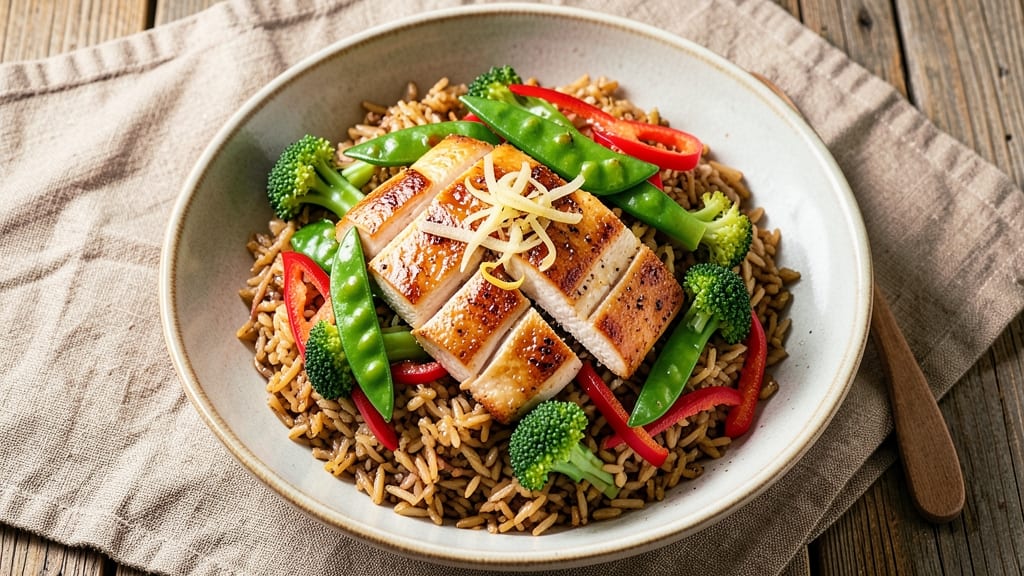
This chicken veggie rice bowl recipe delivers a perfectly balanced meal in just 25 minutes—no fuss, no waste, and no last-minute grocery runs. I designed it after years of testing one-pan solutions for busy weeknights, where flavor harmony matters more than fancy techniques.
The secret lies in cooking everything together: tender chicken, crisp-tender vegetables, and fluffy rice all develop in the same pan, creating a symphony of textures and tastes that feels restaurant-quality without the effort.
The foundation starts with brown rice—chewy yet light—cooked to perfection in the same pan where the chicken and vegetables sizzle. You'll use lean chicken breast cut into strips for quick cooking, paired with an aromatic blend of ginger, garlic, and soy sauce that infuses every bite.
Bell peppers, broccoli, and snap peas add color and crunch, while a drizzle of sesame oil at the end ties everything together with nutty depth. It's the kind of meal that satisfies both body and schedule.
What makes this recipe truly special is how effortlessly it balances protein, vegetables, and carbs in one dish. The chicken stays juicy thanks to a simple marinade, the vegetables retain their vibrant colors and crisp texture from high-heat cooking, and the rice absorbs all the delicious flavors without turning mushy.
This isn't just another rice bowl—it's a complete, nutritious meal that comes together faster than takeout and tastes better than anything you'd order.
Perfect for meal preppers, busy professionals, or anyone craving a wholesome dinner without spending hours in the kitchen. The best part? Leftovers reheat beautifully, making it an ideal solution for feeding a family or packing lunches for the week. Let's get started on this foolproof, flavor-packed one-pan wonder.
Ingredients for chicken veggie rice bowl
Fourteen ingredients, one pan, restaurant-quality flavor in 25 minutes—this bowl balances protein, veggies, and carbs perfectly.
| Ingredient | Amount | Notes |
|---|---|---|
| Long-Grain Brown Rice 🍚 | 1 cup | Uncooked, rinsed thoroughly |
| Boneless, Skinless Chicken Breast 🍗 | 1 ½ lb | Cut into 1-inch strips |
| Red Bell Pepper 🌶️ | 1 whole | Sliced into 1/2-inch strips |
| Broccoli Florets 🥦 | 2 cups | Cut into bite-sized pieces |
| Snap Peas 🌱 | 1 cup | Trimmed, whole or halved |
| Fresh Ginger 🌿 | 1 tbsp | Finely grated, aromatic |
| Garlic Cloves 🧄 | 4 cloves | Minced, fresh preferred |
| Low-Sodium Soy Sauce 🥢 | 2 tbsp | For umami depth |
| Sesame Oil 🫒 | 1 tbsp | Toasted, for finishing |
| Olive Oil 🫒 | 2 tbsp | Light, for high-heat cooking |
| Diamond Crystal Kosher Salt 🧂 | ¾ tsp | For seasoning and rice |
| Ground Black Pepper 🌶️ | ½ tsp | Freshly cracked |
| Lemon Juice 🍋 | 1 tbsp | Fresh, for brightness |
| Green Onion 🧅 | 2 whole | Sliced thin, for garnish |
| Toasted Sesame Seeds 🌾 | 1 tsp | For crunchy texture |
Brown rice is the secret weapon here—jasmine or short-grain works too, but long-grain brown stays chewy yet light. I grab mine from Whole Foods bulk bins for freshness, but any store's organic section has good options. Rinse it well to remove excess starch, which keeps the rice from turning gummy. The chicken breast should be lean but not dried out—pat it dry before cutting to ensure crisp edges. For the veggies, fresh broccoli is best, but frozen florets work in a pinch if you're short on time. Just don't thaw them first—they'll get soggy in the pan.
No soy sauce? Coconut aminos or tamari are great swaps, though tamari has a deeper flavor. Fresh ginger and garlic are non-negotiable for that aromatic punch—jarred ginger is fine if you're in a rush, but it lacks the zing. The bell pepper and snap peas can be swapped for zucchini or carrots if you prefer. For extra protein, add edamame or tofu cubes—they hold up well to the high heat. And if you're watching calories, reduce the sesame oil to 1/2 tbsp—it's still flavorful, just lighter.
This meal reheats like a dream—microwave with a damp paper towel for 1-2 minutes to restore crispness. Store leftovers in airtight containers for 4-5 days in the fridge, or freeze portions for up to 3 months. I double the recipe every Sunday and portion it into containers for the week—lunch is sorted. The rice keeps best if you cook it separately and mix it in at the end, but the one-pan method is worth the slight texture trade-off for convenience. Garnish with sesame seeds and green onions right before serving—they add freshness that disappears when reheated.
Why You'll Love This Recipe
- One-Pan Wonder: I swear by this trick—just toss everything on one sheet pan after cooking the rice. No extra pots, no messy cleanup, and that crispy chicken? Worth the 10 minutes it takes to roast.
- Crispy-Creamy Magic: The chicken stays juicy inside while the edges get that perfect golden crust, and the snap peas? They add this weirdly addictive sweetness that balances the broccoli’s bite. Honestly, I’ll take this over takeout any day.
- Lunchbox Hero: Between us, this is my go-to for meal prep. Brown rice keeps for days, the veggies stay crisp, and I can swap in whatever’s on sale—zucchini one week, carrots the next. My kids actually eat their veggies this way. (Yes, even on a Tuesday night.)
- Budget Meal, Big Payoff: Brown rice is cheaper than white, chicken breast is lean but filling, and bell peppers last forever in the fridge. I’ve made this for $12 and fed four people—leftovers for days, no guilt, no extra cost. My wallet thanks me.
Step-by-step instructions for chicken veggie rice bowl
Here's how to assemble this balanced, flavorful meal in one pan—quick, efficient, and packed with texture.
Sear the Chicken and Prepare the Rice
Heat a large skillet or deep pan over medium-high heat and add the 2 tablespoons olive oil. Once shimmering, add the 1.5 lb boneless, skinless chicken breast cut into 1-inch strips. Cook for 4-5 minutes until the chicken develops a golden crust on all sides and reaches an internal temperature of 165°F.
Remove the chicken and set aside. In the same pan, add the 1 cup long-grain brown rice and toast it for 1 minute, stirring constantly. This step enhances the nutty flavor of the rice. Immediately add 2 cups water (or enough to cover the rice by about ½ inch) and bring to a boil. Reduce heat to low, cover, and simmer for 30 minutes until the rice is tender and the liquid is absorbed.
Sauté the Aromatics and Vegetables
While the rice cooks, return the pan to medium-high heat and add 1 tablespoon sesame oil. Add the 4 cloves minced garlic and 1 tablespoon finely grated fresh ginger, cooking for 30 seconds until fragrant—don't let them burn. Add the 1 whole red bell pepper sliced into ½-inch strips and 2 cups broccoli florets, cooking for 4-5 minutes until the bell pepper softens and the broccoli brightens in color.
Add the 1 cup snap peas and stir-fry for another 2 minutes until the snap peas are tender-crisp. Season everything with 2 tablespoons low-sodium soy sauce, 0.75 teaspoon Diamond Crystal kosher salt, and 0.5 teaspoon ground black pepper. Taste and adjust the seasoning—this is where the umami and balance come together.
Combine Everything and Finish
Return the cooked chicken to the pan and stir everything together. Add 1 tablespoon lemon juice and toss gently to combine. Cook for 1-2 minutes to heat the chicken through and let the flavors meld. If the rice is ready now, transfer it to a serving bowl and mix in the chicken and vegetable mixture. If the rice needs more time, keep it covered on low heat.
For the final touch, drizzle with an extra ½ teaspoon sesame oil and sprinkle with 1 teaspoon toasted sesame seeds and 2 whole green onions sliced thin. Serve immediately while the chicken is still juicy and the vegetables retain their vibrant colors.
Garnish and Serve with Confidence
Let each person assemble their own bowl by dividing the rice, chicken, and vegetables evenly. The contrast of textures—tender rice, crisp-tender vegetables, and juicy chicken—makes this dish satisfying. The bright lemon juice and toasted sesame seeds add layers of flavor that keep every bite interesting.
This one-pan method ensures minimal cleanup while delivering a restaurant-quality meal. The key is balancing the cooking times so everything finishes together—vegetables stay crisp, chicken stays juicy, and rice absorbs all the delicious flavors. Enjoy your perfectly balanced, nutrient-packed bowl!
Pro Tips For Making Chicken Veggie Rice Bowl
- CUT CHICKEN SMALLER THAN YOU THINK: Skinless chicken breast dries out fast, so slice it paper-thin (¼-inch max) before cooking. I used to fight with uneven pieces—now they cook in 3-4 minutes on high heat instead of 6-8, staying juicy. (Yes, even if it looks like confetti.)
- SALT THE BROCCOLI LIKE IT’S SALMON: Toss broccoli florets in ½ teaspoon salt before roasting—they’ll crisp faster and hold their shape. I learned this the hard way when my florets turned to mush. (Bonus: Snap peas don’t need extra salt—they’re already sweet.)
- DON’T OVERCOOK THE BROWN RICE: Drain brown rice exactly when the water’s absorbed—no waiting for it to “finish.” It’ll keep cooking from residual heat. I’ve ruined batches by letting it sit too long; now I check at 40 minutes and drain immediately.
- SAUTÉ PEPPERS FIRST, THEN EVERYTHING ELSE: Cook sliced red bell pepper alone for 2 minutes in the pan—it softens faster and prevents soggy veggies later. Add broccoli and peas after the chicken’s halfway done; they’ll steam in their own juices instead of turning limp. (Trust me, this is the non-negotiable step.)
Storing and reheating this recipe
Fridge Storage Tips
Store your chicken veggie rice bowl in an airtight container with a tight-fitting lid to keep flavors fresh. I swear by glass Pyrex containers—they maintain temperature better than plastic and don’t absorb odors.
Divide leftovers into single-serving portions for quick reheating, and press plastic wrap directly on the surface to prevent drying. Keep in the fridge for 4-5 days at 40°F or below—the rice stays chewy, and the chicken remains juicy when reheated properly. 🥗
Freezer-Friendly Hacks
For longer storage, freeze portions in quart-sized freezer bags with all the air squeezed out. Lay them flat to save space, and label with dates—this bowl keeps well for up to 3 months.
When ready to eat, thaw overnight in the fridge for even reheating. I’ve found that cooking the rice separately before freezing preserves texture better than mixing everything in one pan. 🧊
Microwave Reheating
Pop your bowl in the microwave for 1-2 minutes on medium power, stirring halfway. Add 1-2 tablespoons water to prevent drying, then cover with a damp paper towel to restore crispness.
For extra flavor, finish with a drizzle of sesame oil and fresh green onions—it’s like eating fresh again. Avoid high power settings, or the rice will turn gummy. ⏱️
Stovetop Revival
My favorite method is reheating on the stovetop over medium-low heat with a splash of water or chicken broth. Stir occasionally for 3-4 minutes until everything is heated through.
The stovetop method gives you better control over texture—no rubbery rice or dry chicken. Add a pinch of salt if needed, as flavors can mellow during storage. 🔥
Garnish Like Fresh
Always add fresh sesame seeds and green onions after reheating—they bring back that restaurant-quality crunch and brightness. I keep a small bowl of toasted sesame seeds on my counter for quick garnishing. For extra zing, squeeze a little lemon juice over the top right before serving. 💫
Meal Prep Pro Tips
Double the recipe and store components separately: cooked rice in one container, chicken and veggies in another. This way, you can mix and match flavors throughout the week.
I also prep extra marinade in small jars to drizzle on reheated bowls. The key is to reheat rice and protein separately for best texture, then combine before serving. 💡
Nutrition facts
Frequently asked questions
Can I use white rice instead of brown?
Yes, but the cooking time will change! White rice cooks in about 15 minutes instead of 30 minutes for brown. Use a 1:1.5 rice-to-water ratio and check for doneness at 12 minutes. The texture will be lighter, but the flavor profile stays the same. For extra convenience, try pre-cooked microwaveable rice pouches—they cut prep time by half!
How do I keep the chicken from drying out?
Pat the chicken strips completely dry with paper towels before cooking, and don't overcrowd the pan. Cook in single layers for 4-5 minutes per side over medium-high heat. A quick trick: Add 1 tablespoon water to the pan when combining everything at the end—it steams the chicken slightly and keeps it juicy.
What if I don't have sesame oil?
Don't worry—substitute with toasted peanut oil or even a drizzle of olive oil. For that nutty aroma, toast 1/2 teaspoon sesame seeds in a dry pan for 30 seconds and sprinkle them on top. The flavor won't be identical, but it still adds depth. The dish will taste delicious without it!
Can I make this gluten-free?
Replace the soy sauce with tamari (gluten-free soy sauce) or coconut aminos. Double-check that your sesame oil and broth (if used) are also gluten-free. All other ingredients are naturally gluten-free, so this version works perfectly for gluten-sensitive diets. The flavor remains rich and balanced.
What's the best way to add extra protein?
Add 1/2 cup edamame or tofu cubes with the vegetables—they'll cook through in the same 2 minutes. For more meat, include 1/2 lb shrimp or sliced mushrooms. If using tofu, press it first to remove excess water and cut into small cubes. The extra protein boosts nutrition without changing the recipe's harmony.