
Main Courses
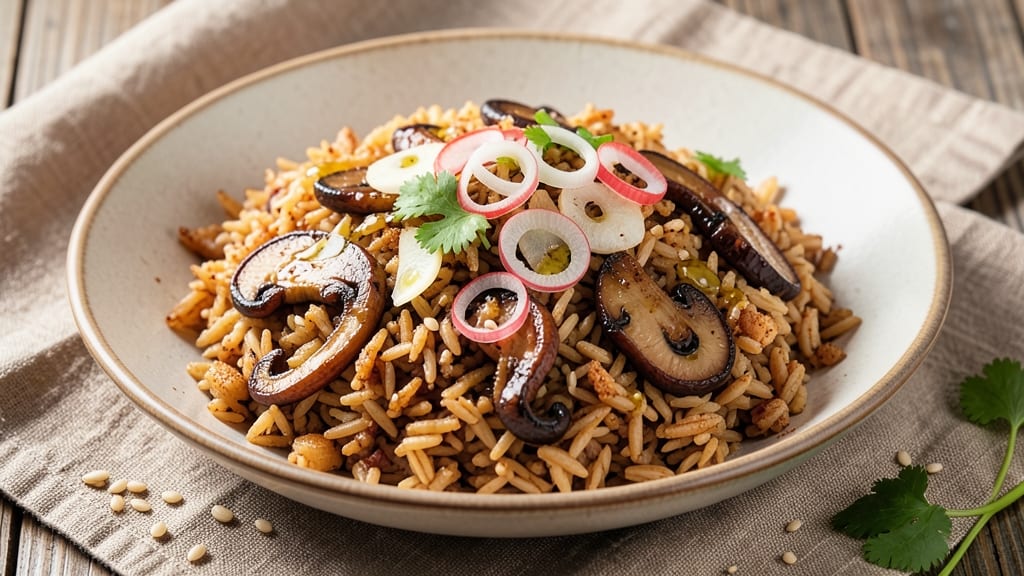
Chinese brown rice recipe transforms simple grains into a fragrant, textured dish that balances chewy bites with aromatic five-spice warmth. The key lies in proper soaking and wok-searing techniques that create that signature crispy crust while keeping the interior tender. I developed this method after years of experimenting with traditional Chinese rice dishes, and it never fails to impress.
This recipe begins with a 30-minute soak to ensure even cooking, followed by a quick rinse to remove excess starch. The magic happens in the wok, where high heat sears the rice for a crispy exterior while steaming it to perfection.
A touch of ginger, scallions, and five-spice powder infuses the grains with authentic Chinese flavor without overpowering the natural nuttiness of brown rice.
What you'll end up with is restaurant-quality brown rice that's crispy on the edges and fragrant throughout, ready to pair with stir-fries, braised meats, or fresh vegetables.
The five-spice blend adds depth that elevates simple dishes into something special. This method preserves the rice's nutritional benefits while delivering that satisfying crunch we all love.
For extra flavor, consider adding mushrooms or preserved vegetables during the cooking process. The rice keeps well in the fridge for up to 3 days, making it perfect for meal prep. Let's get started on creating this versatile, flavorful dish that's sure to become a staple in your kitchen.
Ingredients for chinese brown rice
Nine essential ingredients transform ordinary brown rice into restaurant-style Chinese crunch with aromatic five-spice depth.
| Ingredient | Amount | Notes |
|---|---|---|
| Long-Grain Brown Rice 🌾 | 1 ½ cups | Uncooked, rinsed thoroughly |
| Five-Spice Powder 🌶️ | 1 ½ tsp | Authentic blend preferred |
| Fresh Ginger Root 🧄 | 1 tbsp | Finely grated, aromatic |
| Scallions 🧅 | 3 whole | White and green parts, sliced |
| Sesame Oil 🫒 | 1 tbsp | Toasted, for aroma |
| Neutral High-Smoke-Point Oil 🫒 | 2 tbsp | Avocado or vegetable oil |
| Light Soy Sauce 🥢 | 1 tbsp | For umami depth |
| Water 💧 | 2 ½ cups | Room temperature preferred |
| Salt 🧂 | ½ tsp | Diamond Crystal preferred |
| Dark Soy Sauce 🥢 | ½ tbsp | For color contrast |
| Dried Shiitake Mushrooms 🍄 | 2 whole | Rehydrated, sliced (optional) |
The brown rice is the foundation—look for long-grain varieties like Jasmine or Basmati at Whole Foods or Asian markets. Five-spice powder is non-negotiable; Penzeys brand delivers authentic flavor. Fresh ginger should smell vibrant, not musty. Scallions add brightness, so choose bright green stalks with crisp whites. For sesame oil, Kadoya brand offers the richest toasted aroma. The high-smoke-point oil ensures proper searing without burning. Pre-rinse your rice to remove excess starch, which prevents clumping during cooking.
No five-spice powder? Combine 1/2 tsp each cinnamon, star anise, cloves, fennel, and Szechuan peppercorn for a homemade blend. Substitute dried shiitake with cremini mushrooms if unavailable. For a vegetarian option, skip the optional mushrooms entirely. The soy sauces can be swapped for coconut aminos if soy-free is required. If you lack a wok, a heavy-bottomed skillet works—just ensure it's well-heated before adding rice. The dark soy sauce adds visual appeal but can be omitted if preferred.
This rice reheats beautifully—steam with a splash of water for 3-5 minutes to restore crispiness. Stores for 3 days in an airtight container in the fridge. For longer storage, freeze portions for up to 3 months. The five-spice blend intensifies over time, so make extra and store it in a dark glass jar for future use. To serve, spread the rice on a tray to cool slightly before mixing with any optional toppings like preserved vegetables or crispy fried shallots.
Why You'll Love This Recipe
- One-Pot Magic: I swear by this—just toss the rice, ginger, and spices in one pot, add water, and walk away. No measuring cups, no straining, no mess. The five-spice powder does all the heavy lifting while you sip your tea.
- Nutty, Toasty Perfection: That caramelized edge on the brown rice? Chef’s kiss. The five-spice powder and sesame oil turn simple grains into something rich and aromatic—like a cozy hug in a bowl. Honestly, I’ll take this over plain rice any day.
- Meal Prep MVP: Between us, this is my go-to for lunches all week. Cook a big batch, and it stays fresh in the fridge—pair it with roasted veggies, stir-fries, or even just eggs. The scallions add brightness even after reheating.
- Budget Booster: Brown rice is already affordable, but this recipe stretches it further. A single batch feeds four, and the spices cost pennies. Plus, the leftovers? Still taste like you slaved over them. (Yes, even on a Tuesday night.)
Step-by-step instructions for wok-seared brown rice
This method transforms simple brown rice into a fragrant, textured dish with wok-seared edges and aromatic five-spice depth.
Prepare the Shiitake Mushrooms and Scallions
Begin by rehydrating the 2 whole dried shiitake mushrooms in warm water for 15 minutes until pliable. This step ensures they contribute umami depth without overpowering the rice. While they soak, slice them into thin strips and set aside. Next, slice the 3 whole scallions into ¼-inch rings, separating the white and green parts. The whites will caramelize beautifully during searing, while the greens add freshness at the end.
Finely grate the 1 tbsp fresh ginger root using a microplane—this maximizes surface area for flavor infusion. The ginger's sharp aroma will permeate the entire dish, balancing the five-spice warmth. Keep all prepared ingredients within reach to maintain an efficient workflow during cooking.
Toast the Five-Spice Powder and Brown the Rice
Heat a heavy-bottomed skillet or wok over medium-high heat until hot. Add the 1.5 cups long-grain brown rice and stir continuously for 3-4 minutes until the grains develop a light golden brown crust. This toasting step enhances nuttiness and prevents mushiness. The rice should smell toasty and slightly nutty—this is your cue to move quickly to the next step.
Immediately remove the rice from heat and transfer to a bowl. Add the 1.5 tsp five-spice powder and toss gently to coat evenly. The spices will infuse the rice as it cooks, creating layers of cinnamon, star anise, and clove notes. Let the spiced rice rest for 2 minutes while you prepare the aromatics.
Sear Aromatics and Combine with Rice
Return the skillet to medium heat and add the 2 tbsp neutral high-smoke-point oil. Once shimmering, add the white parts of the scallions and grated ginger, cooking for 1-2 minutes until fragrant. The ginger should sizzle audibly—this indicates proper heat control. Add the sliced shiitake mushrooms and cook for another 2 minutes until they release their moisture and begin to brown.
Pour in the 2.5 cups water and bring to a gentle simmer. Stir once to distribute the liquid, then add the spiced rice along with the 1 tbsp light soy sauce, 0.5 tsp salt, and 0.5 tbsp dark soy sauce. The dark soy sauce will create visual contrast while adding depth. Return to a simmer and cover tightly with a lid.
Steam and Develop Crispy Edges
Reduce heat to low and steam the rice for 35-40 minutes without lifting the lid. The goal is even moisture absorption while maintaining the toasted edges from earlier. After 30 minutes, check for doneness by inserting a fork—it should slide in easily with slight resistance. If the rice isn't tender, continue steaming for another 5 minutes.
For the final 2 minutes, remove the lid and increase heat to medium to develop crispy edges. The rice should have a deep golden brown wok-seared appearance at the bottom. Stir in the green scallion parts and drizzle with 1 tbsp sesame oil just before serving. The sesame oil adds a nutty aroma that complements the five-spice complexity.
Pro Tips For Making Chinese Brown Rice
- Rinse Until Clear: Brown rice clings like glue if you skip this. Rinse it in a fine-mesh strainer under cold water for 30 seconds—until the water runs nearly clear. I learned this the hard way when my rice turned into a sticky brick.
- Toast the Five-Spice: Skip this, and your rice will taste flat. Dry-toast the five-spice powder in a small pan over medium heat for 30 seconds until fragrant—it deepens the flavor without burning. (Yes, even if you’re impatient like me.)
- Slice Ginger Thin: Thick ginger chunks? They’ll sit like rocks in your rice. Use a mandoline or sharp knife to slice it paper-thin—this way, it infuses evenly without overpowering. My grandmother swore by this, and she was right.
- Finish with Sesame Oil: Drizzle that sesame oil after the rice is off heat—it cooks off too quickly if added earlier. A teaspoon at the end adds aroma without turning bitter. (Your future self will thank you.)
Essential equipment for this recipe
Wok Essentials
A carbon steel wok is my go-to for authentic Chinese brown rice—it heats evenly and develops a natural nonstick patina over time. For beginners, a 14-inch wok from Made In or Trader Joe's offers great performance at an affordable price.
If you don’t own a wok, a heavy-bottomed stainless steel skillet (like All-Clad) works well, though it may require slightly lower heat to prevent burning.
Heat Control Tools
Precision is key with brown rice, so I use a digital thermometer (like Thermoworks Smoke) to monitor your wok’s temperature—aim for medium-high heat (375-400°F) during searing. A long-handled spatula (preferably carbon steel) helps stir the rice evenly without losing heat.
For steam control, a tight-fitting lid (or a steamer basket) ensures even cooking without overcooking the edges.
Rice Soaking Setup
Soaking brown rice requires a fine-mesh strainer (like OXO Good Grips) to rinse excess starch, and a glass or ceramic bowl (avoid metal) to prevent discoloration. I use a timer (set for 30 minutes) to track soaking time precisely.
For larger batches, a rice cooker with a steaming function (like Zojirushi) simplifies the process—just add the rice, water, and spices, then let it work its magic.
Knife and Cutting Gear
A sharp chef’s knife (I prefer Shun Premier) and a cutting board (like Teakhaus bamboo) make quick work of slicing scallions and shiitake mushrooms. For ginger, a microplane (or box grater) ensures fine, even grating.
If you’re adding preserved vegetables, a mandoline (with a thin-slice attachment) creates uniform strips for even cooking.
Storage Containers
After cooking, transfer rice to an airtight container (like Glasslock) to maintain crispiness for up to 3 days in the fridge. For freezing, use quart-sized silicone bags (from FoodSaver) to prevent freezer burn.
A small spray bottle with water helps revive dried-out rice—just mist and steam for 2-3 minutes before serving.
Optional Extras
For crispy toppings, a small frying pan (for making fried shallots) or a toaster oven (for toasted sesame seeds) adds restaurant-quality texture. If you’re using dried shiitake, a small bowl for soaking and a colander for draining keeps your workspace tidy.
A small whisk helps emulsify the sesame oil with any optional sauces for garnishing.
Nutrition facts
Frequently asked questions
Why does this recipe call for soaking brown rice?
Soaking reduces cooking time by 25-30% and prevents uneven texture. Brown rice has a tough bran layer that absorbs water during soaking, making it cook more evenly and develop that perfect crunchy exterior. For best results, use room-temperature water and soak for exactly 30 minutes—no longer or the rice may become mushy.
Can I substitute white rice for this recipe?
Technically yes, but you'll lose the nutty texture and nutritional benefits. White rice cooks faster (20 minutes) and won't develop the same crispy edges. If substituting, use jasmine rice and reduce water by ¼ cup—but expect a softer, less aromatic result. This recipe is specifically designed to highlight brown rice's unique qualities.
What's the secret to getting crispy edges without burning?
High heat (medium-high) for 3-4 minutes is key—stir constantly to prevent sticking. The rice should be golden but not blackened. After initial toasting, reduce to low heat for steaming. For extra crispiness, finish with 2 minutes uncovered on medium heat before adding sesame oil. A well-seasoned wok helps too!
How do I adjust this for a rice cooker?
Use the same 1:1.5 rice-to-water ratio (1.5 cups rice to 2.5 cups water). Toast the rice in a separate pan first, then transfer to the rice cooker with all other ingredients. Cook on white rice setting (about 45 minutes)), then let sit covered for 10 minutes before fluffing. The crispy edges won't be as pronounced, but it'll be tender and flavorful.
Can I make this gluten-free?
Yes! Simply replace the soy sauces with tamari or coconut aminos (1:1 ratio). Check that your five-spice powder is gluten-free (some blends contain wheat). Brown rice is naturally gluten-free, so no other substitutions are needed. The flavor profile remains authentic while being safe for gluten-sensitive diets.