
Main Courses
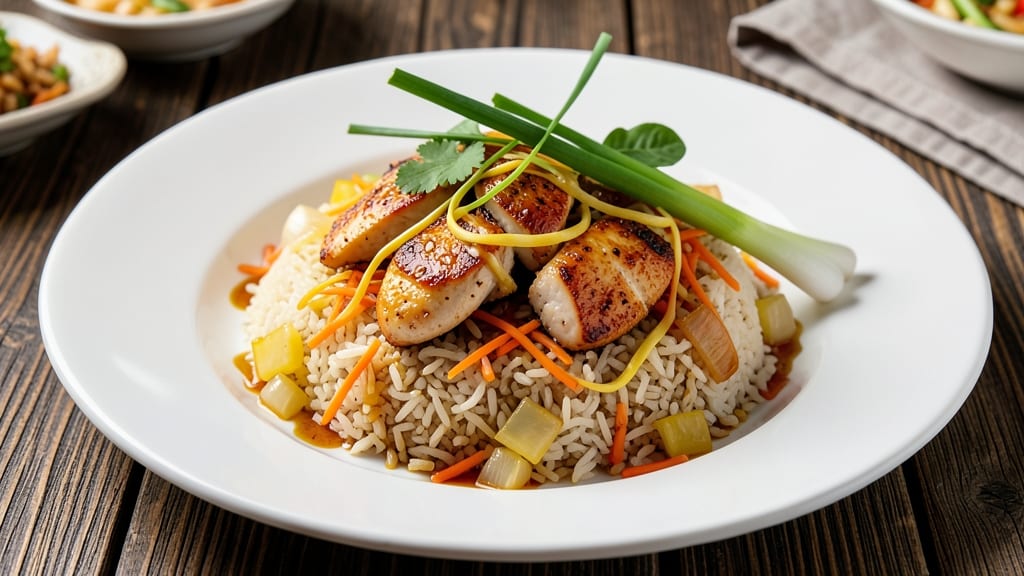
This Chinese restaurant-style chicken fried rice recipe delivers the signature wok-heated crunch and silky egg ribbons you crave. The secret lies in high-heat stir-frying day-old rice with tender chicken, aromatic vegetables, and a savory-sweet sauce that balances umami perfectly.
I've perfected this technique after years of recreating my favorite takeout flavors at home—no shortcuts, just restaurant-quality results.
The key to authentic texture is using day-old rice that's lightly toasted in the wok before adding chicken and vegetables. This creates that signature crispy exterior while keeping the centers tender.
The sauce—a blend of soy sauce, oyster sauce, and a touch of sugar—infuses every bite with depth, while silky scrambled egg ribbons add richness. With just 20 minutes of active cooking, you'll have a dish that tastes like it came straight from your favorite Chinese restaurant.
Ingredients for chinese restaurant chicken fried rice
Day-old rice, tender chicken, and aromatic vegetables transform into restaurant-style fried rice with crispy edges.
| Ingredient | Amount | Notes |
|---|---|---|
| Day-Old Cooked White Rice 🍚 | 4 cups | Cold, preferably from previous day |
| Boneless Chicken Breast 🍗 | 1 ½ lb | Cut into 1-inch pieces |
| Large Eggs 🥚 | 3 whole | Fresh, at room temperature |
| Yellow Onion 🧅 | 1 whole | Cut into small dice |
| Carrot 🥕 | 1 whole | Cut into small dice |
| Garlic Cloves 🧄 | 4 cloves | Minced finely |
| Green Onions 🌿 | 4 whole | Cut into 1-inch pieces |
| Light Soy Sauce 🍶 | ½ cup | Kikkoman preferred |
| Oyster Sauce 🍴 | 2 tbsp | High-quality, no additives |
| Sesame Oil 🫒 | 1 tbsp | Toasted, for aroma |
| Granulated Sugar 🍯 | 1 tbsp | White or brown |
| Vegetable Oil 🫒 | ½ cup | High smoke point |
| Salt 🧂 | 1 tsp | Kosher or sea salt |
| Black Pepper 🌶️ | ½ tsp | Freshly ground |
| Peanuts 🥜 | ¼ cup | Chopped, optional garnish |
The day-old rice is non-negotiable—fresh rice turns mushy. I always cook a big batch of jasmine rice on Sunday and refrigerate it for this recipe. For chicken, boneless breast is leaner than thigh, but thighs stay juicier if you prefer. Kikkoman soy sauce has that authentic umami punch, but any light soy will work. The oyster sauce? Lee Kum Kee is the gold standard, but check the ingredients—some brands contain additives. For garlic, four cloves give you that perfect balance without overpowering. If you're short on time, frozen stir-fry veggie mixes work in a pinch, but fresh veggies make all the difference.
No oyster sauce? Hoisin sauce at half the amount adds sweetness, though it won't have the same depth. Fresh green onions can be swapped for scallions, but the white parts add more flavor. The sesame oil is purely for aroma—add it at the very end. If you're avoiding peanuts, toasted cashews or sesame seeds make great garnishes instead. The sugar in this recipe isn't about sweetness—it balances the savory-sweet umami profile. For extra richness, a splash of chicken stock in the sauce ties everything together. And if you're wondering about the eggs, silky scrambled ribbons are key—don't overmix them or they'll turn dense.
This dish reheats beautifully—just stir-fry again with a splash of water or broth. Keeps for 3-4 days in the fridge, but taste best within 2 days. For meal prep, portion into containers with the sauce on the side so the rice doesn't get soggy. The sauce can be pre-mixed and stored separately for 1 week. Freeze portions without the sauce for 3 months. Pro tip: Wok or large skillet is essential—you need high heat to get that signature crunch. If you're short on time, use a nonstick pan, but it won't be as crispy.
Why You'll Love This Recipe
- Here’s what sold me: toss everything in one pan, stir-fry, and boom. No chopping boards full of mess, no switching between pots. The eggs scramble right into the rice, the chicken stays juicy, and the veggies caramelize just enough to make it taste like a takeout win—without the drive-thru wait.
- Pantry-Friendly Magic: I swear by this recipe because it uses what’s already in my fridge. Day-old rice? Perfect. A lonely onion and carrot? No problem. Even that chicken breast I forgot about gets a second chance—crispy, savory, and packed with flavor without needing fancy ingredients.
- One-Pan Wonder: Here’s what sold me: toss everything in one pan, stir-fry, and boom. No chopping boards full of mess, no switching between pots. The eggs scramble right into the rice, the chicken stays juicy, and the veggies caramelize just enough to make it taste like a takeout win—without the drive-thru wait.
- Leftover Hero: Between us, this dish begs to be made extra. The flavors actually improve overnight—yes, really. I’ll make a big batch on Sunday, and by Wednesday, it’s still the star of my lunch. Reheat it, add a splash of soy sauce, and it’s like new. My wallet and my lunchbox thank me every time.
Step-by-step instructions for Chinese restaurant style chicken fried rice
Here's how to recreate that perfect wok-heated texture with tender chicken and silky egg ribbons.
Prepare the Chicken and Vegetables
Cut the 1.5 lb boneless chicken breast into 1-inch pieces and set aside. Finely mince the 4 cloves garlic cloves and dice the 1 whole yellow onion and 1 whole carrot into small, even pieces. Chop the 4 whole green onions into 1-inch pieces, separating the white and green parts for garnish later.
Spread the chicken pieces on a plate and season generously with 1 teaspoon salt and ½ teaspoon black pepper. Let them sit for 10 minutes while you prep the vegetables. This pre-seasoning ensures every bite has balanced flavor. The garlic and onions should be minced so finely they practically disappear in the finished dish—this creates that authentic restaurant texture.
Cook the Chicken Thoroughly
Heat ½ cup vegetable oil in a large wok or skillet over medium-high heat until shimmering. Add the seasoned chicken pieces in a single layer and cook for 4-5 minutes, stirring occasionally, until the chicken is no longer pink in the center. Remove the chicken with a slotted spoon and set it aside on a plate.
Here's the thing—don't overcrowd the pan. Cooking the chicken in batches ensures it gets properly browned and cooked through, not steamed. If your wok isn't large enough, work in two batches. The chicken should be fully cooked but still tender—overcooking will make it dry and rubbery.
Scramble the Eggs to Ribbon Perfection
Return the wok to the stove over medium heat (no additional oil needed). Crack the 3 whole large eggs into a bowl, add 1 tablespoon sesame oil, and whisk vigorously until completely combined. Pour the egg mixture into the hot wok and let it sit undisturbed for 5-10 seconds—this creates those signature silky ribbons.
Using a spatula, gently push the eggs from one side of the wok to the other in quick motions, creating thin ribbons as you go. The eggs should be just set but still slightly runny in the center when you're done. Remove them from the wok and set aside with the chicken. This quick cooking method is crucial—overcooking turns eggs rubbery instead of silky.
Build the Flavor Base
Add ½ cup vegetable oil back to the wok and increase heat to high. Add the diced yellow onion, carrot, and minced garlic, stirring constantly for 2-3 minutes until the vegetables soften and begin to caramelize slightly. This step develops the foundational flavors that make restaurant-style fried rice taste so good.
Pour in ½ cup light soy sauce and 2 tablespoons oyster sauce, stirring to combine. Add 1 tablespoon granulated sugar and let the mixture simmer for 1 minute until the sauce thickens slightly. The sugar helps balance the salty sauces while adding a touch of sweetness that rounds out the flavors. You'll smell that authentic umami-rich aroma building—this is where the magic happens.
Combine Everything for Wok-Heated Crunch
Return the chicken and eggs to the wok, then add the 4 cups day-old cooked white rice, breaking up any large clumps with your spatula. Stir-fry everything together over high heat for 3-4 minutes, allowing the rice to absorb the flavorful sauce while maintaining its distinct texture.
Finally, add the white parts of the chopped green onions and toss everything together for another 30 seconds. Taste and adjust seasoning if needed—you might want to add a splash more soy sauce or a pinch of sugar to balance the flavors. The rice should be hot, the chicken tender, and the eggs still holding their shape slightly. Serve immediately, garnished with the green parts of the green onions and sprinkled with ¼ cup chopped peanuts for that classic restaurant finish.
Pro Tips For Making Chinese Restaurant Chicken Fried Rice
- STIR-FRY IN BATCHES: Toss the rice in the wok after the chicken and veggies hit the pan—otherwise, it turns to glue. I learned this the hard way when my first batch stuck like cement. Keep the rice separate until the last 2 minutes, then fold it in with a spatula, not a spoon.
- CUT CHICKEN SMALL: Dice the chicken into ½-inch cubes—any bigger, and you’ll end up with dry chunks. My grandmother swore by this, and she was right: smaller pieces cook faster and soak up the egg and soy sauce better.
- USE COLD RICE: Spread day-old rice on a tray and refrigerate for 30 minutes before using—cold rice releases less starch and stays separate. I skip this when I’m lazy, but the dish is noticeably better when I don’t.
- SCRAMBLE EGGS FAST: Crack eggs into a bowl first, then scramble them in a separate pan on medium-high heat until just set—about 30 seconds. Fold them in at the end to keep them creamy, not rubbery. (Yes, even if you’re impatient like me.)
Dietary considerations for this dish
Gluten-Free Adaptations
For a gluten-free version, simply swap the light soy sauce for a high-quality gluten-free tamari or coconut aminos. I recommend San-J tamari—it has the same umami depth without the gluten.
The rest of the recipe stays exactly the same, including the oyster sauce (just verify it's gluten-free, as some brands contain wheat). The texture and flavor remain identical, so you won't sacrifice authenticity. 🌱
Vegetarian Options
Replace the chicken with tofu or mushrooms for a vegetarian version. I like using extra-firm tofu pressed for 20 minutes, then cubed and pan-fried until crispy.
For mushrooms, shiitake or oyster mushrooms add that meaty texture. Keep the same cooking technique—high heat and quick stir-frying—to maintain the dish's signature crunch. 🍄
Low-Carb Version
To make this lower in carbs, replace the rice with cauliflower rice (about 4 cups riced cauliflower). It absorbs flavors differently, so I recommend adding an extra 1 tablespoon soy sauce and cooking it for 1-2 minutes longer to crisp up the edges.
The texture will be slightly different but still delicious. For extra protein, add ½ cup edamame to the mix. 🥬
Allergy-Friendly Swaps
If you have peanut allergies, skip the garnish or use toasted sesame seeds instead. For egg-free versions, omit the eggs entirely or replace them with silken tofu scrambled in the same way.
The dish will still be flavorful, though the texture will differ slightly. Always check labels on sauces—some oyster sauces contain shellfish or wheat. 🚫🥜
Protein Alternatives
For a seafood twist, swap chicken for shrimp or scallops. Peeled shrimp should be cooked for just 2-3 minutes until pink, while scallops need 1-2 minutes per side for a tender finish.
If you prefer beef, use thinly sliced flank steak marinated in 1 tablespoon soy sauce for 15 minutes** before cooking. The high heat ensures a tender, flavorful bite. 🦐
Nutrition facts
Frequently asked questions
Why does the recipe call for day-old rice?
Freshly cooked rice is too moist and turns mushy when stir-fried. Day-old rice has dried out slightly, giving it the perfect texture to absorb flavors while creating those signature crispy edges. The starches have also retrograded, making each grain distinct and chewy—just like in Chinese restaurants!
Can I use frozen vegetables instead of fresh?
Yes, but thaw and drain them thoroughly first to avoid excess moisture. Stir-fry frozen veggies for 1-2 minutes longer than fresh to ensure they're tender. For best results, use a mix of peas, carrots, and corn—just like many restaurant versions.
How do I get the eggs to look like restaurant-style ribbons?
Cook them over medium heat (not high) and let them sit undisturbed for 5-10 seconds after pouring into the wok. Then quickly push them in thin ribbons with a spatula. The key is gentle, continuous motion—don't overmix or they'll turn dense.
What if I don't have a wok?
Use a large nonstick skillet or cast-iron pan with high sides. The critical factor is high heat—get your pan as hot as possible before adding ingredients. A wok distributes heat better, but any deep pan will work if you stir-fry quickly.
Can I make this dish ahead of time?
Yes, but store components separately to prevent sogginess. Cook the chicken and veggies, then refrigerate them separately from the rice. Reheat everything together in the wok with a splash of water or broth for 2-3 minutes to restore crispiness. The sauce can be pre-mixed and stored for up to 1 week.