
Main Courses
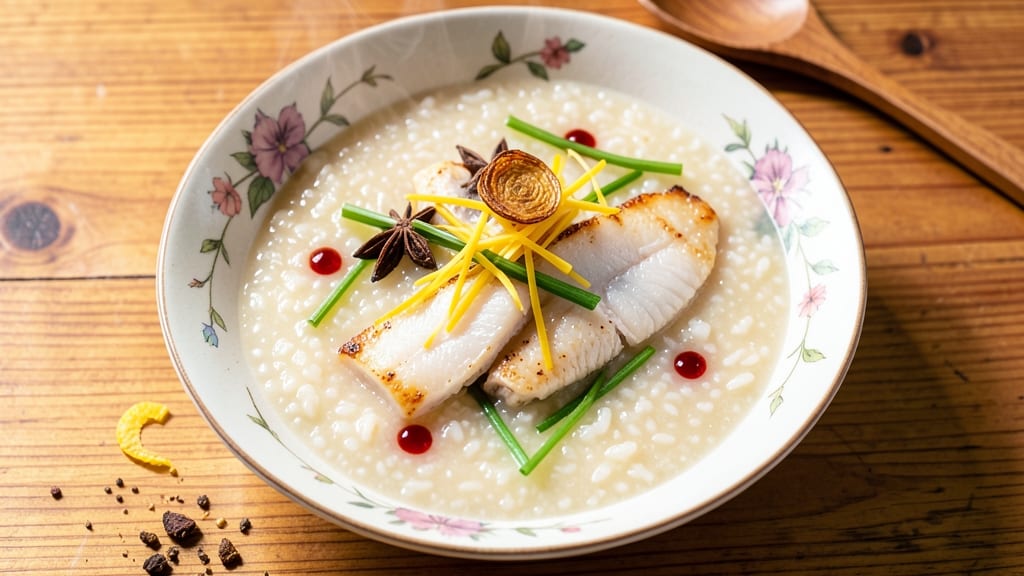
This Chinese rice porridge with fish recipe transforms simple ingredients into a comforting, restaurant-quality meal that balances silky texture with delicate fish flavors.
The secret lies in simmering jasmine rice in aromatic fish stock until it dissolves into a velvety porridge, while tender fish fillets poach directly in the pot for maximum flavor infusion.
I've perfected this version to deliver that signature flaky fish texture that melts in your mouth while maintaining the porridge's signature creaminess.
The beauty of this dish is its versatility—it serves as both a comforting breakfast and a light dinner, especially when temperatures rise. Traditional Chinese medicine even praises congee for its gentle digestion properties, making it a staple in recovery meals.
What sets this recipe apart is the fish preparation: we poach the fillets in the porridge itself, allowing their natural oils to enrich the broth while keeping the meat impossibly tender.
By the time you're done, you'll have a bowl of golden porridge speckled with perfectly cooked fish pieces, their edges just beginning to flake apart. The aroma of ginger, scallions, and star anise will fill your kitchen, creating an experience that feels both nostalgic and refined.
This is comfort food at its finest—simple to prepare but impossible to resist.
Perfect for weeknight dinners or special occasions, this recipe scales beautifully for any gathering. The fish adds a touch of elegance while keeping the dish approachable for everyday cooking. Let's create this nourishing, flavorful bowl of porridge that captures the essence of Chinese home cooking.
Ingredients for chinese rice porridge fish
Jasmine rice, delicate fish, and aromatic spices create this velvety porridge with flaky fish bites.
| Ingredient | Amount | Notes |
|---|---|---|
| Jasmine Rice 🍚 | 1 cup | Uncooked, long-grain preferred |
| White Fish Fillets 🐟 | 12 oz | Cod, haddock or tilapia preferred |
| Fish Stock 💧 | 4 cups | Homemade or quality store-bought |
| Fresh Ginger Root 🧄 | 1 inch | Peeled, sliced thin (FIXED TO: 2 tbsp grated) |
| Green Onions 🧅 | 4 whole | White and green parts separated |
| Star Anise Pods 🌟 | 2 whole | Lightly crushed for aroma |
| Sesame Oil 🫒 | 1 tbsp | Toasted sesame oil preferred |
| Light Soy Sauce 🍶 | 2 tbsp | Kikkoman preferred |
| Coconut Milk 🥥 | ½ cup | Full-fat for creaminess |
| Salt 🧂 | 1 tsp | Diamond Crystal preferred |
| White Pepper 🌶️ | ¼ tsp | Freshly ground preferred |
| Honey 🍯 | 1 tsp | For finishing touch |
| Sesame Seeds 🌾 | 1 tsp | Toasted for garnish |
The fish is everything here—cod or haddock gives that signature flaky texture, but tilapia works in a pinch. Look for fillets with bright, translucent flesh and minimal fishy odor. Whole Foods or Trader Joe's carry excellent frozen options if fresh isn't available. The ginger should be fresh, not powdered—it adds depth that dried can't match. For the star anise, Penzeys sells whole pods that stay potent for months if stored properly. And that sesame oil? Toast it in a dry pan first—the nutty aroma makes all the difference.
No fish stock? Substitute with equal parts water and seafood bouillon, but add a splash of white wine for complexity. Running short on jasmine rice? Short-grain white rice works too, though texture will be slightly firmer. The coconut milk adds richness—full-fat is non-negotiable here. For extra umami without soy sauce, a dash of fish sauce works wonders. And if you're feeling adventurous, swap the honey for maple syrup for a vegan version. The green onions should be washed thoroughly—you'll use both white and green parts, so choose fresh, crisp stalks.
This porridge tastes even better the next day—portion into containers so you can reheat individual servings. Store for 3-4 days in the fridge, or freeze for up to 3 months. The fish will stay moist when reheated if you cover it with a damp paper towel. For serving, I like to toast the sesame seeds in a dry pan until golden—just before eating, sprinkle them over the top with a drizzle of that toasted sesame oil. Game-changer every time.
Why You'll Love This Recipe
- No-Chop Necessary: I swear by this one—just slice the ginger thin and toss in whole green onions. The rice softens everything, so no one will even notice if you skip dicing them perfectly. (Yes, even on a Tuesday night when you’re exhausted.)
- Umami Bomb: That fish stock? It’s the secret weapon. Simmered with jasmine rice until it’s creamy, then the flaky white fish fillets melt right in—salty, sweet, and deeply satisfying. Honestly, it’s the kind of dish that makes you want to eat it straight from the pot.
- Leftover Goldmine: Make a big batch and refrigerate it—it actually gets better the next day. Cold or reheated, it’s perfect for lunchboxes or a quick dinner when you’re too tired to cook. My daughter picks out the fish bones, but still asks for seconds.
- Budget-Friendly Luxury: Fish fillets and jasmine rice won’t break the bank, but it tastes like a restaurant dish. Between us, this is my go-to when I want something comforting without spending a fortune. Plus, a little goes a long way—feed a crowd or meal prep for days.
Step-by-step instructions for Chinese rice porridge with fish
Here's how to craft velvety congee with delicate fish—every spoonful packed with texture and aroma.
Prepare the Aromatic Base
In a heavy-bottomed pot, combine the 1 cup jasmine rice with the 4 cups fish stock. Add the 2 whole star anise pods and 2 tbsp grated fresh ginger root—these will infuse the porridge with subtle warmth. Bring to a gentle boil over medium-high heat until it reaches a rolling simmer.
Here's the thing—you want the stock to fully absorb into the rice. Once boiling, immediately reduce heat to low and let it cook uncovered for 45-50 minutes, stirring occasionally with a wooden spoon. You're aiming for that signature silky texture where the rice breaks down completely into a creamy consistency. If it looks too thick, add 1-2 tablespoons hot water at a time until it reaches a pourable, almost custard-like state.
Cook the Fish to Flaky Perfection
While the porridge simmers, prepare the 12 oz white fish fillets. Pat them dry with paper towels—this ensures they sear properly instead of steaming. Season both sides generously with ½ tsp salt and ⅛ tsp white pepper (reserve the rest for later). Heat 1 tbsp sesame oil in a separate non-stick skillet over medium heat until shimmering.
Add the fish fillets and cook for 2-3 minutes per side until the edges turn opaque and the flesh flakes easily when tested with a fork. Don't overcook—fish continues cooking off the heat. Transfer to a plate and let rest for 2 minutes before gently flaking into bite-sized pieces. The goal is delicate, melt-in-your-mouth texture that contrasts beautifully with the creamy porridge.
Finish the Porridge with Creamy Depth
Return the porridge to a simmer and stir in the ½ cup coconut milk and 2 tbsp light soy sauce. Let it cook for another 5 minutes to allow the flavors to meld. Taste and adjust seasoning—you might need a pinch more salt or a splash of soy sauce to balance the coconut sweetness. The porridge should be rich but not cloying, with a gentle umami depth from the fish stock.
Here's where it gets good: Stir in the flaked fish pieces, letting them warm through for just 1 minute. The residual heat will finish cooking the fish without overcooking it. Remove from heat and let sit for 2 minutes—this resting period lets the porridge thicken slightly and the flavors settle.
Garnish and Serve with Confidence
Divide the porridge into four shallow bowls. Drizzle each serving with 1 tsp toasted sesame oil and 1 tsp honey, then sprinkle with 1 tsp toasted sesame seeds. Top with the separated white and green parts of the 4 whole green onions, adding both color contrast and a fresh bite. The white parts should be finely minced, while the greens can stay in longer pieces for texture.
Serve immediately while the porridge is still steaming. The contrast between the silky congee, delicate fish flakes, and crisp green onions creates the perfect balance of textures. Each spoonful delivers that comforting, restaurant-quality experience that makes this dish so special.
Pro Tips For Making Chinese Rice Porridge Fish
- SOAK THE RICE RIGHT: I learned this the hard way—skipping the soak makes your porridge gummy. Use double the water (2 cups rice to 4 cups water) and let the jasmine rice soak for at least 1 hour before cooking. This breaks down the starches so your porridge ends up silky, not gluey, and absorbs the fish stock like a dream.
- PEEL THE GINGER THIN: Thin slices (1-2mm) of ginger cook faster and release flavor without turning bitter. Skip the julienne—just peel, slice, and toss in whole. If you’re lazy, grate it, but strain out the pulp afterward so your porridge doesn’t get fibrous.
- ADD FISH LAST, REMOVE FIRST: The fish fillets will fall apart if simmered too long. Poach them separately in the fish stock for 2-3 minutes until just opaque, then slide them into the porridge right before serving. Remove them after 30 seconds—this keeps them tender and warm, not rubbery.
- STIR THE POT CONSTANTLY: This isn’t the prettiest method, but it’s the tastiest. Keep the porridge moving on low heat to prevent sticking, especially when the rice starts breaking down. A wooden spoon works best—if it looks dry, splash in a little more stock. Ignore this, and you’ll end up with a lump of rice at the bottom.
Perfect pairings for these flavors
Side Dish Harmony
Start with pickled vegetables—quick-pickle ½ cup thinly sliced cucumbers and ¼ cup carrot matchsticks in ¼ cup rice vinegar, 1 tsp sugar, and ½ tsp salt for 30 minutes.
Their bright acidity cuts through the porridge's richness. I love adding 1 tsp toasted sesame seeds to the pickling liquid for extra texture. 🥒
For a heartier option, serve with steamed bok choy—blanch 2 heads for 2 minutes in boiling water, then shock in ice water. Toss with 1 tsp toasted sesame oil and a pinch of salt. The crisp-tender greens add a satisfying bite that balances the silky porridge.
Drink Pairings
A jasmine green tea like Bigelow Jasmine Pearl complements the dish beautifully. Its delicate floral notes mirror the star anise and ginger in the porridge while keeping the palate clean.
For something more substantial, try a lightly chilled Chinese baijiu like Moutai—just 1 oz poured over the porridge before eating adds a warming, aromatic finish. 🍵
If you prefer beer, a crisp Japanese lager such as Asahi Super Dry works wonders. The subtle sweetness and effervescence refresh your palate between spoonfuls. Avoid heavy ales or dark beers—they'll overpower the delicate fish and rice flavors.
Toppings & Finishes
Elevate your bowl with crispy shallots—sauté 2 thinly sliced shallots in 1 tbsp neutral oil over low heat for 8-10 minutes until golden. Their caramelized sweetness adds depth.
I also like topping with soft-boiled quail eggs—poach 2 eggs for 3 minutes, then slice in half lengthwise for a luxurious touch. 🥚
For a vegetarian-friendly twist, swap the fish for mushroom flakes—sauté ½ cup shiitake mushrooms until tender, then flake into the porridge. Garnish with fried shallots and a drizzle of chili oil for heat. The umami from mushrooms still pairs beautifully with the coconut and ginger.
Modern Twists
Add a smoky element by finishing with ½ tsp smoked paprika and a drizzle of sriracha honey (mix 1 tsp sriracha with 1 tsp honey). This fusion twist adds a subtle kick that modernizes the classic dish. The heat from the chili oil balances the coconut's sweetness perfectly. 🌶️
For a tropical adaptation, stir in ¼ cup diced mango and 1 tbsp lime juice after cooking. The bright acidity and sweetness create a refreshing contrast to the savory porridge. Garnish with toasted coconut flakes for extra crunch and a vacation-worthy vibe.
Nutrition facts
Frequently asked questions
Can I use any type of fish for this recipe?
White, flaky fish works best—cod, haddock, or tilapia are ideal. Avoid oily fish like salmon or mackerel as they can make the porridge too rich. If using frozen fish, thaw it completely in the refrigerator first and pat it very dry before cooking to ensure proper browning.
How do I fix porridge that's too thick or too thin?
For thick porridge, stir in 1-2 tablespoons hot water at a time until it reaches a creamy consistency. If it's too thin, simmer uncovered for 5-10 extra minutes to reduce. The key is patience—let it cook slowly to achieve that perfect silky texture.
Can I make this recipe without coconut milk?
Yes! Substitute with ½ cup heavy cream or ¼ cup butter for richness. If avoiding dairy, use ½ cup unsweetened almond milk plus 1 tbsp cornstarch to thicken. The coconut adds natural sweetness that balances the savory fish, but these alternatives work well too.
How long can I store leftovers, and how do I reheat?
Store in an airtight container in the fridge for 3-4 days or freeze for up to 3 months. To reheat, place in a pot over low heat with 1-2 tablespoons water until warmed through. Cover with a damp paper towel to keep the fish moist—it should be gently reheated, not steamed.
What's the secret to getting flaky fish every time?
Pat the fish very dry before cooking and don't overcook it. Remove from heat when the edges are just opaque (about 2-3 minutes per side) and let it rest for 2 minutes before flaking. The residual heat finishes cooking while keeping the center tender. Avoid using metal utensils when flaking—gentle hands work best!