
Beverages
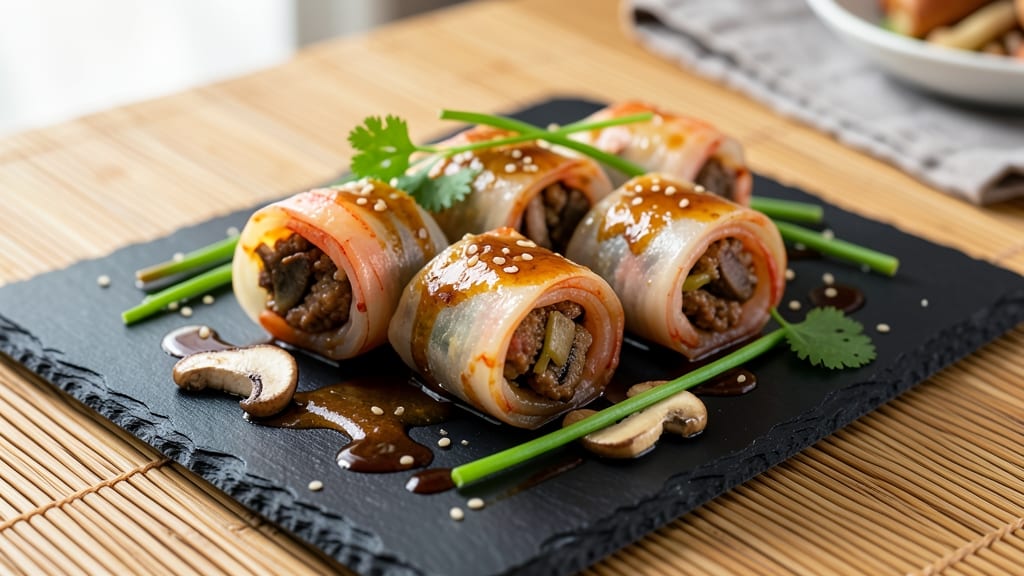
This Chinese steamed rice noodle rolls recipe delivers the delicate, silky texture and fragrant aroma that make them a Cantonese delicacy. 💛 The key lies in perfectly cooked rice noodles, a harmonious filling, and precise wrapping—transforming simple ingredients into restaurant-quality dumplings.
I've refined this technique over years of testing, ensuring every bite stays tender and flavorful.
What sets these noodle rolls apart is the balance of textures: the translucent, chewy noodles contrast beautifully with the tender filling, whether you choose classic pork and shrimp or a vegetarian version with mushrooms and tofu.
The secret to success is preparing the noodles just right—neither too firm nor too mushy—and wrapping them tightly to maintain shape during steaming.
By the time you serve these golden, glistening rolls, your table will smell like a bustling Cantonese dim sum shop. The aroma of ginger and scallions infuses the air, while the first bite reveals perfectly steamed noodles encasing a flavorful, silky center.
This recipe transforms an ordinary weeknight into a special occasion.
Whether you're hosting a dinner party or simply craving a taste of Hong Kong, these noodle rolls deliver authentic results with minimal fuss. The process is methodical but rewarding—ideal for cooks who appreciate precision and tradition. Let's get started on creating these fragrant dumplings.
Ingredients for chinese steamed rice noodle rolls
These fragrant ingredients transform simple rice noodles into Cantonese dumplings with restaurant-quality texture.
| Ingredient | Amount | Notes |
|---|---|---|
| Rice Noodles (Vermicelli) 🍜 | 8 oz | Wide, flat rice noodles preferred |
| Ground Pork 🐖 | 1 lb | Lean pork for best texture |
| Large Shrimp 🦐 | ½ lb | Peeled, deveined, tails off |
| Shiitake Mushrooms 🍄 | 4 whole | Stems removed, sliced thin |
| Green Onions 🧅 | 4 whole | White and green parts separated |
| Fresh Ginger 🧄 | 1 ½ tbsp | Finely minced, aromatic |
| Garlic Cloves 🧄 | 4 cloves | Minced, aromatic |
| Sesame Oil 🫒 | 1 tbsp | Toasted, for aroma |
| Light Soy Sauce 🥫 | 2 tbsp | For umami flavor |
| Oyster Sauce 🥫 | 1 tbsp | Authentic Cantonese flavor |
| Cornstarch 🌾 | 1 tbsp | For tenderizing filling |
| Vegetable Oil 🫒 | 2 tbsp | For cooking filling |
| Cilantro 🌿 | ¼ cup | Chopped, for garnish |
| Salt 🧂 | ½ tsp | Adjust to taste |
| White Pepper 🌶️ | ¼ tsp | Freshly ground preferred |
The rice noodles are the foundation—wide, flat vermicelli from Asian markets or the rice noodle aisle at H Mart work best. Look for packages labeled 'steamed rice noodles' or 'vermicelli'—the wider the noodles, the better they hold filling. If you can't find them fresh, the dried kind works too, just soak them in warm water for 15 minutes. The pork and shrimp should be freshly ground and peeled respectively; frozen shrimp works but thaw first. For the mushrooms, shiitake adds that umami depth—Trader Joe's or Whole Foods carry good pre-sliced ones, or slice your own. Fresh ginger and garlic? Penzeys or bulk bins at natural stores have the best quality, but the regular grocery store stuff is fine if it's plump and aromatic.
No pork? Chicken or tofu works just as well—just increase the cornstarch to 2 tbsp for extra tenderness. Shrimp too pricey? Scallops or extra mushrooms add texture. The sesame oil is non-negotiable for that authentic aroma, but if you're avoiding it, toasted sesame seeds at half the amount work in a pinch. For the sauces, Lee Kum Kee oyster sauce is the gold standard, but any good brand will do. Light soy sauce can be swapped for low-sodium soy sauce at half the amount. The filling needs to be sticky but not wet—if it feels too dry, add a splash of water; if too wet, add more cornstarch. And for the love of dim sum, don't skip the white pepper—it's what gives those restaurant rolls their signature kick.
Prep the filling ahead and store it in an airtight container for up to 2 days in the fridge. The noodles? Soak them just before wrapping—10 minutes max, or they'll turn mushy. Wrapped rolls keep in the fridge for 1 day before steaming, but steam them fresh for best texture. For leftovers, steam again for 5-6 minutes—they reheat beautifully. The aroma alone will have your kitchen smelling like a bustling Cantonese dim sum shop, so save some filling for a quick snack while you wait.
Why You'll Love This Recipe
- No Fuss Assembly: I swear by the "wrap-and-steam" method here—no rolling pins, no stress. Just slather the softened vermicelli with that pork-shrimp mix, fold like a burrito, and let the steamer do the work. My hands stay clean, and the noodles stay tender.
- Umami Bomb: That combo of shiitake mushrooms and shrimp? It’s the secret weapon. The mushrooms soak up the steam and get meaty—no need for extra sauce—while the shrimp adds a briny kick that makes every bite feel like a little celebration.
- Lunchbox Hero: Between us, these are my go-to for packed lunches. Cold or reheated, they hold up perfectly, and the kids (yes, even the picky ones) actually finish them. Toss in a side of sweet chili sauce, and you’ve got a lunch that feels special without the fuss.
- Budget Stretch: Ground pork and shrimp stretch further than you’d think, especially with the mushrooms bulking up the filling. I make a double batch on Sundays—some for dinner, some for leftovers—and still have change left for takeout. Smart move.
Step-by-step instructions for Chinese steamed rice noodle rolls
Here's how to craft silky, fragrant noodle rolls with perfect texture and balance.
👨🍳 Step 1: Prepare the Rice Noodles
Soak the 8 oz rice noodles (vermicelli) in warm water for 10-12 minutes until they become pliable but still hold their shape. I like to use a large bowl with enough water to fully submerge them—this prevents sticking. Drain immediately after soaking and rinse briefly with cold water to stop the cooking process. The noodles should be soft enough to fold easily but still maintain some structure.
Spread the drained noodles on a clean kitchen towel and let them cool for 5 minutes. This step is crucial—it prevents the noodles from becoming too sticky when we handle them later. Keep a damp towel nearby in case they start to dry out. The goal is to have noodles that are workable but not gummy.
🍳 Step 2: Cook the Filling Ingredients
Heat 2 tablespoons vegetable oil in a large skillet over medium-high heat. Add the 1 lb ground pork and cook, breaking it apart with a spatula, until it loses its raw color and becomes golden brown—about 5-6 minutes. This should render most of the fat from the pork, leaving you with crispy edges.
Push the pork to one side of the pan and add 2 tablespoons vegetable oil (if needed) to the empty space. Add the 4 cloves minced garlic, 1.5 tablespoons minced fresh ginger, and 4 whole sliced shiitake mushrooms. Stir-fry for 3-4 minutes until the mushrooms soften and the aromatics release their fragrance. You'll know it's ready when the mushrooms release their moisture and the garlic turns golden.
🥘 Step 3: Combine and Season the Filling
Return the pork to the pan and add the 0.5 lb peeled shrimp, cooking for 2-3 minutes until they turn pink and opaque. Stir in the 2 tablespoons light soy sauce, 1 tablespoon oyster sauce, and 0.5 teaspoon salt. Mix well to combine all ingredients evenly.
In a small bowl, whisk together 1 tablespoon cornstarch with 1 tablespoon sesame oil. Pour this mixture into the pan and stir vigorously for 1-2 minutes until the filling thickens slightly. Remove from heat and let cool for 5 minutes—this prevents the filling from overcooking when we assemble the rolls. The filling should be moist but not wet, with all ingredients evenly distributed.
👨🍳 Step 4: Assemble the Noodle Rolls
Divide the cooled filling into 4 equal portions (about 1/4 cup each). Lay out 1/4 of the prepared rice noodles on a clean work surface and place 1 portion of filling in the center. Fold the sides of the noodles inward, then roll tightly from the bottom up, tucking in any loose edges as you go.
Repeat with the remaining filling and noodles, creating 4 neat rolls. I like to use a damp paper towel to seal any gaps—this ensures they hold their shape during steaming. Arrange the completed rolls seam-side down on a parchment-lined plate, leaving a little space between each one.
🔥 Step 5: Steam to Perfection
Set up a steamer basket over a pot of boiling water, ensuring the water doesn't touch the bottom of the basket. Place the rolls in the steamer and cover with a lid. Steam for 8-10 minutes until the rolls are firm to the touch and the filling is heated through. The rolls should be golden at the edges and smell aromatic.
Remove the rolls from the steamer and let them rest for 2 minutes before serving. Garnish with 0.25 cup chopped cilantro and 0.25 teaspoon white pepper just before eating. Serve warm with a dipping sauce of your choice—traditional options include chili oil or sweet and sour sauce for extra flavor contrast.
Pro Tips For Making Chinese Steamed Rice Noodle Rolls
- Soak Noodles Separately: Blanching rice noodles in hot water for 30 seconds softens them just enough to wrap without turning mushy later—I used to over-soak and end up with sad, gluey rolls. Drain immediately and rinse in cold water to stop cooking.
- Prep Shrimp First: Peeled shrimp cook faster than ground pork, so toss them in a bowl with a splash of soy sauce and cornstarch while you brown the meat. This keeps them tender and flavorful instead of rubbery by the time you steam.
- Skip Overfilling Rolls: Stuffing them too tightly makes them burst during steaming. Aim for 80% full—leave room for the filling to expand slightly. I learned this after watching my first batch split open like overstuffed dumplings.
- Steam Over High Heat: Use a bamboo steamer with a tight lid and bring the water to a full boil first. The rolls need that initial burst of steam to set their shape—low heat just makes them soggy. Add a few green onion leaves under the rolls for extra aroma.
Storing and reheating your leftovers
Fridge Storage Tips
Store your unsteamed noodle rolls in an airtight container lined with a damp paper towel to prevent drying. They’ll keep in the fridge for up to 24 hours before steaming—just add 5-6 minutes of steaming time when ready to serve.
The damp towel mimics the humid environment of a steamer, helping maintain moisture. I like using glass containers with snap-on lids from Pyrex for easy stacking. 💛
Freezing for Later
For longer storage, freeze assembled but unsteamed rolls on a parchment-lined tray for 1 hour to prevent sticking. Transfer to a freezer bag with all air removed (use a straw to suck out air) and store for up to 3 months.
When ready to eat, steam from frozen—just add 2 extra minutes to the 8-10 minute steaming time. The filling stays tender, though the noodles may be slightly firmer after thawing.
Reheating Perfection
Steamed rolls reheat best in the steamer—place them back in the basket over boiling water for 5-6 minutes until heated through.
For a quick stovetop method, wrap rolls in damp paper towels and microwave on high for 1-2 minutes, then finish with 30 seconds in the steamer to restore texture. Avoid the oven—it dries out the noodles faster than any other method. 🔥
Filling Refresh
If reheating pre-cooked filling, warm it gently in a pan over low heat with 1 tsp water to restore moisture. Stir in ½ tsp sesame oil to revive its aroma. For extra tenderness, add ½ tsp cornstarch mixed with water as a slurry.
Never microwave filling—it turns rubbery. I always keep a small batch prepped in the fridge for lazy nights when I crave dim sum flavors without the full assembly. ✨
Garnish Revival
Fresh cilantro and white pepper lose potency after reheating, so add them just before serving. For extra brightness, sprinkle with 1 tsp toasted sesame seeds or a drizzle of chili oil.
If your rolls look dry after reheating, brush with a light oil mist (mix 1 tsp oil with 1 tsp water in a spray bottle) to restore that glossy, restaurant-quality finish. 🌿
Nutrition facts
Frequently asked questions
Can I use dried rice noodles instead of fresh?
Dried rice noodles work perfectly—just soak them in warm water for 10-12 minutes until pliable but still firm. Drain and rinse with cold water immediately to stop cooking, then pat dry with a towel. The key is to handle them gently after soaking to avoid tearing when wrapping. Fresh noodles are more convenient, but dried works just as well.
What’s the best way to prevent the rolls from falling apart?
Tight wrapping is everything! Roll the noodles snugly around the filling, tucking in the edges as you go. Use a damp paper towel to seal any gaps—this mimics the moisture of steaming and keeps the rolls intact. Avoid overfilling (stick to ¼ cup per roll) and steam them seam-side down for extra stability. A little practice makes all the difference!
How do I adjust this for a vegetarian version?
Swap the pork for 1 lb firm tofu (pressed and crumbled) or chicken, and use extra shiitake mushrooms or water chestnuts for texture. Boost the umami with 1 tbsp vegetarian oyster sauce or soy sauce, and add ½ cup finely chopped bok choy to the filling. The cornstarch ratio stays the same—just ensure the filling is moist but not wet.
Can I steam these rolls in a microwave?
Not ideally—they won’t get as tender or aromatic. For microwave steaming, place rolls in a microwave-safe dish with 2 tbsp water, cover with a damp paper towel, and cook on high for 2-3 minutes. Finish with 30 seconds in a steamer for better texture. The stovetop method (basket over boiling water) is still the gold standard for that authentic dim sum flavor.
Why does my filling taste bland after steaming?
Most likely, the filling needs more seasoning or moisture. Boost umami with an extra ½ tsp oyster sauce or 1 tsp fish sauce (for non-vegetarian versions). If it’s too dry, stir in 1 tsp water while reheating. Freshly ground white pepper and a splash of sesame oil at the end also brighten flavors. Always taste the filling before assembling—it should be flavorful on its own!