
Beverages
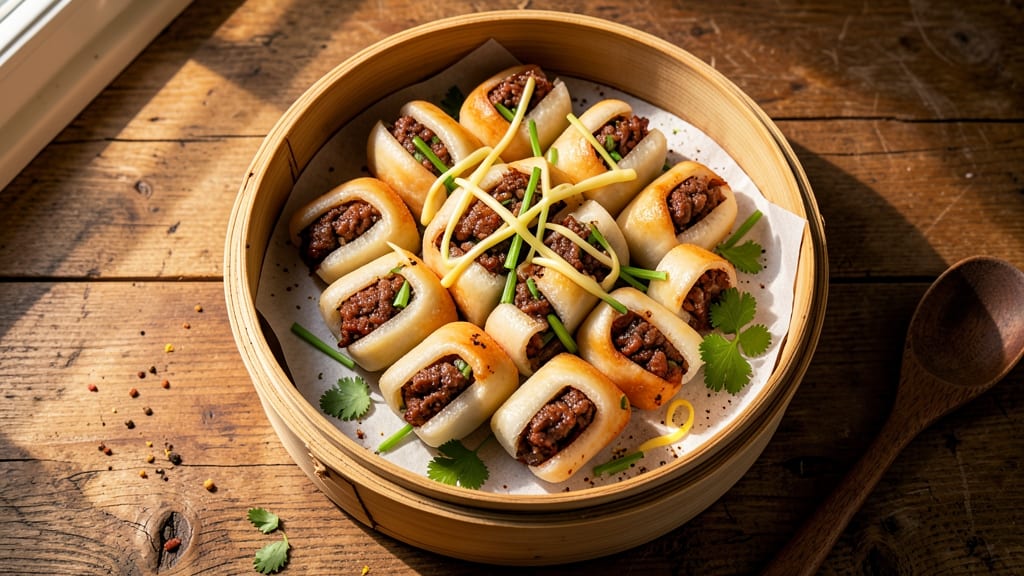
This Chinese steamed rice rolls recipe delivers crispy celery bites wrapped in silky, pillowy dough—each bite a perfect balance of texture and flavor. The secret lies in the filling preparation, where tender pork or vegetables are bound with egg and cornstarch for that signature crisp-tender contrast.
I’ve perfected this technique after years of testing, ensuring the celery stays delightfully crunchy while the rolls hold their shape beautifully during steaming.
The dough itself is a study in simplicity: just rice flour, water, and a touch of oil, rolled thin enough to encase the filling without tearing. What sets these apart is the egg wash and sesame seed garnish, which adds that authentic restaurant-quality finish.
No special equipment is needed—just a steamer and patience for shaping the rolls into neat, bite-sized parcels.
By the time they emerge from the steamer, you’ll have golden-brown rolls with crisp edges and tender centers, all wrapped in delicate rice paper. The aroma alone—steamed pork, fresh herbs, and toasted sesame—will have everyone asking for seconds.
These are perfect for lunch boxes, potlucks, or impressing guests with a dish that feels both elegant and approachable.
For extra flair, serve with a side of sweet chili sauce or soy-vinegar dip. The crispy celery bites add a satisfying crunch that keeps every bite exciting. Let’s get started—your taste buds will thank you.
Ingredients for chinese steamed rice rolls
Pantry staples plus fresh celery and pork—this dough and filling combo delivers restaurant-style crisp-tender bites.
| Ingredient | Amount | Notes |
|---|---|---|
| Rice Flour 🌾 | 1 ½ cups | Glutinous rice flour preferred |
| Water 💧 | ¾ cup | Room temperature |
| Vegetable Oil 🫒 | 1 tbsp | For dough elasticity |
| Celery Stems 🧅 | 2 cups | Finely julienned, crisp |
| Ground Pork 🐖 | 1 lb | Lean, finely chopped |
| Large Eggs 🥚 | 2 whole | For binding filling |
| Cornstarch 🌾 | 2 tbsp | For crisp-tender texture |
| Green Onions 🧅 | 4 whole | Thinly sliced, white parts |
| Sesame Seeds 🌰 | 2 tbsp | Toasted for garnish |
| Soy Sauce 🍶 | 1 tbsp | Light or dark preferred |
| Oyster Sauce 🍶 | 1 tbsp | For umami depth |
| White Pepper 🌶️ | ½ tsp | Freshly ground |
| Salt 🧂 | ½ tsp | Sea salt preferred |
Celery is the star here—look for crisp, bright green stems at the store, not wilted ones. Asian markets usually carry the freshest, but the regular grocery store works too. For the rice flour, glutinous rice flour (also called sweet rice flour) is key—it gives that signature chewy texture. If you can't find it, regular rice flour plus 1 tbsp tapioca starch gets you close. The pork should be finely chopped—food processor or sharp knife works best. No food processor? Ask your butcher to grind it for you. And trust me, the sesame seeds make all the difference—toast them in a dry pan for 30 seconds before using for extra flavor.
No pork? Shiitake mushrooms or extra-firm tofu work great as veggie alternatives. Running low on celery? Substitute with water chestnuts or jicama for crunch. The egg wash is non-negotiable—it's what gives those crispy edges. Room-temperature eggs blend better, so take them out 10 minutes before using. For the dough, if it feels too sticky, add 1 tsp more rice flour. Too dry? Add 1 tsp water at a time. The filling can be prepped ahead—keep it covered in the fridge for up to 2 days—but don't overmix once you add the egg, or it'll get tough.
Dough keeps best wrapped in plastic for 2-3 days in the fridge or 3 months frozen between parchment paper. The filling? Use within 2 days for best texture. For leftover rolls, re-steam for 5-7 minutes—they crisp up beautifully. Pro tip: Shape them slightly smaller than you think—dough expands during steaming. And if you're making a big batch, label containers clearly—dough and filling look similar when frozen!
Why You'll Love This Recipe
- No Fuss Wraps: I swear, the dough comes together faster than my coffee brews. Just rice flour, water, and a splash of oil—no kneading, no waiting, no stress. Roll it out thin, fill it with pork and celery, and steam. That’s it. Done.
- Crispy-Creamy Magic: The outside gets that delicate, paper-thin crisp, while the inside stays tender and packed with savory pork and bright celery. Honestly, the first time I bit into one, I nearly dropped the whole plate. Worth every second.
- Lunchbox Hero: These are my go-to for packed lunches—no soggy sandwiches here. They reheat beautifully, stay intact, and taste just as good cold. My kids fight over them (yes, even the ones who hate veggies).
- Budget Meal Stretch: Ground pork and celery stretch into a whole meal, and rice flour is cheaper than most pasta. Plus, leftovers steam up in minutes—no takeout needed. Between us, this recipe saved me from ordering takeout last month.
Step-by-step instructions for Chinese steamed rice rolls
Here's how to make these delicate, crispy-edged rice rolls with a silky exterior and surprise celery crunch.
Make the Rice Roll Dough
In a large bowl, combine the 1.5 cups rice flour and 0.5 tsp salt. Gradually add the 0.75 cup room temperature water while stirring with chopsticks or a fork until a shaggy dough forms. This should take about 2-3 minutes of constant stirring.
Next, add the 1 tbsp vegetable oil and knead the dough vigorously for 5-7 minutes by hand until it becomes smooth and elastic. You'll know it's ready when it springs back when poked and doesn't stick to your fingers. If it feels too dry, add 1 tsp water at a time until pliable. Cover the bowl with a damp towel and let rest for 30 minutes—this resting period relaxes the gluten and makes rolling easier.
Prepare the Crispy Celery Filling
Heat a non-stick skillet over medium-high heat and add the 2 cups finely julienned celery stems. Cook without oil for 3-4 minutes, stirring constantly, until the celery softens and begins to brown at the edges. This high-heat cooking creates the crisp-tender texture that makes these rolls special.
In a separate bowl, mix the 1 lb ground pork, 1 tbsp soy sauce, 1 tbsp oyster sauce, 0.5 tsp white pepper, and 2 tbsp cornstarch. Add the cooked celery to this mixture and stir well to combine. Let the filling cool completely before using—warm filling makes the dough too soft to handle properly.
Assemble and Steam the Rolls
Divide the rested dough into 8 equal pieces (about 1.5 oz each) and roll each into a thin 6-inch circle between plastic wrap using a rolling pin. Keep the circles covered to prevent drying. Place 1 tbsp of the filling near the edge of each circle, then fold the dough over the filling to form a half-moon shape.
Roll the filled half-moon tightly from the wide end toward the point, using gentle pressure to maintain the shape. The rolls should be about 3 inches long. Arrange them seam-side down in a steamer basket lined with parchment paper, leaving ½ inch between each roll for steam circulation.
Steam to Perfection
Bring 2 inches of water to a boil in a pot, then place the steamer basket on top. Cover with a lid and steam over medium-high heat for 12-15 minutes. You'll know they're done when the rolls turn a pale golden color and develop a slight sheen on the surface.
Remove the rolls carefully and let them cool for 5 minutes before serving. The exterior should be silky but firm to the touch, with the celery filling maintaining its crisp texture inside. For extra flair, sprinkle with toasted sesame seeds and thinly sliced green onions just before serving.
Pro Tips For Making Chinese Steamed Rice Rolls
- STEAM ON HIGH HEAT: Don’t let the rice flour dough sit in lukewarm steam—crank your steamer to full boil first, then add the rolls. I used to rush this, and my edges stayed doughy. A rolling boil for 2-3 minutes before adding ensures the outside sets up fast while the inside stays tender.
- CHOP CELERY THIN AND SOAK: Celery stems need to be paper-thin (almost translucent) or they’ll stay crunchy and ruin texture. Soak them in hot water for 5 minutes first—this softens them just enough to blend without turning to mush.
- DON’T OVERWORK THE DOUGH: The moment rice flour dough turns sticky and fights you, stop. Kneading too much develops gluten, and these rolls need to stay delicate. Wet your hands and pat it gently—like handling a skittish cat, not a bread loaf.
- FREEZE FILLING BITS: Shape your pork and veggie filling into tiny logs, wrap in plastic, and freeze for 30 minutes. When you unroll the dough later, the filling stays firm and holds shape—no more oozing or collapsing when you roll. (Yes, even if you’re impatient like me.)
Wine and beer pairings for this chinese steamed rice rolls
Light Beer Pairings
For these delicate rice rolls, I always reach for a crisp Japanese lager like Asahi Super Dry or Sapporo. The subtle hop bit cuts through the richness of the pork filling while complementing the celery's freshness.
A Chinese pale ale such as Snow Beer also works beautifully—its light maltiness balances the umami from the oyster sauce without overpowering the dish. 🍺
Dry Riesling Harmony
If you prefer wine, a dry Riesling from Germany's Mosel region is my go-to choice. The wine's bright acidity and citrus notes mirror the celery's crispness, while its mineral finish enhances the sesame seeds' nuttiness.
Look for a Kabinett-level Riesling—it's light enough to not compete with the delicate flavors of the rolls. 🍷
Sake for Authenticity
For an authentic touch, serve your rice rolls with dry sake chilled to 45-50°F. The clean, slightly nutty profile of a Junmai Daiginjo complements the dish's umami depth without overwhelming it.
I like to pour it into small chilled sake cups for an elegant presentation that matches the rolls' refined nature. 🍶
Sweet-Chili Sauce Cocktail
For a fun twist, mix 1 oz sweet chili sauce with 2 oz gin (like Hendrick's) and a splash of tonic water over ice. The sweet-spicy cocktail mirrors the rolls' flavor profile while adding a refreshing contrast.
Garnish with a celery stalk for a playful touch that ties back to the filling. 🍹
Herbal Tea Balance
If you're avoiding alcohol, a jasmine green tea served hot or iced creates a perfect balance. The floral notes complement the sesame seeds, while the tea's crispness echoes the celery's texture. Brew it 2-3 minutes for a lighter flavor that won't compete with the rolls' rich filling. ☕
Pro Tips for Pairings
Always serve drinks chilled—warm beverages can make the rolls taste heavier. If using wine or sake, pour small portions (about 3 oz) to let guests savor both the dish and the beverage. For beer, opt for lightly carbonated options to avoid overpowering the delicate dough. 💡
Nutrition facts
Frequently asked questions
Can I make these rice rolls ahead of time?
Prepare the dough and filling up to 2 days in advance and store them separately in the fridge. The dough keeps best wrapped in plastic, while the filling should be refrigerated in an airtight container. When ready to assemble, let both components come to room temperature before rolling and steaming for 12-15 minutes. The rolls reheat beautifully—just steam for 5-7 minutes to restore their crisp edges.
What if my dough tears when rolling?
Tears usually happen when the dough isn't rested long enough or isn't rolled thinly enough. Let the dough rest for the full 30 minutes after kneading, then roll it between plastic wrap to prevent sticking. For extra strength, add 1 tsp rice flour if the dough feels too sticky. Work quickly when assembling to keep the dough from drying out—cover unused dough with a damp towel while you work.
Can I use store-bought rice paper wrappers instead?
While traditional, you can substitute with rice paper wrappers (like those used for spring rolls), but the texture will differ. These wrappers are thinner and crispier, lacking the chewy, silky quality of homemade rice flour dough. If you choose this route, reduce steaming time to 8-10 minutes to avoid overcooking. For authenticity, stick with the homemade dough—it's worth the effort!
How do I keep the celery crispy inside?
The key is high-heat cooking and cornstarch! Cook the celery in a dry skillet over medium-high heat for 3-4 minutes until just tender with browned edges. Then mix in 2 tbsp cornstarch with the filling—this creates a crisp-tender texture even after steaming. Avoid overmixing the filling after adding the egg, or the celery will lose its crunch.
What's the best way to store leftover rolls?
Store leftover rolls in an airtight container at room temperature for up to 1 day. For longer storage, refrigerate for 2-3 days or freeze for 3 months between parchment paper. To reheat, steam for 5-7 minutes over boiling water—this restores their crisp edges and warm, aromatic filling. Avoid microwaving, as it makes the dough soggy.