
Main Courses
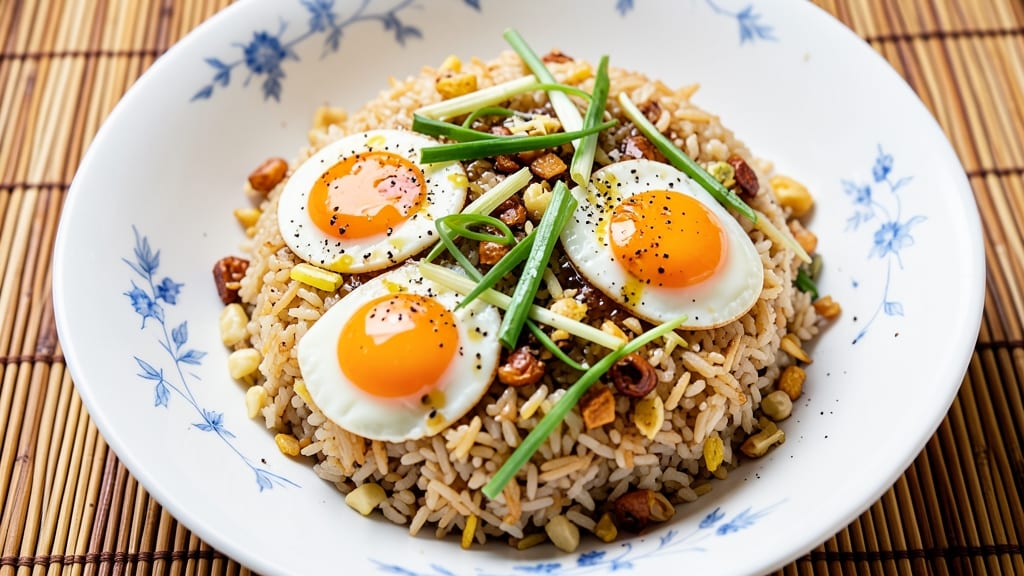
This Chinese takeout rice recipe delivers the perfect balance of wok-fried crunch and silky egg ribbons you crave after a long week. The secret lies in high-heat stir-frying day-old rice with aromatic garlic, ginger, and soy sauce, then folding in tender scrambled egg for that signature takeout texture.
I’ve perfected this version after years of takeout cravings—it’s the closest you’ll get to restaurant-quality without the delivery wait.
What makes this recipe stand out is the two-step cooking process: first, the rice gets crispy edges from the wok, while the egg transforms into delicate ribbons that coat every grain.
A splash of sesame oil at the end adds that unmistakable aroma, and optional proteins like chicken or shrimp can be added for extra heartiness. The result? A dish that’s restaurant-worthy but simple enough for weeknight dinners.
Ingredients for chinese takeout rice
Nine simple ingredients transform into that addictive takeout rice texture you crave.
| Ingredient | Amount | Notes |
|---|---|---|
| Day-Old Cooked White Rice 🍚 | 4 cups | Cold or room temperature preferred |
| Large Eggs 🥚 | 4 whole | Fresh, room temperature for ribbons |
| Garlic Cloves 🧄 | 4 cloves | Minced, aromatic and fresh |
| Fresh Ginger 🌿 | 1 ½ tbsp | Finely grated, peeled |
| Light Soy Sauce 🥢 | 3 tbsp | Kikkoman preferred for balance |
| Sesame Oil 🫒 | 1 tbsp | Toasted, for aroma only |
| Vegetable Oil 🫒 | 2 tbsp | High smoke point for wok |
| White Sugar 🍚 | 1 tsp | Balances flavors |
| Green Onions 🧅 | 3 whole | Thinly sliced, for garnish |
| Salt 🧂 | ½ tsp | Adjust to taste |
| Black Pepper 🌶️ | ¼ tsp | Freshly ground |
| Optional Protein 🍗 | 1 cup | Chicken or shrimp, diced |
The rice is the star—day-old works best (the dryness gives those crispy edges). Day-old means cooked the night before and refrigerated. If you're short on time, spread freshly cooked rice on a tray and microwave for 2 minutes to dry it out. Garlic and ginger are non-negotiable here—they're the aromatic base that makes this taste like takeout. Kikkoman soy sauce is my go-to, but any light soy will work. For the ginger, use fresh if you can—it makes a huge difference over powdered. If you're adding protein, chicken or shrimp work great, but keep it simple if you're keeping it vegetarian.
No day-old rice? Microwave trick works in a pinch—just spread fresh rice on a plate and zap for 2 minutes to dry it out. Fresh garlic and ginger are ideal, but powdered works at half the amount if that's what you've got. Sesame oil is for aroma only—don't cook with it. The sugar balances the soy sauce, so don't skip it. For extra flavor, a dash of white pepper instead of black works well. The optional protein? Skip it if you're keeping it vegetarian, or add whatever you've got—leftover chicken, shrimp, or even tofu all work great.
This dish reheats beautifully—honestly tastes better the next day. Keeps for 3-4 days in the fridge, but the texture gets softer. For crispier rice, reheat in a dry skillet for 2-3 minutes. The sesame oil aroma fades fast, so add it right before serving. I always make a double batch—half for dinner, half for lunch the next day. Store in an airtight container to keep the rice from drying out.
Why You'll Love This Recipe
- Uses Leftovers Like Magic: I swear by this trick—day-old rice transforms into something gourmet without extra effort. No sad, dry grains here; the eggs and soy sauce give it that perfect sticky texture, like a restaurant’s secret.
- One-Pan, Zero Stress: Honestly, I’ve made this with just a wok and a spatula. Scramble the eggs, toss in the rice, add minced garlic and ginger—no flipping, no fuss. The only cleanup is rinsing one pan.
- Garlic-Ginger Punch: That crispy egg on top with the aromatic garlic and ginger? It’s the kind of flavor that hits you right away. Light soy sauce ties it all together—salty, savory, and just a little addictive.
- Budget Meal for Busy Nights: Between us, this feeds four for under $5. Use whatever rice you have, crack a couple eggs, and boom—dinner’s ready. It’s my go-to when I’m broke or exhausted (yes, even on a Tuesday night).
Step-by-step instructions for Chinese takeout-inspired fried rice
Here's how to recreate that perfect wok-fried texture with silky egg ribbons.
Prep All Ingredients for Maximum Flavor
Start by mincing the 4 cloves garlic cloves and finely grating the 1.5 tbsp fresh ginger. I like to use a microplane for the ginger—it gives you the perfect texture without any stringy bits. Set these aside in separate small bowls. Thinly slice the 3 whole green onions, separating the white and green parts. The whites will cook down into the rice while the greens will add fresh color at the end.
Crack the 4 whole large eggs into a separate bowl and whisk them lightly—just until the whites and yolks are combined. Don't overbeat them or you'll lose that delicate ribbon texture. If using 1 cup optional protein (like diced chicken or shrimp), pat it dry with paper towels to remove any excess moisture, which prevents it from steaming instead of searing.
Heat the Wok and Build the Flavor Base
Heat a wok or large skillet over high heat until it's smoking slightly. Add the 2 tbsp vegetable oil and swirl to coat the entire surface. Once the oil is shimmering (about 30 seconds), add the 1.5 tbsp grated ginger and 4 cloves minced garlic. Stir constantly for 30-45 seconds until the garlic turns golden brown—this is when it releases its full aromatic potential. If it starts to burn, reduce heat slightly but keep it moving.
At this point, add the 1 cup optional protein (if using) and stir-fry for 2-3 minutes until it's just cooked through. Chicken should be opaque and shrimp should turn pink. Remove the protein from the wok and set it aside temporarily—we'll add it back later to keep it warm.
Stir-Fry the Day-Old Rice
Add the 4 cups day-old cooked white rice to the wok in a single layer. Use a spatula to break up any large clumps and spread the rice evenly across the surface. Let it sit undisturbed for 30 seconds—this allows the rice to develop a slight crust on the bottom, which adds that authentic takeout texture. Then stir-fry vigorously for 2-3 minutes until the rice is heated through and begins to sizzle.
Here's the thing—day-old rice is crucial. Fresh rice is too moist and will turn mushy. If your rice is particularly cold, you might need an extra 30 seconds to get it properly heated. The goal is to create individual grains with crisp edges while keeping the centers tender.
Create the Egg Ribbons and Season
Push the rice to one side of the wok, creating a small empty space. Pour in the 4 whole whisked eggs and let them sit for 5-10 seconds until they begin to set slightly at the edges. Then quickly scramble them into soft, silky ribbons using a spatula. Once mostly cooked, mix the eggs into the rice and stir-fry for another 1 minute to distribute them evenly.
Now add the 3 tbsp light soy sauce, 1 tsp white sugar, 0.5 tsp salt, and 0.25 tsp black pepper. Stir everything together for 1-2 minutes until the sauce is absorbed and the rice is evenly coated. Taste and adjust seasoning—you might want to add a splash more soy sauce if it's not salty enough. This is where the magic happens—the balance of salty, sweet, and umami comes together.
Finish with Aromatics and Serve Immediately
Return the cooked protein to the wok and toss everything together for 30 seconds to heat it through. Drizzle in the 1 tbsp sesame oil and the sliced green onion whites, stirring until incorporated. The sesame oil should perfume the entire dish instantly—this is your signal that it's ready. Taste one last time and adjust seasoning if needed.
Transfer the fried rice to serving plates and garnish with the reserved green onion greens. Serve immediately while the rice is hot and the egg ribbons are still silky. The texture should be a perfect balance—crisp edges on the rice, tender centers, and those beautiful egg strands that melt in your mouth. This dish tastes even better the next day, but it's hard to wait!
Pro Tips For Making Chinese Takeout Rice
- STIR-FRY RICE COLD: Use day-old rice—fresh rice turns to mush when you stir-fry it. If you’re desperate, microwave leftover rice for 30 seconds with a splash of water, then spread it on a plate to dry out for 5 minutes. Trust me, soggy rice ruins everything.
- SCRAMBLE EGGS FAST: Push the cooked egg mixture to one side of the pan, add a little oil, and scramble it again—this creates crispy edges that mimic takeout texture. I used to just stir it all at once, and it always ended up too soft.
- GINGER SLICE THIN: Use a microplane or the flat side of your knife to shred ginger into tiny, almost invisible pieces. This way, it blends into the rice instead of sitting as chunks. After burning my tongue on one too many thick slices, I learned the hard way.
- SOY SAUCE LAST: Add light soy sauce at the very end, right when you’re about to serve. Stir it in just enough to coat the rice evenly—overdoing it makes the dish taste flat. I used to dump it in early, and the flavor always felt weak.
Common mistakes when making great chinese takeout rice
Overcrowding the Wok
I can’t stress this enough—never add all the rice at once if your wok isn’t large enough. Overcrowding steams the rice instead of crisping it, resulting in a sad, soggy mess.
Instead, work in batches if needed, or use a 12-inch cast iron skillet if you don’t have a wok. The goal is to get those crisp edges on every grain, not a mushy pile. 💫
Skipping the Day-Old Rice Rule
Fresh rice is a big no-no for this dish. The moisture turns your fried rice into glue, and no amount of stirring will fix that. If you’re in a pinch, microwave fresh rice for 2 minutes to dry it out, but it won’t be the same.
I’ve tried it—trust me, the texture suffers. The starches in day-old rice create that perfect crunchy exterior, tender interior combo.
Burning the Garlic
Garlic burns faster than you think, and once it’s blackened, it turns bitter. Keep your heat high but controlled—stir constantly for 30-45 seconds until it’s golden brown, not charred.
If it starts to smoke, pull the wok off the heat for 5-10 seconds and let it recover. That aromatic base is the soul of the dish, so don’t rush it.
Undercooking the Eggs
The eggs are what make this dish special—those silky ribbons should coat every grain. If you scramble them too fast or don’t let them set for 5-10 seconds before stirring, they’ll turn rubbery.
Push the rice to one side, let the eggs partially set, then gently fold them in. Pro tip: Use room-temperature eggs for even better texture.
Adding Soy Sauce Too Early
Soy sauce should be added after the rice and eggs are mostly cooked. If you toss it in too soon, the rice will absorb it unevenly, leaving some grains bland.
Wait until the rice is hot and slightly crispy, then stir in the sauce and let it coat everything evenly. Taste as you go—you can always add more, but you can’t take it out.
Ignoring the Sesame Oil Finish
This is where the dish comes alive. Sesame oil is for aroma only—don’t cook with it. Drizzle it in at the very end, just before serving, so it perfumes the entire dish.
If you add it too early, it’ll burn and turn bitter. A single tablespoon is all you need—it’s potent stuff! 🌟
Nutrition facts
Frequently asked questions
Why does my Chinese takeout-style rice turn out mushy?
Fresh rice contains too much moisture, which turns to steam when cooked. Always use day-old rice (or dry fresh rice by microwaving for 2 minutes) to get that signature crispy texture. The starches in day-old rice create perfect crunchy edges with tender centers—this is what makes takeout-style rice so satisfying!
Can I make this without a wok?
A 12-inch cast iron skillet or heavy-bottomed nonstick pan works perfectly. The key is using high heat and keeping the rice in a single layer to develop those crispy edges. Just stir constantly and don't overcrowd—this mimics the wok's rapid heat transfer. A small batch tastes even better than a crowded one!
What's the secret to those perfect egg ribbons?
Whisk the eggs lightly (just until combined), then let them sit in the hot pan for 5-10 seconds before stirring. This creates delicate strands that coat every rice grain. Use room-temperature eggs for best results, and avoid overmixing—they should be soft and silky, not scrambled. Push the rice aside first to make space for the eggs to set properly.
How can I add protein without overpowering the dish?
Cook any protein (chicken, shrimp, or tofu) separately first, then add it back at the very end to warm through. Keep portions small—½ cup per serving works best. For shrimp, cook just until pink (2-3 minutes), and for chicken, ensure it's opaque throughout. The rice and egg should still be the stars of the dish, not an afterthought.
Why does my fried rice taste bland?
Most likely, you're not using enough soy sauce or balancing the flavors. Start with 3 tbsp light soy sauce and adjust to taste—you can always add more, but you can't take it out. The 1 tsp sugar balances the saltiness, and the sesame oil adds depth. Taste as you go! Also, make sure your garlic and ginger are fresh—they're the aromatic base that makes the difference.