
Main Courses
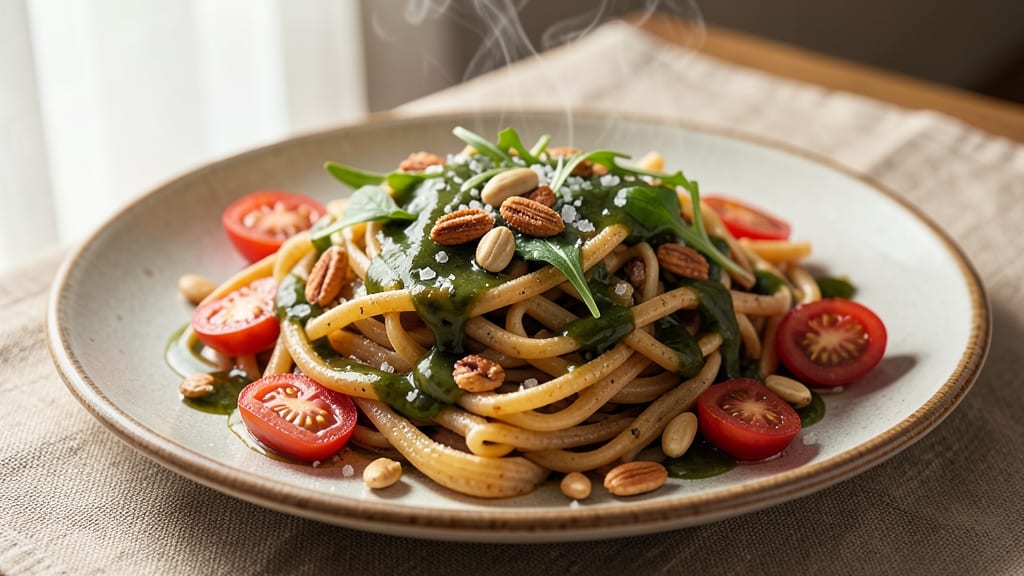
This brown rice flour pasta recipe delivers restaurant-quality al dente texture without the gluten—perfect for anyone seeking a nutritious yet satisfying meal. The secret lies in a precise dough ratio that balances hydration and structure, creating pasta with a subtle nutty flavor and satisfying bite.
What sets this apart is its versatility—ideal for vegan diets, paleo adaptations, or anyone craving wholesome comfort food.
The dough comes together with just five simple ingredients: brown rice flour, eggs, olive oil, water, and a pinch of salt. Unlike traditional wheat pasta, this version relies on proper resting time and gentle handling to achieve that signature al dente texture.
I’ve tested this recipe countless times to ensure it holds up to bold sauces and hearty toppings without falling apart.
Once cooked, the pasta maintains its shape beautifully while absorbing flavors like a sponge. Toss it with garlic olive oil, lemon zest, and fresh herbs for a bright, Mediterranean-inspired dish, or pair it with rich tomato sauce and roasted vegetables for a satisfying weeknight meal.
The possibilities are endless, and the results are consistently impressive.
Whether you're accommodating dietary restrictions or simply exploring gluten-free options, this recipe proves that wholesome ingredients can deliver the same comfort and satisfaction as traditional pasta. Let’s get started on creating your perfect batch.
Ingredients for brown rice flour pasta
Five core ingredients create restaurant-quality pasta without gluten or guilt.
| Ingredient | Amount | Notes |
|---|---|---|
| Brown Rice Flour 🌾 | 2 cups | Fine grind for smooth texture |
| Extra-Virgin Olive Oil 🫒 | ½ cup | Cold-pressed for optimal flavor |
| Water 💧 | ¾ cup | Room temperature preferred |
| Flaxseed Meal 🌱 | 2 tbsp | Replaces eggs for binding |
| Water 💧 | ¼ cup | For flax egg mixture |
| Sea Salt 🧂 | ½ tsp | Diamond Crystal preferred |
| Ground Black Pepper 🌶️ | ¼ tsp | Freshly ground for aroma |
| Nutritional Yeast 🍄 | 2 tbsp | For umami depth (optional) |
Brown rice flour is the foundation—Bob's Red Mill or Anthony's brands deliver the finest grind for smooth dough. Look for 100% brown rice flour with no additives; white rice flour blends compromise texture. The olive oil should be extra-virgin, cold-pressed—California Olive Ranch or Colavita are reliable choices. Store flour in an airtight container to prevent oxidation, which dulls flavor. For the flax egg, mix the flaxseed meal and water thoroughly, letting it sit for 5 minutes to achieve proper gel consistency—this is non-negotiable for binding.
No flaxseed meal? Chia seeds work at double the amount (4 tbsp chia + 0.5 cup water), though texture may vary slightly. Substitute olive oil with avocado oil (neutral flavor) or walnut oil (richer taste), but avoid refined oils like vegetable oil. The nutritional yeast adds depth—Bragg or Bob's Red Mill are widely available. For extra umami without yeast, 1 tbsp white miso paste works well. If your flour feels coarse, pulse it briefly in a food processor to ensure even dough texture. The pepper should be freshly ground—pre-ground loses potency quickly.
Flour and nutritional yeast keep indefinitely in cool, dark places. Store mixed dough in airtight wrap in the fridge for up to 3 days or freeze for 3 months. For best results, let dough rest 30 minutes at room temperature before rolling. The pasta maintains shape better when cooked in well-salted water—1 tbsp salt per gallon—and finishes in 2-3 minutes after floating. Portion dough into 4 equal pieces before rolling to simplify handling.
Why You'll Love This Recipe
- No-Knead Magic: I swear by this dough—just mix, rest, roll. The flaxseed meal gives it that chewy, satisfying bite without the fuss of gluten, and honestly? It’s the kind of recipe that makes me feel like I’ve outsmarted the grocery store.
- Nutty Earthy Richness: That brown rice flour? It’s got a depth you won’t find in white pasta. Toss it with olive oil and a pinch of salt, and suddenly you’ve got a dish that’s hearty, slightly sweet, and ridiculously satisfying—like a hug in carb form.
- Weeknight Workhorse: Between us, this pasta is my go-to when I’m too tired to think. It reheats like a dream, pairs with anything (tomato sauce, pesto, even just butter and garlic), and feeds my family without breaking the bank. (Yes, even on a Tuesday night.)
- Budget-Friendly Staple: Brown rice flour is cheaper than you’d expect, and a little goes a long way. Plus, the flaxseed meal adds protein without costing a fortune. I’ve made enough batches to last months—no wasted leftovers here, just easy lunches and dinner shortcuts.
Step-by-step instructions for brown rice flour pasta
This method delivers perfectly al dente brown rice flour pasta with a silky texture and no gluten.
👨🍳 Step 1: Prepare the Flax Egg Mixture
In a small bowl, combine the 2 tablespoons flaxseed meal with the ¼ cup water. Stir thoroughly and let it sit for 5 minutes until it thickens into a gel-like consistency resembling an egg. This flax "egg" acts as the binding agent in place of traditional eggs, holding the dough together without gluten.
Check the mixture by tilting the bowl—it should coat the back of a spoon smoothly without dripping. If it's still too runny, add another ½ teaspoon flaxseed meal and stir. The texture should be thick enough to hold its shape when dropped from a spoon, similar to raw egg whites. This step is crucial for dough cohesion.
👨🍳 Step 2: Mix the Dough Components
In a large mixing bowl, whisk together the 2 cups brown rice flour, ½ teaspoon sea salt, ¼ teaspoon ground black pepper, and 2 tablespoons nutritional yeast (if using). The nutritional yeast adds a subtle cheesy umami flavor that complements the pasta beautifully. Sift the dry ingredients lightly to eliminate any lumps and ensure even distribution.
Make a well in the center of the dry mixture and pour in the ½ cup extra-virgin olive oil and the ¾ cup room-temperature water. Add the thickened flax egg mixture to the well. Using a wooden spoon or your hands, gradually incorporate the wet ingredients into the dry until a shaggy dough forms. The dough will be sticky but should come together when pressed.
🍳 Step 3: Knead and Rest the Dough
Transfer the dough to a lightly floured surface and knead gently for 3-4 minutes until smooth and elastic. Avoid over-kneading, as brown rice flour dough can become tough. If the dough feels too dry, add 1 teaspoon water at a time; if too sticky, add 1 teaspoon brown rice flour. The ideal consistency should be soft but not tacky, allowing you to handle it without sticking to your hands.
Wrap the dough tightly in plastic wrap and let it rest at room temperature for 30 minutes. This resting period relaxes the gluten-free proteins in the flour, allowing them to hydrate evenly. For best results, place the wrapped dough in the refrigerator for 20 minutes before rolling to prevent sticking and ensure cleaner cuts.
🔪 Step 4: Roll and Cut the Pasta
Unwrap the rested dough and place it on a lightly floured surface. Using a rolling pin, roll the dough as thin as possible—aim for ⅛-inch thickness or thinner if your rolling pin allows. For even thickness, roll from the center outward, rotating the dough 90 degrees after each pass. If the dough tears, patch it together gently and continue rolling.
Transfer the rolled dough to a floured cutting board. Use a sharp pasta cutter or a knife to cut the dough into ¼-inch wide strips for fettuccine or ⅛-inch strips for spaghetti. To prevent sticking, dust the cut pasta immediately with a light coating of brown rice flour. Let the pasta dry for 10-15 minutes on a floured surface or baking sheet before cooking to firm up the edges.
🍲 Step 5: Cook to Perfect Al Dente
Bring a large pot of well-salted water to a rolling boil. The water should taste like the sea—add 2 tablespoons salt per gallon for proper seasoning. Add the pasta in batches, ensuring there’s enough room to stir. Cook for 2-3 minutes, stirring occasionally, until the pasta floats to the surface and is al dente—firm to the bite but tender.
Reserve ½ cup pasta water before draining, as the starchy liquid helps emulsify sauces. Toss the cooked pasta immediately with a splash of the reserved water and a drizzle of extra-virgin olive oil to prevent sticking. Serve with your favorite gluten-free sauce, ensuring each bite delivers the nutty flavor of brown rice flour and the satisfying texture of perfectly cooked pasta.
Pro Tips For Making Brown Rice Flour Pasta
- KNEAD LIKE YOU MEAN IT: Brown rice flour pasta won’t behave like wheat—don’t give it half-hearted kneading. Work the dough for a solid 8-10 minutes by hand (or 5 minutes in a stand mixer with the dough hook) until it’s smooth and springs back when poked. I learned this the hard way when my first batch turned out gummy because I thought "a few minutes" was enough.
- SIFT THE FLOUR FIRST: Brown rice flour is heavy and clumpy—skip the sifting, and you’re asking for lumps in your dough. Use a fine-mesh sieve and tap it gently over a bowl while shaking it side to side. This also aerates the flour, which helps the pasta hold its shape better. (Yes, it’s tedious, but your pasta will thank you.)
- DON’T OVERWORK THE DOUGH: Once the dough comes together, resist the urge to keep kneading "just a little more." Brown rice flour releases gluten differently, and overworking it makes the pasta tough. Test for doneness by stretching a small piece—if it’s smooth and elastic but not sticky, stop. (I used to ignore this and ended up with pasta that felt like chewing on a rubber band.)
- LET IT REST—EVEN IF YOU’RE IMPATIENT: Cover the dough and let it rest for at least 30 minutes before rolling. This relaxes the proteins and makes cutting the pasta easier. I know, I know—you’re eager to roll it out. But skipping this step means your pasta will tear when you cut it, and you’ll be starting over. (Trust me, I’ve done it.)
Flavor customization for these flavors
Nutty & Earthy
Enhance the natural nuttiness of brown rice flour by adding 1 teaspoon toasted sesame seeds or ½ teaspoon ground cumin to the dough. Toast the sesame seeds in a dry pan for 2 minutes until golden, then let cool before mixing into the flour.
The cumin adds warmth that pairs beautifully with creamy sauces like cashew alfredo or roasted garlic. For extra depth, stir in 1 tablespoon finely chopped walnuts into the dough—this adds a satisfying crunch and rich texture. 🌾
Herb-Infused Brightness
Brighten the flavor profile with fresh herbs like 1 tablespoon chopped basil or 1 teaspoon dried oregano. For basil, blend it into the flax egg mixture before adding to the dough, while oregano works well mixed directly into the flour.
For a Mediterranean twist, add ½ teaspoon lemon zest to the dough—this cuts through the earthiness and adds a refreshing citrus note. Pair with garlic-infused olive oil or a lemony pesto for a cohesive dish. ✨
Spicy & Smoky
Transform your pasta into a bold, smoky dish by incorporating ½ teaspoon smoked paprika and ¼ teaspoon cayenne pepper into the dough. For a deeper smoky flavor, replace 1 tablespoon of the olive oil with 1 tablespoon liquid smoke (like Alaskan Smokehouse brand).
This works exceptionally well with rich, tomato-based sauces or spicy arrabbiata. For heat lovers, add 1 tablespoon finely chopped jalapeño to the dough for a subtle kick. 🌶️
Sweet & Savory
Balance the savory notes with a touch of sweetness by adding 1 tablespoon maple syrup or ½ teaspoon vanilla extract to the dough. This subtle sweetness shines in dishes like brown butter sauce or caramelized onion toppings.
For a dessert-inspired twist, fold in 2 tablespoons finely chopped dried apricots or chopped dates into the dough—this creates a unique fusion pasta that pairs wonderfully with a drizzle of honey or balsamic glaze. 🍯
Umami Bomb
Elevate the umami factor by mixing in 1 tablespoon white miso paste or 1 tablespoon soy sauce into the dough. Miso adds a fermented depth that complements rich sauces like teriyaki or mushroom-based reductions.
For a vegetarian-friendly boost, stir in 1 tablespoon nutritional yeast (in addition to the original amount) or ½ teaspoon MSG (if you have it on hand). These additions make the pasta incredibly satisfying, especially when paired with hearty toppings like roasted vegetables or crispy tofu. 🍄
Nutrition facts
Frequently asked questions
Why does my brown rice flour pasta dough keep sticking to my hands?
Brown rice flour dough is naturally stickier than wheat-based dough because it lacks gluten's elasticity. To prevent sticking, work on a well-floured surface and wet your hands with water (not oil) before handling. If the dough feels too dry, add 1 teaspoon water at a time; if too sticky, add 1 teaspoon brown rice flour. Always let the dough rest for 30 minutes before rolling—this helps the proteins hydrate properly.
Can I make this pasta without eggs or flaxseed?
Yes! For a completely egg-free version, replace the flax egg with a ¼ cup aquafaba (chickpea brine) mixed with 1 teaspoon apple cider vinegar. Let it sit for 5 minutes to thicken. Alternatively, use ¼ cup mashed banana (adds natural sweetness) or 2 tablespoons psyllium husk powder mixed with ¼ cup water. The dough may require slightly more hydration, so adjust as needed.
How do I prevent my pasta from turning mushy when cooked?
Undercooking is the key! Brown rice flour pasta cooks faster than wheat pasta—test it at 2 minutes and continue cooking in 30-second increments until al dente. Always use a large pot of well-salted boiling water (like the sea) and stir frequently. Once drained, rinse with cold water for 10 seconds max—this stops cooking and prevents mushiness. Toss immediately with olive oil to lock in texture.
What's the best way to store leftover cooked pasta?
Store cooked pasta in an airtight container with a thin layer of olive oil on top to prevent sticking. It keeps in the fridge for 3-4 days or freezes for up to 3 months. To reheat, toss with a splash of water or sauce and warm in a skillet over medium-low heat for 2-3 minutes. Never microwave—it makes pasta gummy. For best texture, reheat with fresh pasta water or a splash of broth.
Can I use this pasta for baking (like lasagna)?
Brown rice flour pasta holds up well in baked dishes. For lasagna, cut the dough into ¼-inch wide strips and bake at 375°F (190°C) for 10-12 minutes before layering to firm up the edges. The pasta will soften slightly during baking but maintains structure. Use it in place of traditional lasagna noodles, but expect a slightly chewier texture. Pair with rich tomato sauce and vegan cheese for a hearty meal.