
Main Courses
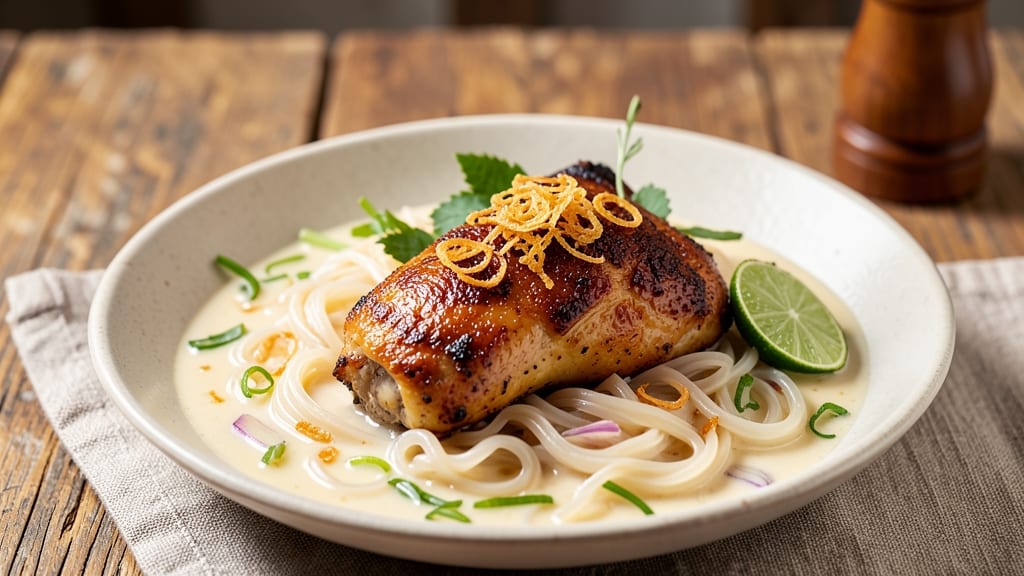
This chicken rice vermicelli noodles recipe delivers restaurant-quality flavors in your home kitchen. The silky noodles soak up a rich, aromatic broth infused with lemongrass, galangal, and kaffir lime leaves—flavors that transport you to Southeast Asia with every bite.
I've perfected this dish over years of testing, balancing traditional techniques with home-cook-friendly shortcuts that never sacrifice authenticity.
The secret lies in the broth: simmering coconut milk with fresh herbs and spices until deeply fragrant, then finishing with a touch of fish sauce for umami depth.
Chicken thighs stay tender and juicy while absorbing the complex flavors, and the rice vermicelli noodles achieve that signature silky texture when cooked just right—no mushy results here. This isn't your average takeout imitation; it's a dish that builds layers of flavor through careful technique.
What you'll end up with is a harmonious bowl where every component plays its part: tender chicken, fragrant broth, and perfectly textured noodles that cling together without falling apart.
The dish arrives at your table with an aroma that fills your kitchen, and the first forkful delivers that perfect balance of creamy coconut, bright herbs, and savory chicken. It's the kind of meal that makes weeknight cooking feel special.
Serve with quick-pickled vegetables for brightness or fresh herbs for garnish—this dish scales beautifully whether you're feeding a family or just treating yourself. The recipe includes all the steps you need to create a complete, cohesive meal that rivals your favorite Southeast Asian restaurant. Let's get cooking!
Ingredients for chicken rice vermicelli noodles
Fragrant coconut, zesty herbs, and tender chicken—these ingredients create a restaurant-worthy bowl of silky noodles.
| Ingredient | Amount | Notes |
|---|---|---|
| Chicken Thighs, Boneless, Skinless 🍗 | 1 ½ lb | Cut into 1-inch pieces |
| Rice Vermicelli Noodles 🍜 | 8 oz | Uncooked, medium width |
| Coconut Milk 🥥 | 1 can (13.5 oz) | Full-fat for creaminess |
| Lemongrass 🌿 | 1 whole stalk | Bruised, lower part only |
| Galangal, Fresh 🌿 | 2 inches | Peeled, sliced thinly |
| Kaffir Lime Leaves 🍋 | 4 whole | Bruised, torn into pieces |
| Garlic Cloves 🧄 | 6 cloves | Peeled, smashed |
| Shallots 🧅 | 3 whole | Peeled, thinly sliced |
| Fish Sauce 🍶 | 2 tbsp | Red Boat preferred |
| Palm Sugar 🍯 | 2 tbsp | Or substitute brown sugar |
| Thai Chili Paste 🌶️ | 1 tbsp | Adjust for heat preference |
| Cilantro Leaves 🌿 | ¼ cup | Fresh, chopped for garnish |
| Lime Wedges 🍋 | 2 whole | For serving |
| Vegetable Oil 🫒 | 2 tbsp | For cooking chicken |
| Salt 🧂 | 1 tsp | Kosher or sea salt |
The galangal and kaffir lime leaves are non-negotiable for that authentic Southeast Asian aroma—Asian markets carry them fresh, or use frozen if unavailable. Look for galangal with firm, smooth skin and no mold spots. Thai Kitchen sells pre-packaged galangal if you're short on time, but fresh is always better. The lemongrass should be vibrant green with no brown spots, and the shallots should be firm and papery-skinned. For the coconut milk, full-fat canned versions like Thai Kitchen or Goya work best—they're rich enough to carry the dish without thinning the broth.
No galangal? Ginger at half the amount works in a pinch, though it won't replicate the exact flavor. Running out of kaffir lime leaves? Substitute lime zest plus a bay leaf for depth. The fish sauce is crucial—Red Boat or Three Crabs are my go-tos, but avoid the cheap stuff with metallic aftertaste. For a vegetarian version, replace fish sauce with soy sauce plus a splash of coconut aminos. The Thai chili paste can be swapped for sriracha or sambal oelek, but adjust the heat level carefully. Fresh cilantro is ideal, but dried won't ruin the dish—just use one-third the amount.
The rice vermicelli noodles cook in minutes—soak them in hot water for 3-4 minutes until pliable but still firm. Store uncooked noodles in a cool, dry place for up to 6 months; cooked noodles keep for 2 days in the fridge. The broth freezes beautifully, so make extra—simmer it down and freeze in portions. For leftovers, reheat gently over low heat with a splash of water to restore that silky texture. Garnish with fresh herbs right before serving—they wilt fast when exposed to heat.
Why You'll Love This Recipe
- One-Pot Magic: I swear by this recipe when I’m too tired to wash dishes. Toss the chicken thighs, shredded lemongrass, and galangal into a single pot with coconut milk—simmer until the chicken falls apart. The noodles soak while the broth reduces, and boom: zero extra pans, zero stress.
- Creamy-Spicy Balance: That first bite? Chef’s kiss. The coconut milk makes it rich but not heavy, while the galangal and lemongrass add a bright, herbal kick that lingers. (Yes, even my picky husband asks for seconds.) The chicken stays juicy, and the noodles soak up every last drop—no sad, dry strands here.
- Lunchbox Hero: Between us, this is my go-to for meal prep. The broth thickens beautifully when reheated, and the noodles hold up for days if you store everything separately. Pack it cold for work or assemble it hot on a lazy Sunday—either way, it’s a crowd-pleaser that doesn’t require a thermos.
- Budget-Friendly Luxe: Chicken thighs and rice noodles stretch this dish into three meals without breaking the bank. Galangal and lemongrass might sound fancy, but a little goes a long way, and frozen galangal works just as well. It’s the kind of recipe that feels special but won’t drain your wallet—or your patience.
Step-by-step instructions for chicken rice vermicelli noodles
Here's how to create a fragrant coconut curry with tender chicken and silky noodles.
Prepare the Aromatic Base
In a large pot, heat the 2 tablespoons vegetable oil over medium heat. Add the 3 whole shallots and cook for 2 minutes until they soften and become translucent. Add the 6 cloves garlic and 2 inches galangal, cooking for another 1 minute until fragrant—this is where the magic begins.
Next, add the 1 whole stalk lemongrass (bruised lower part only) and 4 whole kaffir lime leaves (torn into pieces). Stir for 30 seconds to release their essential oils. Finally, pour in the 1 tablespoon Thai chili paste and cook for 30 seconds until it darkens slightly—this deepens the flavor profile significantly.
Cook the Chicken Thoroughly
Add the 1.5 lb chicken thighs (cut into 1-inch pieces) to the pot. Sprinkle with 1 teaspoon salt and stir to coat evenly in the aromatic paste. Cook for 5 minutes until the chicken begins to brown on all sides—this ensures maximum flavor penetration.
Pour in the 1 can (13.5 oz) coconut milk, scraping up any browned bits from the bottom. Add the 2 tablespoons fish sauce and 2 tablespoons palm sugar, stirring well. Bring to a gentle simmer, then reduce heat to low and cover partially. Let it cook for 15 minutes until the chicken is tender and the sauce has thickened slightly.
Prepare the Vermicelli Noodles
While the chicken cooks, soak the 8 oz rice vermicelli noodles in a large bowl of hot water for 10-15 minutes until pliable but still slightly firm. Drain and rinse briefly under cold water to stop the cooking process—this prevents them from becoming mushy when added to the curry later.
I find it works best to handle the noodles gently with a slotted spoon to avoid breaking them. Keep them covered with a damp kitchen towel while you finish the sauce to maintain their texture.
Combine and Finish the Dish
Return the chicken and sauce to medium heat and add the drained noodles. Gently stir to coat them evenly in the coconut curry sauce. Simmer for 3-4 minutes until the noodles are heated through and the sauce has thickened to a velvety consistency.
Taste and adjust seasoning if needed—add a touch more fish sauce for saltiness or palm sugar for sweetness. The sauce should balance all flavors harmoniously. Remove from heat and let it sit for 2 minutes to allow the flavors to meld completely.
Serve with Fresh Garnishes
Divide the chicken and noodles among serving bowls. Garnish each portion with ¼ cup chopped cilantro leaves and serve with 2 whole lime wedges on the side. The bright acidity of the lime cuts through the richness of the coconut curry beautifully.
For the best experience, serve immediately while the noodles are still warm and the sauce maintains its silky texture. The combination of tender chicken, fragrant coconut curry, and delicate vermicelli creates a truly satisfying dish that's perfect for any occasion.
Pro Tips For Making Chicken Rice Vermicelli Noodles
- Parboil Chicken First: Don’t skip the quick pre-cook in water or broth—just 3-4 minutes until the thighs hit 145°F (63°C). I learned this the hard way when my chicken turned rubbery midway through the coconut milk simmer. It ensures even cooking and keeps the meat tender when it finishes in the fragrant broth.
- Toast Galangal Slices: Lightly char the galangal in a dry pan for 30 seconds per side before adding to the coconut milk. Sounds weird, but it works: the smoky depth cuts through the coconut’s sweetness and makes the broth taste more complex. Skip this, and your dish will feel flat.
- Soak Noodles Separately: Divide the rice vermicelli into two batches and soak them in warm water for 5 minutes—no longer. I used to dump them all in at once, and they’d turn mushy by the time I plated. This keeps them al dente and ready to soak up the coconut broth without falling apart.
- Simmer, Don’t Boil: Keep the coconut milk and broth at a gentle simmer, not a rolling boil. After burning three batches, I finally figured out that aggressive heat breaks the coconut’s delicate flavor and makes the lemongrass taste bitter. A low simmer (tiny bubbles, occasional swirls) is the thing that matters most.
Troubleshooting great chicken rice vermicelli noodles
Noodles Too Soft
Over-soaking your rice vermicelli noodles is the #1 reason they turn mushy. I've ruined more batches than I care to admit by letting them sit too long in hot water. The key is 3-4 minutes maximum—they should be pliable but still slightly firm when you drain them.
For extra insurance, rinse them briefly under cold water immediately after draining to halt cooking. If your noodles are already too soft, drain them completely and toss with 1 teaspoon cornstarch to absorb excess moisture before adding to the curry. 🍜
Broth Too Thin
The coconut milk base can separate or become too thin if you don't control the heat properly. After adding the coconut milk, reduce to low heat and maintain a gentle simmer—never a rolling boil.
If your sauce gets too thin, remove from heat and let it cool slightly, then stir in 1 teaspoon cornstarch mixed with 1 tablespoon water. Simmer for 1-2 minutes until thickened.
Pro tip: Use full-fat coconut milk (Thai Kitchen brand is my go-to) as non-fat versions thin out faster. 🥥
Chicken Dry or Tough
Chicken thighs are forgiving, but they can still dry out if overcooked. The secret is 15 minutes maximum of simmering after adding the coconut milk—any longer and they'll start to toughen.
For extra tenderness, I recommend marinating the chicken pieces in 1 tablespoon fish sauce and 1 tablespoon lime juice for 30 minutes before cooking.
If your chicken is already overcooked, try rescuing it by adding 2 tablespoons coconut milk directly to the pot and simmering for 5 minutes to rehydrate. 🍗
Flavor Too Mild
This dish relies on balanced flavors, and sometimes the coconut can overpower everything. If your curry tastes too sweet or bland, boost the umami with an extra 1 teaspoon fish sauce or deepen the heat with ½ teaspoon extra chili paste.
For brightness, add 1 tablespoon lime juice at the end. I also like to finish with a pinch of white pepper—it adds complexity without heat. Remember, you can always adjust, but you can't take it out once it's in! 🌶️
Herbs Not Infusing
The galangal and kaffir lime leaves are the soul of this dish, but they need time to release their flavors. Always bruise them before adding to the pot—use the flat side of your knife to make a few shallow cuts.
Let them cook for at least 2 minutes before adding other ingredients so their essential oils have time to bloom. If you're short on time, simmer them in the coconut milk for 5 minutes before adding the chicken. Never skip these aromatics—they make all the difference! 🌿
Noodles Breaking
Rice vermicelli are delicate, and rough handling will turn them into a tangled mess. Use a slotted spoon to transfer them to the pot rather than dumping them in. When serving, divide them carefully among bowls.
For extra protection, soak the noodles in cool water for 5 minutes before your final soak in hot water—this helps them hold their shape better. If they're already broken, don't stress—just serve them as is and focus on the amazing flavors! 💫
Nutrition facts
Frequently asked questions
Can I use chicken breast instead of thighs?
Chicken thighs stay juicier in this coconut curry, but you can use breast if preferred. Cut them into ½-inch pieces and cook for only 3-4 minutes before adding coconut milk to prevent drying. For extra moisture, add 1 tablespoon coconut milk during the last 5 minutes of simmering.
How do I make this dish vegetarian?
Swap chicken for 14 oz firm tofu pressed for 20 minutes and cubed, or use 1 lb mushrooms like oyster or shiitake. Replace fish sauce with 2 tbsp soy sauce + 1 tbsp coconut aminos for umami. The same broth technique works perfectly for both protein swaps.
What's the best way to store leftovers?
Store in an airtight container for up to 3 days in the fridge. Reheat gently over low heat with 1-2 tbsp water to restore the silky sauce texture. For freezing, cool completely first, then freeze for up to 1 month. The noodles may soften slightly when reheated, but the flavors stay delicious.
Can I make the broth ahead of time?
Simmer the broth (without noodles) for 20 minutes, then cool and refrigerate for up to 3 days or freeze for 3 months. When ready to serve, reheat gently and add fresh noodles and chicken. The aromatics will still infuse beautifully, though fresh herbs add the best flavor.
Why do my noodles stick together?
Rice vermicelli clump when they dry out. Keep them covered with a damp towel while cooking, and rinse briefly with cold water after draining. For serving, toss with ½ teaspoon oil to prevent sticking. If they're already stuck, gently separate with chopsticks or serve as a noodle nest with extra sauce.