
Main Courses
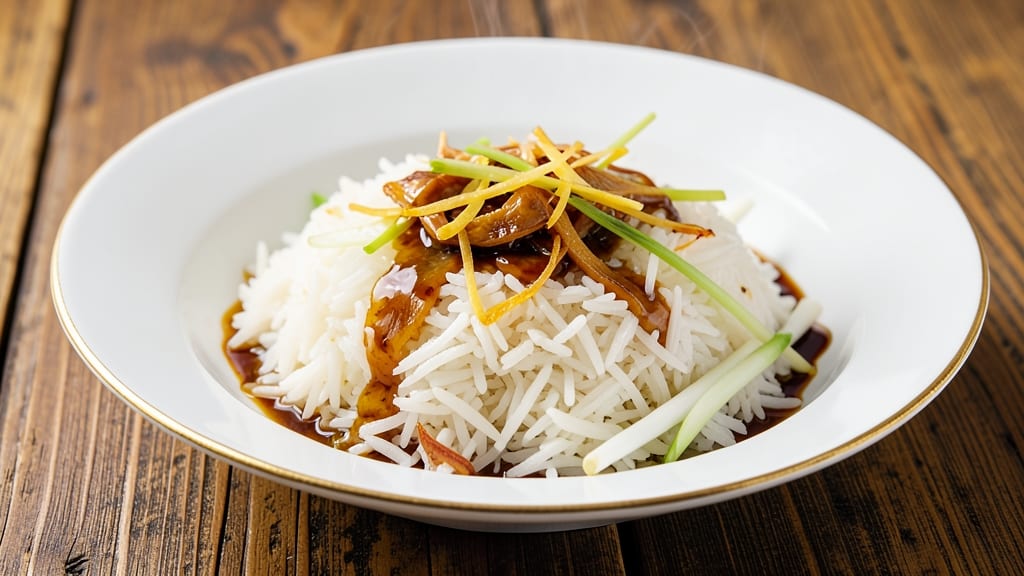
This Chinese basmati rice recipe transforms ordinary grains into fragrant, nutty perfection that elevates any meal. The secret lies in a simple yet precise technique—rinsing the rice thoroughly to remove excess starch, then steaming it with aromatic ginger and scallions until each kernel is tender yet distinct.
What sets this apart is the final toasted step, where the rice develops a delicate crunch and deepens in flavor, much like traditional Chinese jasmine rice but with basmati's signature texture.
The result is restaurant-quality rice with a subtle nutty aroma and just the right balance of moisture and bite. Perfect for serving alongside stir-fries, braised meats, or as a standalone dish, this method ensures every grain stays separate and fragrant.
Ready in just 20 minutes, it's a foolproof technique that delivers professional results without requiring special equipment. Let's get started!
Ingredients for chinese basmati rice
Nine essential ingredients transform ordinary basmati rice into aromatic, nutty perfection with restaurant-quality crunch.
| Ingredient | Amount | Notes |
|---|---|---|
| Long-Grain Basmati Rice 🌾 | 1 ½ cups | Uncooked, premium quality preferred |
| Fresh Ginger Root 🌿 | 1 tbsp | Finely grated, aromatic |
| Scallions 🧅 | 4 whole | White and green parts, thinly sliced |
| Vegetable Oil 🫒 | 3 tbsp | High smoke point preferred |
| Sesame Oil 🫒 | 1 tbsp | Toasted, for finishing |
| Light Soy Sauce 🥢 | 2 tbsp | For subtle umami depth |
| Water 💧 | 3 cups | Room temperature preferred |
| Salt 🧂 | ½ tsp | Kosher or sea salt |
| Toasted Sesame Seeds 🥜 | 1 tbsp | For garnish and crunch |
| White Peppercorns 🌶️ | ¼ tsp | Freshly cracked for subtle heat |
The foundation is premium basmati rice—look for brands like Mahatma or Bombay Basmati at specialty stores or the international aisle. The rice should be long-grained and plump, with a glossy sheen. Fresh ginger and scallions are non-negotiable for authentic flavor; organic produce from the farmers market delivers the brightest aroma. Sesame oil and seeds should be toasted—Kadoya brand is excellent for authentic Japanese-style toasting. For the oil, avocado or refined sesame oil works best to prevent burning during toasting. Store all dried ingredients in airtight containers away from light to preserve their potency.
No fresh ginger? Powdered ginger at half the amount works in a pinch, though it lacks the bright zing. Substitute scallions with green onions or chives, but slice them slightly thicker to mimic texture. Sesame oil shortages? Light olive oil plus a pinch of sesame seeds provides a similar neutral base. Light soy sauce unavailable? Low-sodium soy sauce at double the quantity maintains umami without overpowering. The white peppercorns can be omitted entirely if you prefer milder flavor, but their subtle heat enhances the nutty notes. All ingredients should be measured precisely—this delicate balance is what creates the signature texture and aroma.
Rice keeps best in an airtight container in the refrigerator for 4-5 days, though flavor peaks within the first 24 hours. For longer storage, freeze portions in 1-cup increments for up to 3 months. Reheat gently with a splash of water to restore moisture. The toasted sesame seeds and scallions should be added fresh after reheating to preserve their crunch. This method produces 4 perfect servings, ideal for pairing with stir-fries or braised dishes. Double the batch for larger gatherings—simply scale all ingredients proportionally while maintaining the 1:2 rice-to-water ratio.
Why You'll Love This Recipe
- No-Chop Night: I swear by this when I’m too tired to dice anything—just toast the whole scallions and ginger slices, then toss them in. The rice absorbs the sesame oil’s nutty warmth while staying perfectly separate, so you get that just-cooked aroma without the fuss.
- Umami Bomb: That first whiff of sesame oil hitting the pan? Instant flavor upgrade. The ginger’s sharp bite cuts through the rice’s natural sweetness, and the scallions add a fresh finish—like someone seasoned it for you but kept the magic simple.
- Lunchbox Hero: Between us, this rice is my go-to for meal prep. It reheats like a dream (just add a splash of water), and the toasted scallions stay crisp even after three days. Pack it with leftover chicken or veggies, and suddenly you’ve got restaurant-quality takeout.
- Budget Magic: A single bag of basmati rice stretches forever, and the other ingredients? Ginger and scallions last weeks in the fridge. I’ve made this for date nights, family dinners, and lazy Sundays—always the same base, always different when paired with whatever’s on hand. Cheap, but never boring.
Step-by-step instructions for Chinese basmati rice
Mastering this technique transforms ordinary basmati rice into aromatic, nutty grains with perfect texture.
Prepare the Aromatics and Base
Heat the 3 tablespoons vegetable oil in a heavy-bottomed pot over medium heat. Add the 1 tablespoon finely grated fresh ginger root and 4 whole thinly sliced scallions, stirring constantly for 1-2 minutes until the ginger becomes fragrant and the scallions soften slightly but don't brown.
This initial step builds the aromatic foundation. The ginger should release its bright, citrusy notes while the scallions mellow without burning. If the oil starts to smoke, reduce the heat immediately—smoke means you've lost precious flavor. Here's where it matters: don't skip this step, even though it seems simple. These aromatics infuse the rice with depth that separates this from basic steamed rice.
Toast the Rice for Nuttiness
Add the 1.5 cups long-grain basmati rice to the pot, stirring to coat the grains evenly with the oil and aromatics. Toast for 2-3 minutes until the rice becomes translucent at the edges and emits a toasty aroma. You'll see the grains begin to separate slightly—this is when they develop that signature nutty flavor.
I press the rice gently against the pot with a wooden spoon during the last 30 seconds of toasting. This ensures even contact with the hot oil and prevents the rice from sticking together. The moment the rice releases its raw starch smell and smells distinctly toasty, it's ready for the next step. This toasting process creates the nutty complexity that makes this rice distinctly Chinese-inspired.
Add Liquid and Season
Pour in the 3 cups room-temperature water, 2 tablespoons light soy sauce, and 0.5 teaspoon salt. Stir gently once to distribute everything evenly. Bring to a boil over high heat, then immediately reduce to a gentle simmer. The rice should be just covered by the liquid—you might see a few grains poking through, which is perfect.
This is where precision matters. The soy sauce adds subtle umami while balancing the rice's natural starchiness. The salt enhances all the flavors without overpowering. Let it simmer uncovered for 12-15 minutes until the liquid has been absorbed and the rice is tender but still has a slight bite. You'll know it's done when the bottom of the pot develops a thin, dry layer of rice—this indicates all the moisture has been absorbed.
Finish with Essential Oils
Remove from heat and immediately stir in the 1 tablespoon toasted sesame oil and 0.25 teaspoon freshly cracked white peppercorns. Cover tightly with a lid and let the rice steam undisturbed for 5 minutes. This resting period allows the flavors to meld completely and the grains to plump to their full texture.
Here's the thing about this finishing step: the sesame oil adds a delicate toasted aroma that elevates the dish, while the white peppercorns provide subtle heat without overpowering. The tight lid creates a steam chamber that prevents the rice from drying out. After resting, fluff the rice gently with a fork, then sprinkle the 1 tablespoon toasted sesame seeds on top. Serve immediately while still warm for the best texture and aroma.
Pro Tips For Making Chinese Basmati Rice
- TOAST THE GINGER FIRST: I learned this the hard way—raw ginger in this dish just sits there like a wet sock. Lightly fry the grated ginger in vegetable oil for 30 seconds until it smells aromatic and turns a pale gold. That’s when the flavor actually integrates instead of floating on top like an afterthought.
- DON’T CHOP SCALLIONS TOO FINE: Thinly sliced scallions turn to mush in this rice. Cut them into ½-inch pieces instead—long enough to stay distinct but small enough to distribute evenly. Trust me, you’ll taste the difference when they stay crisp through the whole dish.
- USE A TIGHT LID AFTER ADDING WATER: I used to peek every 30 seconds, and my rice would steam-dry or stick. Once you pour in the water, slap that lid on and don’t touch it for 10 minutes—even if the rice looks undercooked. The steam does the work.
- FINISH WITH SESAME OIL LAST: Add the sesame oil right before serving, not during cooking. It burns easily and turns bitter if heated, but a quick toss with a spoon right off the heat? That’s how you get that nutty aroma without sacrificing flavor. (Yes, even if you’re impatient like me.)
Essential equipment for this dish
Heavy-Bottomed Pot
Your 10-12 inch heavy-bottomed pot is non-negotiable—this prevents hot spots that can burn your rice. I use a Le Creuset Dutch oven for its even heat distribution, but any enameled cast iron or stainless steel with a thick base works.
Avoid thin aluminum pots, which can create uneven cooking and lead to mushy rice. If you're on a budget, Calphalon stainless steel is an excellent mid-range option that still provides superior heat control. 🔥
Wooden Spoon
A heat-resistant wooden spoon is essential for stirring during the toasting and simmering stages. I prefer olive wood or bamboo because they're gentle on the pot and won't scratch the surface.
Avoid metal utensils during these steps—they can scratch your pot and potentially react with the acidic components of the aromatics. Keep your spoon handy for pressing rice against the pot during toasting, which ensures even browning and nutty flavor development.
Fine-Mesh Strainer
A stainless steel fine-mesh strainer is crucial for rinsing the rice thoroughly before cooking. I use a OXO Good Grips because it's durable and has tight enough mesh to catch even the finest rice starch. Rinsing removes excess surface starch that would otherwise make your rice gummy.
After rinsing, give the rice a gentle shake in the strainer to remove any remaining water droplets—this ensures even cooking and prevents a soggy texture.
Digital Kitchen Scale
While the recipe uses volume measurements, a digital kitchen scale (like the OXO Good Grips) helps achieve perfect consistency, especially when doubling batches. Basmati rice should weigh about 300 grams per cup when uncooked.
For precise toasting, knowing the exact weight helps you judge when the rice is properly toasted—it should be light golden and smell nutty. This is particularly useful if you're experimenting with different rice varieties or adjusting the recipe for dietary needs.
Sesame Oil Toaster
For authentic flavor, I recommend a small sesame oil toaster (like the Kadoya brand) to toast your sesame oil and seeds separately. This creates a deeper, nuttier flavor than store-bought toasted sesame oil.
If you don't have one, toast the oil in a small saucepan over low heat for 2-3 minutes until it smells rich and nutty. Be careful not to let it smoke—this can create a bitter taste.
The toasted sesame seeds can be made in a dry skillet over medium heat for 1-2 minutes until fragrant and golden.
Lid with Steam Vent
A tight-fitting lid with a small steam vent (like those on Le Creuset lids) is perfect for the final steaming step. The vent allows excess steam to escape while maintaining a sealed environment to keep the rice moist.
If your lid doesn't have a vent, prop it slightly ajar with a wooden spoon during the 5-minute resting period. This prevents the rice from becoming too moist or developing a watery texture. A well-fitted lid ensures even steaming and helps develop that signature Chinese rice aroma. ✨
Nutrition facts
Frequently asked questions
Why does this recipe use basmati rice instead of jasmine?
Basmati rice offers a distinct nutty aroma and long, separate grains that stay firm when cooked—perfect for Chinese-style dishes. While jasmine rice has a floral scent, basmati's subtle nuttiness pairs beautifully with the ginger and scallions in this recipe. The grains also maintain their shape better during toasting, creating that signature crunch.
Can I make this without a heavy-bottomed pot?
You can use a stainless steel or enameled pot, but avoid thin aluminum—they can create hot spots that burn the rice. For best results, choose the thickest pot you have. If all you have is aluminum, reduce the heat to medium-low and stir more frequently during toasting to prevent sticking.
How do I prevent my rice from turning out mushy?
Rinse the rice thoroughly before cooking to remove excess starch, then use the correct rice-to-water ratio (1:2). Avoid lifting the lid during cooking—steam release causes uneven moisture distribution. Also, let the rice rest covered for 5 minutes after cooking to redistribute steam evenly.
What's the best way to store leftovers?
Store in an airtight container in the fridge for up to 4 days. For longer storage, freeze portions in 1-cup increments for up to 3 months. Reheat gently with a splash of water to restore moisture—never microwave dry rice directly. Add fresh sesame seeds and scallions after reheating for the best texture.
Can I use this rice for fried rice the next day?
This recipe makes perfect fried rice the next day because the grains stay separate and firm. Just break up any clumps with your hands, then stir-fry with your favorite proteins and veggies using 1 tablespoon oil per cup of rice. The toasted flavor will deepen during frying, creating amazing texture.