
Main Courses
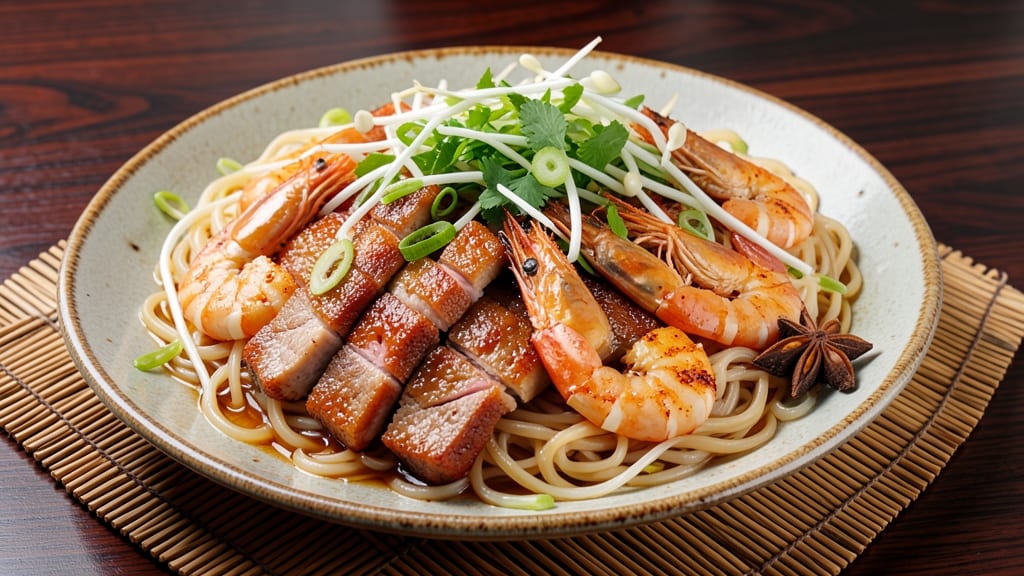
This Chinese buffet rice noodle recipe brings the bold flavors of Hokkien mee to your table with a fragrant five-spice glaze that transforms silky noodles into a showstopper. The dish is all about balance—tender noodles, savory protein, and a rich broth that comes together in layers of aromatic complexity.
I developed this version after years of perfecting the technique for restaurant-quality results at home.
The secret lies in the broth, where star anise, cinnamon, and five-spice powder create a warm, earthy base that pairs perfectly with charred pork or shrimp.
Silky rice noodles soak up the fragrant flavors while remaining tender, and a quick stir-fry with bean sprouts and chili oil adds freshness and heat. This dish is designed for sharing—ideal for buffet-style gatherings where every bite delivers that perfect harmony of textures and flavors.
Ingredients for chinese buffet rice noodle
Six servings of fragrant, restaurant-style rice noodles with tender pork and shrimp.
| Ingredient | Amount | Notes |
|---|---|---|
| Rice Noodles 🍜 | 1 ½ lb | Thin, flat, dried variety |
| Char Siu Pork 🥓 | 1 ½ lb | Pre-cooked, sliced thin |
| Large Shrimp 🦐 | 1 lb | Peeled, deveined, tails on |
| Bean Sprouts 🌱 | 3 cups | Fresh, trimmed ends |
| Green Onions 🧅 | ½ cup | Thinly sliced, white and green parts |
| Star Anise 🌿 | 2 whole | Whole pods, crushed lightly |
| Cinnamon Sticks 🌿 | 2 whole | 2-inch pieces, lightly crushed |
| Five-Spice Powder 🌶️ | 1 tbsp | Authentic Chinese blend |
| Garlic Cloves 🧄 | 6 cloves | Minced, fresh preferred |
| Ginger Root 🌿 | 1 tbsp | Fresh, finely grated |
| Chicken Broth 💧 | 4 cups | Low-sodium preferred |
| Soy Sauce 🍶 | ½ cup | Dark soy for color |
| Sesame Oil 🫒 | 1 tbsp | Toasted, for aroma |
| Chili Oil 🌶️ | 2 tbsp | Homemade or store-bought |
| Vegetable Oil 🫒 | ¼ cup | High smoke point |
| Salt 🧂 | 1 tsp | Kosher or sea salt |
| Black Pepper 🌶️ | ½ tsp | Freshly ground |
The star anise and cinnamon are non-negotiable for that authentic Hokkien mee aroma. Whole pods work best—crush them lightly to release oils without turning to powder. Asian markets carry the best quality, but most grocery stores stock them too. Five-spice powder should have a warm, slightly sweet scent—if it smells stale, toast it in a dry pan for 30 seconds to revive it. The rice noodles need to be fresh enough to soften quickly but not so old they turn mushy. Thai Kitchen brand is my go-to for consistency, but any thin, flat rice noodles will work.
No char siu pork? Substitute with thinly sliced leftover roast pork or even smoked sausage if you're in a pinch. Shrimp can be swapped for chicken breast cut into strips, but they won't give the same delicate texture. Fresh ginger is ideal, but ground ginger at half the amount works if you're short on time. The bean sprouts should be crisp—if they're wilted, soak them in ice water for 10 minutes before using. For the chili oil, Lao Gan Ma brand is widely available and adds instant heat and depth.
The broth keeps for 3 days in the fridge, and the noodles can be prepped ahead and stored separately for 2 days. Freeze the broth in ice cube trays for easy reheating. If making ahead for a buffet, assemble the dish just before serving to keep the bean sprouts crisp. The char siu pork and shrimp can be cooked the day before and stored in the fridge. This dish tastes even better the next day as the flavors meld—perfect for making a big batch for gatherings.
Why You'll Love This Recipe
- I’ll be real: this feeds four for the price of takeout. Char siu and shrimp are often on sale, and rice noodles last forever. Leftovers? Even better reheated with a quick stir-fry—just add a fried egg on top, and suddenly it’s dinner again.
- One-Pan Magic: I swear by this recipe when I’m too tired to scrub pots. Toss the pre-cooked rice noodles, shrimp, and char siu into a hot wok with a splash of oyster sauce—no boiling, no fuss. The noodles soften in seconds while the pork stays juicy, and those shrimp? They turn tender-crisp without overcooking.
- Sweet-Savory Balance: Honestly, the combo of sticky char siu and plump shrimp with a hint of soy and sesame is chef’s kiss. The bean sprouts add that satisfying crunch, and a sprinkle of green onions finishes it with a fresh kick—like a flavor party in every bite.
- Lunchbox Champion: Between us, this is my go-to for packed lunches. The noodles hold up for days (yes, really), and the shrimp and pork stay flavorful even cold. My kid’s favorite? The little char siu bits she picks out first—then complains when I stop making it.
Step-by-step instructions for Chinese buffet rice noodle recipe
Master this fragrant five-spice glaze technique for restaurant-quality noodles every time.
Prepare the Five-Spice Glazed Protein
In a large skillet, heat 0.25 cup vegetable oil over medium-high heat. Add the 1.5 lb char siu pork and cook for 2-3 minutes until heated through and slightly caramelized. Remove from skillet and set aside.
In the same skillet, add the 1 lb large shrimp and cook for 1-2 minutes per side until just pink. Remove and set aside with the pork. The shrimp should be cooked through but still tender—overcooking makes them rubbery. In the same oil, add 6 cloves minced garlic cloves and 1 tbsp finely grated ginger root, cooking for 30 seconds until fragrant.
Build the Fragrant Five-Spice Broth
Add the 2 whole crushed star anise, 2 whole crushed cinnamon sticks, and 1 tbsp five-spice powder to the skillet, stirring for 1 minute to toast the spices. Pour in 4 cups chicken broth and 0.5 cup soy sauce, bringing to a gentle simmer. Reduce heat to medium-low and let the broth infuse for 10 minutes—you'll notice the aroma deepen as the spices release their oils.
Strain the broth through a fine-mesh sieve into a clean saucepan, pressing gently on the spices to extract maximum flavor. Discard the solids. Return the broth to medium heat and reduce by half—about 10-12 minutes—until it coats the back of a spoon. This concentrated broth forms the foundation of your glaze.
Cook the Silky Rice Noodles
Bring a large pot of water to a rolling boil. Add the 1.5 lb rice noodles and cook for 2-3 minutes until just tender. Drain immediately and rinse briefly under cold water to stop cooking. The noodles should be pliable but still slightly firm—overcooking makes them mushy.
Transfer the noodles to a large bowl and toss with 1 tbsp sesame oil and 2 tbsp chili oil to coat evenly. This step prevents sticking and adds that signature buffet aroma. Keep the noodles covered with a damp towel to maintain moisture while you finish the glaze.
Combine and Finish with Fresh Elements
Return the reduced broth to medium heat and stir in the reserved char siu pork and shrimp to heat through. Add the cooked rice noodles and toss gently to coat in the glaze. Cook for an additional 1-2 minutes until everything is heated through and the noodles absorb the flavorful broth.
Divide the noodles among 6 serving plates and top each with 3 cups bean sprouts and 0.5 cup sliced green onions. Finish with a final drizzle of chili oil and a sprinkle of 0.5 tsp black pepper. The contrast of crisp sprouts against the silky noodles creates the perfect texture balance, while the green onions add freshness to cut through the richness.
Pro Tips For Making Chinese Buffet Rice Noodle
- STIR-FRY SHRIMP FAST: Toss shrimp in 1 tablespoon cornstarch before cooking—it keeps them crispy without sticking. I learned this the hard way after watching perfectly good shrimp turn rubbery mid-stir-fry. Works best with large shrimp; skip the marinade unless you’re adding extra flavor (like garlic or ginger).
- SOAK NOODLES 10 MINUTES: Rice noodles need just 10 minutes in warm water, not boiling—over-soaking makes them mushy. Drain immediately and rinse with cold water to stop cooking. (Yes, even if you’re impatient like me.)
- CHOP SPROUTS SMALL: Bean sprouts should be cut into 1-inch pieces—they cook faster and soak up sauce better. Whole sprouts stay crunchy and underwhelming. Do this last, right before tossing into the wok.
- REST CHAR SIU 5 MINUTES: Let sliced char siu sit for 5 minutes before stir-frying—it keeps the meat juicy instead of drying out. I used to skip this and ended up with chewy pork every time. (Your future self will thank you.)
Regional styles of this recipe
Cantonese Hokkien Mee
This dish originated in the Hokkien region of Fujian province and is a staple in Cantonese cuisine. The version you're making is inspired by the Hong Kong-style Hokkien mee, where the noodles are stir-fried with a rich, five-spice-infused broth.
I love how the charred pork and shrimp add depth, while the bean sprouts provide that essential crunch. The key difference from other regional noodle dishes is the five-spice glaze—it's what gives this version its signature aroma and complexity. 🌶️
Sichuan Spicy Noodle Twist
For a Sichuan-inspired variation, swap the chili oil for Lao Gan Ma doubanjiang (fermented chili bean paste) and add 1 tbsp Sichuan peppercorns to the broth. The numbing heat from the peppercorns creates a unique tingle that pairs perfectly with the silky noodles.
I recommend using Thai Kitchen rice noodles for this version—they hold up better to the bold flavors. Garnish with extra bean sprouts and a sprinkle of crushed peanuts for texture.
Malaysian Nasi Lemak Fusion
In Malaysia, rice noodles are often served with coconut milk-based curries. For a fusion twist, replace the chicken broth with 2 cups coconut milk and add 1 tbsp curry powder to the spice blend. Stir in ½ cup shredded coconut at the end for a creamy, tropical touch.
This version works beautifully with grilled chicken instead of pork, keeping the dish lighter but equally flavorful. Serve with a side of sambal for extra heat. 🥥
Singapore Hawker-Style
The Singaporean version often includes hard-boiled eggs and fried shallots for extra richness. After cooking the noodles, set aside 4 hard-boiled eggs, slice them, and arrange them on top of each serving.
Sprinkle with 2 tbsp fried shallots and a drizzle of sweet soy sauce (like Lee Kum Kee). The contrast of the creamy eggs with the chewy noodles is pure hawker-style magic. This version is perfect for buffet settings where you want to impress with bold flavors. 🍳
Taiwanese Braised Noodles
In Taiwan, this dish often features a thicker, slightly sweet glaze made with hoisin sauce and rock sugar. Replace the soy sauce with ¼ cup hoisin and add 1 tsp rock sugar to the broth while reducing.
The result is a glossy, caramelized coating on the noodles that balances the savory pork and shrimp beautifully. Garnish with pickled ginger and cilantro for brightness. This version is especially popular during winter gatherings in Taiwan. 🍯
Modern Fusion Adaptation
For a contemporary twist, try adding miso paste to the broth—just 1 tbsp white miso stirred in during the reduction. The umami depth elevates the dish to new heights. Pair it with seared scallops instead of shrimp for a seafood-forward version.
Top with microgreens and a drizzle of yuzu kosho for a fusion that feels both nostalgic and fresh. This adaptation works well for dinner parties where you want to showcase modern techniques. 🌱
Nutrition facts
Frequently asked questions
What's the best way to store leftover rice noodles?
Store cooked noodles in an airtight container in the fridge for up to 2 days. For longer storage, freeze them for up to 3 months—just thaw overnight in the fridge before reheating. Pro tip: Toss them with a little oil before storing to prevent sticking. Reheat gently with a splash of water or broth to restore their silky texture.
Can I make this dish vegetarian?
Swap the char siu pork and shrimp for extra-firm tofu (pressed and pan-fried) or mushrooms like shiitake. Boost umami with 1 tbsp vegetarian oyster sauce or miso paste in the broth. Keep the five-spice blend—the aromatic depth still shines through.
Why is my broth too thin after reducing?
Broth thickness depends on simmer time and heat control. For a richer reduction, simmer uncovered on low heat and stir occasionally to prevent skin from forming. If it's still too thin, remove from heat and let it cool slightly—it'll thicken as it cools. For extra body, stir in 1 tsp cornstarch mixed with water at the end.
How do I adjust the spice level?
Start with the chili oil and adjust to taste. For milder heat, reduce to 1 tbsp or swap for 1 tsp chili flakes. For extra kick, add ½ tsp red pepper flakes directly to the broth. Always taste the broth before adding noodles—you can't remove excess spice easily once mixed.
What's the secret to perfectly silky noodles?
The key is cooking time and rinsing. Boil for exactly 2-3 minutes until just tender, then rinse briefly in cold water to stop cooking. Overcooking makes them mushy. For extra silkiness, soak the noodles in warm water for 5 minutes before boiling—this helps them absorb flavors better.