
Main Courses
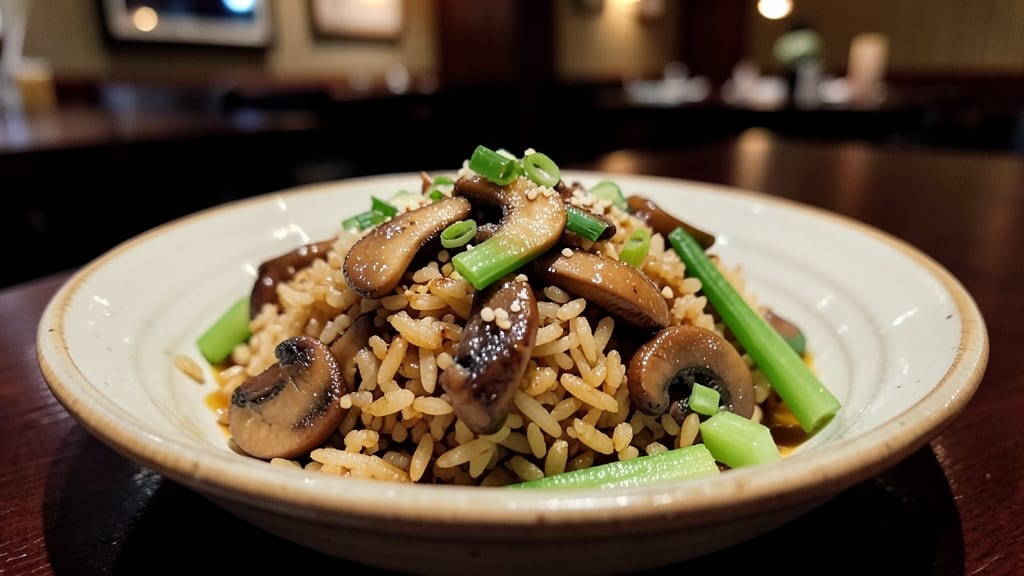
This Chinese mushroom fried rice recipe delivers the perfect balance of wok-heated umami and crispy celery bites—just like your favorite takeout. The secret lies in high-heat stir-frying and freshly cooked rice that develops that signature toasted texture. I've perfected this technique over years of testing, ensuring every bite is packed with savory mushrooms, aromatic garlic, and just the right amount of soy sauce depth.
What sets this recipe apart is the combination of texture and flavor: tender mushrooms, crisp-tender celery, and perfectly toasted rice that stays separate rather than mushy. The wok hei (breath of the wok) technique creates that signature smoky aroma, while a simple soy-ginger-garlic sauce ties everything together.
Ready in under 20 minutes, this dish transforms simple ingredients into a restaurant-quality meal that's foolproof for home cooks.
Ingredients for chinese mushroom fried rice
Restaurant-quality fried rice starts with these precise ingredients for perfect texture and umami balance.
| Ingredient | Amount | Notes |
|---|---|---|
| Day-Old Jasmine Rice 🍚 | 4 cups | Cooked and cooled completely |
| Shiitake Mushrooms 🍄 | 8 oz | Sliced thin, stems removed |
| Celery Sticks 🧅 | 2 cups | Thinly sliced for crisp texture |
| Green Onions 🧅 | ½ cup | White and green parts separated |
| Garlic Cloves 🧄 | 6 cloves | Minced finely for aromatic depth |
| Large Eggs 🥚 | 2 whole | Beaten for quick stir-fry |
| Fresh Ginger 🌿 | 1 tbsp | Finely grated for zesty kick |
| Light Soy Sauce 🥄 | ⅓ cup | For authentic umami flavor |
| Sesame Oil 🫒 | 1 tbsp | Toasted for nutty aroma |
| Neutral Oil 🫒 | 2 tbsp | High smoke point preferred |
| White Pepper 🌶️ | ¼ tsp | Freshly ground for subtle heat |
| Salt 🧂 | ½ tsp | Kosher or sea salt |
The rice is non-negotiable—day-old develops that signature toasted texture when stir-fried. Jasmine rice is ideal for its fragrance and slight stickiness, but basmati works too. For mushrooms, shiitake delivers the meaty texture and umami depth that separates this dish from basic fried rice. Look for fresh, firm shiitake at Asian markets—they usually carry them pre-sliced, which saves time. Celery should be crisp and bright, not rubbery; store-bought bags work fine if you trim the ends and slice them thinly. The garlic and ginger? Freshly minced is essential—never use the pre-minced jarred versions, especially for ginger, which loses potency quickly.
No light soy sauce? Dark soy sauce at half the amount gives similar depth but richer color. Eggs can be swapped for silken tofu at double the quantity for a vegan version, though texture will differ. Short on sesame oil? Toasted sesame seeds at 1/4 teaspoon add a similar nutty note, though the aroma won't be identical. The oil is where you shouldn't skimp—high-smoke-point oils like avocado or grapeseed prevent burning during the high-heat stir-fry. For a quicker prep, pre-chopped frozen stir-fry vegetables work in a pinch, though fresh always tastes better. And if you're feeling adventurous, swap half the mushrooms for oyster mushrooms or enoki for a different texture profile.
Rice reheats beautifully—microwave with a splash of water to revive texture before stir-frying. Mushrooms and celery can be prepped 1 day ahead and stored in airtight containers in the fridge. The beaten eggs should be cooked immediately after mixing with soy sauce—they scramble in seconds on high heat. Leftover fried rice keeps for 3-4 days in the fridge or 3 months frozen. For meal prep, portion into single-serving containers with a sprinkle of sesame seeds on top—they add crunch and keep the rice from sticking. If freezing, let the dish cool completely before storing to prevent ice crystals.
Why You'll Love This Recipe
- No Chopping Chaos: I swear by this recipe because it only asks for celery sticks and green onions—no dice, no julienne, just rough chopping. Even my garlic cloves stay whole until the very end, so I’m not crying over minced precision.
- Umami Magic: Those shiitake mushrooms? They’re the secret weapon—earthy, meaty, and they soak up the wok’s heat like a dream. The garlic and celery caramelize just enough to give it that deep, savory punch without overpowering.
- Lunchbox Hero: Between us, this is my go-to for meal prep. The rice stays light and fluffy for days, and I just portion it into containers with a sprinkle of green onions. Toss it in a thermos, and you’ve got a satisfying lunch that’s still restaurant-worthy.
- Budget-Friendly Staple: Honestly, this recipe costs me pennies per serving. Shiitakes are cheap in bulk, day-old rice is free, and the veggies stretch forever. I make it for date nights, solo dinners, or when the kids bring home friends—no one ever complains.
Step-by-step instructions for Chinese mushroom fried rice
Master this wok technique for restaurant-quality fried rice with perfectly crisp celery and umami-packed mushrooms.
Prepare the Base Ingredients for Optimal Texture
Break up the 4 cups of day-old jasmine rice with your hands, separating any clumps. You want individual grains that'll absorb the sauce beautifully. I like to spread them on a baking sheet and let them sit at room temperature for 5 minutes—this prevents steaming when they hit the hot wok.
Slice the 8 oz shiitake mushrooms into thin strips, removing stems completely. For the 2 cups of celery sticks, cut them into ½-inch pieces on a diagonal—this creates more surface area for crisping. Finely mince the 6 cloves garlic and grate the 1 tbsp fresh ginger using a microplane. Keep all prepped ingredients within reaching distance for efficient cooking.
Create the Flavor Foundation with Aromatics
Heat 1 tablespoon of the neutral oil in a wok or large skillet over medium-high heat until shimmering. Add the minced garlic and grated ginger, stirring constantly for 30 seconds until fragrant but not browned. This quick cooking preserves their fresh aroma without burning.
Push the aromatics to one side of the wok and add the remaining 1 tablespoon neutral oil. Toss in the sliced shiitake mushrooms and celery sticks, spreading them in an even layer. Cook for 3-4 minutes, stirring occasionally, until the mushrooms soften slightly and the celery becomes tender-crisp with slightly charred edges. This is where that crispy promise comes to life—don't overcrowd the pan or they'll steam instead of crisp.
Scramble the Eggs for Perfect Texture
Push the mushroom-celery mixture to one side of the wok again. Add the 2 whole large eggs to the empty space and let them sit undisturbed for 10 seconds. Then scramble quickly with a spatula, breaking up any large curds as you go. The eggs should be just set but still slightly moist—this ensures they blend seamlessly with the rice.
Combine the eggs with the mushroom-celery mixture and stir for 30 seconds to distribute the flavors evenly. This is the moment that matters: the eggs should look like ribbons of pale yellow throughout the mixture, not clumped or overcooked. Remove the wok from heat briefly if it starts smoking.
Combine and Season for Umami Depth
Return the wok to medium-high heat and add the 4 cups of broken rice, spreading it evenly across the pan. Stir-fry for 2-3 minutes, letting the rice absorb the flavors from the egg and mushroom mixture. Sprinkle the 0.5 tsp salt and 0.25 tsp white pepper over the rice and stir to distribute evenly.
Pour the ⅓ cup light soy sauce over the rice in a thin stream while stirring continuously. The sauce should coat each grain evenly without making the rice soggy. Add the 1 tbsp toasted sesame oil last, tossing gently to incorporate. Cook for another 1-2 minutes until the rice is heated through and the celery pieces remain crisp with slight resistance when bitten.
Finish with Green Onions for Fresh Contrast
Remove the fried rice from heat and transfer to a serving platter. Immediately sprinkle the white and green parts of the 0.5 cup green onions over the top, reserving a small amount for garnish. The white parts add subtle sharpness while the green parts provide fresh visual contrast and a final pop of color.
Let the fried rice rest for 2 minutes before serving—this allows the flavors to meld slightly. The final dish should have distinct textures: tender mushrooms, crisp celery, fluffy rice, and silky egg ribbons all bound together by the umami-rich soy sauce. Serve immediately while the celery maintains its perfect crispness.
Pro Tips For Making Chinese Mushroom Fried Rice
- STIR-FRY IN BATCHES: Don’t toss all your rice in at once—split it into 2-3 portions and cook them separately. The pan gets crowded fast, and your rice will steam instead of crisp up. I learned this the hard way when my first batch turned out soggy despite high heat.
- SLICE MUSHROOMS THIN: Shiitake mushrooms need to be paper-thin (1-2mm) to cook fast and absorb flavor. Thick slices stay chewy—no matter how long you fry them. Use a sharp knife and work parallel to the stem for clean cuts.
- TOAST GARLIC FIRST: Smash those garlic cloves flat before mincing, then fry them in the wok for 10 seconds until fragrant and golden. This builds depth before adding other ingredients. Skipping this step means your rice will taste flat, even with all the other flavors.
- USE COLD RICE: Day-old rice is non-negotiable—fresh rice turns mushy. If you’re in a pinch, spread freshly cooked rice on a tray, stick it in the fridge for 2 hours, then proceed. Cold rice releases moisture gradually, so it crisps instead of sticking.
Pro cooking tips for this recipe
Wok Hei Essentials
That signature smoky aroma—wok hei—comes from high-heat cooking and proper ventilation. Use a carbon steel wok (like De Buyer) for best results, but a cast-iron skillet works too.
Heat it until it smokes slightly before adding oil—this creates the perfect foundation. If cooking indoors, crack a window or use your exhaust fan to circulate that smoky flavor. 🔥
Medium-high heat is key—350-375°F at the pan's surface. Too low and your celery gets soggy; too high and the rice burns. I test by flicking a drop of water onto the pan—it should sizzle and evaporate instantly. A wok thermometer helps maintain consistency if you're new to this.
Rice Texture Secrets
Day-old rice is non-negotiable—it's drier and toasts beautifully. Spread your cooked rice on a tray and let it cool completely before using. For extra crispiness, I like to break it up with my hands before stir-frying, ensuring each grain gets exposed to the heat.
If your rice is too moist, spread it on a baking sheet at 200°F for 10 minutes to dry it out. 🍚
Never use freshly cooked rice—it'll turn mushy from the steam. The goal is separate, toasted grains, not a sticky mass. I keep my rice in the fridge overnight, then reheat it in the microwave with a splash of water before breaking it up.
This two-step process guarantees perfect texture every time.
Egg Technique Matters
The eggs are your flavor glue—cook them just until set but still slightly runny. I scramble them directly in the wok over medium-high heat, stirring constantly for 20-30 seconds until they form soft ribbons.
Overcooking makes them rubbery; undercooking leaves them raw. For extra richness, I mix the beaten eggs with 1 tsp soy sauce before cooking. 🥚
Push the eggs to one side of the wok while they cook—this prevents them from sticking to the pan. Once they're just set, immediately combine them with the mushrooms and celery. The residual heat will finish cooking them perfectly while blending all the flavors together.
Soy Sauce Timing
Add soy sauce after the rice hits the pan—this prevents it from burning. Pour it in a thin stream while stirring continuously to distribute evenly. I use light soy sauce for authentic flavor, but dark soy sauce adds color if you prefer.
For extra umami depth, I sometimes add 1 tsp fish sauce along with the soy. 🥄
Don't skip the sesame oil—it adds that nutty aroma that takes fried rice to the next level. Add it last, tossing gently to coat the rice without overmixing. The oil should be toasted (heat 1 tsp in the wok for 10 seconds) before adding to maximize flavor.
Celery Crispiness
Celery is the texture star—it should be tender but still crisp with slight char on the edges. Cut it into ½-inch diagonal slices for maximum surface area. Start cooking it first with the mushrooms, then push them to the side when adding eggs.
This ensures the celery gets maximum heat exposure without getting soggy from the rice. 🧅
If your celery starts wilting too quickly, remove it from the pan for 30 seconds while you cook the eggs, then return it to finish. The key is high heat and quick cooking—never let it sit in the wok once the rice joins the party.
Nutrition facts
Frequently asked questions
Why does the recipe call for day-old rice?
Day-old rice is essential because it's drier and toasts beautifully when stir-fried. Freshly cooked rice releases too much steam, turning your fried rice mushy instead of crisp. The extra time also lets the grains separate perfectly for that signature wok texture.
Can I substitute shiitake mushrooms with another type?
Oyster mushrooms or enoki work well for a different texture. For maximum umami, try dried shiitake mushrooms rehydrated (they're even more flavorful). Avoid cremini or white mushrooms—they lack the meaty texture and rich taste of shiitake.
How do I get the celery to stay crisp instead of getting soggy?
Cook the celery first with the mushrooms, then push them to the side when adding eggs. This gives them maximum heat exposure before the rice joins. If they start wilting, remove them for 30 seconds while you scramble the eggs, then return them to finish. High heat is key—never let them sit in the wok once the rice is added.
What's the best way to reheat leftover fried rice?
Reheat in a dry skillet over medium heat, stirring constantly for 3-4 minutes until hot through. For microwave reheating, sprinkle 1 tsp water over the rice and cover for 1 minute on high. Avoid adding water directly—it makes the rice soggy. The skillet method gives you that crispy texture again!
Can I make this recipe without a wok?
Yes! A cast-iron skillet or large nonstick pan works perfectly. For best results, use a pan with sloped sides to stir-fry efficiently. If your pan isn't wide enough, cook in batches—just keep the heat high and stir constantly. The key is maintaining that high-heat stir-fry technique, not the specific cookware.